Reviewed · PRAGUE TOURS
Contemporary art tour in Prague: the works of David Černý
Prague’s old streets are full of Gothic towers and ornate façades, but this walk sends you after something less expected: 10 public works by David Černý, the Czech sculptor famous for turning political criticism and dark humor into urban art. You move through Malá Strana, Staré Město, and Nové Město while the guide explains both the pieces and the city around them.
I like the mix of contemporary art and old Prague, and I like that the tour includes works that are less familiar than the city’s headline sights. The main consideration is the pace: 90 minutes is enough for an introduction, not a full study of Černý’s career, and the tour takes place outdoors in all weather.
Key points to know before booking
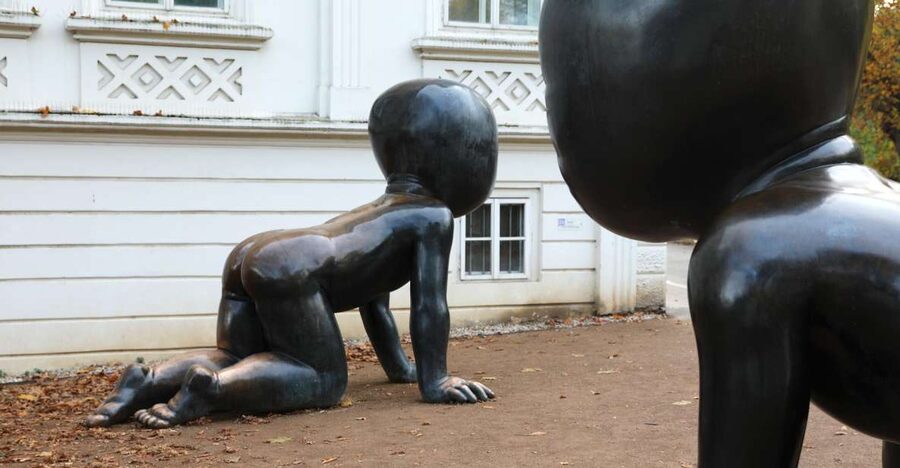
- Ten David Černý works: See a planned selection of urban sculptures, with each stop explained by the guide.
- Three historic districts: The route links Malá Strana, Staré Město, and Nové Město.
- French-speaking guide: The tour is conducted in French by a guide licensed by the Czech Ministry of Tourism.
- A different Prague: Expect political satire, public art, and modern Czech culture alongside historic streets.
- Ninety minutes on foot: Wear comfortable shoes and plan for a rain-or-shine outing.
- Good local advice: The guide also offers suggestions for places to visit and practical tips for the rest of your stay.
Why David Černý changes the way you see Prague
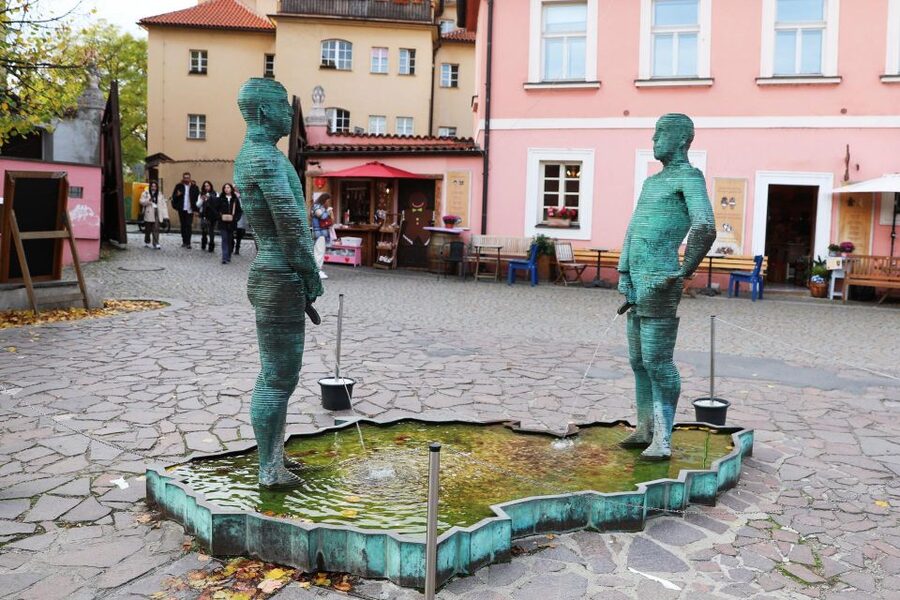
David Černý is not an artist who politely decorates a square. His work often provokes, jokes, criticizes, or makes you stop because something feels slightly wrong. That tension is the point.
He became known during the Velvet Revolution, when he was still a student at Prague’s School of Applied Arts. His early act challenged the institutional symbols of communist Czechoslovakia. From there, his work developed into a long-running critique of Czech and European public life.
You do not need a background in modern art to enjoy this tour. In fact, the walk works best if you arrive with simple questions. Why is this sculpture here? Who is it mocking? Is it meant to be beautiful, funny, offensive, or all three? A good explanation gives you a way into the work without turning the tour into a lecture.
The guide also places the sculptures in Prague’s wider story. That matters because Černý’s art often responds to politics, public institutions, national identity, and the habits of modern society. You see the old city differently when a modern sculpture suddenly pokes at its certainties.
A few more Prague half-days to weigh up
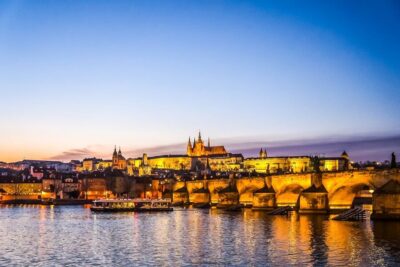
- Prague: 50-Minute Sightseeing Evening Cruise
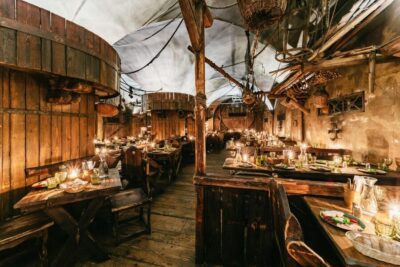
★ 4.2 · 33,780 reviews - Prague: Medieval Dinner with Unlimited Drinks
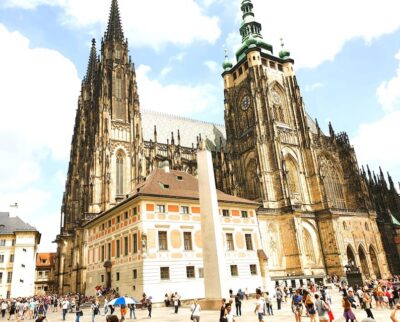
★ 4.4 · 19,847 reviews - Prague: Skip-the-line Castle Ticket and Optional AudioGuide
★ 4.3 · 11,121 reviews
Starting at Kinsky Square in Malá Strana
The meeting point is in front of the fountain on Kinsky Square. The nearest tram stop is Švandovo divadlo, served by lines 9, 12, 15, and 20.
This is a useful starting point for a walking tour because you are not meeting in the middle of the most crowded central sights. Give yourself enough time to find the fountain, especially if you are arriving by tram and are still learning Prague’s street layout.
Malá Strana is one of the city’s historic districts, known for its old streets, churches, palaces, and slope toward Prague Castle. Beginning here gives the tour an immediate contrast. You start among traditional Prague scenery, then look for contemporary art within and around it.
The fountain is also a practical landmark. Still, the tour does not include hotel pickup, so you need to make your own way to the square. Transport tickets are not included either. A tram is the clearest option from the information provided, but check the current route and ticket rules before setting out.
Ten works spread across three Prague districts
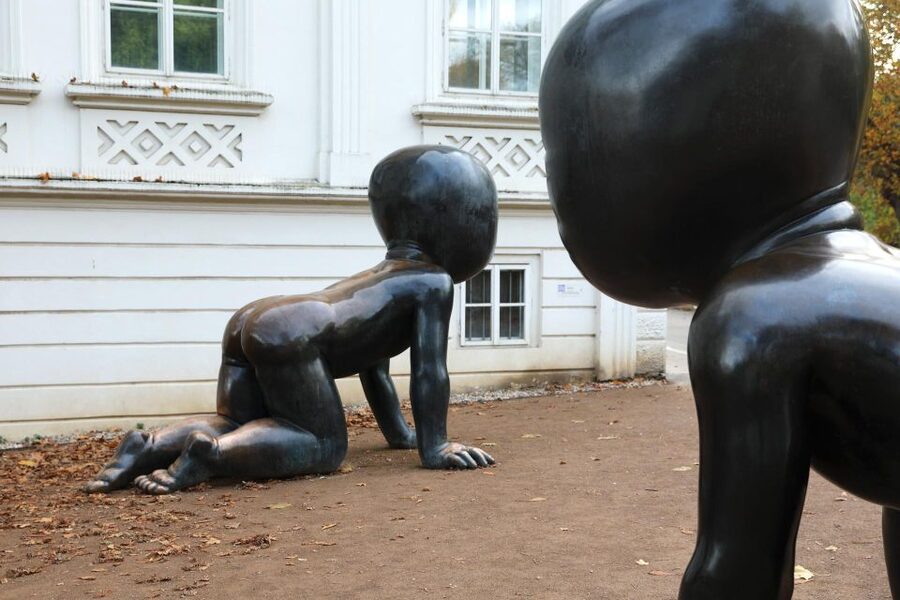
The main structure is simple: walk from one Černý work to the next, with explanations at each stop. The route covers Malá Strana, Staré Město, and Nové Město, so the tour is also a compact introduction to central Prague.
You are promised ten urban works. Some are well known, while others are more discreet. That balance is one of the best reasons to choose a guided walk rather than searching online for the artist’s most famous pieces and visiting only those.
At each stop, the guide explains the work and its setting. You should expect context about Černý’s ideas, the history of Prague, and Czech culture. The exact order and walking route may vary, and the information does not provide a stop-by-stop list of titles. That means you should book this for the guided interpretation and broad selection, not for a guaranteed checklist of named sculptures.
The walk through three districts adds value. You are not simply being taken from gallery to gallery. The city itself becomes part of the subject. A historic street, a public square, or an everyday corner can change meaning when you learn why a provocative sculpture was placed there.
Malá Strana: old Prague with a modern interruption
Malá Strana is a natural setting for a tour about contrasts. Its historic character can make contemporary work look even more striking. Černý’s sculptures do not belong to a sealed museum room, where you can quietly study them and move on. They share space with residents, pedestrians, buildings, traffic, and the regular business of the city.
That public setting is important. Černý’s work often deals with institutions and public culture, so seeing it in the city gives the ideas more force. You can consider how a piece affects the place around it, rather than treating it as an isolated object.
The Malá Strana portion may also help you get your bearings. The guide provides information about the district as well as the artwork, so you receive more than an art-history lesson. If this is your first day in Prague, pay attention to restaurant and sightseeing suggestions offered during the walk. The tour includes good addresses in the area and advice for your stay.
One caution: outdoor art is not always easy to view. A sculpture may be partly blocked by people, vehicles, temporary barriers, or maintenance. The tour takes place rain or shine, so carry suitable clothing and do not assume that every stop will offer a long, quiet viewing period.
A different way to spend an afternoon here:
- Prague: Castle Tour with Local Guide and Entry Ticket
★ 4.6 · 10,422 reviews - Prague Castle 2.5-Hour Tour Including Admission Ticket
★ 4.7 · 8,927 reviews - Prague: Oldtown, Medieval Underground & Dungeon History Tour
★ 4.2 · 8,244 reviews - Prague: Vltava River Night Cruise with Buffet
★ 4.3 · 7,338 reviews
Staré Město: public art among Prague’s famous sights
Staré Město, or the Old Town, is where many visitors focus on Prague’s best-known historic attractions. A Černý walk gives you a reason to look beyond the usual towers, clocks, and grand façades.
The value here is not just spotting a sculpture. It is learning how contemporary Czech culture sits alongside the city’s older identity. Prague can sometimes feel like a preserved stage set, especially in its busiest central streets. Modern public art reminds you that the city is still arguing with itself, making jokes, testing limits, and producing new work.
The guide’s role is especially useful in this district. Without context, a public sculpture may register as strange and then disappear from your attention. With an explanation, you can connect the visual joke or shock to Černý’s broader interest in politics, institutions, and European culture.
The tour is conducted in French. If French is your preferred language, this is a major reason to choose it. The available feedback repeatedly praises the guide’s passion, clear explanations, and ability to discuss both Černý and Prague. One French participant described learning a great deal about the city and the artist, while another especially appreciated the guide’s suggestions for the rest of the visit.
No guide’s name is supplied, so I would not book this expecting a particular named host. I would book it because the experience is designed around a French-speaking local guide who can explain the works as you encounter them.
Nové Město: Černý’s city in motion
Nové Město, or the New Town, adds another layer to the route. Despite its name, it is a historic Prague district, and it brings the walk toward parts of central Prague with a different feel from Malá Strana and the Old Town.
This section reinforces the tour’s main idea: contemporary art is not separate from Prague’s history. It is part of how the city presents itself today. You see how modern work can occupy streets with long-established buildings and traditions.
The itinerary does not provide exact walking distances or a detailed list of the ten pieces. You should therefore expect a general urban walk rather than a museum-style visit with fixed viewing times. A 90-minute tour covering three districts will keep you moving.
That format suits you if you enjoy seeing a city on foot and learning as you go. It may not suit you if you want extended time at each work, extensive photography stops, or a detailed academic discussion of every sculpture.
What the guide adds beyond a sculpture checklist
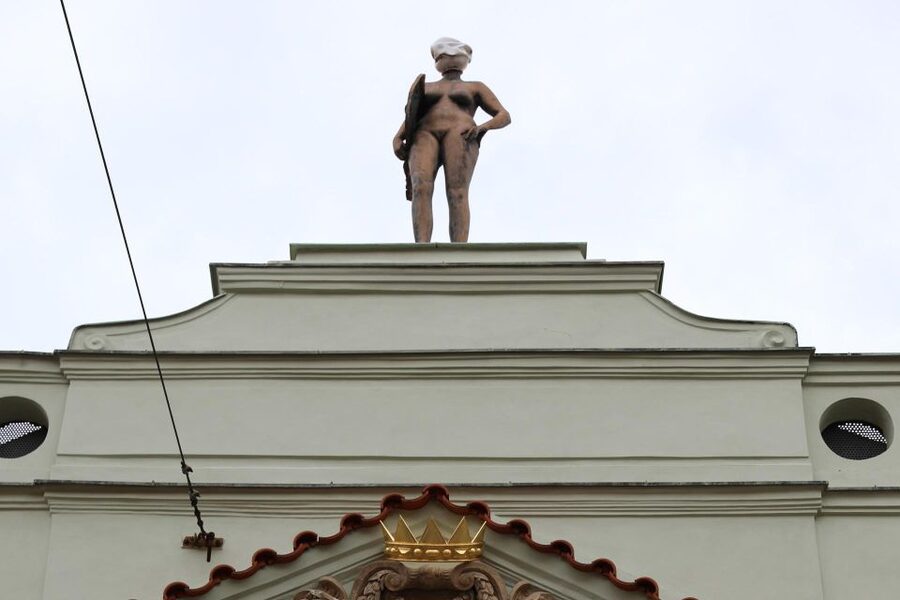
The strongest part of this experience is the interpretation. Černý’s work can be playful, blunt, and politically charged. A guide helps you understand the references and explains why the pieces matter in Czech culture.
The tour also gives you a compact history lesson. The included commentary covers Prague’s historic districts, the city’s past, and aspects of Czech culture. That makes the experience useful even if you are only partly interested in contemporary art.
I would listen for connections between the artist’s early political protest and his later public works. The supplied information presents Černý as an artist whose criticism reaches beyond Czech borders, with exhibitions around the world. The tour in Prague lets you see that international figure in his home city, where his work has a direct relationship with local public life.
The guide also offers advice for your stay. This is a small inclusion, but it can be useful. A short walk is often a good time to ask where to eat or what to see next, particularly because the route moves through three central districts.
Rain, maintenance, and the practical side of public art
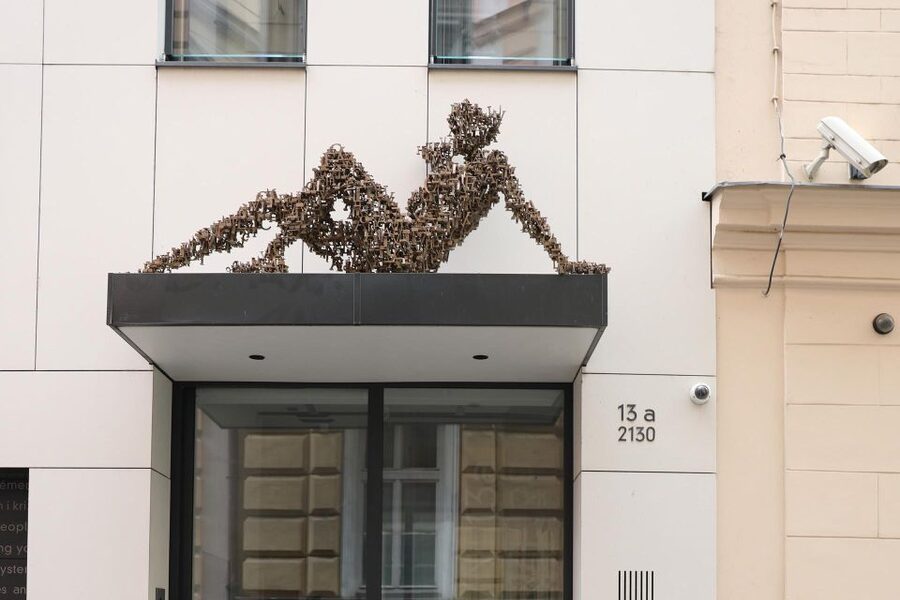
This is an outdoor tour, and it runs in all weather. Bring a rain jacket in unsettled conditions, and wear shoes you can use comfortably for 90 minutes on city streets.
The route may include ordinary sidewalks and public spaces rather than a controlled museum floor. The tour information does not promise a specific accessibility standard, so contact the provider if you have mobility concerns or need details about the route.
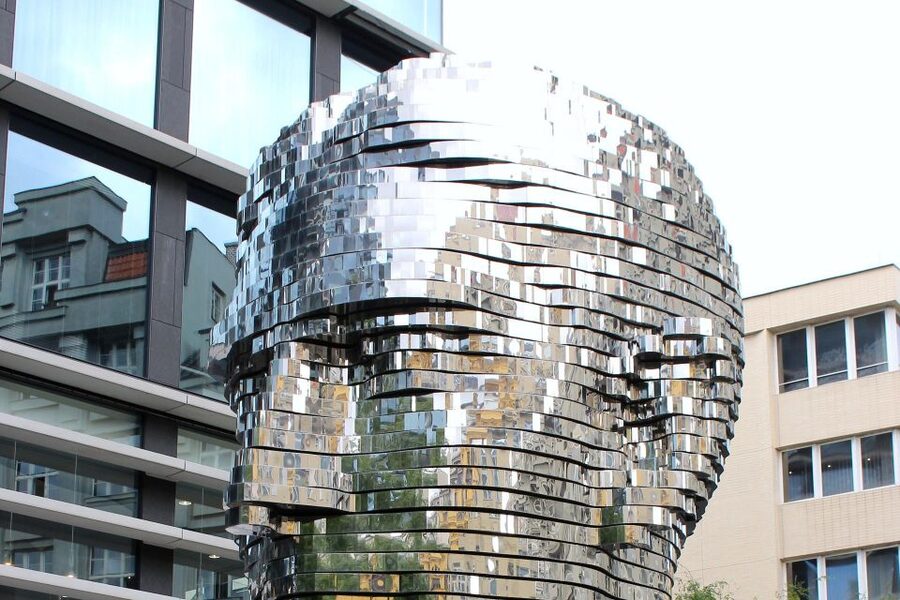
A work may occasionally be inaccessible because of maintenance or other restrictions. The information specifically noted that the statue of Franz Kafka was under renovation through the end of 2023. Since that date has passed, check the current situation if seeing that piece matters to you. Do not assume that every listed work will always be visible.
This is not a serious flaw. Public art changes, and that is part of the nature of a city walk. It is simply worth knowing that the experience is not a guarantee of ten perfectly accessible viewing stops on every date.
Is $19 a fair price for 90 minutes?
At $19 per person, this tour offers good value if you want an introduction to Černý with live explanation in French. The price covers a licensed local guide, about 90 minutes of walking, commentary on ten works, Prague history, Czech culture, local addresses, and advice for your visit.
The value depends on your interests. If you already know Černý’s work well and can locate public sculptures on your own, you may prefer an independent walk. You would save the fee, but you would also lose the explanations and the chance to connect the works to Prague’s history and politics.
For most visitors, the guide is the reason the price makes sense. The art is in public spaces, so seeing it costs nothing. Understanding it is what you are paying for.
Food, drinks, transport tickets, and hotel pickup are not included. Those exclusions are normal for a short walking tour, but budget a little extra for getting to Kinsky Square and returning to your next stop.
Free cancellation is available up to 24 hours before the tour for a full refund, and you can reserve now and pay later. Those terms are useful if your Prague plans are still shifting.
Who should book this Prague art walk?
I would choose this tour if you meet one or more of these descriptions:
- You have already seen Prague’s main historic sights and want another side of the city.
- You enjoy modern or urban art but prefer seeing it in public spaces.
- You want a French-language tour.
- You like learning about politics, culture, and the ideas behind art.
- You want a short activity that fits around a busy sightseeing day.
- You appreciate local restaurant and sightseeing advice from a guide.
I would hesitate if you want a slow, highly detailed art seminar or a private tour with a guaranteed list of specific works. The 90-minute format is brisk, and the route may change if a work is blocked or under maintenance.
The tour is also a good choice for repeat visitors. You can walk through familiar districts with a new purpose, looking at public spaces instead of simply passing between famous landmarks.
Should you book the David Černý tour?
Book it if you want Prague to feel like a living city rather than a collection of old monuments. The combination of ten urban works, three central districts, and French-language commentary gives you a useful 90-minute introduction to Czech contemporary culture.
The strongest reasons to go are the guide’s passionate explanations, the chance to see less familiar pieces, and the way the route links modern criticism with Prague’s historic streets. The main limits are the outdoor format, the brisk timing, and the lack of a published stop-by-stop list.
At $19, I consider it a sensible choice for French-speaking visitors who want art, local context, and a walk through central Prague. Bring good shoes, dress for the forecast, and treat the route as an introduction to Černý rather than the final word on his work.
FAQ
How long does the David Černý art tour last?
The guided walking tour lasts approximately 90 minutes.
How much does the tour cost?
The listed price is $19 per person.
In which language is the tour conducted?
The live tour guide speaks French.
Where does the tour meet?
The meeting point is in front of the fountain on Kinsky Square.
How can I reach Kinsky Square by public transport?
You can get off at the Švandovo divadlo tram stop. Tram lines 9, 12, 15, and 20 serve the stop.
Which Prague districts does the route visit?
The tour explores Malá Strana, Staré Město, and Nové Město.
How many David Černý works will I see?
The tour includes ten urban works by David Černý. Some are well known, while others are less familiar.
What is included in the price?
The price includes a local guide licensed by the Czech Ministry of Tourism, the guided walk, explanations about the sites, Prague’s history, Czech culture, local addresses, and advice for your stay.
Can I cancel the booking?
You can cancel up to 24 hours in advance for a full refund. The reserve-now, pay-later option lets you book without paying immediately.
Recently added around Prague
- St Vitus Cathedral and Prague Castle Private Walking Tour★ 4.0 · 3 reviews
- Prague: Old Town and Jewish Quarter Small-Group Tour★ 5.0 · 3 reviews
- Royal Splendor Unveiled Private Prague Castle Interior Tour★ 3.5 · 3 reviews
- Prague Castle Interiors & Changing of the Guard-Small group★ 5.0 · 3 reviews
- Prague: Bohemian & Saxon Switzerland National Park Day Trip★ 5.0 · 3 reviews
- Running Tour of Prague. Your private 6-9K intro★ 5.0 · 3 reviews
- PRAGUE AIRSOFT SHOOTING GAMES★ 4.7 · 3 reviews
- Private walking tour and Boat cruise Best of Prague★ 5.0 · 3 reviews
Prague Tours, compared.
Skip-the-line Castle Ticket and Optional AudioGuide
Read our review →
Castle Tour with Local Guide and Entry Ticket
Read our review →
Prague Castle 2.5-Hour Tour Including Admission Ticket
Read our review →
Oldtown, Medieval Underground & Dungeon History Tour
Read our review →