
Reviewed · WALKING TOURS
Stories of Jewish Prague Walking Tour
Prague’s Jewish Quarter is more than a cluster of handsome old buildings. It is a place where medieval religious life, Renaissance prosperity, Nazi destruction, Communist rule, and today’s Jewish community all meet on the same few streets. This tour gives that long story a human voice, beginning at the Old-New Synagogue and ending with Jewish Prague today.
I like the small maximum of eight people, which gives you room to ask questions and keeps the walk from feeling like a parade. I also like the way the route connects figures such as Mordechai Maisel and Rabbi Judah Loew ben Bezalel to the buildings around you. The main caution is that the tour can run longer than three hours, and the Jewish Museum and synagogue admission fees are extra.
Key points at a glance
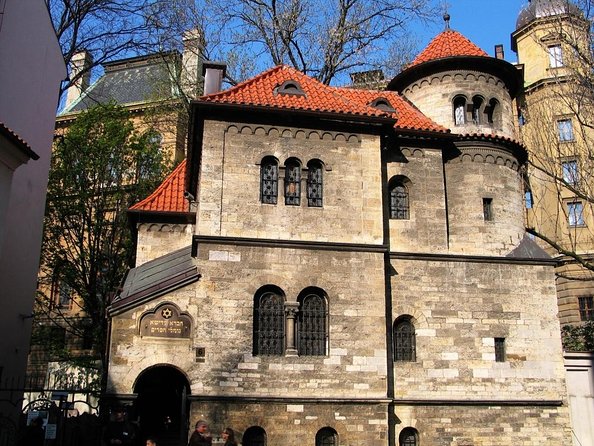
- Old-New Synagogue: Begin at Europe’s longest-functioning synagogue and hear how Prague’s Jewish community took root in the late 13th century.
- A full historical arc: Follow Jewish life from the medieval period through Maria Theresa’s expulsion, the Edict of Toleration, Nazi rule, Communism, and the present day.
- Personal local guides: Guides including Martina, Petr, Katerina Prusova, and Bonita have led the walk, bringing strong local and historical perspectives.
- Small-group format: The group is limited to eight people, and low bookings may turn the outing into a private tour.
- Morning or afternoon choice: You can fit the walk around other Prague plans, though you should allow extra time if the discussion runs long.
- Admission costs: Entry to the Jewish Museum and Old-New Synagogue is not included. The listed fee is 600 CZK for adults and 400 CZK for students.
Why Prague’s Jewish Quarter deserves three hours
Josefov, Prague’s former Jewish Quarter, is compact, but its story is not. You can cross the area quickly on your own. The challenge is understanding what changed from one century to the next, and why a synagogue, town hall, cemetery, or street carries such weight.
This walk helps you read the quarter in layers. You begin with the community’s medieval roots, move into a period of cultural and economic growth, then confront expulsion, political pressure, Nazi persecution, and Communist restrictions. The final discussion brings the story into the present, so the tour does not treat Jewish Prague as something that ended in 1945.
The format suits you if you want context rather than a quick collection of photographs. A local historian leads the route, and the small group allows the guide to stop, explain, and respond to questions. The pace is generally relaxed, but you will be on your feet for most of the outing.
More Walking Tours in Prague:
- Prague: 3-Hour Walking Tour of Old Town & Prague Castle
★ 4.7 · 5,696 reviews - Prague: Ghost Walking Tour Where Legends Come To Life
★ 4.4 · 5,253 reviews - Prague: Jewish Quarter Walking Tour with Admission Tickets
★ 4.7 · 3,729 reviews
Starting at the Old-New Synagogue
The meeting point is at Maiselova 38/15 in Josefov, near public transportation. From there, the route heads to the Old-New Synagogue, the tour’s essential first stop.
The synagogue’s name alone hints at Prague’s unusual sense of time. It was once new, but it is now the longest-functioning synagogue in Europe. Here, your guide sets out the earliest chapter of the community and explains how local Jews hired Christian builders to construct the synagogue in the late 13th century.
That detail opens a useful conversation about medieval Prague. Jewish life was shaped by religious customs, social rules, trade, political limits, and the uneasy relationship between Jewish residents and the Christian authorities around them. The building is not just an architectural stop. It gives you a physical place to think about how a Jewish community organized worship and daily life over many centuries.
Admission is not included in the tour price. The stated entrance fee is 600 CZK for adults and 400 CZK for students, so factor that into your budget before booking. Some past outings included the Old-New Synagogue along with the Jewish Museum sites, but you should confirm exactly which entries your departure covers on the day.
Maisel’s town hall and Prague’s golden age
The walk continues to the Renaissance Town Hall, built by Mordechai Maisel during what is often described as the golden age of Prague’s Jewish community.
Maisel was not simply a wealthy benefactor whose name survived on a building. He served as mayor of the Jewish Quarter and used his own money to pave local streets and support charity. That makes the town hall a good place to discuss how communal life worked. Wealth could fund religious buildings, improve public space, and support people in need, but it also tied prominent figures closely to local politics.
Your guide also introduces the intellectual life of the period, including Rabbi Judah Loew ben Bezalel, the writer and theologian often linked with Prague’s famous golem tradition. The useful part of this stop is that it moves beyond a simple persecution narrative. Jewish Prague had scholars, civic leaders, patrons, workers, families, and institutions. You see a community facing restrictions, but also shaping its own life.
Guides such as Martina, Petr, Katerina Prusova, and Bonita have been praised for making these names and events understandable rather than dry. The strongest guides on this route connect the individual story to the larger political setting, then bring you back to the street or building in front of you.
Cemetery, synagogues, and museum spaces
The Old Jewish Cemetery is one of the most sobering parts of the route. It compresses centuries of burial into a limited urban space, and the crowded stones make the pressure on the old community visible in a way that a lecture cannot.
The cemetery is not a place to rush through. Your guide can explain its role in the quarter and place it within the story of Prague’s Jewish residents. You may find the tone here quieter than at the earlier stops. That is appropriate. The cemetery and memorial spaces ask you to slow down and consider the people behind the dates and political events.
The wider Jewish Museum complex adds objects, documents, and interiors to the walk. Depending on the exact plan for your departure, you may visit several synagogues and museum sites. The Spanish Synagogue is especially striking inside, with ornate decoration that gives the tour a visual change after the more restrained Old-New Synagogue and the solemn cemetery.
There is a practical tradeoff. A three-hour route cannot give every museum display equal time, especially if your guide is explaining the history at each stop. If you want to study exhibits closely, plan to return on your own. The tour is best for building a framework and seeing the major places with an informed explanation.
A few more Prague half-days to weigh up
- Prague: 50-Minute Sightseeing Evening Cruise
★ 4.2 · 33,780 reviews - Prague: Medieval Dinner with Unlimited Drinks
★ 4.4 · 19,847 reviews - Prague: Skip-the-line Castle Ticket and Optional AudioGuide
★ 4.3 · 11,121 reviews - Prague: Castle Tour with Local Guide and Entry Ticket
★ 4.6 · 10,422 reviews
Maria Theresa, the Edict of Toleration, and political change
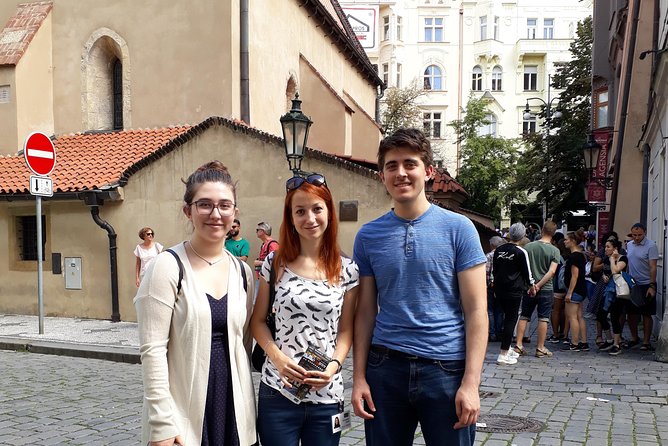
The story then turns to the 18th century, when Empress Maria Theresa expelled Prague’s entire Jewish community. That decision shows how quickly Jewish life could be disrupted by a ruler’s policy, even after generations of settlement.
The reversal under her son and the later Edict of Toleration provide a sharp contrast. The community was allowed to return, but changing a legal order did not instantly remove social suspicion or political limits. This part of the walk helps you see that toleration was not the same as full equality.
I value this section because it keeps Prague’s Jewish story tied to the wider history of the Habsburg lands. You are not only hearing a sequence of local events. You are seeing how imperial decisions reached into homes, businesses, schools, worship, and family life.
A strong guide will also help you avoid a common mistake: treating the quarter as a sealed-off world separate from Prague. Its residents were affected by the city around them, and they also helped shape its economy, culture, and public life.
The Nazi destruction of Prague’s Jewish community
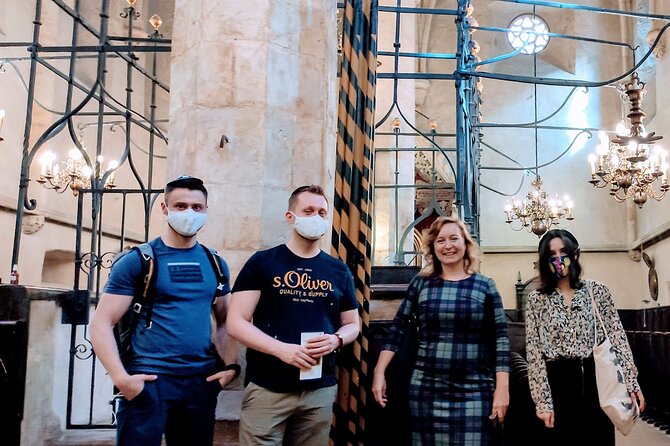
The tour’s most painful section covers the years before and during Nazi rule. Your guide explains the local politics and ethnic tensions that preceded Hitler’s invasion of Czechoslovakia, then follows the destruction of Prague’s Jewish community under Nazi Germany.
This section is handled through places, dates, and human consequences. The memorial areas and cemetery take on new meaning once you understand what happened to the people who lived in the quarter. The tour does not stop with vague references to wartime tragedy. It places the persecution in the political setting that made it possible.
You should expect this portion to be serious. It is not sightseeing in the usual sense, and the emotional weight can be considerable. That is also why having a guide matters. The right guide can explain the history with care, without turning suffering into spectacle.
The experience has been led by guides who bring different backgrounds and personalities to the subject. Martina is described as articulate, warm, and lively, while Bonita has been praised for connecting political events with the human side of Jewish life in Prague. Katerina Prusova and Petr have also been singled out for making the quarter’s history feel immediate and personal. Guide quality matters greatly here, so a small group is a real advantage.
Jewish Prague under Communism
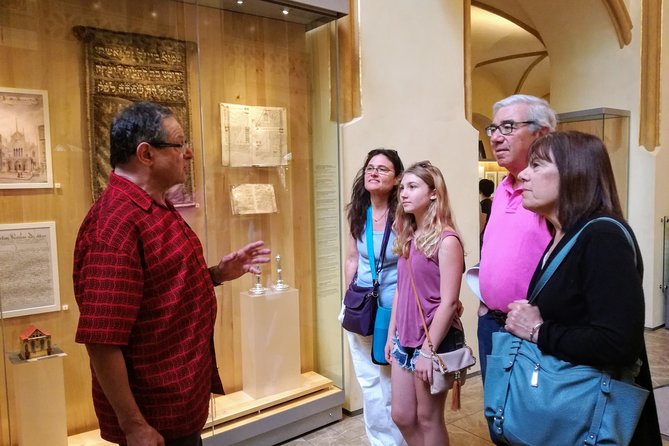
The tour does not treat 1945 as the end of the story. It continues into the Communist era, when religion, public identity, and historical memory faced another set of pressures.
This chapter is easy to miss if you visit the quarter alone. Many people know about medieval Prague and the Holocaust, but fewer consider what happened to Jewish life under Communist rule. The tour explains that the community’s experience continued through another political system, with its own limits and tensions.
That broader timeline is one of the best reasons to book this walk. You leave with a sense of continuity, loss, and change rather than a collection of disconnected tragedies. The final discussion of Prague’s Jewish community today brings the route back to the present and gives you a chance to ask questions that do not fit neatly into an older historical period.
How the guides shape the experience
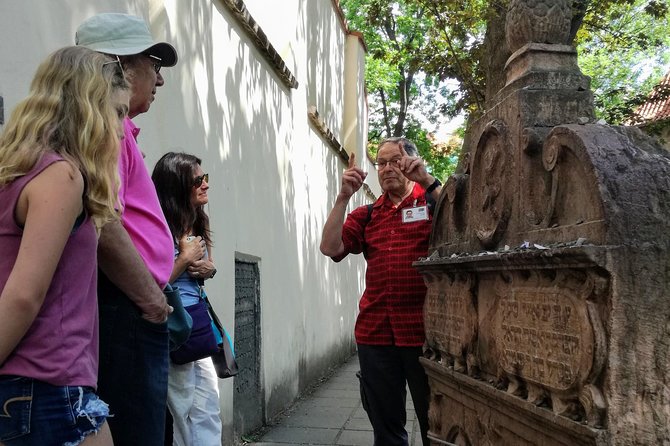
The guide is the heart of this tour. You are not following an audio script or simply moving from one sign to another. You are listening to someone interpret the quarter, explain difficult events, and decide how much detail to give each group.
Past guides have included Martina, Petr, Katerina Prusova, and Bonita. Their styles differ, but the strongest qualities are clear: careful preparation, a personal connection to Prague, and the ability to link architecture with politics and human experience.
The small-group limit of eight helps. If only two or four people book, the walk may operate almost like a private tour. That can make the experience more relaxed and lets you ask about family history, religious customs, architecture, or modern Jewish life.
There is one fair warning. One guide was described as speaking at a very intellectual level and assuming too much background knowledge. That same outing also ran four hours instead of three, and the guide’s limited familiarity with Jewish religious practices reduced the value of some explanations. This is not a reason to reject the tour, but it is a reminder to ask questions when something is unclear and to allow extra time.
Price, admissions, and real value
The listed price is $126.03 per person. That is a substantial fee for a three-hour walking tour, especially because food, drinks, hotel transfers, and entry fees are not included.
The price makes more sense if you value a small group and a historian-led route rather than a standard city walk. A private guide for two people would usually cost more, and low booking numbers may give you that level of personal attention here. The guide’s interpretation also helps you understand several sites in one visit instead of paying for separate explanations.
Still, you should budget for admission. The stated rates are 600 CZK for adults and 400 CZK for students for the Jewish Museum and Old-New Synagogue. The exact access plan can vary, so check what you will enter before you arrive. If you are determined to spend hours inside every exhibition, the added cost and the tour’s fixed pace may not be ideal.
For me, the value is strongest for a first visit to Prague’s Jewish Quarter. You get a clear timeline, access to major sites, and a chance to ask questions. If you already know the area well, you may prefer buying museum admission and exploring at your own speed.
Timing, pace, and what to bring
You can choose a morning or afternoon departure. The choice is useful because the Jewish Quarter is easy to combine with other central Prague plans, but remember that the outing can last longer than the advertised three hours.
Wear comfortable shoes. You will walk and stand for the entire tour, though the pace is described as relatively slow and relaxed. Most people can participate, and the route is near public transportation.
A small umbrella is sensible in wet weather. One guide even helped carry a bag and umbrella during an outing, but you should not count on that as a standard service. Bring water if you need it, since food and drinks are not included.
The tour requires at least two people per booking and accepts a maximum of eight. It is often booked well ahead, with an average lead time of about 57 days, so do not leave it until the last minute if your Prague dates are fixed.
Who should book this Jewish Prague walk?
I would choose this tour if you want the Jewish Quarter explained in a connected way, from medieval foundations through the 20th century and into modern life. It is especially suitable for anyone interested in European history, religious communities, architecture, or the way political decisions affect ordinary families.
It also suits you if you prefer a calm walk with plenty of explanation. The pace is not built around rushing from one photo stop to the next, and the small group makes it easier to speak with the guide.
You may want another option if you dislike long historical discussions, want to spend your full visit inside museum displays, or need a precisely timed three-hour activity. The extra admission fees also matter for a tight budget.
Free cancellation is available if you cancel at least 24 hours before the start time. Changes or cancellations inside that window are not accepted for a refund.
Should you book Stories of Jewish Prague?
Book it if you want more than beautiful synagogues and old stones. The route gives you the people, politics, faith, persecution, and modern questions behind the buildings. The strongest part is the combination of the Old-New Synagogue, cemetery, museum sites, and a guide who can explain why each place matters.
The price is high, and admissions cost extra, but a group capped at eight can offer good value when the guide is as strong as Martina, Petr, Katerina Prusova, or Bonita. Allow more than three hours, arrive ready to walk and listen, and treat the tour as an introduction that may send you back to the museum on your own.
FAQ
How long is the Stories of Jewish Prague Walking Tour?
The tour lasts approximately three hours, but it can run longer if the guide gives extended explanations or the group has many questions.
Where does the tour begin?
It begins at Maiselova 38/15, 110 00 Praha 1-Josefov, Prague, near public transportation.
Is the tour offered in English?
Yes. The tour is offered in English.
Are admission fees included?
No. Admission to the Jewish Museum and Old-New Synagogue is not included. The listed cost is 600 CZK for adults and 400 CZK for students.
How many people can join the tour?
The maximum group size is eight people. At least two people are required per booking.
Can I cancel for a full refund?
Yes, if you cancel at least 24 hours before the experience begins. Cancellations or changes made less than 24 hours before the start time are not accepted for a refund.
Recently added around Prague
- St Vitus Cathedral and Prague Castle Private Walking Tour★ 4.0 · 3 reviews
- Prague: Old Town and Jewish Quarter Small-Group Tour★ 5.0 · 3 reviews
- Royal Splendor Unveiled Private Prague Castle Interior Tour★ 3.5 · 3 reviews
- Prague Castle Interiors & Changing of the Guard-Small group★ 5.0 · 3 reviews
- Prague: Bohemian & Saxon Switzerland National Park Day Trip★ 5.0 · 3 reviews
- Running Tour of Prague. Your private 6-9K intro★ 5.0 · 3 reviews
- PRAGUE AIRSOFT SHOOTING GAMES★ 4.7 · 3 reviews
- Private walking tour and Boat cruise Best of Prague★ 5.0 · 3 reviews
Walking Tours, compared.
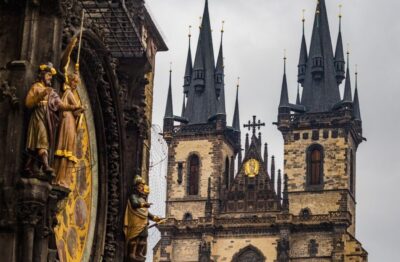
3-Hour Walking Tour of Old Town & Prague Castle
Read our review →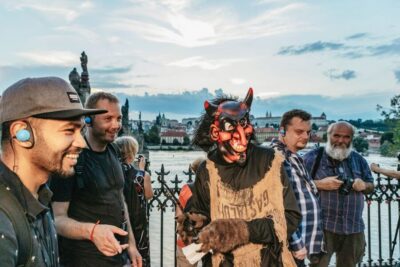
Ghost Walking Tour Where Legends Come To Life
Read our review →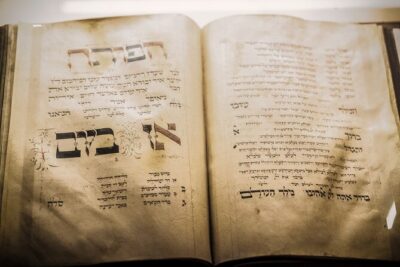
Jewish Quarter Walking Tour with Admission Tickets
Read our review →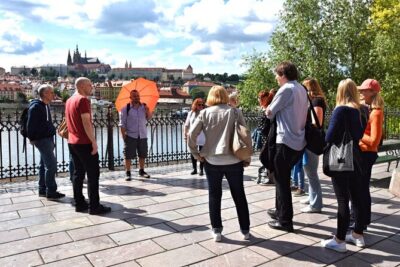
Prague Guided Walking Tour and Cruise with Authentic Czech Lunch
Read our review →
Old Town and Jewish Quarter Guided Walking Tour
Read our review →
Prague Ghost and Legend of Old Town Walking Tour
Read our review →
Prague 3-hour Afternoon Walking Tour including Prague Castle
Read our review →
Ghosts and Legends Nighttime Guided Walking Tour
Read our review →Browse the lists this tour appears in