Reviewed · PRAGUE TOURS
The Plague Doctor of Prague
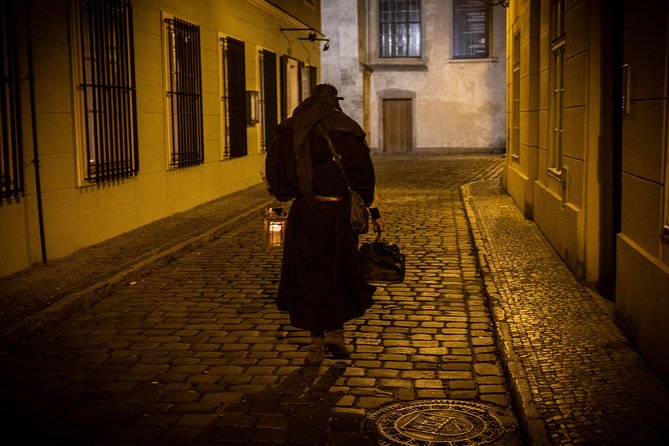
Prague’s plague years become far more vivid when a costumed doctor leads you through the actual streets where people lived, worked, worshiped, and tried to escape disease. This 90-minute walk uses dark humor and theatrical storytelling to explain the plague, old medical beliefs, quarantine, and the human cost behind the city’s grand squares.
I like the small advertised group size of 10, which should make it easier to hear the guide in narrow streets. I also like the mix of public health, Jewish history, literature, and everyday life. The walk is not just about a costume and a few spooky tales.
The main thing to consider is tone. This is serious history presented with jokes, character acting, and creepy details. That combination works well for families and curious adults, but anyone seeking a strictly academic lecture may find the performance style a little light.
Key points to know before booking
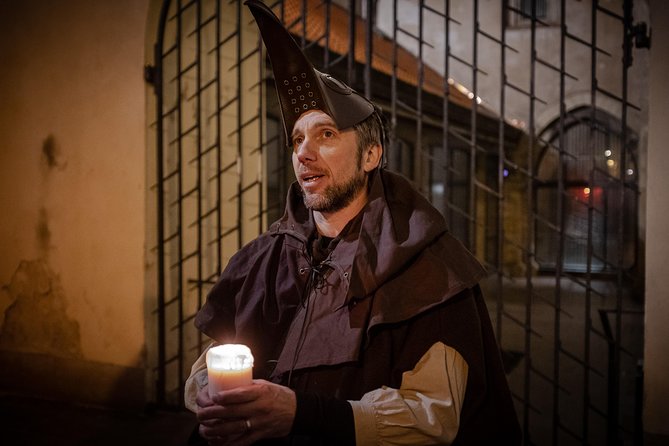
- A costumed guide leads you through central Prague: The route begins near the Charles Bridge area and finishes at the Convent of St. Agnes.
- The tour focuses on plague life, not only architecture: You learn about quarantine, healing methods, merchants, religious beliefs, and social divisions.
- Jewish history has a proper place in the story: The stop by the Franz Kafka Statue leads into Prague’s Jewish Quarter and the impact of plague fears on Jewish communities.
- Several guides have received strong praise: Thomas, David, Dave, Oscar, Oskar, and Maddie have been named as engaging, funny, and well prepared.
- It suits a wide age range: Families with children, teenagers, adults, and people interested in medicine or public health can all find an entry point.
- The tour finishes with a group photo: The plague doctor joins you for a picture at the end.
Starting at the House of the Golden Well
Meet at Aurus Hotel Prague on Karlova 3 in Prague’s Old Town. The tour opens with an introduction to Alexander Schamsky, the plague doctor character, and a return to Prague in 1715, during the plague years of 1713 to 1715.
The building itself, known as the House of the Golden Well, gives the opening a useful sense of place. Instead of beginning with a broad lecture on European disease, you start with a particular house and a particular city. That makes the subject easier to picture.
You also meet St. Sebastian and St. Rochus, the saints linked with protection from plague. The guide explains what people once believed caused the disease. These ideas could include religious punishment, bad air, moral failure, or other explanations that seem strange now but made sense within the limits of medical knowledge at the time.
This first 10-minute stop sets the tone. You are not simply walking from one famous building to another. You are being asked to see Prague through the fears and beliefs of people who had no modern germ theory.
The route starts in one of the city’s busiest sightseeing areas, so pay attention to the exact meeting point. Karlova is a well-known street, but it can be crowded, especially near the Charles Bridge. Arriving a little early should make the start less rushed.
A few more Prague half-days to weigh up
- Prague: 50-Minute Sightseeing Evening Cruise
★ 4.2 · 33,780 reviews - Prague: Medieval Dinner with Unlimited Drinks
★ 4.4 · 19,847 reviews - Prague: Skip-the-line Castle Ticket and Optional AudioGuide
★ 4.3 · 11,121 reviews
Klementinum, the New Library, and the New Town Hall
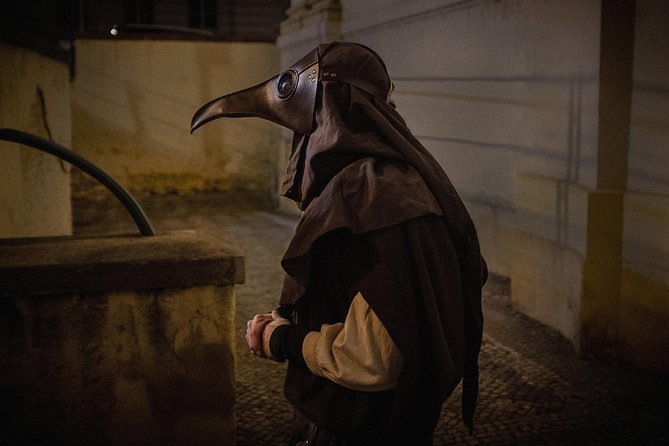
The second stop takes about 10 minutes and brings in the old monastery Klementinum, the new library, and the New Town Hall. These places help the guide explain how different parts of society faced the plague.
The wealthy and the poor did not experience an outbreak in the same way. People with money could sometimes leave the city or isolate themselves in better conditions. Common people often had fewer choices and greater exposure to crowded housing, markets, and workplaces.
The guide also explains different forms of the Black Death and the basic realities of quarantine. This is one of the most useful parts of the experience because quarantine is not treated as a modern invention. You see it as an old public response shaped by fear, limited information, and strict rules.
The Klementinum adds another layer. Monasteries, libraries, religious buildings, and civic institutions were not just pretty backdrops. They were part of the systems through which people prayed, recorded information, cared for the sick, or tried to maintain order.
Expect about 10 minutes here, with the guide speaking outdoors. The itinerary includes several stops rather than one long talk, so the information comes in manageable portions. That structure helps families and younger children stay involved.
Old Town Square during plague years
At Staromestske namesti, the large Old Town Square, the tour shifts to merchants and public life. You hear about the Hussite Church, Tyn Church, and the Old Town Hall while the guide describes what happened to trade during plague times.
This is a good setting for understanding how an epidemic affects more than hospitals. Merchants faced closed markets, fewer customers, travel restrictions, and the danger of carrying disease from one town to another. A market square could be a place of opportunity, but it could also become a source of fear.
The guide also connects the story to the Thirty Years’ War. That wider conflict matters because disease, hunger, military movement, and social disruption often overlap. Prague’s plague story was not isolated from the political and military troubles around it.
The stop lasts about 10 minutes. You will see famous architecture, but the focus remains on people and daily routines. If you want a standard explanation of every building around Old Town Square, this is not the right tour. If you want to understand how a crisis changed the use of a public square, it is a useful stop.
At night, the setting can feel especially atmospheric. The dark streets and old facades support the theatrical mood, though you should still expect an outdoor walk rather than a staged indoor performance.
Franz Kafka, Jewish Prague, and La Peste
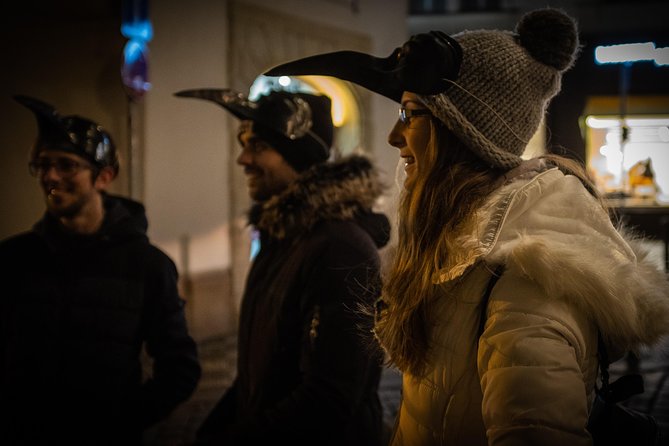
The brief stop at the Franz Kafka Statue lasts about five minutes, but it opens an important chapter. The guide gives a short introduction to Kafka, then discusses Jewish life during plague periods in Prague and across Europe before entering the Jewish Quarter.
This part deserves attention. Plague fears often led to scapegoating, suspicion, and cruel accusations against Jewish communities. The tour does not treat the disease only as a medical event. It also shows how panic could damage social relations and place already vulnerable groups in greater danger.
The Kafka connection adds a literary angle, while the mention of Albert Camus’s novel La Peste links older epidemics with modern reflections on fear, responsibility, and society. It is a compact stop, so do not expect a full tour of the Jewish Quarter or a detailed biography of Kafka.
Still, the subject broadens the experience. You are encouraged to think about disease not only in terms of symptoms and death, but also in terms of rumor, blame, exclusion, and the stories societies tell during emergencies.
Because this section leads toward the Jewish Quarter, it is one reason to choose this tour over a simple ghost walk. The subject has moral weight, even when the guide presents it with humor.
A different way to spend an afternoon here:
- Prague: Castle Tour with Local Guide and Entry Ticket
★ 4.6 · 10,422 reviews - Prague Castle 2.5-Hour Tour Including Admission Ticket
★ 4.7 · 8,927 reviews - Prague: Oldtown, Medieval Underground & Dungeon History Tour
★ 4.2 · 8,244 reviews - Prague: Vltava River Night Cruise with Buffet
★ 4.3 · 7,338 reviews
The old hospital at Na Frantisku
The longest stop comes at the Church of Saint Simon and Jude, where the guide introduces the old hospital Na Frantisku. This 15-minute section deals with treatment, medical ideas, and the people who tried to help.
You learn about the plague itself and the healing methods used before modern medicine. Some practices may sound alarming to modern ears, but they show how doctors worked with the tools and beliefs available to them. The tour also gives medical background on a disease that killed approximately 200 million people worldwide.
The setting matters. A former hospital connects the abstract idea of plague with care for actual sick people. It also lets the guide give attention to lesser-known medical figures who worked there. That human focus is one of the strongest parts of the route.
People with an interest in public health, medicine, epidemics, or nursing should get particular value from this stop. You will not receive a medical course, but you will gain a clear sense of how uncertain diagnosis and treatment were, and how much courage care required.
The guide’s ability matters here. Thomas, David, Dave, Oscar, Oskar, and Maddie have all been praised for clear delivery, humor, and preparation. The strongest feedback points to guides who can answer questions while keeping the group moving and the performance in character.
One small practical point: the walk is described as manageable and not too taxing, but you are still outdoors for about an hour and a half. Comfortable shoes and clothing suited to the weather make sense. The experience requires good weather, and rain can affect the atmosphere as well as the comfort of the walk.
Ending at St. Agnes of Bohemia
The final stop is the Convent of St. Agnes, part of the National Gallery Prague. This quieter location gives the tour room to slow down and close its story.
The guide introduces Agnes of Bohemia, her life, and her work before drawing together the main themes from plague years in Prague and Europe. This ending is a smart change of pace after the busy Old Town streets. Rather than finishing with one last shock story, the guide gives you a chance to place the disease in a wider historical frame.
The tour also touches on the current status of plague. That helps connect the old story with present-day public health without pretending that the past and present are identical.
The group photo with the plague doctor is taken here. It is a simple extra, but it gives families and groups a lasting reminder of the experience. If you prefer to keep your evening sightseeing more conventional, the photo and costume may feel theatrical. If you enjoy unusual city memories, it is a fitting finish.
Note that the tour ends at a different location from the starting point. You should plan the rest of your evening from the Convent of St. Agnes rather than assuming you will return to Karlova.
What the guiding style is really like
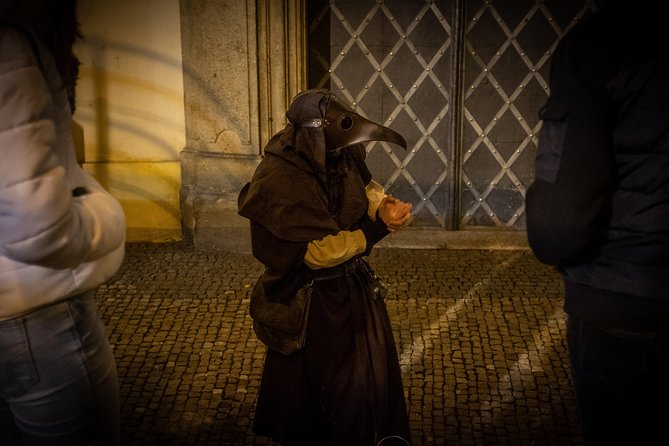
The guide is not simply a person reading dates from a script. The experience depends on performance. You can expect a plague doctor character, humor, spooky details, and direct engagement with the group.
Thomas has been praised for acting and for making the alleyways feel like another era. David and Dave have been singled out for clear explanations and a good sense of humor. Oscar and Oskar have been described as articulate and engaging, while Maddie has been noted for personal, well-prepared delivery.
The different names suggest that guide assignment can vary. You should book for the format and subject, not for a guaranteed individual guide unless the provider confirms that detail.
The humor is a key part of the appeal. Families have found the experience suitable for children and teenagers, including a 10-year-old who especially enjoyed it. At the same time, the jokes do not remove the darker facts. The best moments balance entertainment with the suffering caused by disease, poverty, war, and persecution.
One piece of practical criticism concerns the costume. A comment noted that it needed freshening and had an unpleasant smell. That sounds like an occasional presentation issue rather than the main character of the tour, but it is worth mentioning because close group interaction makes costume condition noticeable.
Who gets the best value from the $26.61 price?
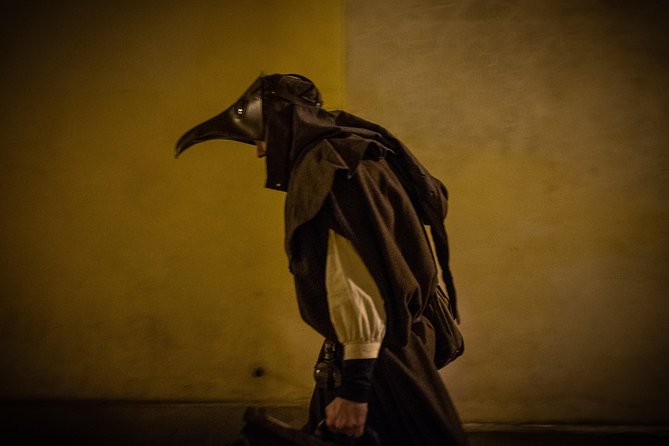
At $26.61 per person, the experience is reasonably priced for a 90-minute guided walk in central Prague. You are paying for a guide, a prepared performance, a small group format, and a route that connects several parts of the Old Town and Jewish Quarter.
The value is strongest if you want something beyond a standard architecture walk. The tour gives you history, medicine, religion, literature, and social impact in one compact evening. It can also serve as a good introduction to Prague’s old center, though it is not designed to explain every monument in architectural detail.
The price is less compelling if your main goal is a formal museum lesson or a full Jewish Quarter tour. The stop by the Kafka Statue is short, and the route gives only selected historical context at each site.
A 4.9 rating from 126 ratings, with 98 percent recommending the experience, suggests a strong level of satisfaction. The most consistent strengths are the guides’ energy, humor, clear speaking, and ability to make the subject work for both adults and children.
The advertised maximum is 10 people. A small group matters on a walking tour because you can hear the guide and stay close during the character scenes. One piece of feedback referred to a group of 12, so group size may not always feel identical, but the stated limit is 10.
How the walk fits into a Prague visit
This tour works well in the evening, especially if you have already spent the day visiting churches, museums, or the castle. The walking is described as moderate and manageable, and the route gives you a different reason to look at streets you may otherwise pass without thought.
It is also useful early in a Prague stay. You get a basic orientation to Old Town, the Old Town Square, the Jewish Quarter, and the area near the river. The tour will not replace a city overview, but it can help you see Prague as a lived-in city rather than a collection of postcard views.
The subject connects naturally with recent interest in pandemics and public health. You will hear about isolation, social fear, medical uncertainty, and the way institutions responded under pressure. The historical setting is specific, but the questions are familiar.
Families should consider the age and temperament of their children. The tour has worked for groups with children as young as 5 and teenagers, but plague stories include death, illness, and disturbing medical practices. The humor helps, yet the subject is not completely light.
Booking, weather, and cancellation details
Confirmation is provided at booking. The tour is offered in English, uses a mobile ticket, and is near public transportation. Service animals are allowed, and most people can participate.
Good weather is required. If poor weather causes cancellation, you are offered another date or a full refund. The same applies if the minimum number of participants is not reached.
You can cancel for a full refund up to 24 hours before the start time. Cancellations or changes made within 24 hours are not accepted for a refund, and the cut-off follows Prague’s local time.
The activity is often booked about 16 days ahead. That does not guarantee that every departure sells out, but it is a useful hint if your Prague dates are fixed.
Should you book The Plague Doctor of Prague?
I would book this if you like history delivered through storytelling rather than a formal lecture. It is especially well suited to families, teenagers, medical professionals, public health enthusiasts, and anyone who wants a different evening walk through Prague.
Choose it with realistic expectations. You will get selected sites, a strong focus on plague life, and a costumed performance. You will not get a full architectural tour, a complete Jewish Quarter visit, or a university-level account of European epidemics.
At $26.61, the mix is fair: a small group, 90 minutes of guiding, a memorable character, serious historical themes, and a group photograph. The humor may not suit every mood, and the outdoor format depends on the weather, but the tour offers more substance than its theatrical costume first suggests.
FAQ
Where does The Plague Doctor of Prague start?
The tour starts at Aurus Hotel Prague, Karlova 3, 110 00 Praha 1-Staré Město, Czechia.
Where does the tour finish?
The activity ends at a different location, at the Convent of St. Agnes, associated with National Gallery Prague.
How long does the tour last?
The tour lasts approximately 1 hour and 30 minutes.
What language is the tour offered in?
The tour is offered in English.
How many people can join the tour?
The stated maximum is 10 participants.
Is the tour suitable for children?
Most people can participate, and families with children and teenagers have found the experience suitable. The subject includes plague, death, illness, and old medical practices, so parents should consider their children’s comfort with darker history.
What happens if the weather is poor?
The experience requires good weather. If it is canceled because of poor weather, you will be offered a different date or a full refund.
Recently added around Prague
- St Vitus Cathedral and Prague Castle Private Walking Tour★ 4.0 · 3 reviews
- Prague: Old Town and Jewish Quarter Small-Group Tour★ 5.0 · 3 reviews
- Royal Splendor Unveiled Private Prague Castle Interior Tour★ 3.5 · 3 reviews
- Prague Castle Interiors & Changing of the Guard-Small group★ 5.0 · 3 reviews
- Prague: Bohemian & Saxon Switzerland National Park Day Trip★ 5.0 · 3 reviews
- Running Tour of Prague. Your private 6-9K intro★ 5.0 · 3 reviews
- PRAGUE AIRSOFT SHOOTING GAMES★ 4.7 · 3 reviews
- Private walking tour and Boat cruise Best of Prague★ 5.0 · 3 reviews
Prague Tours, compared.
Skip-the-line Castle Ticket and Optional AudioGuide
Read our review →
Castle Tour with Local Guide and Entry Ticket
Read our review →
Prague Castle 2.5-Hour Tour Including Admission Ticket
Read our review →
Oldtown, Medieval Underground & Dungeon History Tour
Read our review →