Reviewed · PRAGUE TOURS
WWII/WW2 Prague with a Local Historian Semi Private Tour
Prague’s WWII story becomes most powerful when you leave the postcard center and stand where events actually happened. This 2.5-hour tour traces Nazi occupation, the Prague Uprising, Nicholas Winton’s rescue trains, Operation Anthropoid, and the 1945 bombing of the city.
I like the maximum group size of six, which gives Hana or Jiří Klůc room to answer questions and adjust the emphasis to your interests. I also like the personal touch: the tour draws on Jiří’s historical work, and the Winton section includes research connected to children he helped rescue.
The main drawback is that this is an outdoor walking tour with several stops, so weather matters. You also pay about €1.30 for public transportation, and the subject is often grim, especially at the church linked to the Heydrich assassination.
Key points to know before booking
- Operation Anthropoid takes center stage: See the church and surviving bullet marks connected to the resistance fighters who killed Reinhard Heydrich.
- Nicholas Winton’s story is tied to real places: At Prague’s main railway station, you hear about the trains that carried 669 mostly Jewish children to safety.
- The group is genuinely small: The tour accepts no more than six people, making it easier to ask questions and hear the guide clearly.
- Hana brings a local perspective: Her warmth, personal recommendations, and knowledge of Czech life add more than a standard battlefield lecture.
- The route covers several parts of central Prague: It begins at Wenceslas Square and finishes near the Dancing House.
- The price is reasonable for a specialist tour: At $62.47 per person, you are paying for a focused guide-led experience rather than admission to a large museum.
Why Prague’s WWII story works best on foot
Prague can look almost untouched at first glance. Its grand squares, historic churches, and elegant streets often make the Second World War feel distant. This tour corrects that impression by placing the occupation, resistance, liberation, and postwar confusion at street level.
You begin at the Statue of Saint Wenceslas on Wenceslas Square. This is a useful starting point because the square is not just a scenic meeting place. It is one of the main symbolic spaces in modern Czech history, and the opening talk looks at the early period of Nazi occupation through events tied to the square and surrounding streets.
The guide’s task here is not simply to recite dates. The strongest part of the experience is the link between location and human choices. You are asked to picture how public spaces changed under occupation, how power was displayed, and how ordinary people lived with fear and uncertainty.
Hana has received especially strong praise for making difficult material clear without turning the tour into a dry lecture. She is also described as warm and open to questions, which matters on a subject that can quickly become a list of military movements and political names.
A few more Prague half-days to weigh up
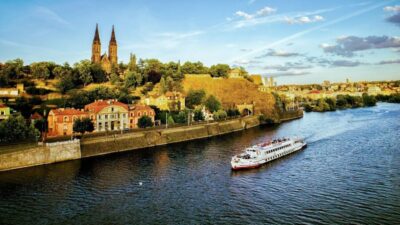
- Prague: 50-Minute Sightseeing Evening Cruise
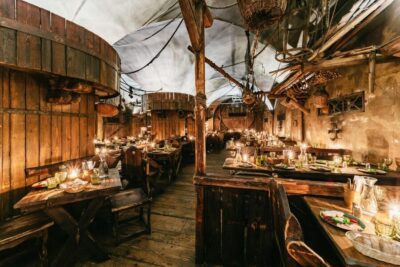
★ 4.2 · 33,780 reviews - Prague: Medieval Dinner with Unlimited Drinks
★ 4.4 · 19,847 reviews - Prague: Skip-the-line Castle Ticket and Optional AudioGuide
★ 4.3 · 11,121 reviews
Wenceslas Square and the first days of occupation
The first stop lasts about 25 minutes and requires no admission fee. You remain outside, so this section depends on the guide’s storytelling rather than museum displays or original documents.
That is both its strength and its limitation. You get a direct explanation of what happened in the very area where history unfolded, but you should not expect a large collection of artifacts. If you have already read extensively about the occupation, Hana or Jiří can help connect the broad events to Prague itself.
I like beginning here because it gives the rest of the tour a clear frame. The later stories about resistance and liberation make more sense once you understand the pressure created by occupation. You are not jumping straight to the famous assassination story without first seeing the political setting around it.
The National Theater area and the Prague Uprising
The next stop, near the Prague National Theater Opera, lasts about 20 minutes. Here the focus turns to Czechoslovakia’s liberation in 1945, the advance of the U.S. Army under General George S. Patton in western Bohemia, and the Prague Uprising.
This is an important part of the route because Prague’s liberation story is not as simple as a single army arriving and ending the war. The tour uses historical research and firsthand testimony to explain the dramatic final phase of the conflict, including the risks taken by people inside the city.
You will want to listen closely here. The material covers several forces and developments in a short time, and the surrounding streets can make it easy to lose focus. The small group helps, since you can stop and ask the guide to clarify the sequence of events.
This section also adds balance. Operation Anthropoid is the tour’s most famous subject, but the Prague Uprising shows a wider picture of local resistance and the disorder of liberation. It helps prevent the experience from becoming only a story about one daring military operation.
Prague main railway station and Nicholas Winton
The 30-minute stop at Praha hlavní nádraží is one of the most distinctive parts of the experience. It tells the story of Nicholas Winton, who arranged train transports that saved 669 children, mainly Jewish, from the Nazi threat.
The location matters. You are not hearing the story in an unrelated classroom setting. You are standing at a railway station connected to the movement of children whose lives were changed by those rescue efforts.
This portion draws on personal research connected to Sir Nicholas Winton. The guide has also had the rare opportunity to interview some of the children he rescued, giving this part an unusually personal angle.
I find this a valuable counterweight to the darker military stories. The tour does not present WWII only through generals, assassins, and political leaders. It also looks at children, families, trains, and the practical work required to save lives.
The Winton section later became widely known through the film One Life, but you do not need to have seen it to follow the story. The guide explains the setting and the rescue work directly.
For many people, this will be the emotional center of the tour. It is also one reason to choose this experience over a general Prague walking tour. You get a specific story tied to a specific place, along with research that goes beyond a quick plaque or textbook summary.
A different way to spend an afternoon here:
- Prague: Castle Tour with Local Guide and Entry Ticket
★ 4.6 · 10,422 reviews - Prague Castle 2.5-Hour Tour Including Admission Ticket
★ 4.7 · 8,927 reviews - Prague: Oldtown, Medieval Underground & Dungeon History Tour
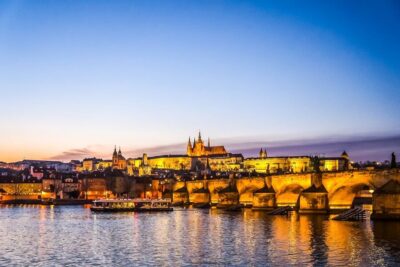
★ 4.2 · 8,244 reviews - Prague: Vltava River Night Cruise with Buffet
★ 4.3 · 7,338 reviews
The church of Operation Anthropoid
The tour then moves to the National Memorial to the Heroes of the Heydrich Terror. This is the longest stop, at about 45 minutes, and it focuses on Operation Anthropoid and the assassination of Reinhard Heydrich.
Heydrich was one of the highest-ranking Nazi leaders. The tour presents him as a central figure in the Nazi system and connects his role to the Holocaust and the brutal occupation of Czechoslovakia.
The memorial includes the church where the resistance fighters hid after the assassination. You can see bullet holes connected to the final battle. The physical evidence is stark, and the church and crypt give the story a sense of place that no film or book can quite reproduce.
This is the point where the tour becomes especially serious. The guide explains the planning of the attack, its consequences, and the resistance fighters’ last stand. You should allow yourself time to take in the site rather than rushing through it for photographs.
I especially value this stop because the setting forces you to consider the human cost of resistance. It is easy to admire Operation Anthropoid as a daring mission from a distance. Standing at the memorial, you are confronted with what happened after the mission and what the fighters faced when they were trapped.
The site can be emotionally difficult for children or anyone who prefers lighter sightseeing. The experience is not graphic entertainment, but it deals directly with murder, occupation, betrayal, and reprisal. That weight is part of its purpose.
The Dancing House and the 1945 bombing
The stop at the Dancing House lasts about 15 minutes and covers the American bombing of Prague in 1945. The building itself is a modern landmark, so the attraction here is not an original WWII structure. The value comes from using the location to explain an episode that can be overlooked in the city’s wartime story.
This stop also serves as the tour’s endpoint. The route begins at Wenceslas Square and ends at Jiráskovo náměstí beside the Dancing House. You finish in a part of central Prague that is well placed for continuing your sightseeing, though the tour does not include a ticket or interior visit to the building.
The short length keeps the final stop from dragging. After the concentration of the church memorial, a brief discussion of the bombing gives the tour one more angle on the final months of the war.
Petschkův palác and the Gestapo
The tour also includes Petschkův palác, once the Gestapo headquarters. This stop lasts about 15 minutes and brings the story back to the machinery of Nazi rule.
The building is useful as a reminder that occupation was not an abstract political condition. It involved offices, interrogation, surveillance, arrests, and people forced to live under a system designed to control them.
Because the stop is brief, the guide must keep the explanation focused. You should expect an exterior-based historical talk rather than a long interior visit. Still, its place in the route is worthwhile: after hearing about resistance fighters, you see the institution that hunted them.
How Hana and Jiří shape the experience
The tour is offered in English and is limited to six participants. That size is one of its best practical features. You can usually hear the guide without strain, ask questions without holding up a crowd, and signal when you need a point explained again.
Hana is repeatedly praised for her clear explanations, kindness, and ability to make the material feel personal. She also brings in broader comments about Czech life, both past and present, which helps place WWII in the country’s larger story.
Jiří Klůc is associated with the historical research at the heart of the tour. His work gives the experience a clear specialist focus, especially in the Winton and occupation sections.
The guide may tailor the emphasis to your interests. If you have read about Operation Anthropoid, ask for more detail there. If you are new to Czech history, say so at the start and ask for the basic political background before moving into the military events.
Past groups have also received suggestions for further reading, films, food, and places to visit. Those extras are not listed as a formal part of the tour, so do not book solely on that expectation. Still, they show how the experience can become a useful starting point for a wider Prague visit.
Price, timing, and walking demands
The cost is $62.47 per person. All fees and taxes are included, but public transportation costs about €1.30 per person. At this price, the main value is the specialist guide and the small group, not paid entry to a series of attractions.
That makes the tour a good buy if you want context, personal interpretation, and access to places that mean more once you understand what happened there. It is less appealing if you prefer independent sightseeing or want several indoor museum admissions included.
The advertised duration is about 2 hours and 30 minutes. The listed stop times total the full duration, so expect a steady schedule rather than a relaxed afternoon wandering. Wear comfortable shoes and plan for changing conditions, since the tour requires good weather.
The meeting point is at the Statue of Saint Wenceslas on Wenceslas Square. The end point is the Dancing House at Jiráskovo náměstí. A mobile ticket is accepted, and confirmation is provided when you book.
The activity is described as suitable for most people, with service animals allowed and public transportation nearby. It has a minimum number of participants, so a cancellation is possible if that minimum is not reached. If bad weather cancels the tour, you are offered another date or a full refund.
Free cancellation is available up to 24 hours before the start time. Less than 24 hours before the start, a refund is not provided, and changes are not accepted.
Who should book this Prague WWII tour?
I would choose this tour if you have a real interest in WWII, the Nazi occupation, Czech resistance, or Nicholas Winton. It also suits anyone who wants to understand Prague beyond its medieval lanes and famous squares.
It is a particularly good fit for readers who have seen One Life or studied Operation Anthropoid and want to stand at the places connected to those stories. The guide can add local context and answer questions that a film or book cannot.
Families can enjoy it, and one family described the experience as both engaging and suitable for their group. Still, the subject matter is heavy, so parents should decide if the church memorial and Gestapo material are right for younger children.
I would not make this your first choice if you want a light introduction to Prague, an architecture tour, or a route filled with interior attractions. This is a focused WWII experience, with serious themes and a brisk outdoor format.
Should you book it?
Book this tour if you want place-based history told by a local specialist, especially if the stories of Nicholas Winton and Operation Anthropoid interest you. The six-person limit, English-language format, and guide flexibility give it an intimacy that large city tours rarely provide.
Skip it if you dislike somber subjects, need guaranteed indoor shelter, or want admission to several museums included in the price. For the right audience, though, $62.47 buys much more than a walk between landmarks. It gives you a clearer understanding of what Prague endured, how people resisted, and why these sites still matter.
FAQ
Where does the tour begin?
The tour begins at the Statue of Saint Wenceslas on Wenceslas Square, Václavské náměstí, in Prague 1.
Where does the tour end?
The tour ends at the Dancing House, Jiráskovo náměstí 1981/6, in Prague 2.
How long does the tour last?
The tour lasts approximately 2 hours and 30 minutes.
How many people can join?
The tour has a maximum of six participants.
Is the tour offered in English?
Yes. The experience is offered in English.
Is public transportation included?
No. Public transportation costs about €1.30 per person and is not included in the tour price.
What happens if the weather is poor?
The tour requires good weather. If it is canceled because of poor weather, you are offered a different date or a full refund.
Can I cancel for a refund?
Yes. You can cancel up to 24 hours before the experience start time for a full refund. Cancellations made less than 24 hours before the start time are not refunded.
Recently added around Prague
- St Vitus Cathedral and Prague Castle Private Walking Tour★ 4.0 · 3 reviews
- Prague: Old Town and Jewish Quarter Small-Group Tour★ 5.0 · 3 reviews
- Royal Splendor Unveiled Private Prague Castle Interior Tour★ 3.5 · 3 reviews
- Prague Castle Interiors & Changing of the Guard-Small group★ 5.0 · 3 reviews
- Running Tour of Prague. Your private 6-9K intro★ 5.0 · 3 reviews
- Prague: Bohemian & Saxon Switzerland National Park Day Trip★ 5.0 · 3 reviews
- PRAGUE AIRSOFT SHOOTING GAMES★ 4.7 · 3 reviews
- Private walking tour and Boat cruise Best of Prague★ 5.0 · 3 reviews
Prague Tours, compared.
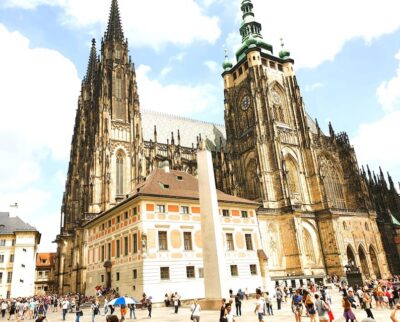
Skip-the-line Castle Ticket and Optional AudioGuide
Read our review →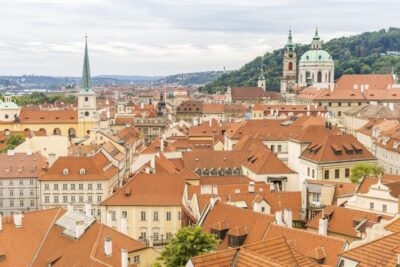
Castle Tour with Local Guide and Entry Ticket
Read our review →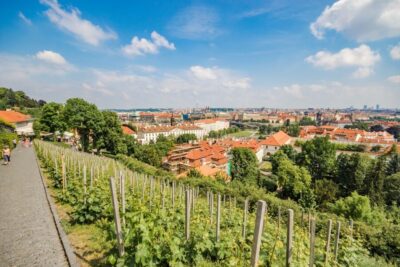
Prague Castle 2.5-Hour Tour Including Admission Ticket
Read our review →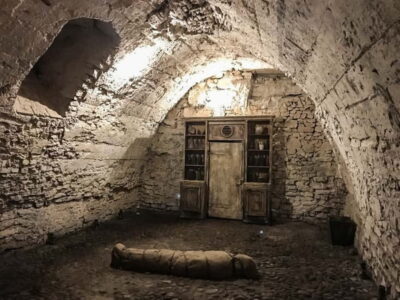
Oldtown, Medieval Underground & Dungeon History Tour
Read our review →