
Reviewed · WALKING TOURS
Walking tour of Prague in French : Nové Město
Prague’s Nové Město is not really new. Charles IV founded it in 1348, laying out a planned district around markets for cattle, horses, and hay. This French-language walk turns that old plan into a readable story, linking Wenceslas Square, Charles Square, and the Vltava.
I like two things here: the route shows Prague’s architectural mix, from the Powder Tower and Municipal House to Cubist and modern buildings, and it ends with a waterside walk across Legion Bridge toward Archer’s Island. The main caution is pace. Two and a half hours covers 19 stops, so you get explanations and outside views, not long visits inside museums or monuments.
Key points to know
- A 14th-century city plan: See how Charles IV organized Nové Město around three working marketplaces.
- French-language guiding: A licensed Czech Ministry of Tourism guide explains Prague’s history, culture, and addresses in French.
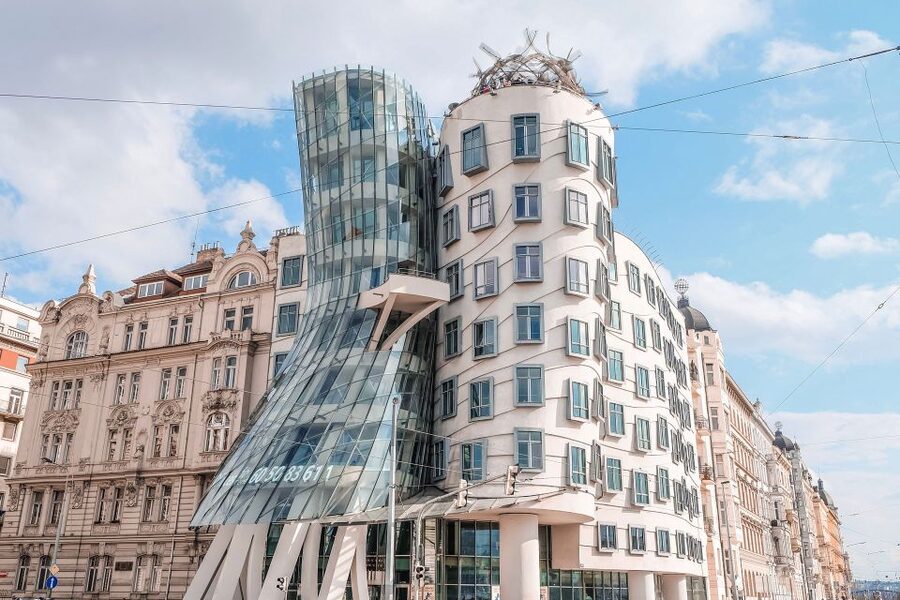
- Several architectural eras: Gothic, Baroque, Art Nouveau, Cubist, Czech National Renaissance, and modern design all appear along the route.
- A strong river finish: The walk continues along the Vltava quays, across Legion Bridge, and into Park Legií near Archer’s Island.
- A useful first-day orientation: The guide adds local addresses and practical advice for the rest of your stay.
- Weather-proof planning: The tour runs in rain, snow, or sunshine, so dress for the forecast and wear shoes suited to city streets.
Why Nové Město makes a fine walking subject
Prague’s Old Town gets most of the attention, but Nové Město gives you a broader picture of how the city developed. Charles IV created it as a planned extension beyond the older medieval core. Its size was ambitious for the 14th century, and its streets and market squares still help you understand the city’s structure.
You are not simply moving from one famous building to another. The route explains why large squares appeared where they did and how commerce shaped the district. Charles Square began as the cattle market, Wenceslas Square as the horse market, and Senovážné Square as the hay market.
That practical beginning matters. It helps you read Prague as a working city, not just a collection of pretty façades. The walk also connects architecture with Czech identity, including the National Museum and National Theatre, both linked to the Czech National Renaissance and the movement toward national independence in 1918.
The tour costs $27 per person. For 2.5 hours with a licensed guide, that is a fair price if you want context rather than a quick list of names. You are paying for a French-language explanation, local suggestions, and a route that covers much more ground than a short stroll around one square.
More Walking Tours in Prague:
- Prague: 3-Hour Walking Tour of Old Town & Prague Castle
★ 4.7 · 5,696 reviews - Prague: Ghost Walking Tour Where Legends Come To Life
★ 4.4 · 5,253 reviews - Prague: Jewish Quarter Walking Tour with Admission Tickets
★ 4.7 · 3,729 reviews
Starting at Jindřišská Tower
The meeting point is in front of the entrance to Jindřišská Tower, a convenient central location near the tram stop at Jindřišská. Tram lines 3, 5, 6, 9, 14, and 24 serve the area, which makes arrival fairly simple.
Jindřišská Tower also gives the walk a fitting opening. You begin near one of Prague’s recognizable historic towers before heading toward the commercial and civic heart of Nové Město. The tour does not focus on an interior visit, so treat the tower as a meeting landmark rather than a scheduled attraction.
Arrive ready to walk. The route includes squares, regular city streets, gardens, quays, a bridge, and a small island park. Since the activity runs in all weather, a rain layer and comfortable shoes are sensible choices.
Senovážné Square and the old hay market
Senovážné náměstí is the first guided stop. Its name recalls the hay market, one of the three central points around which Charles IV’s new district was organized.
This is an important early explanation because it gives you the map in words. Instead of seeing the square as just another open space, you learn how trade once shaped the neighborhood. The guide can then refer back to this system as the walk moves toward the horse and cattle markets.
The scheduled explanation here is about 10 minutes. That is enough for a clear introduction, but not enough for an extended architectural inspection. You will get the district’s basic logic and then keep moving.
Na Příkopě, Republic Square, and Prague’s layered façade
At Na Příkopě, the route shifts toward one of central Prague’s major streets. The name means along the moat, a reminder that the city’s defenses once influenced the shape of this area.
From there, Náměstí Republiky offers one of the strongest architectural groupings on the walk. The Powder Tower and Municipal House are especially important. The Powder Tower is a Gothic gateway, while the Municipal House presents the decorative confidence of Art Nouveau.
Seeing them in sequence is useful. You can compare the darker medieval verticality of the tower with the curves, ornament, and civic polish of the later building. The guide’s job here is not just to name styles, but to explain how Prague changed while keeping older structures in daily use.
The 15-minute stop at Republic Square is among the longer pauses. You should have enough time to look up, take photographs, and get a sense of how the square connects the older center with Nové Město.
A few more Prague half-days to weigh up
- Prague: 50-Minute Sightseeing Evening Cruise
★ 4.2 · 33,780 reviews - Prague: Medieval Dinner with Unlimited Drinks
★ 4.4 · 19,847 reviews - Prague: Skip-the-line Castle Ticket and Optional AudioGuide
★ 4.3 · 11,121 reviews - Prague: Castle Tour with Local Guide and Entry Ticket
★ 4.6 · 10,422 reviews
Ovocný Market and the House of the Black Madonna
Ovocný trh, or Fruit Market, brings the route to another historic square and to the House of the Black Madonna. This building is one of Prague’s key examples of Cubist architecture.
Cubism is often associated with painting, but Prague applied its sharp forms and geometric energy to buildings, furniture, and decorative objects. The House of the Black Madonna is a good place to hear how a style can move from the canvas into the city streets.
The nearby Estates Theater adds another cultural layer. It is one of Prague’s emblematic historic theaters, and its presence helps connect architecture with the city’s musical and theatrical life. The stop is brief, so you should expect an explanation from the street rather than a performance or full theater visit.
This part of the walk works well for anyone who enjoys contrasts. Gothic, Baroque, Art Nouveau, and Cubist buildings are not separated into neat museum rooms. They appear within the same urban center.
Wenceslas Square and the Czech National Museum
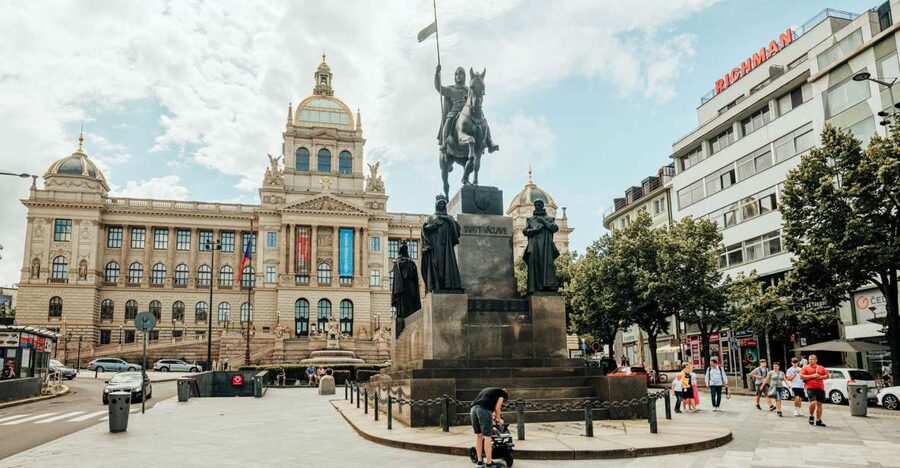
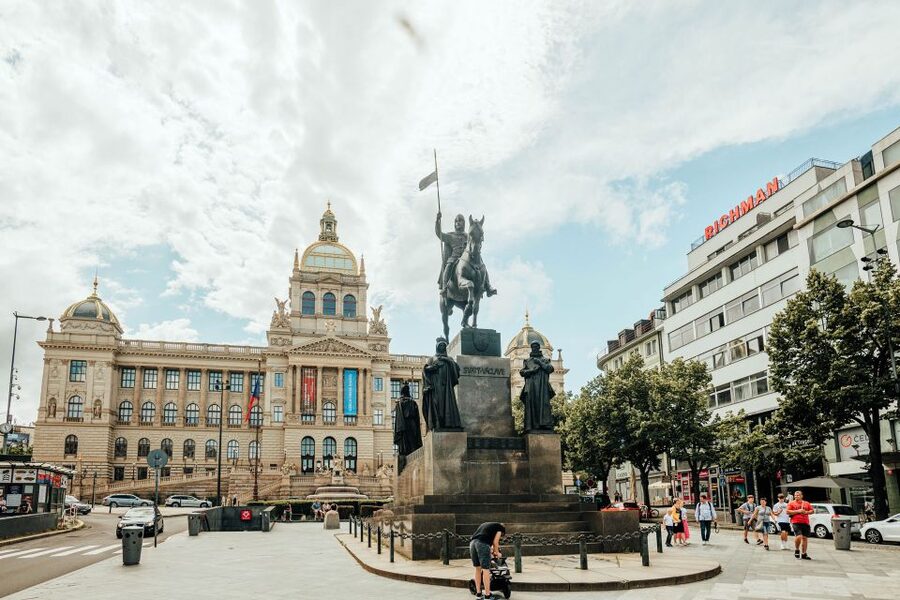
The route then reaches Václavské náměstí, or Wenceslas Square. Despite its name, this is a long boulevard-like space rather than a compact square. It has played an important role in public life and national events.
At the upper end, the National Museum gives the space its grand civic focus. The building represents the Czech National Renaissance, when language, culture, scholarship, and national identity became central to public life.
The guide also places more recent events into the story, including the Prague Spring. That reference helps you connect the square’s 19th-century national symbolism with the political struggles of the 20th century.
The itinerary returns to Wenceslas Square after stops at Jungmann Square and the Franciscan Gardens, so you encounter it in more than one part of the route. This is useful because the square is large. A single quick look can make it feel like a broad shopping avenue, while a guided explanation gives it more historical weight.
Jungmann Square, Franciscan Gardens, and a David Černý sculpture
Jungmann Square provides another chance to see how central Prague combines traffic, commerce, public buildings, and small green spaces. The Franciscan Gardens offer a quieter pause nearby.
The garden stop is short, around 10 minutes. Do not expect a long rest break, but it can give your eyes a break from façades and traffic. The contrast between the formal urban squares and a contained garden is part of the route’s appeal.
The walk also includes a sculpture by David Černý, identified in the route as Kun. Černý is known for provocative contemporary public art, and this stop prevents the tour from becoming an exercise in medieval and imperial architecture alone. Prague’s story continues into the present, sometimes with a sense of humor.
This is one of the more distinctive details of the tour. Many city walks stay with famous monuments. Here, you also get a small piece of contemporary Czech artistic life.
Sokolská, Na Rybníčku, and the scale of Nové Město
Stops at Sokolská and Na Rybníčku are shorter, about five minutes each. These may not be the headline sights, but they help show the district’s broader street pattern.
A good walking tour needs these connecting points. They give the guide room to explain how the grand squares relate to ordinary streets and less famous corners. You may find these brief stops less exciting if you want a nonstop list of major monuments, but they make the district easier to understand as a real neighborhood.
The route’s many short explanations also explain why the walk feels efficient. You cover a lot of ground without stopping for long at every location. The tradeoff is that you will need to listen closely and save some places for a later, independent visit.
Charles Square, once Prague’s cattle market
Charles Square is one of the central stops and receives about 10 minutes of explanation. Its original role as the cattle market completes the three-market framework introduced at Senovážné Square.
The square is large, and its size reflects the scale of Charles IV’s plan. It is not just a scenic pause. It shows how Nové Město was designed to support trade, movement, and a growing population.
This is also a useful point to compare the planned district with Prague’s older streets. The broad spaces of Nové Město feel different from the tighter medieval lanes nearby. The guide can make that contrast clear without requiring a museum visit.
If you enjoy urban design, this may be one of the most rewarding parts of the walk. You are seeing city planning from the ground, with market history explaining why the spaces are so generous.
Resslova and the route toward the river
After Charles Square, the walk continues through Resslova and toward the Vltava. These stops help shift the mood from central squares to the riverfront.
The route does not treat the river as an afterthought. The Vltava banks are one of the highlights, and the final section gives you a chance to see Prague from a more open viewpoint. You can expect explanations about the surrounding buildings and the city’s relationship with the water, along with opportunities for photographs.
The 2.5-hour duration means this is still a guided walk, not a leisurely riverside outing. You will keep a steady pace. If you want extra time for pictures, make use of the short pauses and plan to return later for a slower look.
National Theatre and Czech cultural identity
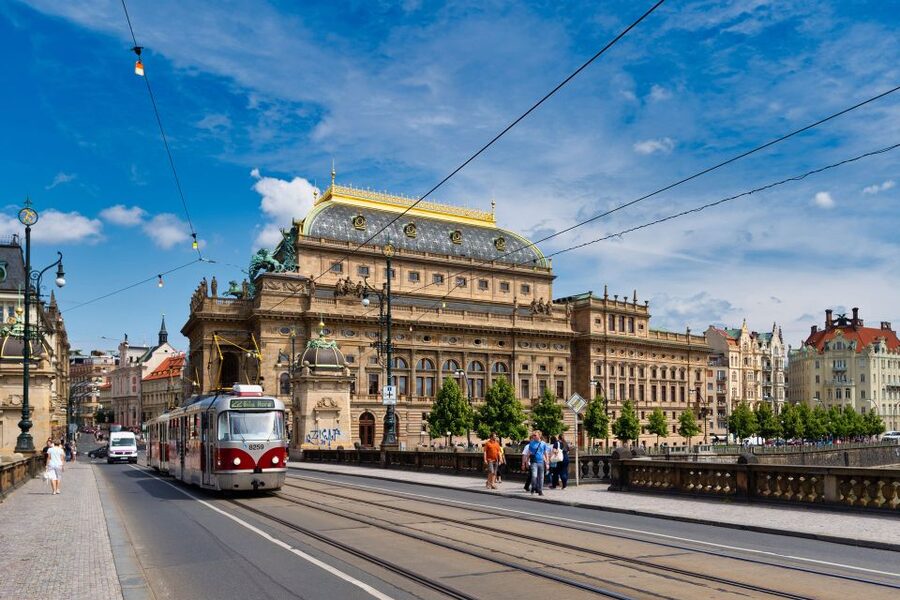
The Prague National Theatre is another major cultural landmark on the route. Like the National Museum, it is tied to the Czech National Renaissance and the effort to build institutions that expressed Czech language and identity.
The building’s importance is not only architectural. It represents the idea that a national culture needs its own public stages, collections, and institutions. That makes it a strong counterpoint to the commercial markets and streets earlier in the walk.
The guide also discusses the district’s connection to Czech independence in 1918. You get a useful timeline: medieval urban planning, 19th-century cultural renewal, 20th-century political events, and contemporary architecture all appear within one afternoon.
Masarykovo Embankment, Legion Bridge, and Park Legií
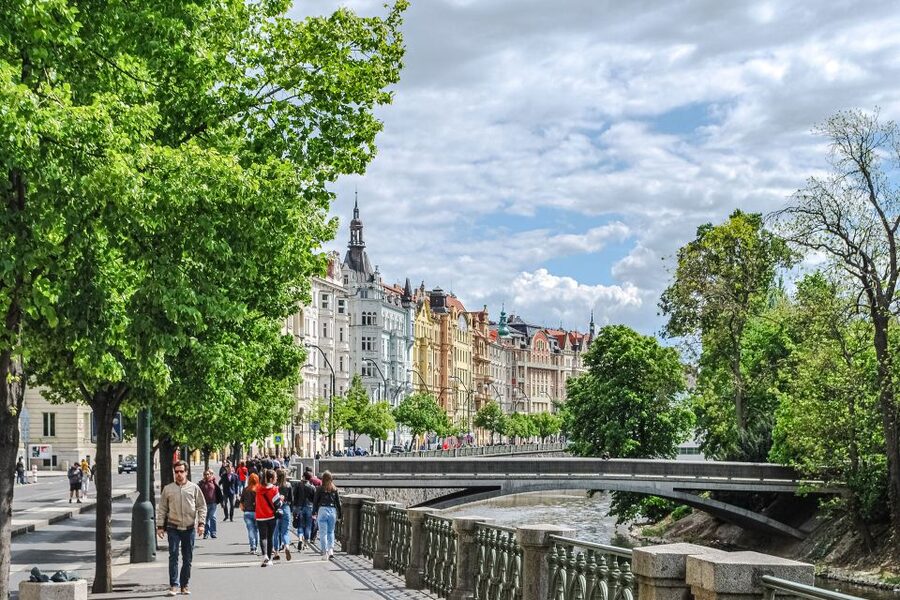
Masarykovo nábřeží brings you onto the Vltava waterfront. From here, the walk heads toward Legion Bridge and Park Legií, finishing near Archer’s Island.
This final section is a welcome change of pace. The quays open up views and create better conditions for photographs than some of the crowded central streets. Legion Bridge also gives you a different angle on Prague’s riverfront architecture and bridges.
Park Legií is the stated finish. The activity information also describes the end as back at the meeting point, but the detailed route places the conclusion at Park Legií. Check the exact end instructions when reserving so you know where to part ways.
The river section is especially appealing if you have already spent time in Old Town and want a less predictable route. It gives you recognizable Prague views without making the entire outing about the Charles Bridge.
What the French-language format adds
This tour is conducted in French by a live guide. That matters if you want history explained naturally rather than pieced together from signs or a written guide.
The guide is licensed by the Czech Ministry of Tourism, and the experience includes explanations of the sites, Prague’s history, Czech culture, local addresses, and advice for the rest of your stay. The practical advice can be as useful as the monuments, especially early in a visit when you are still learning the city.
Alexandre is one guide associated with this experience. If he leads your walk, expect an energetic style with explanations designed to keep the route engaging. The strongest praise attached to his guiding points to explanations that are interesting and captivating, so the quality of delivery appears to be a major part of the experience.
The overall score is 4.9 from 16 reviews, with repeated praise for the quality of the visit and the guide’s explanations. That is a small sample, so I would treat it as encouraging rather than final proof. Still, the pattern fits the tour’s main strength: a well-chosen route made more useful by a French-speaking local guide.
Practical value at $27
At $27, this is not the cheapest way to see Prague, but it offers solid value for a focused introduction to Nové Město. You receive 2.5 hours of guiding, a licensed French-speaking professional, historical context, architectural interpretation, and suggestions for the area.
The price does not include food, drinks, transport tickets, hotel pickup, or return transport. You need to reach Jindřišská Tower yourself and arrange your own way onward from Park Legií.
The route has 19 stops, with most explanations lasting five to 10 minutes. That makes it a good choice if you want broad coverage. It is less suitable if you prefer to spend 30 minutes inside one building or take photographs at every corner.
Free cancellation is available up to 24 hours before the tour for a full refund, and you can reserve now and pay later. Those terms are useful if your Prague plans are still shifting. The all-weather policy is the bigger practical point: snow, rain, or sunshine will not automatically cancel the walk.
Who should book this walk
I would choose this tour if you speak French and want a clear first look at Prague beyond the Old Town postcard route. It suits people who enjoy buildings, city planning, national history, and public art in one outing.
It also works well early in your stay. The guide’s local addresses and advice can help you decide where to eat, what to revisit, and how the central districts fit together.
You may want a different experience if you need a slow, accessible indoor tour, a hotel pickup, or extensive time inside museums. Those are not part of the stated program. The route is also weather-dependent in the practical sense that it runs in all conditions, so your comfort depends on clothing and shoes.
Should you book it?
Book this walk if a French-language guide, architectural variety, and a riverfront finish sound more useful than a short checklist of famous sights. The best reason to choose it is the route’s range: Charles IV’s market plan, Gothic and Art Nouveau landmarks, Czech cultural institutions, modern art, the National Theatre, and the Vltava all fit into one well-packed afternoon.
Skip it if you want a relaxed stroll with long stops or a tour built around interiors. At $27, the value is strongest for you if you want Prague explained as a living city, with enough practical advice to keep exploring after the guide says goodbye.
FAQ
How long does the Prague Nové Město walking tour last?
The tour lasts approximately 2.5 hours.
What language is the tour conducted in?
The live tour guide conducts the walk in French.
Where does the tour begin?
The meeting point is in front of the entrance to Jindřišská Tower.
How can I reach Jindřišská Tower?
The easiest listed option is by tram from Jindřišská station, served by lines 3, 5, 6, 9, 14, and 24.
Where does the tour finish?
The detailed route finishes at Park Legií, near Legion Bridge and Archer’s Island. The activity information also refers to the end as back at the meeting point, so check the final meeting instructions when booking.
What is included in the $27 price?
The price includes a licensed local guide, the French-language walking tour, explanations of Prague’s history and Czech culture, local addresses, and advice for your stay. Food, drinks, transport tickets, and hotel pickup or return are not included.
Recently added around Prague
- St Vitus Cathedral and Prague Castle Private Walking Tour★ 4.0 · 3 reviews
- Prague: Old Town and Jewish Quarter Small-Group Tour★ 5.0 · 3 reviews
- Royal Splendor Unveiled Private Prague Castle Interior Tour★ 3.5 · 3 reviews
- Prague Castle Interiors & Changing of the Guard-Small group★ 5.0 · 3 reviews
- Running Tour of Prague. Your private 6-9K intro★ 5.0 · 3 reviews
- Prague: Bohemian & Saxon Switzerland National Park Day Trip★ 5.0 · 3 reviews
- Private walking tour and Boat cruise Best of Prague★ 5.0 · 3 reviews
- Discover Prague’s most Photogenic Spots with a Local★ 3.5 · 3 reviews
Walking Tours, compared.
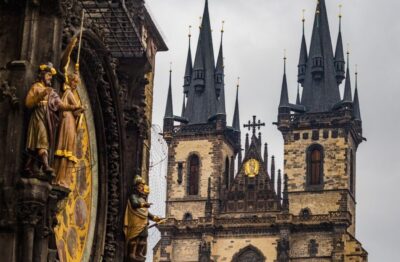
3-Hour Walking Tour of Old Town & Prague Castle
Read our review →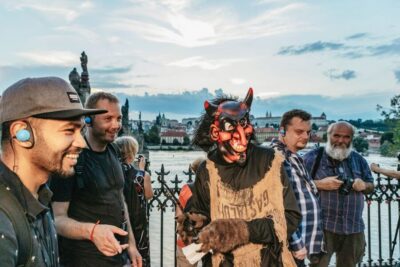
Ghost Walking Tour Where Legends Come To Life
Read our review →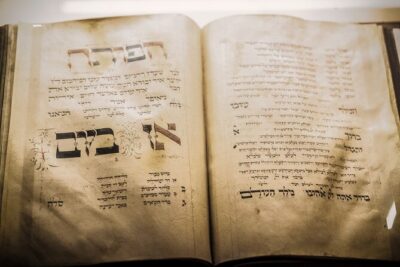
Jewish Quarter Walking Tour with Admission Tickets
Read our review →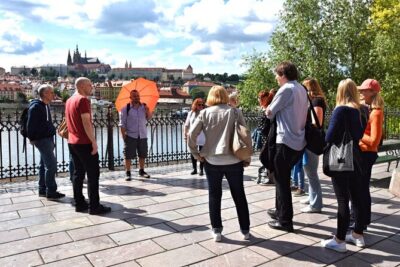
Prague Guided Walking Tour and Cruise with Authentic Czech Lunch
Read our review →
Old Town and Jewish Quarter Guided Walking Tour
Read our review →
Prague Ghost and Legend of Old Town Walking Tour
Read our review →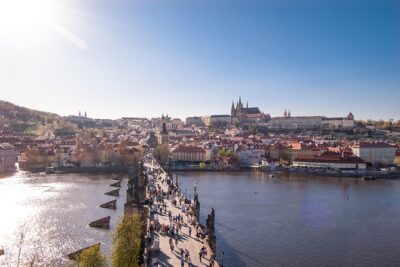
Prague 3-hour Afternoon Walking Tour including Prague Castle
Read our review →
Ghosts and Legends Nighttime Guided Walking Tour
Read our review →Browse the lists this tour appears in