
Reviewed · MUSEUMS
IAM Illusion Art Museum Entry Ticket
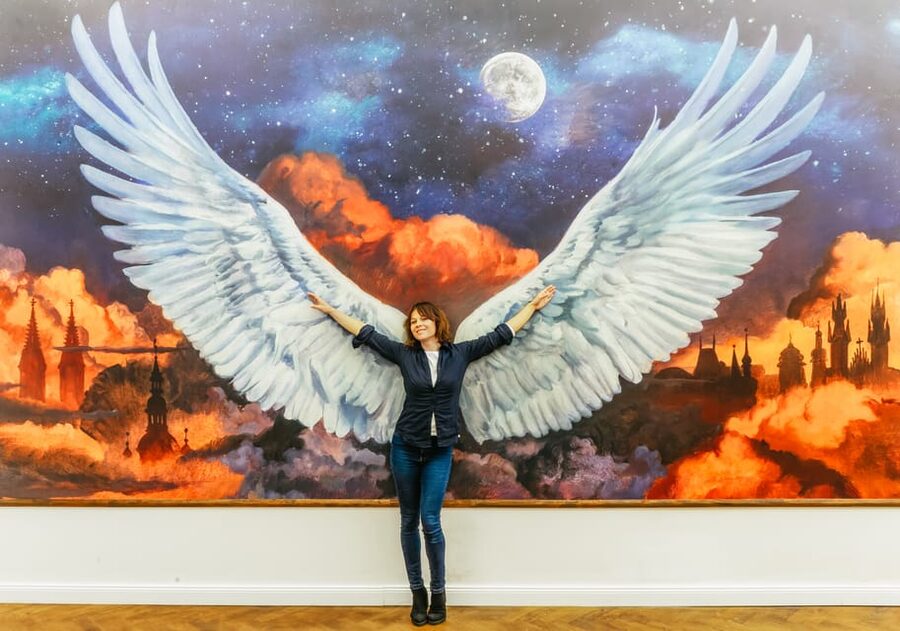
The IAM Illusion Art Museum turns Prague sightseeing into a hands-on game of perception. You will walk through rooms where paintings shift with your viewpoint, sculptures become images, and a phone camera can reveal effects that are not obvious to the naked eye. The best part is the chance to become part of the artwork, rather than simply look at it.
I especially like the mix of Czech stories and playful photo setups. You can learn about figures such as Charles IV, Franz Kafka, Václav Havel, and Nikola Tesla while also trying light painting, 3D effects, and augmented reality. Staff members are quick to help, with Adam and Tomasz among the names praised for taking photos and explaining the displays. The main drawback is size: many people finish in 30 to 60 minutes, and popular photo stations can feel crowded without timed entry.
Key points to know before you go
- Photo-friendly exhibits: Use your camera and QR codes to reveal 3D effects, altered faces, and augmented reality scenes.
- Czech themes: Illusion art brings stories of Prague, the Swedish siege, the Bohemian monarchy, and well-known Czech figures to life.
- A compact visit: Allow 30 to 90 minutes, depending on how long you spend taking photos and testing each activity.
- Helpful staff: Team members can explain QR codes, suggest poses, and take pictures for solo visitors and couples.
- Wide audio-guide choice: Commentary is available in Czech, English, Croatian, French, Chinese, German, Italian, Polish, Portuguese, Russian, Spanish, Ukrainian, and Vietnamese.
- Crowding matters: The museum does not use time slots according to the available information, so photo areas may become awkwardly busy.
A small Prague museum with a big camera trick
The IAM Illusion Art Museum is made for curious hands and phone cameras. Its central Prague setting makes it an easy stop between major sights, especially if you want something different from churches, castles, and traditional galleries.
This is not a quiet museum where you shuffle past framed paintings and read long labels. You are encouraged to change position, scan QR codes, pose in the right place, and look at the image through your phone. Some displays work best with a friend taking your picture. Others are designed so you can experiment on your own.
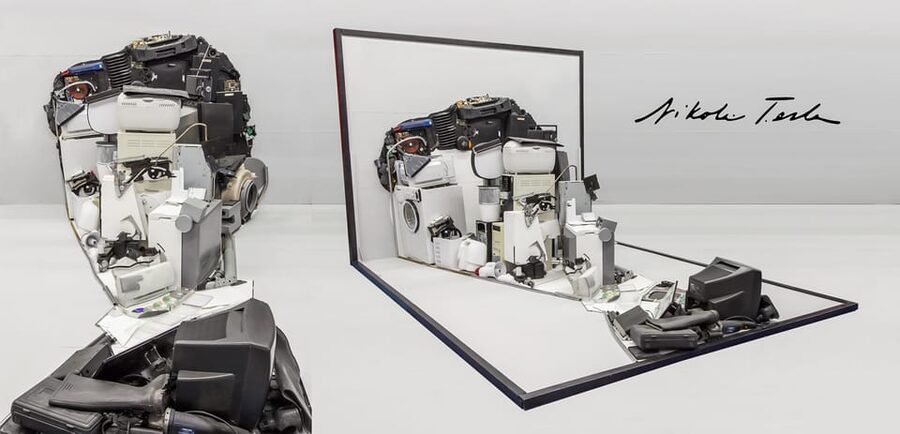
The museum brings together historical and modern forms of illusory art. You may see a flat image turn into a 3D scene on your screen, or a sculpture appear to change into a painting when viewed from the proper angle. The effect is playful, but the art techniques behind it give the visit more substance than a simple photo booth.
More Museums in Prague:
- Prague: Museum of Fantastic Illusions Entry Ticket
★ 4.3 · 4,337 reviews - Prague: Museum of Senses Admission Ticket
★ 4.0 · 1,445 reviews - IAM Illusion Art Museum Prague Fast Pass Ticket
★ 5.0 · 957 reviews
From anamorphoses to reverse perspective
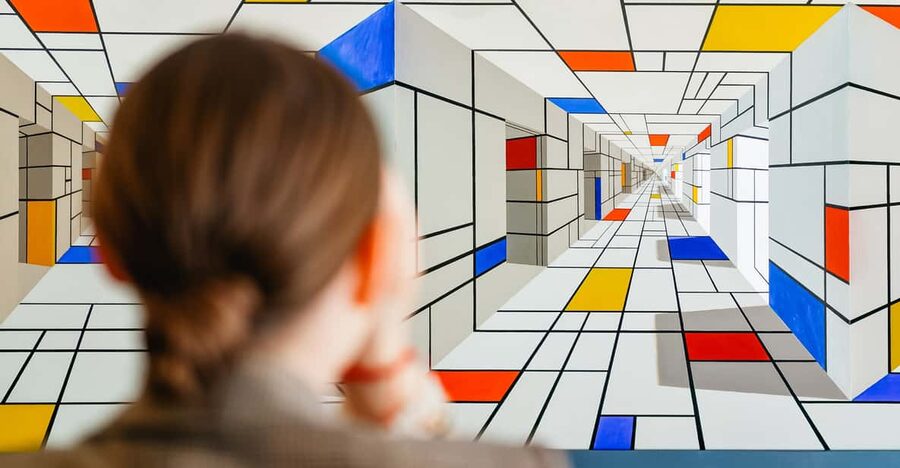
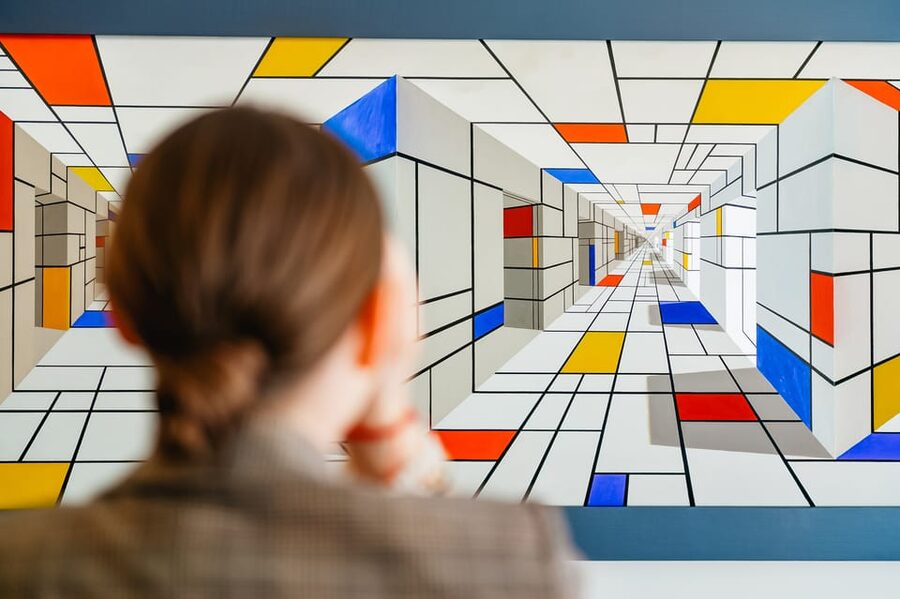
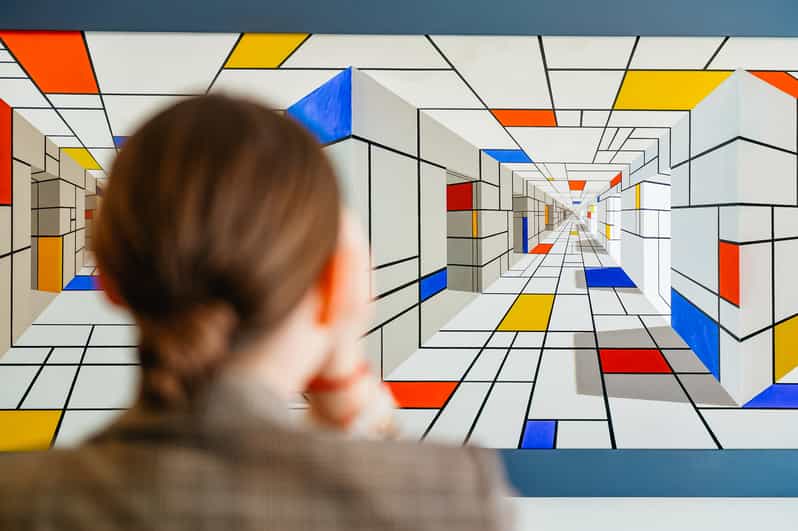
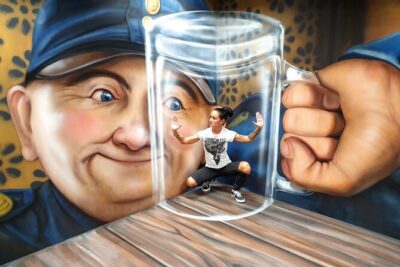
The exhibition begins with the basic idea behind many optical illusions: what you see depends on where you stand. Anamorphic works are distorted when viewed straight on but form a recognizable image from a chosen angle or through a camera.
That simple principle gives you a useful way to approach the museum. Do not rush from one display to the next. Look at the work from different sides, then try the suggested viewing position. The distortion often makes sense only after you move into place.
British artist Patrick Hughes is represented through reverse-perspective works. These pieces play with depth in a particularly clever way. Surfaces that seem flat can appear to shift as you move, making the image feel as if it is following you or changing shape.
Patrik Proško’s 3D anamorphic creations take the same basic idea into more sculptural territory. These are among the works that reward careful positioning. If you stand too close or at the wrong angle, the image may look like scattered parts. Find the intended viewpoint and the pieces come together.
You will also encounter Ladislav Vlna’s metallurgical paintings, which use metal and its surface qualities as part of the illusion. Ivana Štenclová’s optical reliefs add another layer by making shadows, depth, and raised surfaces part of the image. Zdeněk Daňek and Jan Jírovec contribute distorted 3D paintings that keep the eye guessing about what is flat and what projects into space.
These displays are valuable for families because the lesson is physical. You learn by moving, not by memorizing art terms. Children can test the illusion first, then understand the explanation after seeing how viewpoint changes the result.
Czech figures told through visual tricks
The museum is not limited to abstract optical effects. Several works connect illusion art with Czech culture and history, which gives the visit a stronger Prague identity.
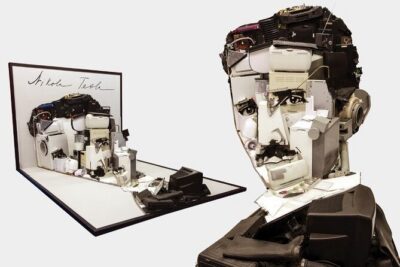
You may encounter artistic portrayals of St. Agnes of Bohemia, Bedřich Smetana, and Nikola Tesla. The museum also includes references to Charles IV, Franz Kafka, and Václav Havel. These are not presented as a full historical course, so you should not treat the museum as a replacement for Prague’s major history museums. Instead, familiar names appear through unusual visual techniques.
One display recalls the Swedish siege of Prague. Another connects to the fall of the Bohemian monarchy. These subjects give you a reason to pause and consider how an image can carry a story, not just produce a visual surprise.
I like this cultural layer because it keeps the museum from feeling completely generic. Many illusion museums could be placed in any city. Here, the Czech references give the art a local link, even when the techniques themselves are international.
An audio guide is included, with options in 13 languages. Czech and English are also listed as the languages used at the museum. If you want more context than the labels provide, bring headphones if you use them with your phone, and check the available audio-guide instructions when you arrive.
The most enjoyable part is doing, not looking
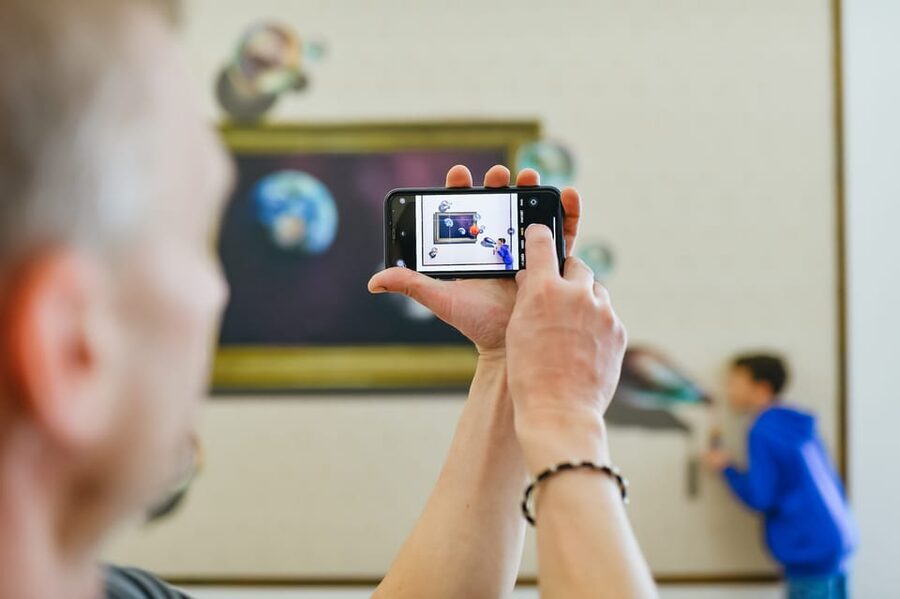
The interactive stations form the heart of the visit. You can transform 2D images into apparent 3D spaces, turn sculptures into paintings, and place yourself inside short visual stories.
The QR-code displays are especially important. Your phone may reveal effects that are not visible in the printed artwork alone. A charged smartphone is listed as essential, and that advice is practical. A nearly empty battery can leave you watching other people use the best camera-based features while you wait.
Bring a camera, too. Your phone will do the main work, but a separate camera can be useful if someone else is taking the picture. Staff members often help visitors find the right pose, explain the QR codes, and take photos. This is good news for solo visitors, since you do not need to skip every station that needs a second person.
One visitor who came alone received help from a staff member who also assisted others. That kind of support changes the visit. The museum is more enjoyable when you can concentrate on the effect instead of trying to balance your phone against a wall.
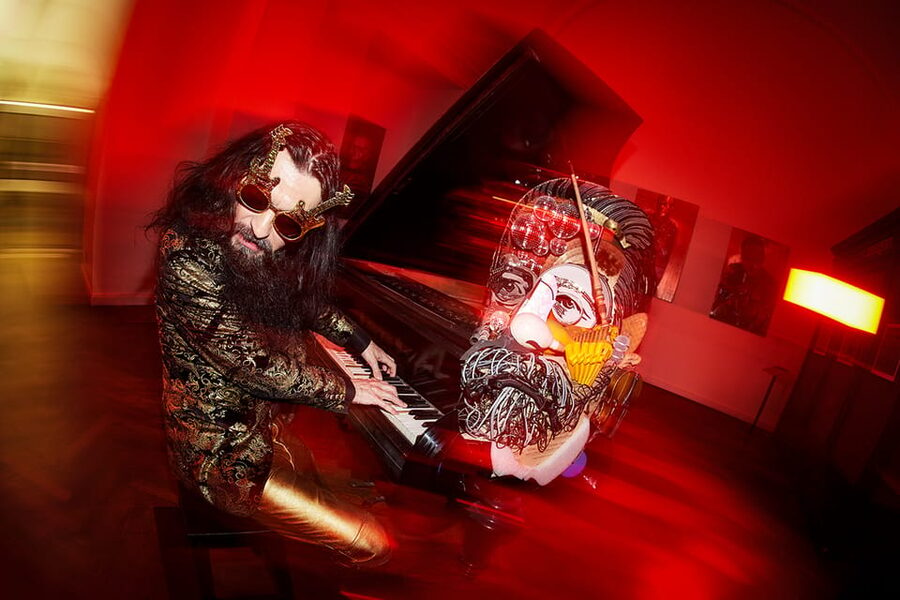
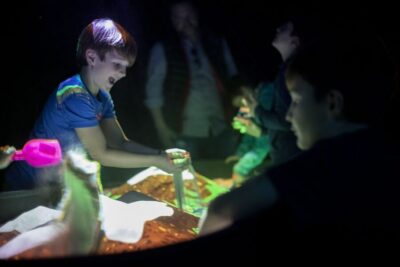
The light-painting activity adds a different sort of fun. Rather than simply posing beside an illusion, you can experiment with movement and light to create a photograph. Results will depend on your timing and the help available at the station, but it gives older children and adults something to try after the first wave of photo surprises.
There is also a mini cinema that offers a look behind the scenes. It helps explain how some of the illusions are made and gives you a short break from posing. The augmented-reality app is another key feature, though phone compatibility can vary. If the app does not work on your device, you should still have plenty to see, but you may miss a few of the interactive effects.
A few more Prague half-days to weigh up
- Prague: 50-Minute Sightseeing Evening Cruise
★ 4.2 · 33,780 reviews - Prague: Medieval Dinner with Unlimited Drinks
★ 4.4 · 19,847 reviews - Prague: Skip-the-line Castle Ticket and Optional AudioGuide
★ 4.3 · 11,121 reviews - Prague: Castle Tour with Local Guide and Entry Ticket
★ 4.6 · 10,422 reviews
How long should you plan for?
The official ticket is valid for one day, but that does not mean you need a full day at the museum. Most people should plan for about 60 minutes. If you move quickly and take only a few photos, you may finish in 30 to 45 minutes. If you try every station, listen to the audio guide, repeat photos, and wait for busy areas to clear, allow 90 minutes.
That short length is both a strength and a weakness. It works well as a flexible stop between sights, and it is an easy choice on a rainy afternoon. You can enjoy the museum without giving up half a day that might be better spent exploring Prague.
On the other hand, the $16 price feels less like a bargain if you expect a large traditional museum. Several displays are compact, and the full route may be shorter than the word museum suggests. You are paying for the interactive setup and the photo experience, not hours of gallery space.
I consider the ticket a fair buy for couples, families, and friends who will use the exhibits fully. It is also a sensible option for a solo visitor if you are comfortable asking staff to take photos. If you dislike posing, camera tricks, or hands-on displays, the price may feel high for the amount of time inside.
Crowds can change the experience
The museum’s interactive design creates a practical problem: many exhibits work best when one person or one small group has room to pose. When several groups gather around the same display, people can get in each other’s way.
There is no listed timed-entry system, and busy periods can make the photo stations feel cramped. You may need to wait, move on, and return later. One useful advantage is that some visitors have been able to go around again, so a second pass can help if the first circuit is crowded.
Try to visit at a quieter time if your schedule allows. The available information does not identify a guaranteed low-crowd period, so keep your plans flexible rather than counting on a completely empty museum. If you are traveling with children, explain that the displays are interactive but still need a little turn-taking.
The staff help reduce the problem. They can show you where to stand and take photos quickly, which keeps a station moving. Their practical assistance is one of the museum’s strongest points, especially for people who are unsure how the effects work.
Comfort, access, and what to bring
The museum is not suitable for wheelchair users, so check this carefully before booking. Pets are not allowed, although assistance dogs are permitted.
Air conditioning has been a concern during hot weather. If you visit Prague in summer, a warm interior could make a crowded visit less comfortable. On cool or rainy days, the museum makes a useful indoor break, and several people have used it for exactly that reason.
Bring:
- A charged smartphone
- A camera if you prefer one
- Enough storage space for photos and short videos
- Patience for QR-code instructions and busy photo points
Food and drinks are not included in the ticket. Plan to eat separately rather than treating the museum as a meal stop.
The host or greeter languages are Czech and English. The audio guide offers much wider language coverage, including English, Czech, Croatian, French, Chinese, German, Italian, Polish, Portuguese, Russian, Spanish, Ukrainian, and Vietnamese.
Who will enjoy IAM most?
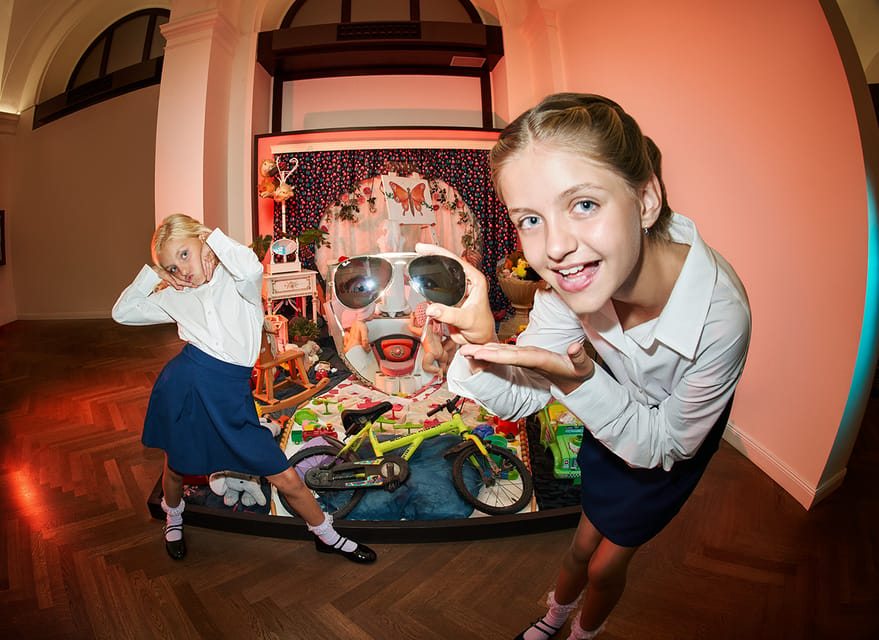
I would recommend this museum to families with children, couples, groups of friends, and anyone who wants a light change of pace from Prague’s formal sights. A seven-year-old can enjoy the physical effects, while adults may take more interest in the techniques and historical references.
It also works well for a rainy day. The visit is short enough to fit around other plans, and the unusual pictures give you a personal record of your time in Prague. If you are traveling alone, staff can help with photos, though you may need to ask.
Art lovers should come with the right expectations. The museum includes serious techniques and named artists, but the visit is built around participation. It is not a silent gallery for extended study. You will get more from it if you are willing to move, test, pose, and look at the work through your camera.
It is less suitable if you need step-free wheelchair access, want a large museum that fills most of a day, or dislike crowded photo stations. Those are not minor details. They shape how much value you receive from the ticket.
Booking flexibility and final value
The ticket costs $16 per person and can be canceled up to 24 hours before the visit for a full refund. You can also reserve now and pay later, which helps if you are arranging a Prague itinerary before your exact day is settled.
The rating is 4.2 from 1,664 reviews, a solid result for a compact attraction with a very specific style. The praise centers on the same practical strengths: unusual artworks, fun interactive stations, friendly staff, and memorable photographs. The repeated cautions are also clear: the museum is smaller than expected, some visits are brief, and crowding can interfere with pictures.
Should you book it?
Book IAM Illusion Art Museum Prague if you want a 60-minute interactive stop with strong photo opportunities and a local Czech theme. It is especially good for families, couples, solo visitors who appreciate staff help, and rainy-day planners.
Skip it if you are seeking a major historical collection or a full-day museum. The $16 ticket is reasonable when you use the camera effects, try the activities, and take your time with the Czech-themed pieces. Visit with a charged phone, expect a compact space, and be ready to wait briefly at the most popular displays.
FAQ
How long does the IAM Illusion Art Museum visit take?
The ticket is valid for one day, but the usual visit can take about 30 to 90 minutes. A 60-minute visit is a practical estimate if you want time for photos and interactive displays.
What languages are available?
The host or greeter languages are Czech and English. The included audio guide is available in English, Czech, Croatian, French, Chinese, German, Italian, Polish, Portuguese, Russian, Spanish, Ukrainian, and Vietnamese.
Do I need a smartphone?
Yes. You should bring a charged smartphone because several displays use QR codes, augmented reality, and camera-based effects. A camera is also listed as something to bring.
Is the museum suitable for wheelchair users?
No. The activity is listed as not suitable for wheelchair users.
Are pets allowed inside?
Pets are not allowed. Assistance dogs are permitted.
Can I cancel the booking?
Yes. You can cancel up to 24 hours in advance for a full refund. Reserve-now, pay-later booking is also available.
Recently added around Prague
- St Vitus Cathedral and Prague Castle Private Walking Tour★ 4.0 · 3 reviews
- Prague: Old Town and Jewish Quarter Small-Group Tour★ 5.0 · 3 reviews
- Royal Splendor Unveiled Private Prague Castle Interior Tour★ 3.5 · 3 reviews
- Prague Castle Interiors & Changing of the Guard-Small group★ 5.0 · 3 reviews
- Prague: Bohemian & Saxon Switzerland National Park Day Trip★ 5.0 · 3 reviews
- Running Tour of Prague. Your private 6-9K intro★ 5.0 · 3 reviews
- PRAGUE AIRSOFT SHOOTING GAMES★ 4.7 · 3 reviews
- Private walking tour and Boat cruise Best of Prague★ 5.0 · 3 reviews
Museums, compared.
IAM Illusion Art Museum Prague Fast Pass Ticket
Read our review →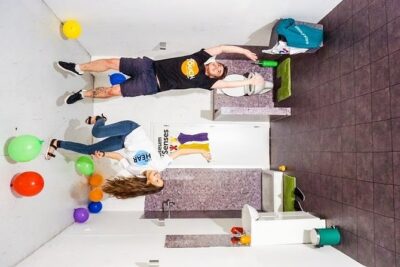
Ticket to Audiovisual Light Art at Lumia Gallery
Read our review →
Browse the lists this tour appears in