
Reviewed · WALKING TOURS
Prague: Highlights Walking Tour to the German embassy 1989
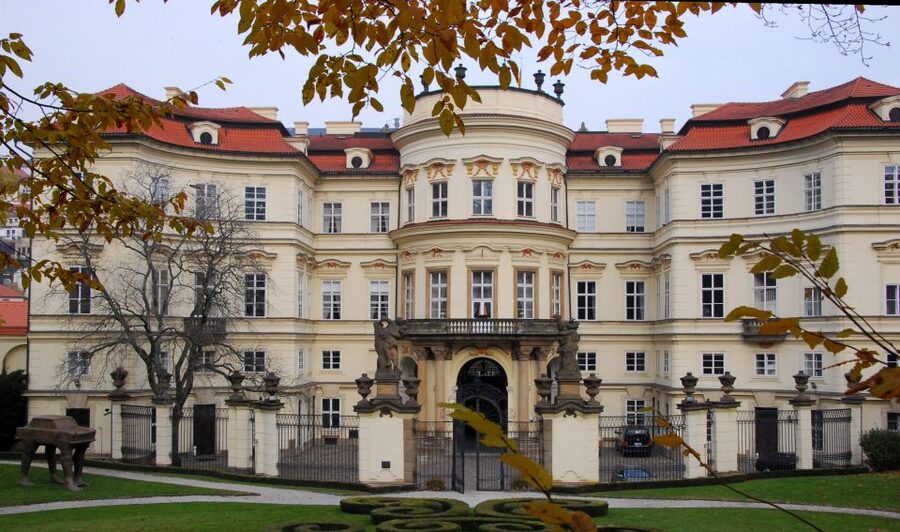
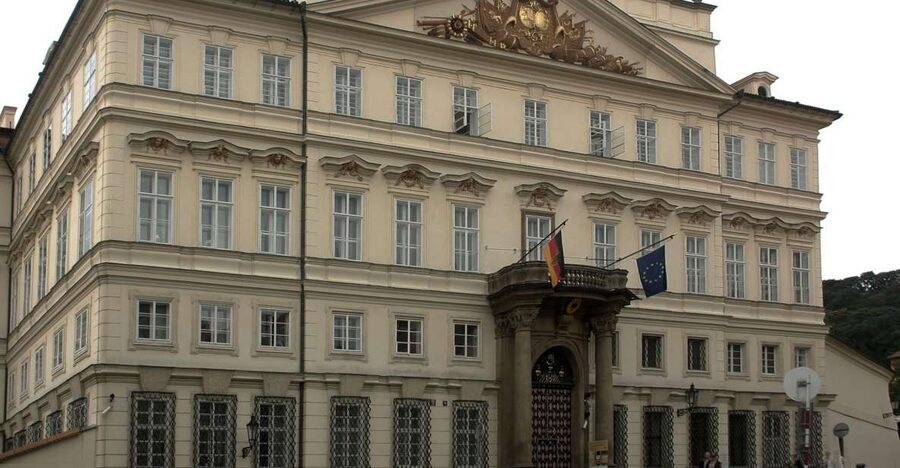
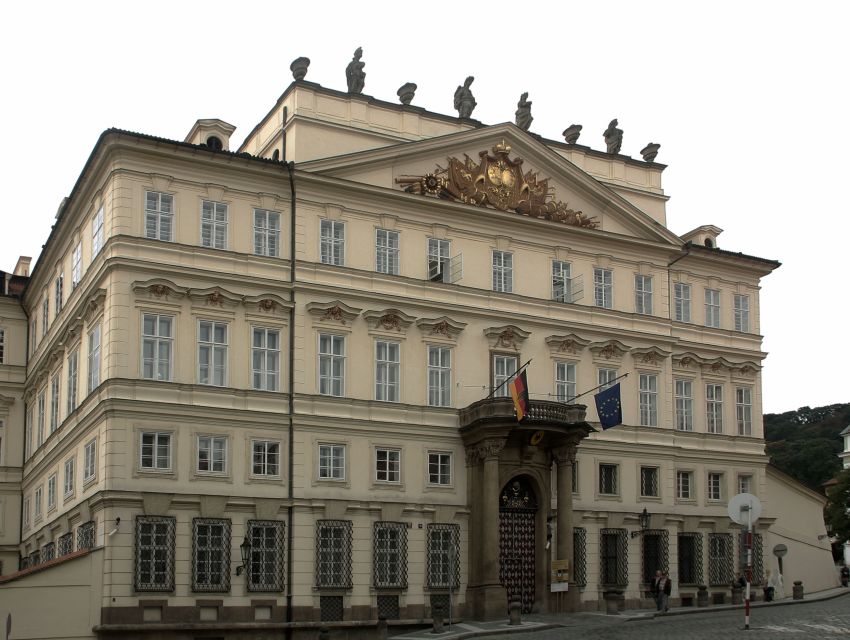
The most moving part of this Prague walking tour is its connection to the German Embassy in 1989, where East German citizens gathered during the refugee crisis that helped bring down communism in Central Europe. You will see the embassy from outside and view the famous balcony where Foreign Minister Hans-Dietrich Genscher delivered his historic announcement. I like that the story is tied to real streets and buildings, not left as a vague classroom lecture.
I also like the way the walk joins Prague’s best-known sights with harder chapters from the 20th century, including Jan Palach, the Prague Spring, and the Velvet Revolution. The main drawback is that the embassy interior is closed to the public, and the route covers a lot of ground in 150 minutes, so it is not a good match for anyone with mobility problems.
Key points of the Prague 1989 walking tour
- Genscher’s famous balcony: See the exterior of the German Embassy and the balcony linked to the announcement that East German refugees could leave for the West.
- A useful history route: Connect Old Town, Josefov, Charles Bridge, Lesser Town, Wenceslas Square, and the Velvet Revolution Memorial in one walk.
- Jan Palach’s story: Visit Jan Palach Square and learn about the philosophy student whose protest became a lasting symbol of resistance after the 1968 Soviet invasion.
- German-speaking guidance: David Klaus leads the experience in German, with a private group option available.
- John Lennon Wall and Charles Bridge: Pair two of Prague’s most photographed locations with political and cultural context.
- Good value for history-minded visitors: At $32 per person for 150 minutes, the tour offers a focused city walk without adding food, museum admission, or hotel transport costs.
Why Prague’s 1989 story begins in the city center
Prague is easy to admire at street level. Spires, bridges, cobbled lanes, and grand squares do much of the work. But the city becomes more meaningful when you understand what happened here under Nazi occupation, communism, and the short-lived reform movement known as the Prague Spring.
This tour gives you that wider frame. It moves through the Old Town, the former Jewish quarter, Charles Bridge, Lesser Town, and Wenceslas Square while explaining how political pressure shaped daily life. The focus is especially strong on 1968 and 1989, two years that changed Czechoslovakia and the rest of Central Europe.
You should expect a walking lecture with regular photo stops rather than a museum-style tour. The guide provides the historical thread while you move between locations. That format works well in Prague because many important events took place in public squares, university areas, streets, and embassy grounds.
The guide is German-speaking, and David Klaus is the named guide associated with this experience. He also offers private groups, which may suit you if you want to ask many questions or keep the pace more personal.
More Walking Tours in Prague:
- Prague: 3-Hour Walking Tour of Old Town & Prague Castle
★ 4.7 · 5,696 reviews - Prague: Ghost Walking Tour Where Legends Come To Life
★ 4.4 · 5,253 reviews - Prague: Jewish Quarter Walking Tour with Admission Tickets
★ 4.7 · 3,729 reviews
Čech’s Bridge and the first look at Prague
The meeting point is in front of the Faculty of Law at Charles University, on náměstí Curieových 7. If you arrive by metro, use Staroměstská Station, about 550 meters away. Tram 17 stops at Pravnicka Fakulta, which is another practical option.
The walk begins around Čech’s Bridge, where you get scenic views and an early orientation to central Prague. This is a short stop, listed at about 10 minutes, so do not expect a long historical presentation here. It is more useful as a starting point that places you near the Old Town, the river, and the route ahead.
Wear comfortable shoes. The tour is only two and a half hours, but it includes streets, bridge walking, alleyways, and stops in several parts of the center. The route is not suitable for people with mobility impairments, an important point to take seriously before booking.
Josefov, the Old Jewish Cemetery, and Prague’s layered past
The route continues through Josefov, Prague’s former Jewish ghetto, with a photo stop at the Old Jewish Cemetery. These stops are brief, about 10 minutes each, so the tour does not function as a full Jewish Quarter visit or cemetery tour.
Still, this part adds useful depth. Prague’s center is not just a collection of pretty façades. Josefov brings attention to the city’s Jewish past and to the way different political periods left their mark on the same compact area.
If you want detailed information about the cemetery’s individual tombs or access to interior sights, you would need a separate visit. Here, the value lies in seeing the district as part of a wider city story before the tour turns more directly toward the political struggles of the 20th century.
Jan Palach Square and the meaning of 1968
At Jan Palach Square, the guide explains the fate of Jan Palach, a student at the Faculty of Philosophy. His protest took place after the Prague Spring of 1968, when Soviet-led forces crushed attempts to reform communist rule in Czechoslovakia.
This is one of the tour’s most important stops because it gives a human face to an otherwise large political event. Palach was not a distant statesman. He was a student, and his action became a symbol of despair, protest, and resistance.
The stop is scheduled for about 10 minutes, including a guided explanation and time for photographs. That is enough for an introduction, but the subject is serious and complex. If Jan Palach’s story interests you greatly, you may want to read more before or after the walk rather than expect a full biography during this short visit.
A few more Prague half-days to weigh up
- Prague: 50-Minute Sightseeing Evening Cruise
★ 4.2 · 33,780 reviews - Prague: Medieval Dinner with Unlimited Drinks
★ 4.4 · 19,847 reviews - Prague: Skip-the-line Castle Ticket and Optional AudioGuide
★ 4.3 · 11,121 reviews - Prague: Castle Tour with Local Guide and Entry Ticket
★ 4.6 · 10,422 reviews
The Velvet Revolution Memorial and Wenceslas Square
The Velvet Revolution Memorial is another central point of the experience. The guide links the memorial to the events of 1989, when peaceful demonstrations helped end communist rule in Czechoslovakia.
The stop lasts around 15 minutes, giving you time to hear the background and take photographs. This is where the tour’s two main threads, 1968 and 1989, begin to connect. The failed reform movement of 1968 and the successful popular uprising two decades later belong to the same story of pressure, resistance, and political change.
The route later reaches Wenceslas Square, one of Prague’s most important public spaces. The tour includes about 15 minutes there, with a guided visit and sightseeing. You will also see the Prague National Museum from the outside, with a shorter five-minute photo stop.
Wenceslas Square is particularly useful for understanding how public demonstrations shaped modern Czech history. The tour does not promise entry to the museum, so think of this as an exterior landmark and historical setting, not a museum visit.
Crossing Charles Bridge toward Lesser Town
Charles Bridge receives about 15 minutes of guided sightseeing and walking. The bridge is one of Prague’s essential sights, but this tour gives it a different role. You are not only crossing a famous medieval bridge for the views. You are moving toward Lesser Town and the German Embassy while hearing how Prague’s streets became connected to the events of 1989.
You will have time for photographs, but this is not a long, quiet bridge visit. Charles Bridge can be crowded, and the tour has several later stops to cover. Keep your group close and watch your footing on the uneven walking surface.
I like this part because it makes the route feel like a real city journey. Prague’s major postcard view becomes a link between Old Town and Malá Strana, rather than a stop isolated from the rest of the city.
John Lennon Wall and the role of public expression
The John Lennon Wall is scheduled for about 10 minutes. You will see the painted memorial and hear about its place in Prague’s culture of protest and expression.
The wall is colorful and photogenic, but its value on this tour is not only visual. It helps show how music, art, and public writing could carry political meaning during the communist period. The stop also gives the tour a change of mood after the serious discussion of Jan Palach and state repression.
Do not expect a long art-history presentation or a formal gallery visit. This is an outdoor photo stop with a guided explanation. It works best as one piece of the larger political story.
The German Embassy and Genscher’s balcony
The final major point is the German Embassy in Prague, reached after a short walk of about 10 minutes from Malostranské Square. You will view the building from outside and see the balcony associated with Hans-Dietrich Genscher, the foreign minister of West Germany.
The background here is central to the tour. In 1989, East German citizens fled through countries including Poland and Hungary and gathered at the West German Embassy in Prague. The embassy became a place of hope and uncertainty as people waited for news about their future.
Genscher’s speech from the balcony delivered the announcement that many had been waiting for. The exact emotional force of the location is hard to grasp from a photograph alone, which is why this stop gives the tour its strongest connection to a single historic moment.
The embassy interior is not open to the public. You should book this experience for the exterior view, the balcony, and the explanation of the refugee crisis, not for an inside visit or a guided tour of embassy rooms.
One personal detail gives the location added weight. During a private tour in November 2024, a participant returned to the embassy area after 36 years. She had stood on the balcony beside Genscher with her parents when they heard the joyful news. That kind of connection shows why this stop can feel far more personal than a standard sightseeing point.
The tour finishes at Malostranské náměstí, a convenient location in Lesser Town for continuing your visit independently.
What the $32 price includes
At $32 per person, the price is reasonable if you want a focused history walk led in German. You are paying for 150 minutes with a licensed German-speaking guide and for the connection between several major sights that would otherwise feel unrelated.
The price does not include food, drinks, hotel transport, or interior admissions. That keeps the cost clear, but it also means you should not compare it with a full-day sightseeing package that includes museums or meals.
The value is strongest for you if:
- You want Prague history explained in German.
- You are interested in the fall of communism and the events of 1989.
- You want major landmarks included without booking a separate general city tour.
- You prefer a private group or a focused route rather than a large standard walk.
- You are comfortable walking steadily for two and a half hours.
It is less useful if you mainly want interiors, extended time at museums, or a relaxed photo tour. The schedule gives each stop a defined purpose, but most visits are short.
Who should book this experience
I would recommend this walk to German-speaking visitors with a strong interest in modern European history. It is also a good choice if you have already seen Prague’s basic sights and now want to understand the political events behind the squares and monuments.
Families with older children may find the subjects worthwhile, especially if the children have studied the Cold War or the division of Europe. The material includes repression, protest, refugees, and a young person’s death, so it may not suit very young children.
Private groups have an advantage here. The subject matter raises questions, and a private format gives you a better chance to pause and ask them. The listed group type allows a private option, though the supplied information does not specify the maximum group size or any extra private-tour fee.
The walk is not suitable for people with mobility impairments. You should also consider the amount of walking between stops, the bridge crossing, and the need to remain outdoors at the embassy.
Booking details that matter
The standard meeting point is the Faculty of Law, while optional pickup is available from hotels in Prague 1, 2, or 3, or from central Prague near Můstek. The meeting point is close enough to Staroměstská metro station to reach on foot, and tram 17 stops nearby.
The experience lasts 150 minutes. Starting times depend on availability, so check the schedule for your date. You can cancel up to 24 hours in advance for a full refund, and the reserve-now, pay-later option keeps payment flexible while you finalize your plans.
The listed language is German. Confirm that this suits everyone in your group before booking, especially if some members would prefer English or Czech.
Should you book the Prague 1989 walking tour?
Book it if you want modern Prague history in German, especially the connection between Jan Palach, the Velvet Revolution, East German refugees, and Genscher’s embassy speech. The combination of Charles Bridge, John Lennon Wall, Wenceslas Square, and the German Embassy gives you both classic sights and serious historical context.
Skip it if you need wheelchair-friendly access, want to tour the embassy interior, or prefer a slow walk with long visits at each stop. For the right audience, $32 buys a clear, tightly planned route and a story that turns familiar Prague landmarks into meaningful places.
FAQ
Is the tour conducted in German?
Yes. The listed live guide language is German, and the licensed guide is associated with David Klaus Travel Manager Service Prag.
How long does the walking tour last?
The tour lasts 150 minutes, or two and a half hours.
Where does the tour begin?
The standard meeting point is in front of the Faculty of Law at Charles University, nám. Curieových 7, in Prague’s Old Town.
How can I reach the meeting point by public transport?
From the metro, get off at Staroměstská Station, about 550 meters from the meeting point. You can also take tram 17 and get off at Pravnicka Fakulta.
Can I go inside the German Embassy?
No. The embassy interior is not open to the public. The tour views the building and the famous balcony from outside.
Is hotel pickup available?
Optional pickup is available from hotels in Prague 1, 2, or 3, or in the city center near the Můstek metro station.
Is the tour suitable for people with mobility impairments?
No. The experience is listed as unsuitable for people with mobility impairments because it involves walking through several central districts, crossing Charles Bridge, and moving between multiple outdoor stops.
Recently added around Prague
- St Vitus Cathedral and Prague Castle Private Walking Tour★ 4.0 · 3 reviews
- Prague: Old Town and Jewish Quarter Small-Group Tour★ 5.0 · 3 reviews
- Royal Splendor Unveiled Private Prague Castle Interior Tour★ 3.5 · 3 reviews
- Prague Castle Interiors & Changing of the Guard-Small group★ 5.0 · 3 reviews
- Prague: Bohemian & Saxon Switzerland National Park Day Trip★ 5.0 · 3 reviews
- Running Tour of Prague. Your private 6-9K intro★ 5.0 · 3 reviews
- PRAGUE AIRSOFT SHOOTING GAMES★ 4.7 · 3 reviews
- Private walking tour and Boat cruise Best of Prague★ 5.0 · 3 reviews
Walking Tours, compared.
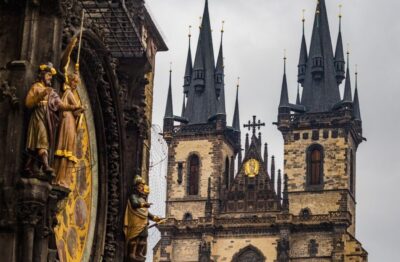
3-Hour Walking Tour of Old Town & Prague Castle
Read our review →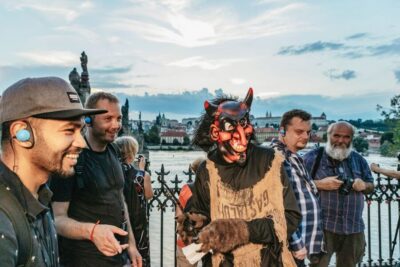
Ghost Walking Tour Where Legends Come To Life
Read our review →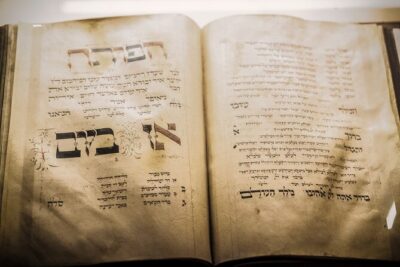
Jewish Quarter Walking Tour with Admission Tickets
Read our review →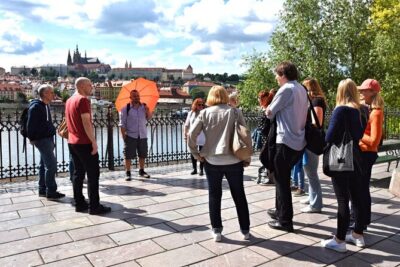
Prague Guided Walking Tour and Cruise with Authentic Czech Lunch
Read our review →
Old Town and Jewish Quarter Guided Walking Tour
Read our review →
Prague Ghost and Legend of Old Town Walking Tour
Read our review →
Prague 3-hour Afternoon Walking Tour including Prague Castle
Read our review →
Ghosts and Legends Nighttime Guided Walking Tour
Read our review →Browse the lists this tour appears in