

Reviewed · MUSEUMS
Prague: Museum of Senses Admission Ticket
Prague’s Museum of Senses turns perception into a hands-on game. You pass through a huge green entrance, work your way through a mirror maze, then meet rooms that twist your balance, sight, hearing, and sense of scale. The bed of more than 3,500 nails and the spinning Vortex tunnel are the sort of oddball stops that make this more than a standard museum visit.
I like the freedom to take photographs and record videos throughout the museum, and I like how easily children and adults can play together. The friendly staff can explain how the illusions work, and some exhibits even point out the best place to stand for a photo. The main drawback is size: many people finish in 20 to 60 minutes, so the $18 price feels better when you treat this as a fun break than as a major half-day attraction.
Key points at a glance
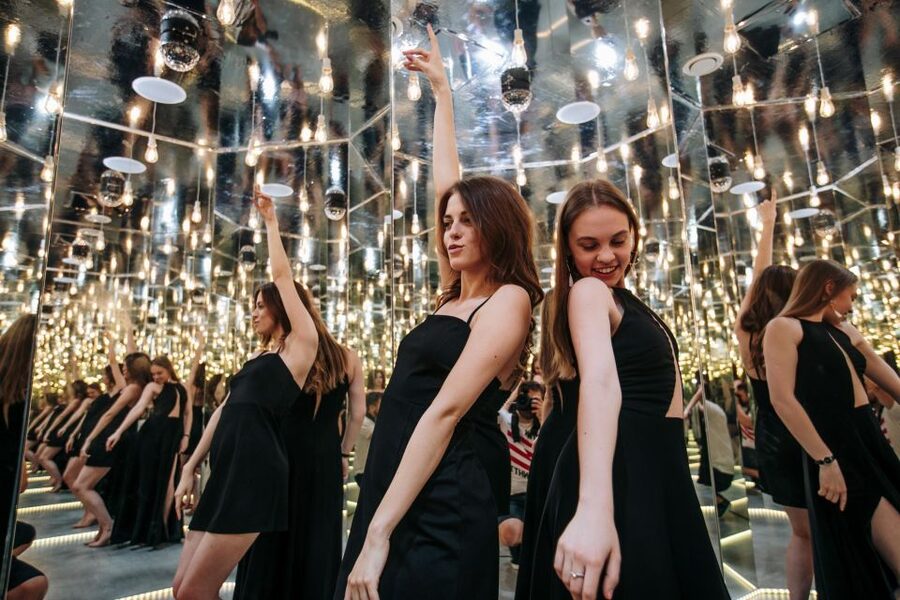
- More than 50 interactive exhibits: Expect optical illusions, touch-based displays, balance tests, sound effects, and playful rooms rather than traditional museum cases.
- The mirror maze comes first: Enter through the giant green gate and begin with a maze that quickly changes your sense of direction.
- The Vortex tunnel is a highlight: The spinning passage can make you feel as if the floor is moving, and it may not suit anyone prone to motion sickness.
- A strong rainy-day and family choice: The museum offers an easy indoor activity near Wenceslas Square, with something for children, teenagers, and adults.
- Photo-friendly by design: You can take pictures and live videos, and staff may show you where to stand for the best effect.
- Small footprint, short visit: Plan for a compact attraction. Crowds can create lines at the most popular exhibits.
Finding the museum near Wenceslas Square
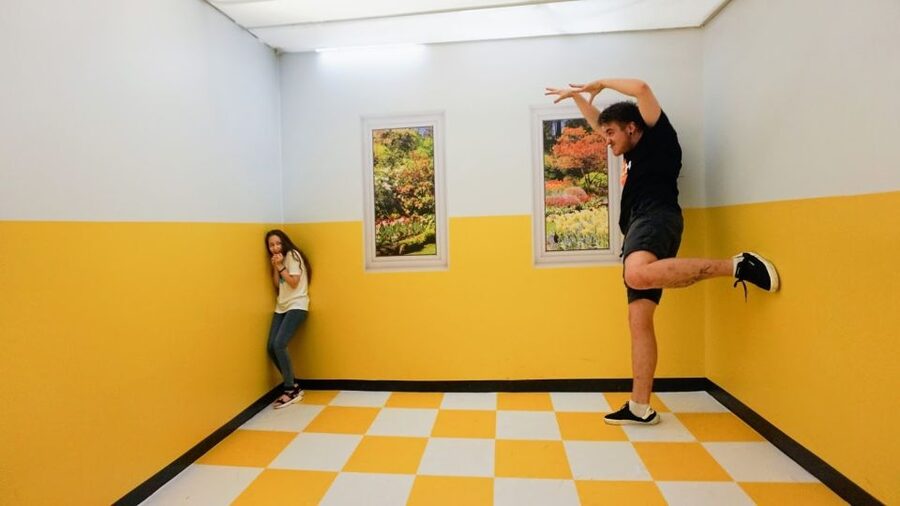
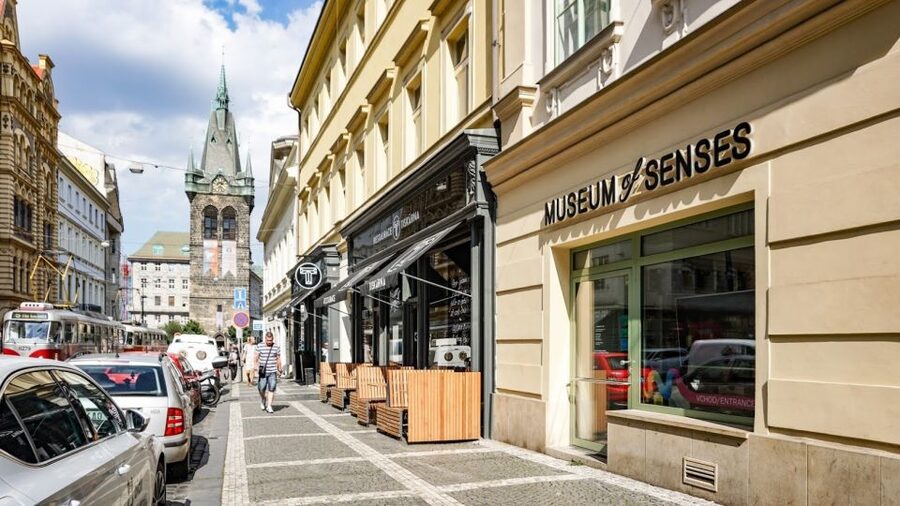
The Museum of Senses is at Jindřišská 20, 110 00 Prague, just around the corner from Wenceslas Square. That central address makes it easy to add to a day of sightseeing, especially when you need shelter from rain, heat, or cold.
You enter through a gigantic green gate. It is a useful visual marker, and the location is easier to reach than an attraction tucked away in a residential district. The experience is self-guided, with help available in Czech and English from the host or greeter.
Bring a charged smartphone or camera. You will want both hands free for some displays, but the museum is built around taking pictures, so arriving with a dead phone would be a small travel tragedy. Food, drinks, and smoking are not allowed inside.
More Museums in Prague:
- Prague: Museum of Fantastic Illusions Entry Ticket
★ 4.3 · 4,337 reviews - IAM Illusion Art Museum Entry Ticket
★ 4.2 · 1,664 reviews - IAM Illusion Art Museum Prague Fast Pass Ticket
★ 5.0 · 957 reviews
The mirror maze sets the tone
The first major stop is a mirror maze. It is not just a passage to the rest of the museum. It gives you an immediate taste of the central idea: your eyes can offer confident advice that turns out to be wrong.
You will use reflections to find your way, and the space is particularly good for group photographs. Children tend to enjoy the puzzle of finding the exit, while adults often become just as competitive. It is a quick opening, but it changes your expectations for the rooms that follow.
The museum works best when you do not hurry from one display to the next. Look at how each illusion is built, test it from more than one position, and let everyone in your group try. Some exhibits are amusing for ten seconds. Others become more interesting when you work out why your brain is being fooled.
Rooms built for touch, balance, and odd sensations
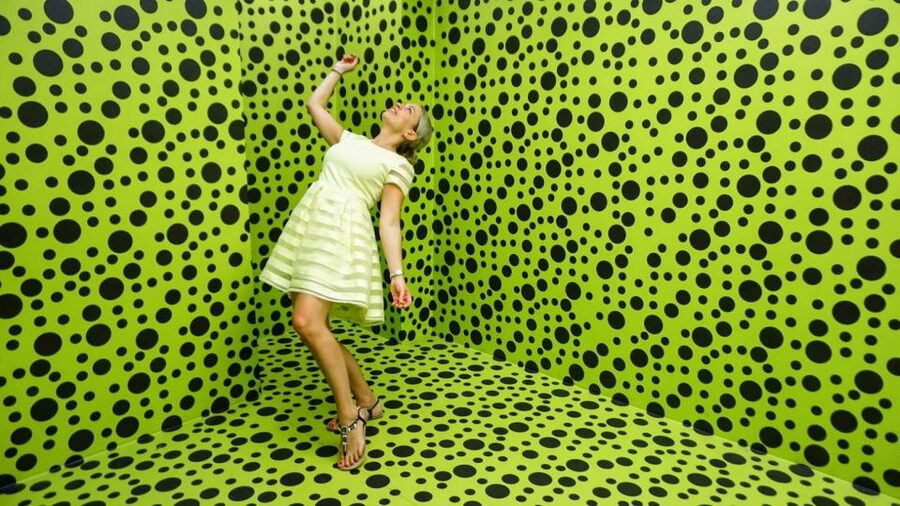
The exhibits ask you to do things rather than simply look at them. You might test your balance, examine distorted images, listen closely, or use touch to understand an effect. The point is not a formal lesson in science, but you will leave with a clearer sense of how easily sight and other senses can be misled.
One memorable stop is the Pin Wall. Press your hand, face, or another object against the pins and leave a temporary three-dimensional impression. It is simple, tactile, and easy to understand without much explanation. It also creates a good group picture because one person can pose while another captures the result.
The bed of nails is the museum’s most famous physical challenge. More than 3,500 nails support the surface, creating a dramatic image that looks far more painful than it is intended to be. You can decide for yourself how far to go. The exhibit is a good example of the museum’s approach: a familiar fear becomes a safe, visual experiment.
Some optical effects can feel surprisingly convincing. One visitor found certain displays so realistic that they caused a queasy reaction. That is not a warning to avoid the museum, but it is useful to know if spinning rooms, visual distortion, or unusual perspectives bother you.
Walking through the Vortex tunnel
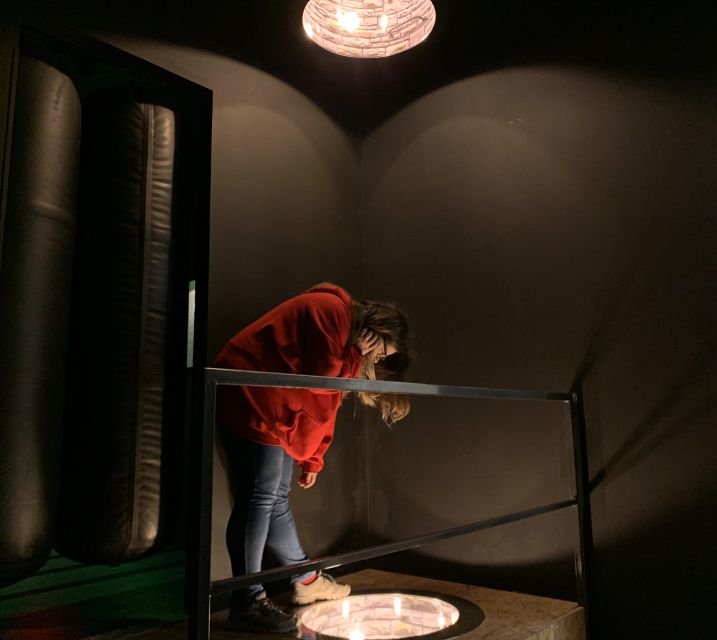
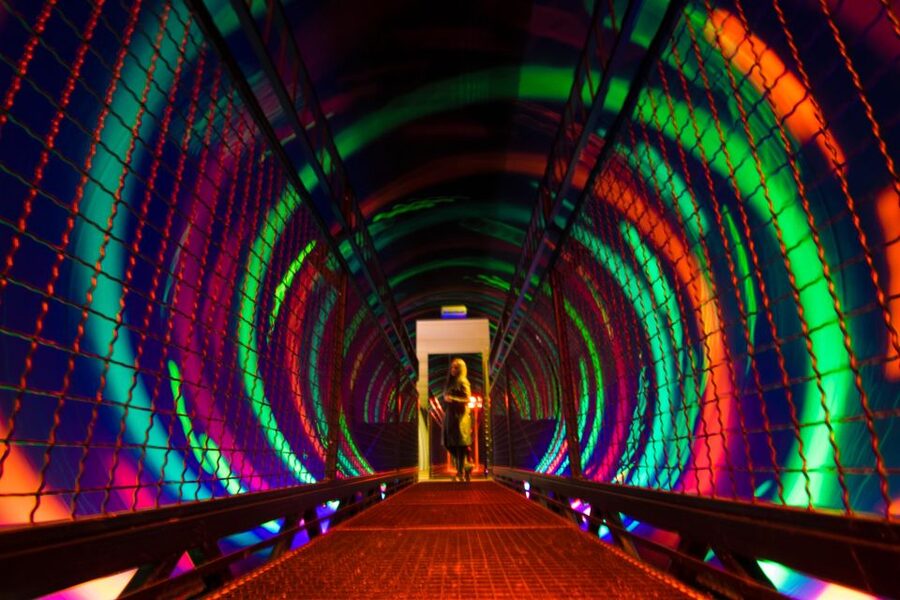
The Vortex is a spinning tunnel designed to confuse your sense of balance. The structure rotates around the walkway, making the space appear to move even as you try to walk straight.
It is a short experience, but it can be intense. Hold the rail if one is available and take your time. If you know that motion-based attractions make you dizzy, you may prefer to watch the rest of your group. This is one place where the museum’s playful tone should not pressure you into trying every exhibit.
The Vortex also shows why this attraction works well for mixed-age groups. Teenagers may want to race through it, younger children may need encouragement, and adults often discover that balance is less dependable than they thought. The museum does not require athletic ability, but some walking and standing are involved.
A few more Prague half-days to weigh up
- Prague: 50-Minute Sightseeing Evening Cruise
★ 4.2 · 33,780 reviews - Prague: Medieval Dinner with Unlimited Drinks
★ 4.4 · 19,847 reviews - Prague: Skip-the-line Castle Ticket and Optional AudioGuide
★ 4.3 · 11,121 reviews - Prague: Castle Tour with Local Guide and Entry Ticket
★ 4.6 · 10,422 reviews
The best part is often the photograph
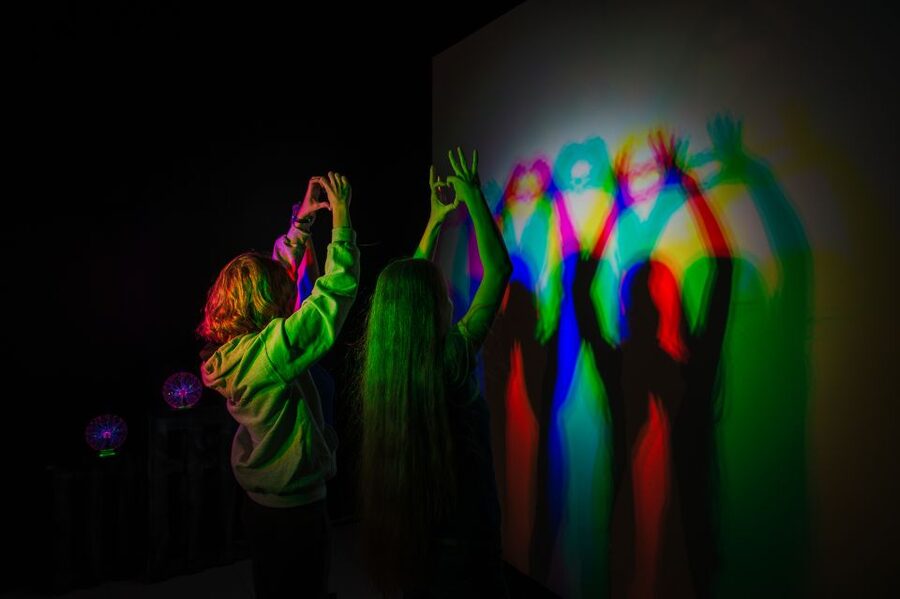
This museum is designed for pictures. Many displays are most successful when you capture the visual trick from the correct spot. Staff can point out where to stand, and some sections identify the best position for taking a photograph.
You can take as many pictures as you like and broadcast live video to family or friends. That makes the experience more social than a quiet museum visit. A person who does not want to try an exhibit can still take the camera role, then switch places.
Do not count on a staff member being free to take every group picture. At busy times, there may be only one person at the entrance or staff may be helping other visitors. Plan to use a companion’s phone, a timer, or a selfie stick if you have one and it is permitted.
The displays reward a little patience. Stand where the instructions suggest, frame the shot carefully, and check the result before moving on. A rushed photograph can miss the illusion completely. The best memories here usually come from the picture you create, not from simply walking past the exhibit.
How long should you allow?
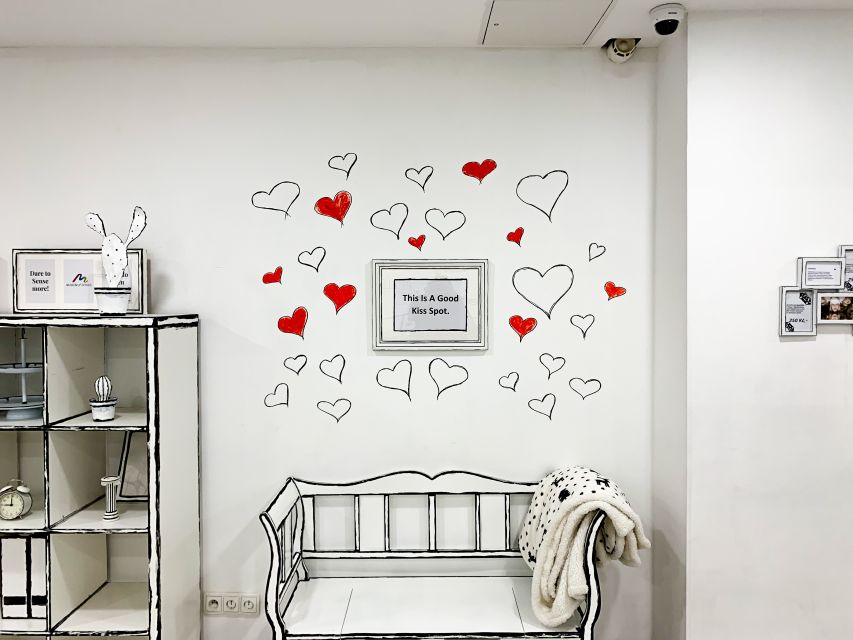
The ticket is valid for one day from first activation, but the museum itself is a compact stop. Some people complete it in about 20 minutes. Others spend an hour or two by taking photographs, repeating favorite exhibits, and letting children explore at their own pace.
I would allow roughly 45 minutes for a normal visit, with extra time if your group enjoys posing and trying everything. That gives you a practical schedule without treating the attraction as a full morning or afternoon.
The different estimates are worth taking seriously. A group that moves quickly may feel finished after half an hour. A family with children may stay longer because every person wants a turn. The museum’s size does not change, so the value depends heavily on how actively you use it.
The last entrance is 45 minutes before closing. Do not arrive near closing and assume you can squeeze in a complete visit. The attraction is much easier to enjoy when you have time for the displays that involve a queue.
Crowds and the question of value
Admission costs $18 per person. That is reasonable if you want a short, central, interactive activity with strong photo potential. It becomes less convincing if you expect a large museum with extensive galleries or several hours of content.
Crowds affect the calculation. The museum has several rooms, but the footprint is limited, and lines can form at popular attractions. Going earlier in the day may help. One family found the museum comfortably uncrowded early in the morning, while another found that unfiltered crowds caused a wait at the displays.
The attraction also overlaps with Prague’s Museum of Fantastic Illusions. If you visit both, some of the visual tricks may feel repetitive. The Museum of Senses makes the most sense when you want a tactile, playful stop rather than another collection of posed optical photographs.
A small gift shop adds a final browsing stop, with fun items aimed at the same playful spirit as the exhibits. You do not need to buy anything, but it can be a pleasant way to finish if children are with you.
Who will enjoy this most?
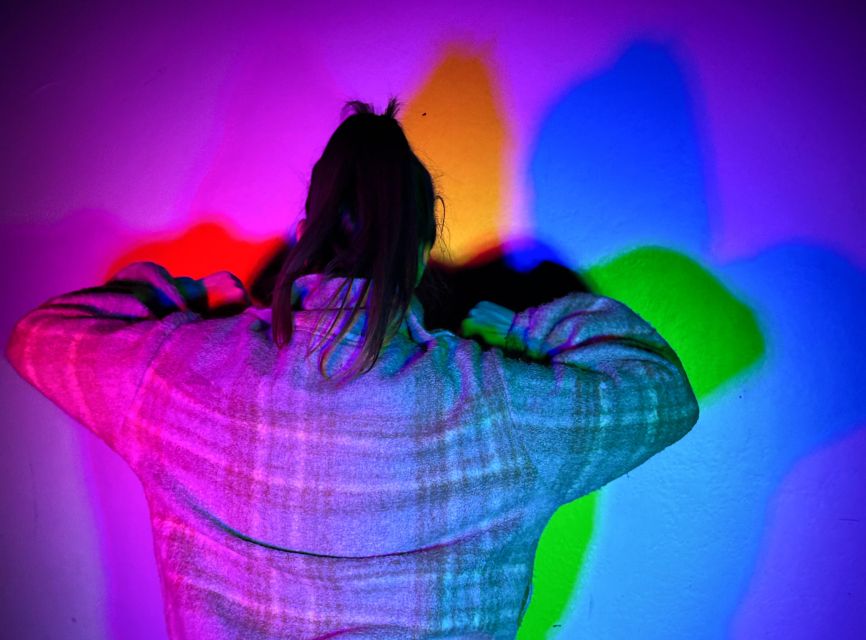
Families with children around school age and teenagers are the clearest match. The displays are easy to understand, physical without being demanding, and built for shared laughter. A family with children aged 12 and 14 can find plenty to do, while younger children may enjoy the mirrors, pins, and visual tricks even more.
Adults without children can have a good time too, especially if you enjoy photography or unusual science-themed attractions. I would not choose this as a substitute for Prague’s major historic sights, but it is a useful change of pace after churches, galleries, and old-town streets.
It also works for groups. A college study group or a party of friends can move through the rooms together, compare reactions, and take turns behind the camera. The museum gives you something active to do, rather than another place where everyone quietly looks at objects.
The attraction is less suited to anyone seeking a long, quiet, academic museum visit. It is also a poor match for someone who cannot walk comfortably or who has strong sensitivity to spinning visual effects. The museum is not wheelchair accessible, so check your needs carefully before booking.
Practical booking details
The admission ticket includes Wi-Fi. A host or greeter can assist in Czech or English, and the activity is valid for one day from first activation. You can reserve now and pay later, which is useful if your Prague schedule is still changing.
Free cancellation is available up to 24 hours in advance for a full refund. That policy gives you some room to adjust plans, but it does not solve the issue of arriving too late in the day. Keep the 45-minute last-entry rule in mind.
The meeting point is simply the museum entrance at Jindřišská 20. You do not need to meet a guide elsewhere or join a walking group. The visit is an independent, exhibit-by-exhibit experience, with staff available to explain the illusions when needed.
Should you book the Museum of Senses?
Book it if you want a short, cheerful indoor activity near Wenceslas Square, especially with children, teenagers, or friends who enjoy taking photographs. The mirror maze, Vortex tunnel, Pin Wall, and nail bed give the visit several clear highlights, and the friendly staff can make the exhibits easier to understand.
Think twice if you expect a large museum or a full afternoon of entertainment. Some people finish in 20 to 30 minutes, and the $18 price may feel high for a compact attraction. For the best value, visit early, take your time with the photographs, and use it as a break between Prague’s bigger sights.
FAQ
Where is the Museum of Senses in Prague?
The museum is at Jindřišská 20, 110 00 Prague, just around the corner from Wenceslas Square in the central part of the city.
How much does admission cost?
The listed price is $18 per person.
How long does a visit usually take?
The ticket is valid for one day from first activation, but the physical visit is usually much shorter. Depending on your pace and how many photographs you take, you might spend about 20 minutes to two hours inside.
What exhibits are included?
The museum has more than 50 interactive exhibits. They include a mirror maze, the spinning Vortex tunnel, a Pin Wall, optical illusions, and a bed of nails with more than 3,500 nails.
Is the Museum of Senses suitable for children?
Yes. The concept is designed for both children and adults, and the interactive exhibits are especially popular with families and teenagers.
Can I take photographs and videos inside?
Yes. You are encouraged to take photographs and broadcast live videos to family and friends. Bring a camera or a charged smartphone.
Are food, drinks, or smoking allowed?
No. Smoking, food, and drinks are not allowed inside the museum.
Is the museum wheelchair accessible?
The available information states that the museum is not wheelchair accessible. Some walking is also involved, so consider your mobility needs before booking.
Recently added around Prague
- St Vitus Cathedral and Prague Castle Private Walking Tour★ 4.0 · 3 reviews
- Prague: Old Town and Jewish Quarter Small-Group Tour★ 5.0 · 3 reviews
- Royal Splendor Unveiled Private Prague Castle Interior Tour★ 3.5 · 3 reviews
- Prague Castle Interiors & Changing of the Guard-Small group★ 5.0 · 3 reviews
- Prague: Bohemian & Saxon Switzerland National Park Day Trip★ 5.0 · 3 reviews
- Running Tour of Prague. Your private 6-9K intro★ 5.0 · 3 reviews
- PRAGUE AIRSOFT SHOOTING GAMES★ 4.7 · 3 reviews
- Private walking tour and Boat cruise Best of Prague★ 5.0 · 3 reviews
Museums, compared.
IAM Illusion Art Museum Prague Fast Pass Ticket
Read our review →
Ticket to Audiovisual Light Art at Lumia Gallery
Read our review →


Browse the lists this tour appears in