
Reviewed · WALKING TOURS
Prague: Private Cubism & Art Nouveau Walking Tour
Prague’s Cubist architecture is the star here. This is not just a walk past the Municipal House and Old Town Square. Your guide points out angular façades, unusual street details, and buildings most people hurry past, then connects them to Prague’s growth between the 1880s and 1914. I like the private format and the chance to see a style that is rare outside the Czech capital. I also like that the tour covers both Cubism and Art Nouveau, two very different answers to the same question: how should a modern city look?
The main drawback is the price. At $229 for up to two people, this makes more sense for a couple or small private party than for a solo visitor. Three hours also gives you a strong introduction rather than a full architectural study, and the museums mentioned are not part of the guided tour.
Key details at a glance
- Prague’s rare Cubist buildings: See an architectural style that is unusually well represented in the city.
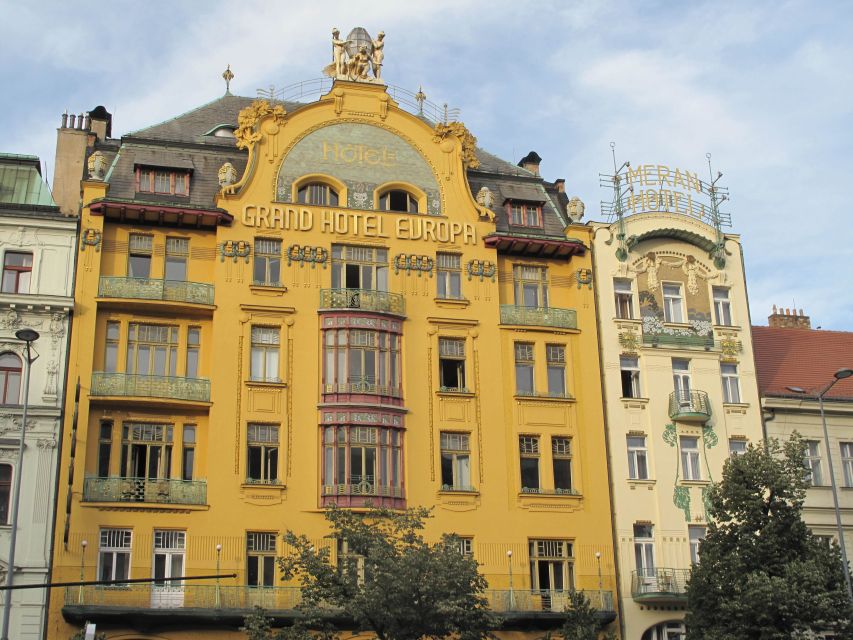
- Art Nouveau landmarks: Pass the Municipal House, Wenceslas Square, National Avenue, Old Town Square, and the Jewish quarter.
- Hotel pickup: Your private guide meets you at your hotel before the walk begins.
- A private three-hour route: Ask questions freely and set the pace around your interests.
- Four guide languages: Tours are offered in English, French, German, and Russian.
- Good museum add-ons: Continue independently at the Museum of Czech Cubism or the Museum of Alfons Mucha.
Why Prague is the right city for this architecture walk
Prague is famous for its medieval lanes, Gothic towers, and Baroque churches. Those landmarks deserve your time, but they can hide a later story. During the second half of the 19th century, the city grew richer and more ambitious. Banks, companies, and property owners rebuilt or enlarged buildings to display their new status.
From the 1880s through 1914, new architectural ideas changed the center of Prague. Art Nouveau brought flowing lines, decorative façades, floral details, and a taste for elaborate public buildings. Cubism took a sharper path, using geometric forms and angular shapes in a way that is rare in city architecture.
I like this tour because it changes how you look at streets you might otherwise treat as scenery. A guide can show you that Prague’s story did not stop with the Old Town’s medieval buildings. The city center becomes a record of money, confidence, fashion, and competing ideas about modern life.
More Walking Tours in Prague:
- Prague: 3-Hour Walking Tour of Old Town & Prague Castle
★ 4.7 · 5,696 reviews - Prague: Ghost Walking Tour Where Legends Come To Life
★ 4.4 · 5,253 reviews - Prague: Jewish Quarter Walking Tour with Admission Tickets
★ 4.7 · 3,729 reviews
Beginning with hotel pickup and a private guide
The experience includes pickup from your hotel, which removes one small but useful problem at the start of the day. You do not need to find an unfamiliar meeting point in central Prague, and you can begin by telling the guide what interests you most.
The group is private, so you are not sharing the guide with a busload of strangers. That matters on an architecture walk. You can stop to ask why a façade looks the way it does, request more detail about a particular building, or spend less time on a style you already understand.
A private tour also works well for mixed interests. One person may care about design, while another wants more city history. A guide can explain the architecture without turning the walk into a lecture. The available languages are English, French, German, and Russian.
The guide’s name is not specified in the tour details, so you should not book this expecting a particular named expert. What you can expect is a live guide focused on Prague’s buildings and urban changes.
Spotting Art Nouveau in Prague’s grand center
Art Nouveau is the easier style to recognize at first. Its buildings often use curving lines, decorative plant forms, sculpted figures, and elaborate surface work. In Prague, this style appeared as businesses, banks, and wealthy owners commissioned buildings that would announce success.
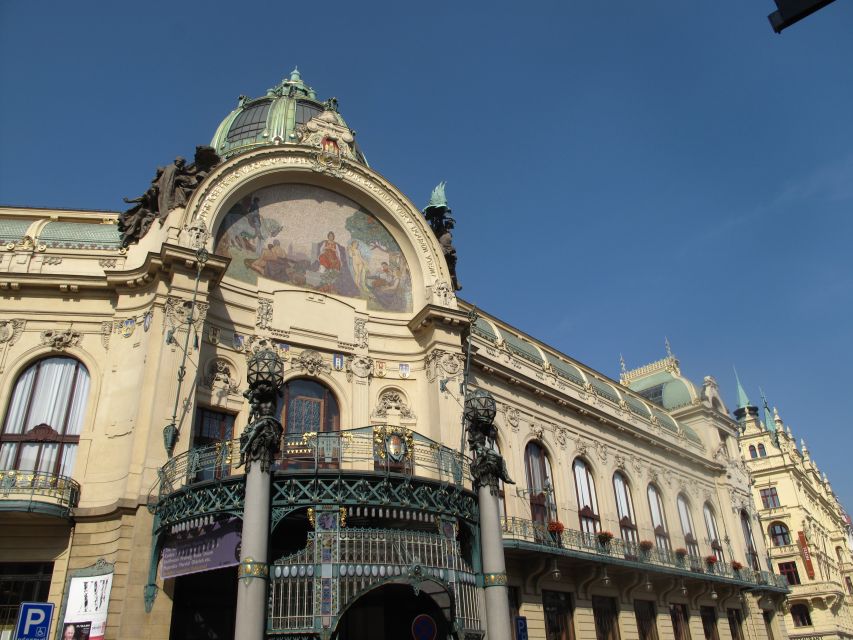
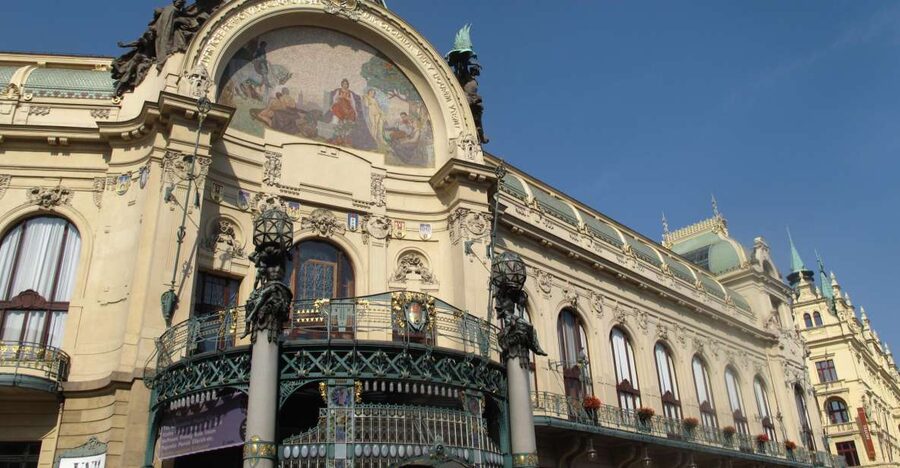
The route may take you past the Municipal House, one of the city’s key Art Nouveau sights. Even if you have already seen it from the outside, a guide can help you read its decoration and place it within Prague’s turn-of-the-century building boom. The point is not simply that the building is pretty. Its design reflects a period when public architecture became a form of civic display.
You also pass buildings around Wenceslas Square. This broad central space is often treated as a shopping and meeting area, but its surrounding façades show how Prague changed from an older town into a modern capital. Look upward. The lower floors may be filled with shops and traffic, while the upper sections reveal a more formal architectural face.
National Avenue offers another chance to compare styles within a compact part of the center. The same district can contain old street patterns, later additions, and decorative façades from Prague’s period of expansion. A guide helps separate the layers rather than presenting the city as one unchanging picture.
The route can also include Old Town Square and the Jewish quarter. These areas are known for older landmarks, but the tour focuses on later buildings and details that are easy to miss beside famous monuments. That is one of the strongest reasons to book this walk: you are encouraged to look at the parts of Prague that guidebooks often place in the margins.
Finding Cubism beyond paintings and furniture
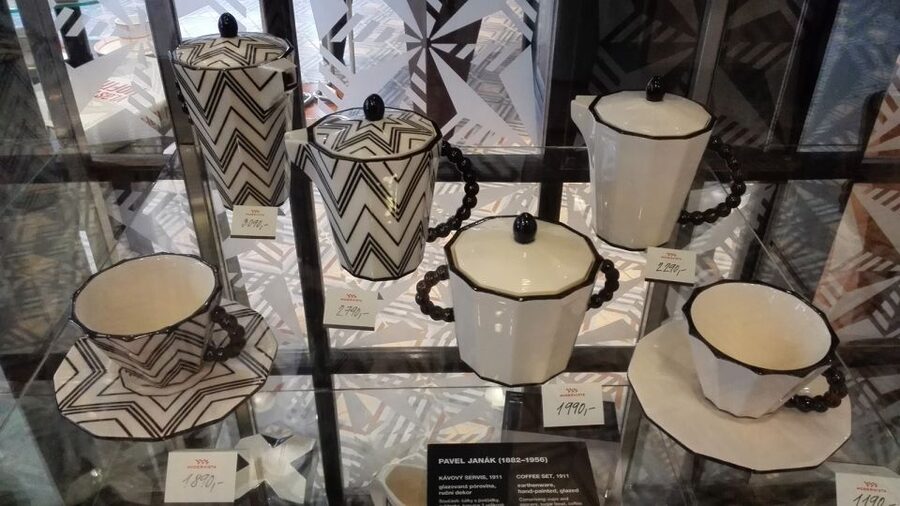
Cubism is where this experience becomes unusual. Most people first meet Cubism through painting, but Prague applied the idea to buildings and street objects. Angular forms, sharp planes, and geometric patterns can appear in places where you might expect the softer decoration of Art Nouveau.
Your guide shows examples in the city center and explains what makes them Cubist. The benefit is visual. Once someone points out the slanted lines and faceted shapes, you may start seeing them on nearby buildings and smaller street elements.
Prague is particularly important for this style because architectural Cubism is difficult to find in many other cities. That gives the walk a clear purpose. You are not simply collecting another set of attractive façades. You are looking at a local expression of a major European art movement.
The Cubist section should appeal to anyone who likes design, photography, urban history, or details that reward a slower pace. It is also a good choice if you have already visited Prague’s main churches and palaces and want a subject that feels less familiar.
Keep your expectations practical. The tour does not promise entry into every building, and the details supplied focus on seeing and discussing architecture from the city streets. If you want a long indoor museum visit, plan one separately.
A few more Prague half-days to weigh up
- Prague: 50-Minute Sightseeing Evening Cruise
★ 4.2 · 33,780 reviews - Prague: Medieval Dinner with Unlimited Drinks
★ 4.4 · 19,847 reviews - Prague: Skip-the-line Castle Ticket and Optional AudioGuide
★ 4.3 · 11,121 reviews - Prague: Castle Tour with Local Guide and Entry Ticket
★ 4.6 · 10,422 reviews
The Old Town and New Town through a different lens
The tour covers both the Old Town and New Town, which gives you useful contrast. Prague’s Old Town is packed with older streets and famous squares. The New Town, despite its name, is also historic, but it offers a broader setting for understanding the city’s later growth.
This pairing helps you see why owners rebuilt or enlarged properties. A new façade could mark a company’s success, attract customers, or make a building look current in a changing city. Architecture here is not isolated art. It is tied to commerce, land ownership, public image, and the rise of a wealthier urban society.
I would pay close attention to the transitions between districts. You may find that the most interesting comparison is not between two famous buildings, but between a medieval street pattern and a later façade fitted into it. Prague’s architectural character often comes from these layers sitting side by side.
The Jewish quarter adds another part of the city center to the walk. The supplied details do not promise a full Jewish-history tour, so treat it as one architectural area among several rather than the main theme. Your guide’s focus remains the later Art Nouveau and Cubist development.
What the three-hour length really gives you
Three hours is a sensible length for this subject. It is long enough to move beyond a quick introduction, but short enough to fit into a busy Prague schedule. You can see several districts and styles without giving up an entire day.
The trade-off is depth. A specialist could spend hours on one building, one architect, or one artistic movement. This tour instead gives you a broad set of examples and the tools to recognize them later.
I like that balance for a first visit. You get a framework for the city, then you can revisit a favorite street or building on your own. If Art Nouveau or Cubism is your main reason for coming to Prague, you may want more time afterward at a museum.
The route is a walking experience, so comfortable shoes are sensible even though the activity is listed as wheelchair accessible. Since the exact route and starting time depend on availability, check the schedule before booking if you need a particular morning or afternoon slot.
Museum follow-ups: Czech Cubism and Alfons Mucha
After the walking tour, you can continue independently at the Museum of Czech Cubism. This is the natural follow-up if the angular buildings catch your attention. The guided walk gives you the street context, while a museum visit can help you examine the movement through objects and displays at a slower pace.
For Art Nouveau, the suggested follow-up is the Museum of Alfons Mucha. Mucha was a leading Czech Art Nouveau artist, and his work offers a useful contrast to the hard geometry of Cubist design. If you enjoy decorative lines, posters, figures, and ornamental detail, this museum may be the better choice.
Neither museum visit is included in the private walking tour. That is worth remembering when planning both time and spending. The advantage is flexibility: you can decide afterward which style deserves more attention instead of paying for a museum visit you may not want.
Price, private value, and who should book
The price is $229 per group of up to two people. For two people, that works out to $114.50 each. For a couple who wants a personal introduction to Prague’s architecture, the cost can be reasonable, especially with hotel pickup and a private guide.
For one person, the price is harder to justify. You pay the full group rate, so a solo visitor should compare it with a regular group walk or a self-guided architecture route. The private format is the main value here, not a long list of included extras.
I would consider this tour a good fit for:
- Couples who want a focused private walk
- First-time visitors who enjoy buildings more than shopping
- Repeat visitors looking for a less familiar side of Prague
- Art, design, and photography enthusiasts
- Families or friends who want to ask questions at their own pace
- Visitors who prefer a guide in English, French, German, or Russian
It may be less suitable if you want interior access, a museum tour, or a general overview of every major Prague sight. This is a focused architecture experience, not a complete city tour.
What the strong feedback tells me
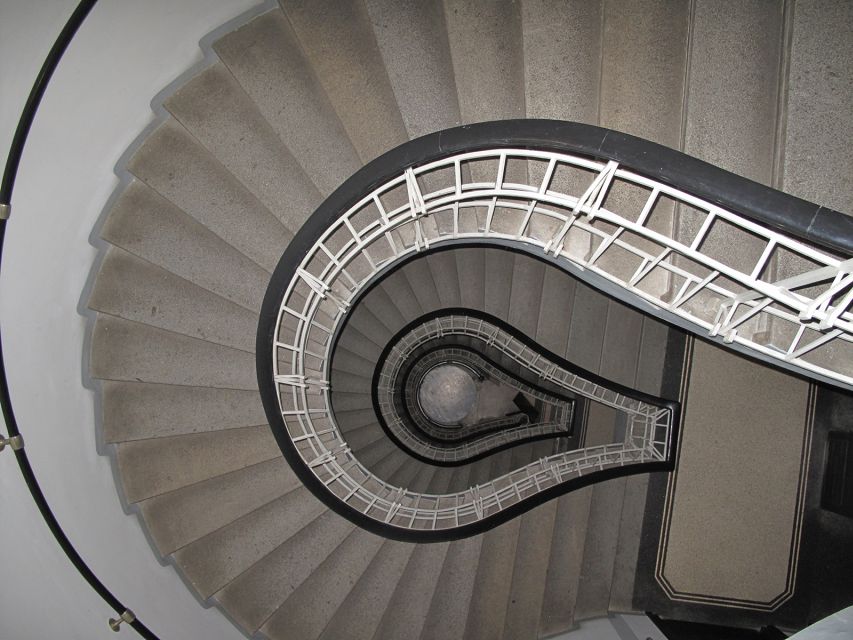
The most consistent praise centers on the guides and the unusual sights. People describe the guides as competent and well prepared, with particular appreciation for discovering less obvious parts of Prague and discussing the city’s past.
That matches the design of the tour. Its success depends on explanation. Without a guide, you can admire a façade, but you may not recognize why it matters or how it fits into the city’s development.
The tour has a five out of five rating from 15 reviews, with positive comments dating from 2022 through June 2025. One German-speaking participant described the guide as very competent and praised the chance to see lesser-known beauty while exploring Prague’s history. Another short response called the experience absolutely fantastic, while other feedback highlighted the exciting architecture discovered during the walk.
Those comments point to a clear strength: this is best when you want someone to make overlooked buildings meaningful. They do not prove that every guide will match every personal taste, but they support the idea that guide quality is central to the experience.
Practical booking points before you decide
You can cancel up to 24 hours before the tour for a full refund, and you can reserve now while paying later. That helps if your Prague schedule is still shifting.
Pickup is included from your hotel. The activity is listed as wheelchair accessible, but the exact street conditions and route details are not provided, so ask for clarification if you have specific mobility needs.
The tour is private, and the group size is limited to the people in your booking. Starting times depend on availability. Since the duration is fixed at three hours, look for a slot that leaves enough time for your next planned activity, especially if you want to visit the Cubism or Mucha museum afterward.
Should you book this Prague architecture tour?
Book it if you want rare Cubist architecture, enjoy asking questions, and prefer a private guide to a standard highlights walk. It is especially worthwhile for two people sharing the $229 group price, since the private format and hotel pickup make the outing easy to fit into a city break.
Skip it if your main goal is Prague Castle, the Charles Bridge, or interior visits. Those are not the focus. You should also think twice if you are traveling alone and watching every dollar.
For the right reader, this tour adds a sharp new layer to Prague. You still see familiar places such as Old Town Square, Wenceslas Square, and the Municipal House, but you learn to look above the shop signs and beyond the famous monuments. That change in attention is the real payoff.
FAQ
How long is the Prague Cubism and Art Nouveau walking tour?
The tour lasts three hours.
Is the tour private?
Yes. It is offered as a private group experience.
How many people can join for the listed price?
The price of $229 covers a group of up to two people.
Is hotel pickup included?
Yes. The guide picks you up from your hotel.
Which languages are available?
The live guide is available in English, French, German, and Russian.
Does the tour include museum admission?
No. After the walk, you can visit the Museum of Czech Cubism or the Museum of Alfons Mucha independently.
Can I cancel for a full refund?
Yes. You can cancel up to 24 hours in advance for a full refund.
Recently added around Prague
- St Vitus Cathedral and Prague Castle Private Walking Tour★ 4.0 · 3 reviews
- Prague: Old Town and Jewish Quarter Small-Group Tour★ 5.0 · 3 reviews
- Prague Castle Interiors & Changing of the Guard-Small group★ 5.0 · 3 reviews
- Royal Splendor Unveiled Private Prague Castle Interior Tour★ 3.5 · 3 reviews
- Prague: Bohemian & Saxon Switzerland National Park Day Trip★ 5.0 · 3 reviews
- Running Tour of Prague. Your private 6-9K intro★ 5.0 · 3 reviews
- Private walking tour and Boat cruise Best of Prague★ 5.0 · 3 reviews
- Discover Prague’s most Photogenic Spots with a Local★ 3.5 · 3 reviews
Walking Tours, compared.
3-Hour Walking Tour of Old Town & Prague Castle
Read our review →
Ghost Walking Tour Where Legends Come To Life
Read our review →
Jewish Quarter Walking Tour with Admission Tickets
Read our review →
Prague Guided Walking Tour and Cruise with Authentic Czech Lunch
Read our review →
Old Town and Jewish Quarter Guided Walking Tour
Read our review →
Prague Ghost and Legend of Old Town Walking Tour
Read our review →
Prague 3-hour Afternoon Walking Tour including Prague Castle
Read our review →
Ghosts and Legends Nighttime Guided Walking Tour
Read our review →Browse the lists this tour appears in