Reviewed · PRAGUE TOURS
Bohemian Glass blowing in Prague
The furnace is the star here. You stand close to a working hot shop, choose a color and object, then help a professional turn molten glass into a vase, drinking glass, or small sculpture. It is a rare chance to take part in a Czech craft tradition listed on UNESCO’s intangible cultural heritage list.
I like the private setting, where the glassmaker can focus on your group rather than a crowd. I also like the practical souvenir: your piece is not something pulled from a shop shelf, but an object made during your time in Prague, followed by a beer in the heat of the workshop.
The main caution is that this is not a full glassblowing course. Hot glass is dangerous and technically demanding, so the glassmaker handles most of the work. At $159.80 per person for about 20 minutes, you are paying for close access and a finished piece, not extended independent practice.
Key points to know before booking
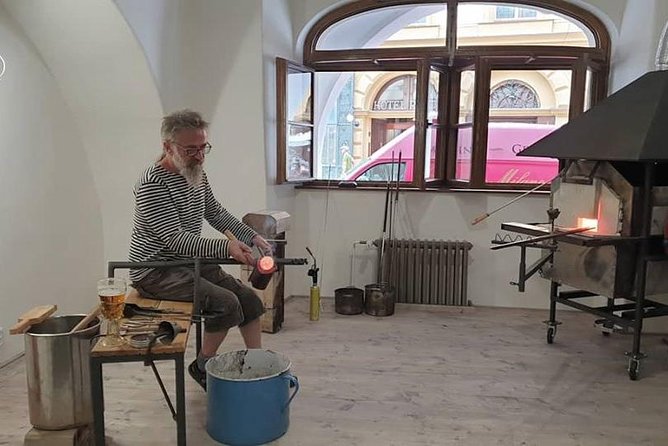
- You work beside a real glass furnace: The close view of the heat and tools is the heart of the experience.
- Your handmade piece needs 12 hours to cool: Plan a next-day pickup or pay about 80 to 100 EUR for shipping home.
- The session is private: Only your own group takes part, allowing the glassmaker to respond to your preferred color and object.
- The finished work is shaped with professional help: Expect a small role in the process rather than complete control.
- A beer is included afterward: It is a simple, fitting way to cool down after time near the furnace.
- The short booking time affects the value: This suits a memorable souvenir and a first taste of glassblowing, not a serious workshop.
A hot-shop encounter in central Prague
This activity begins at Staroměstské nám. 932/6 in Staré Město, close to Prague’s Old Town Square and the Astronomical Clock. That central meeting point makes it easy to fit the session into a day of sightseeing, though the experience itself is about craft rather than a walking tour.
You are introduced to the working area and the glassmaker. From there, you watch the production of items such as glasses, statuettes, and other handmade pieces before taking part in your own creation.
The special feature is proximity. In a conventional glass operation, you would normally watch from a safer distance. Here, you are close to the furnace and the full production process, with the glassmaker guiding your group through the steps.
That closeness also explains the safety limits. Molten glass is not a forgiving material, and shaping it requires speed, strength, and judgment. You may help with selected actions, but the glassmaker must control much of the work. This is best understood as a guided collaboration, not a do-it-yourself craft class.
A few more Prague half-days to weigh up
- Prague: 50-Minute Sightseeing Evening Cruise
★ 4.2 · 33,780 reviews - Prague: Medieval Dinner with Unlimited Drinks
★ 4.4 · 19,847 reviews - Prague: Skip-the-line Castle Ticket and Optional AudioGuide
★ 4.3 · 11,121 reviews
Choosing a color and a piece
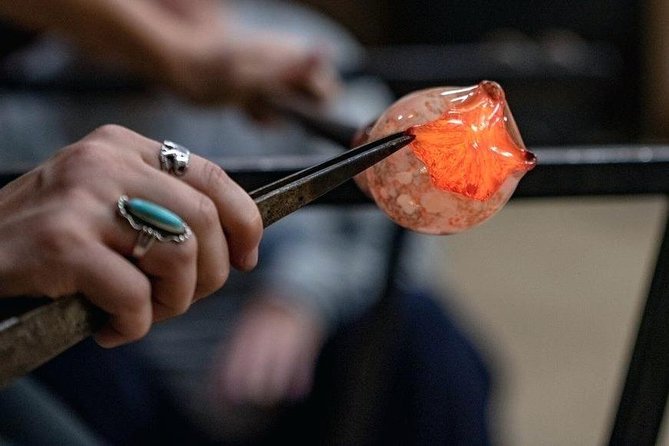
One of the enjoyable decisions comes early: choosing the color and deciding what you want to make. A small vase and a drinking glass are both possible examples, and the final object can differ from one booking to the next.
The choice matters because the piece becomes your souvenir. A drinking glass has an obvious use at home, while a vase or small decorative object may better show off the handmade character of the work. If you have a preference, tell the glassmaker clearly at the start, since the session is short.
You should keep your ambitions modest. The time is limited, and the professional is working with hot material under strict technical conditions. A simple form gives the glassmaker a better chance to produce a pleasing result and gives you a clearer role in the process.
The private format helps here. Your group does not have to share the glassmaker’s attention with a larger class, so you can ask for guidance about the object and color you want. The activity is still brief, but it is tailored to your group rather than run as a large demonstration.
What your hands actually do
The most important expectation to set is that you will not independently blow and shape a finished glass from start to end. The skilled glassmaker carries out most of the demanding work, both for safety and because the process takes years to master.
You do get to cooperate with the professional. The exact actions depend on the piece and the stage of production, but the experience puts you close to the tools, heat, and movement of the hot shop. You see how quickly the glass must be handled and how much control is needed to form a clean object.
One instructor described in the experience details had seven years of glassblowing practice. That level of experience matters because the material changes quickly as it cools. The professional has to judge timing and temperature while also helping you take part.
I would compare this to making pasta with a skilled chef, not taking a cooking exam alone. You contribute, make choices, and watch the work happen at close range, but the professional protects the result. If you book expecting a long hands-on lesson, you may feel shortchanged. If you want a safe introduction and a piece you can keep, the arrangement makes sense.
The furnace is part of the show
Glassblowing is unusually visual. Molten glass, heat, tools, and quick movements make the process feel more like a live performance than a standard souvenir workshop. You are not simply painting a pre-made object or assembling a kit.
The furnace also creates the main physical drawback. You will be working in a hot environment, and the session is designed around the demands of the glass rather than your preferred pace. The included beer makes particular sense after the work, when you have finished standing near the heat.
The activity description gives an approximate duration of 20 minutes. Individual accounts describe sessions closer to 30 minutes and one description refers to a class of about an hour, so you should allow extra time rather than planning another appointment immediately afterward. The actual hands-on portion may vary with the object, the furnace, and the working conditions.
That time difference is worth noting when judging the price. At $159.80 per person, this is expensive for a short activity. The cost is easier to justify if you value the private access, the unusual setting, the professional guidance, and the finished piece. It is harder to justify if your main goal is learning many techniques through repeated practice.
A different way to spend an afternoon here:
- Prague: Castle Tour with Local Guide and Entry Ticket
★ 4.6 · 10,422 reviews - Prague Castle 2.5-Hour Tour Including Admission Ticket
★ 4.7 · 8,927 reviews - Prague: Oldtown, Medieval Underground & Dungeon History Tour
★ 4.2 · 8,244 reviews - Prague: Vltava River Night Cruise with Buffet
★ 4.3 · 7,338 reviews
A souvenir with a cooling period
Your piece cannot go straight into your suitcase. It needs about 12 hours to cool, so the usual arrangement is free pickup the next day at the meeting point.
This is a small detail with a big effect on your schedule. If you are staying in Prague for another night, pickup should be straightforward. If this is your final Prague activity before an early departure, you need a plan before booking.
The other option is shipping. The cost depends on the destination, with an average of about 80 to 100 EUR. That charge is separate from the activity price, and it can make the total cost much higher for an international journey.
Shipping can solve the problem neatly. One couple had their vase and drinking glass sent to Manila, and the pieces arrived safely a little over a week later. That makes the workshop possible near the end of a vacation, but you should treat shipping as a real extra expense, not a minor add-on.
Pack your schedule around the cooling time. Do not assume you can collect the piece immediately after the beer, and do not place it in checked luggage while it is still being prepared. The next-day pickup or shipping arrangement is part of the experience, not an afterthought.
A Czech craft tradition in a modern city
This workshop connects a quick holiday activity with a long Czech glassmaking tradition. Handmade glass production is recognized on UNESCO’s intangible cultural heritage list, and the session gives you a direct look at the skills behind that recognition.
You also see finished examples made by the glassmakers, including glasses, statuettes, and other products. That context helps you understand the difference between a factory-made souvenir and a piece formed by hand in front of you.
The workshop does not offer a long lecture on Czech glass history in the information provided, so do not book it as a museum substitute. Its value is physical and immediate: you watch the furnace, see the material change, and leave with something made during your visit.
For an artistic person, that connection may be the strongest reason to go. You do not need prior experience. The professional handles the difficult parts, while you make choices and take part at a level suited to a short session.
The included beer and the pace of the visit
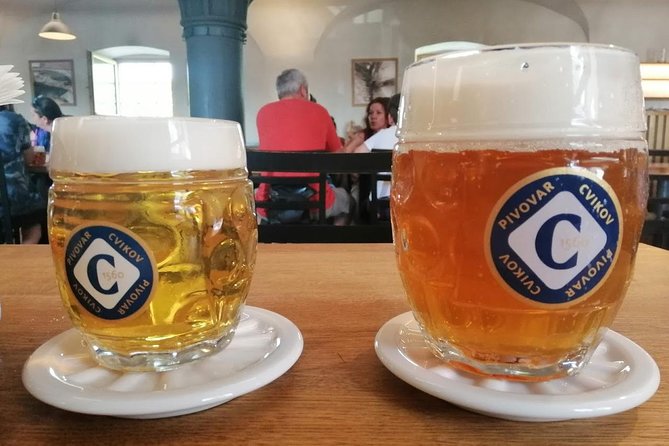
A glass of beer is included after the glassblowing. It is a modest extra, but it gives the activity a pleasant finish and fits the setting well.
This is not a full meal or a long tasting. Think of the beer as a cool-down and a chance to talk with the glassmaker after the work is done. If you are looking for a larger food or drink experience, you will need to arrange that separately.
The activity ends back at the same meeting point. Since the workshop is in central Prague and near public transportation, it can fit before dinner, after sightseeing, or near the end of your stay. Keep enough room in your day for the session to run longer than the approximate 20 minutes and for any questions or viewing of the working area.
Who will get the most from this activity
I would recommend it most strongly to an artistic person who wants a personal souvenir and values access to a real working craft space. It also suits couples, families, or friends who prefer a private activity over a large class.
It is a good choice for someone who has watched glassblowing and wants to feel the heat and see the tools up close. The experience gives you a useful first taste without asking you to master a difficult craft in one sitting.
It is less suitable for someone seeking a detailed lesson with lots of independent practice. The glassmaker does most of the technical work, and the short duration leaves little time for repeated attempts.
Your travel schedule matters just as much. Book it earlier in your Prague stay if you want to collect the piece in person. Book it near departure only if you are comfortable paying for international shipping, which averages 80 to 100 EUR.
Booking details and cancellation
The activity costs $159.80 per person and is offered in English. It is a private activity, so only your group participates, and confirmation is provided at booking.
A mobile ticket is available, and service animals are allowed. The meeting point is served by public transportation, and most people can take part.
Free cancellation is available up to 24 hours before the local start time. Canceling or changing the booking less than 24 hours ahead does not qualify for a refund, so keep the furnace and the cooling period in mind before setting the date.
Is this Prague glassblowing workshop worth booking?
Book it if you want a distinctive Czech souvenir, close contact with a working glass furnace, and a private session guided by a professional. The strongest parts are the setting, the personal choice of color and object, and the fact that your finished piece has a story tied to your time in Prague.
Skip it if you expect a long, independent glassblowing class or if $159.80 feels too high for a short activity. Also think twice if you cannot stay an extra night for pickup and do not want to pay another 80 to 100 EUR for shipping.
For most people who understand the limits, this is a memorable craft encounter rather than a technical course. I would schedule it with enough time for next-day collection, choose a simple object, and treat the professional’s help as part of the value. The result is a small piece of Prague you helped make, even if the glassmaker did the hardest work.
FAQ
How long does the glassblowing activity last?
The stated duration is approximately 20 minutes. Some completed sessions have taken closer to 30 minutes, and one description refers to a class lasting about an hour, so allow extra time in your schedule.
Can I take my glass piece home immediately?
No. The glass needs about 12 hours to cool. You can collect it free of charge the next day at the meeting point.
Can the glass piece be shipped to my home?
Yes. Shipping is available for an additional fee. The average cost is about 80 to 100 EUR, depending on your country.
Is beer included?
Yes. One glass of beer is included after the glassblowing session.
Is this a private activity?
Yes. Only your own group participates in the activity.
What happens if I need to cancel?
You can cancel for a full refund up to 24 hours before the experience starts. Cancellations or changes made less than 24 hours before the local start time are not refunded or accepted.
Recently added around Prague
- St Vitus Cathedral and Prague Castle Private Walking Tour★ 4.0 · 3 reviews
- Prague: Old Town and Jewish Quarter Small-Group Tour★ 5.0 · 3 reviews
- Royal Splendor Unveiled Private Prague Castle Interior Tour★ 3.5 · 3 reviews
- Prague Castle Interiors & Changing of the Guard-Small group★ 5.0 · 3 reviews
- Prague: Bohemian & Saxon Switzerland National Park Day Trip★ 5.0 · 3 reviews
- Running Tour of Prague. Your private 6-9K intro★ 5.0 · 3 reviews
- PRAGUE AIRSOFT SHOOTING GAMES★ 4.7 · 3 reviews
- Private walking tour and Boat cruise Best of Prague★ 5.0 · 3 reviews
Prague Tours, compared.

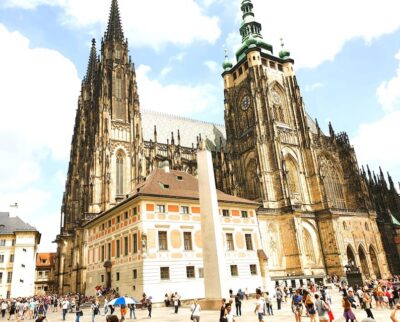
Skip-the-line Castle Ticket and Optional AudioGuide
Read our review →
Castle Tour with Local Guide and Entry Ticket
Read our review →
Prague Castle 2.5-Hour Tour Including Admission Ticket
Read our review →
Oldtown, Medieval Underground & Dungeon History Tour
Read our review →