
Reviewed · WALKING TOURS
Prague Art Nouveau and Cubism Walking Tour
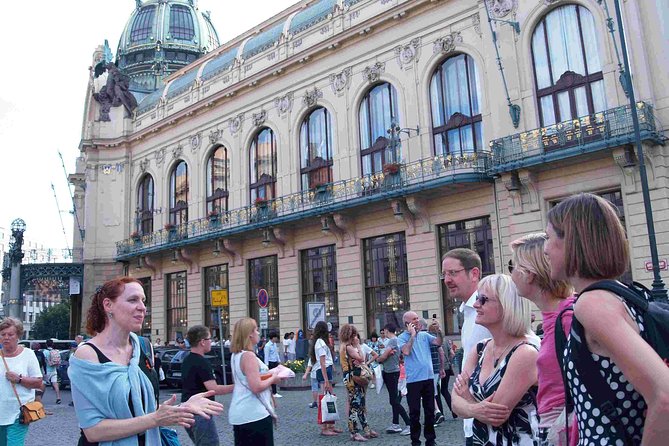
Prague’s Art Nouveau is not just a collection of pretty façades. It tells the story of a city eager to look modern, prosperous, and distinctly Czech. This three-hour walk connects ornate hotels, cafés, restaurants, passages, and public buildings with the social world that filled them before the First World War.
I like the way the tour teaches you how to look, especially for details such as ginkgo leaves, curved lines, stained glass, and elaborate light fittings. I also like the access to places many visitors pass without noticing, including Lucerna bar and the elegant Grand Hotel Europa. The main consideration is pace: there is a lot to absorb, and photographers may sometimes want more time at each stop.
Key points to know before booking
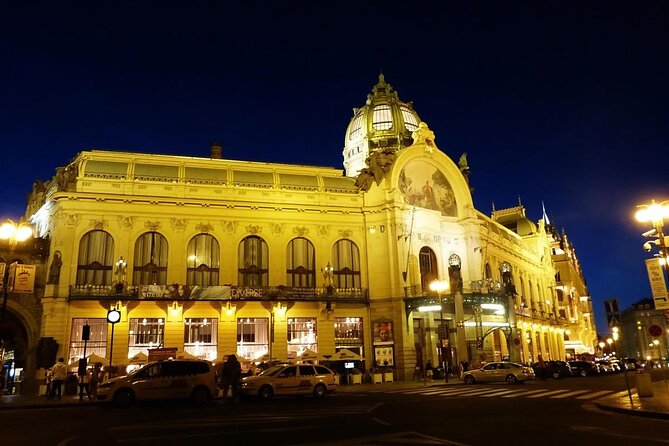
- Art Nouveau becomes easy to recognize: Learn how plant forms, oriental influences, decorative lighting, and flowing lines work together on Prague buildings.
- Lucerna and Grand Hotel Europa add interior views: You are not limited to studying façades from the pavement.
- Cubism gets proper context: The House of the Black Madonna and Bank of the Legions show how Prague adapted Cubism and developed its own Rondo-Cubist style.
- The social story matters: Hotels, cafés, restaurants, and train stations reveal how new wealth and early international travel changed city life.
- Guides bring serious academic background: The team includes professors, doctoral students, historians, journalists, art critics, and published authors.
- Small groups make a difference: Private and small-group formats allow more questions and a more personal route.
Why Prague is the right city for this architecture walk
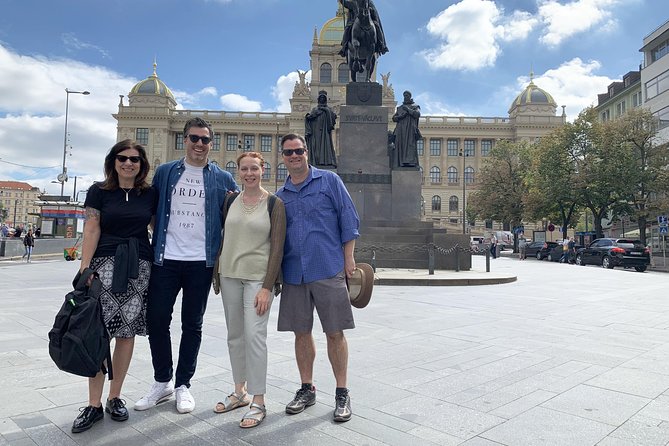
Art Nouveau appeared across Europe near the end of the 19th century. In Prague, it arrived at a useful moment. The city was modernizing, the Czech national identity was gaining strength, and new buildings could signal both European sophistication and local pride.
That helps explain why Art Nouveau appears so often in places linked to leisure and movement. Hotels welcomed the first wave of international tourists. Cafés and restaurants gave the social elite places to meet. Train stations served a public that could now travel farther and faster than previous generations.
I find this social angle more useful than a simple list of architects and dates. When you see an ornate hotel entrance, you can picture the sort of public it was designed to attract. These were buildings meant to impress, but also to advertise a new way of living.
The tour also places Art Nouveau beside older Prague styles. Gothic, Baroque, and later modern architecture are not treated as unrelated chapters. Instead, you see how one period answered the style before it, and how Cubism challenged the decorative curves of Art Nouveau.
More Walking Tours in Prague:
- Prague: 3-Hour Walking Tour of Old Town & Prague Castle
★ 4.7 · 5,696 reviews - Prague: Ghost Walking Tour Where Legends Come To Life
★ 4.4 · 5,253 reviews - Prague: Jewish Quarter Walking Tour with Admission Tickets
★ 4.7 · 3,729 reviews
Starting at the House of the Black Madonna
The meeting point is the House of the Black Madonna, at the front doors of Grand Café Orient on Ovocný 19 in Prague 1. This is an especially fitting place to begin because the building introduces Prague’s Cubist side before the walk turns more fully toward Art Nouveau.
The House of the Black Madonna is associated with Czech Cubist architecture, a style that translated Cubist ideas into buildings, interiors, furniture, and objects. Look for the forceful geometry rather than the soft plant forms associated with Art Nouveau. Sharp angles and faceted shapes give the building a different mood.
Starting here also gives the guide a chance to explain that Prague did not simply copy Paris, Vienna, or other European capitals. Czech architects adapted international styles to their own cultural setting. That local response becomes one of the most interesting threads of the walk.
The exact balance between exterior viewing and interior access can depend on the day and the guide. The meeting point itself is downstairs at the front doors, on the square, so arrive with enough time to identify Grand Café Orient before the start.
Learning the visual language of Art Nouveau
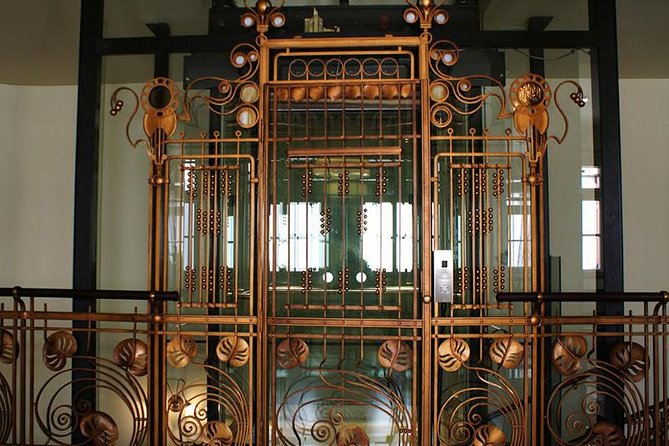
The most practical part of the tour is learning to spot the details that separate Art Nouveau from ordinary decoration. You will be introduced to plant motifs, flowing lines, ornamental façades, and the use of light as part of the overall design.
Ginkgo biloba leaves are one useful clue. Their presence reflects the period’s interest in oriental forms and in nature as a source of design. Once a guide points them out, you may begin noticing leaves, flowers, vines, insects, and female figures used across façades and interiors.
Lighting matters, too. Elaborate lamps and fixtures were not minor finishing touches. They helped create the warm, theatrical interiors that cafés, hotels, and restaurants wanted. A building could announce modern taste outside, then reinforce the message with glass, metalwork, mosaics, and carefully planned light within.
I appreciate this kind of instruction because it stays useful after the tour ends. You will not merely remember a building’s name. You will have a set of visual clues that helps you read other Prague streets on your own.
The walk does not treat Art Nouveau as a single, rigid formula. Some buildings may feel floral and soft, while others use stronger lines, elaborate stonework, or more restrained decoration. The guide’s job is to show the common ideas without pretending that every façade looks alike.
Lucerna bar and Prague’s café society
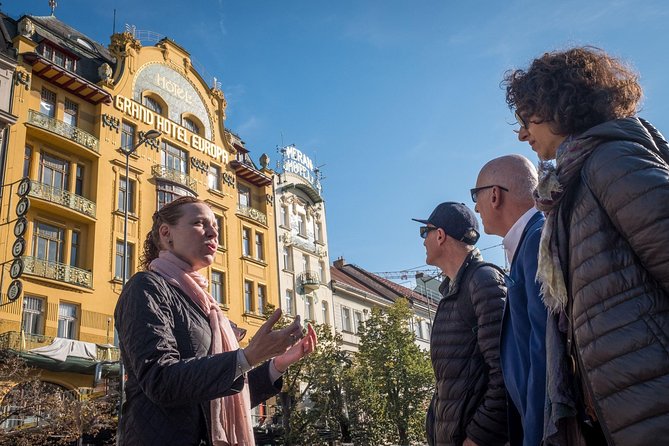
Lucerna is one of the important interior stops. It gives you a chance to consider how architecture worked when people were not simply passing through a building, but spending an evening there.
The bar connects neatly with the tour’s discussion of Prague’s pre-war social elite. Cafés and restaurants were places for conversation, business, culture, and display. The design had to make patrons feel that they were part of an important modern world.
This is where the social history becomes concrete. Instead of viewing Art Nouveau as decoration applied to walls, you see it as part of a complete public experience. The furniture, lighting, entrances, and circulation through a building all helped shape how people met and spent their leisure time.
Access to an interior also matters in cold weather. A December group found that moving indoors offered welcome warmth while still providing close looks at architectural detail. In good weather, these stops break up the pavement walking and give your eyes a rest from scanning façades.
Do not expect Lucerna to be a long, leisurely bar visit. It is part of a guided architectural route, not a standalone food or drink experience. If you want time for photographs or a coffee, ask the guide early. The route keeps moving, and that is both a strength and a limitation.
A few more Prague half-days to weigh up
- Prague: 50-Minute Sightseeing Evening Cruise
★ 4.2 · 33,780 reviews - Prague: Medieval Dinner with Unlimited Drinks
★ 4.4 · 19,847 reviews - Prague: Skip-the-line Castle Ticket and Optional AudioGuide
★ 4.3 · 11,121 reviews - Prague: Castle Tour with Local Guide and Entry Ticket
★ 4.6 · 10,422 reviews
Grand Hotel Europa and the age of the first globetrotters
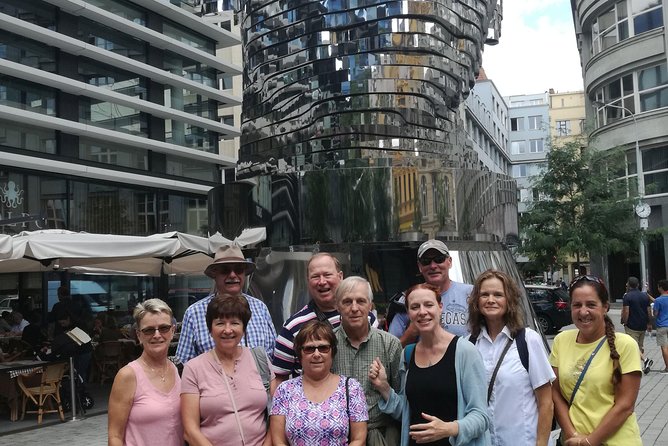
Grand Hotel Europa offers another look at the polished public interiors associated with Prague’s early 20th-century confidence. Hotels were among the clearest expressions of the new international age. They needed to welcome visitors, signal comfort, and compete with establishments in other European cities.
The guide uses places such as this to explain why Art Nouveau became so visible in hotels and public venues. Private homes could adopt the style, but hotels and restaurants had a stronger reason to make a public statement. Every decorative detail helped sell an experience of modern travel.
The hotel also helps you compare exterior and interior design. From the street, you may first notice the façade, windows, ornament, and lettering. Inside, the same period’s ideas can appear in lighting, surfaces, furniture, and the way the rooms lead visitors from one space to another.
The social backdrop is important here. The people using these spaces were benefiting from industrial growth and improved travel. The mood was hopeful and outward-looking, although the First World War would soon change that world.
That contrast gives the walk a little weight. You are not studying buildings in isolation. You are looking at architecture created during a short period of confidence, before war disrupted the habits and ambitions that had shaped these cafés, hotels, and stations.
Cubism, Rondo-Cubism, and the Bank of the Legions
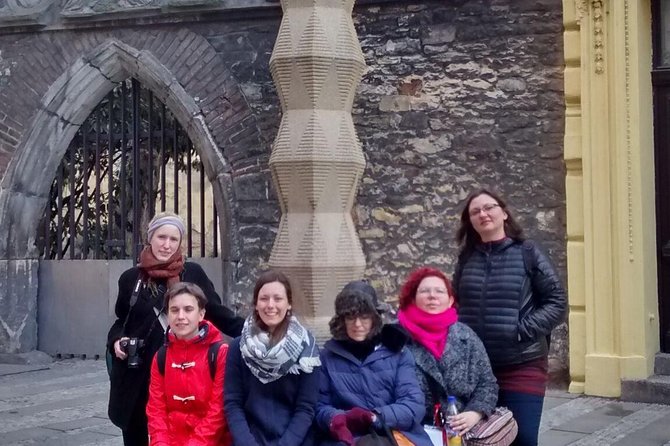
Art Nouveau is only half of the subject. The tour draws clear comparisons with Prague’s Cubist and Rondo-Cubist buildings, including the House of the Black Madonna and the Bank of the Legions.
Cubism can be harder to understand at first because it does not rely on the graceful, nature-based shapes that make Art Nouveau so recognizable. The guide helps by placing the styles side by side. Instead of asking you to memorize labels, the walk encourages you to compare angles, mass, ornament, and the treatment of the façade.
Prague’s Rondo-Cubism is especially important because it shows local adaptation. Circular and semi-circular forms soften the harder geometry of earlier Cubism, while still keeping a strong sense of structure. This gives you a more precise way to talk about Prague’s modern architecture than simply calling every unusual building Cubist.
The Bank of the Legions adds a civic and national dimension. Architecture in this period could express more than fashion. It could suggest strength, independence, and a renewed Czech identity.
I like this section because it prevents the tour from becoming a narrow Art Nouveau checklist. If you already know Prague’s famous decorative buildings, the Cubist comparisons provide fresh material. If you are new to architecture, they give you a clear visual contrast.
Passages, side rooms, and less obvious interiors
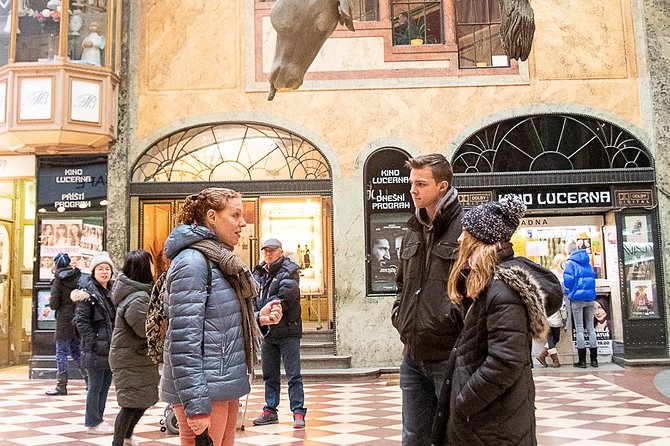
Prague’s covered passages are part of the pleasure of this route. They let you move through the city in a way that is easy to miss if you stick to the main streets and famous squares.
The guides have also taken groups to places such as a university grand hall, an underground chapel, a small student café tucked behind courtyards, and interiors with Roman remains and frescos. These details show the range of the experience, though access and the exact stops can vary.
That flexibility is worth keeping in mind. You are not buying a fixed museum tour with every room guaranteed at a particular time. You are joining a guided walk through active city buildings, and some doors or interiors may depend on opening conditions and the day’s route.
Still, the possibility of these spaces is one reason a local guide adds value. A map can point you toward the House of the Black Madonna or Grand Hotel Europa. It is much harder to know which passage to enter, which interior is worth a pause, or how a modest room fits into Prague’s larger architectural story.
This is also where the tour feels most personal. Rather than moving only between major monuments, you get a sense of how the city works behind its formal façades.
The guides: Robert, Vadim, and Bonita
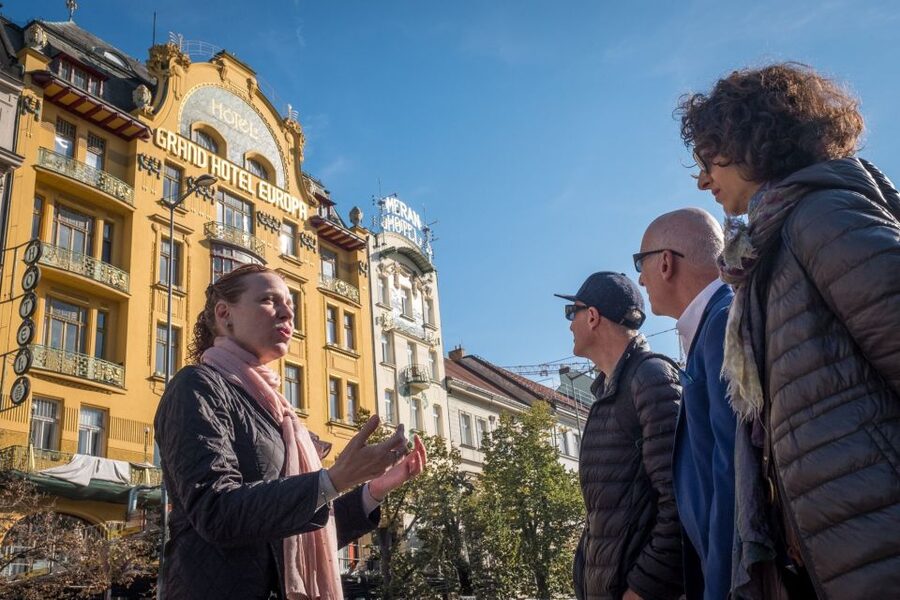
Guide quality is central here, and the named guides have different backgrounds and strengths. Robert is described as a clear storyteller with humor, a strong grasp of architecture, and a willingness to answer questions. He has also adjusted the pace for groups that needed coffee, restrooms, warmth, or more time.
Vadim Erent is presented as a specialist with a strong interest in Art Nouveau and Cubism. His approach connects architectural details with wider Prague history and social change. If you enjoy ideas and historical links rather than a fast procession of facts, his style may suit you well.
Bonita has led the walk for visitors interested in late 19th and early 20th-century architecture. Her long familiarity with Prague helped groups find interiors and details they would not have encountered by wandering alone.
The provider describes its guides as professors, doctoral students, historians, journalists, art critics, and published authors. That suggests a serious academic base, but the experience is not described as a lecture. The strongest praise focuses on clarity, storytelling, humor, and the ability to keep people interested while walking.
One practical point: the group keeps moving. That is usually easier than standing in one place for long stretches, but photographers may want to request a few extra seconds at a façade. Tell the guide if you need a slower pace or have a deadline afterward.
Is $123 a fair price for three hours?
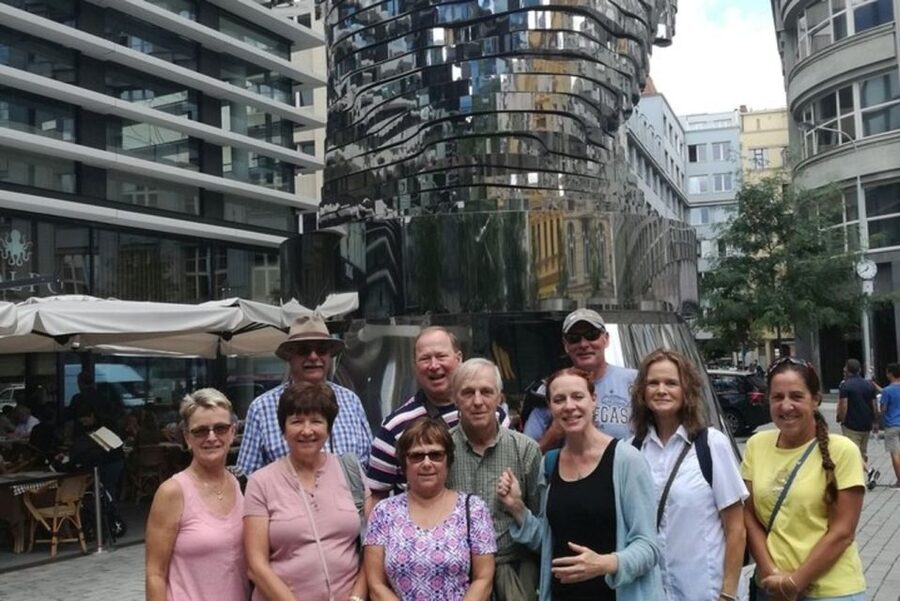
At $123 per person, this is not a budget walking tour. The price makes the most sense for a private booking or a small group where you can ask questions and influence the pace.
You are paying for more than a route between well-known buildings. The value comes from expert interpretation, access to interiors, historical context, and the chance to find passages and rooms that are easy to overlook. A large public tour may cost less, but it is less likely to offer the same personal attention.
The value is also higher if you have a real interest in architecture, design, or Prague’s cultural development. If you mainly want a broad introduction to the city’s major sights, a general city walk may give you more coverage for less money.
At three hours, the tour is long enough to build a clear story without taking your whole day. It can fit well early in a Prague visit because you will continue noticing Art Nouveau and Cubist details afterward. It also works later in your stay if you already know the Old Town and want to look at familiar streets differently.
Who should book this walk?
I would choose this tour if you like architecture but do not want a technical course. The guide explains what you are seeing, why it matters, and how the styles connect to Prague’s national and social story.
It suits adults, design students, history-minded visitors, photographers who can work at a brisk pace, and repeat visitors who have already seen the standard sights. The private or small-group option is particularly useful if your party has its own questions or wants a more flexible conversation.
Families can enjoy it if older children are comfortable walking and listening, but the subject is detailed. Younger children may find three hours of façades and interiors demanding.
You should also consider the season. In cold weather, the indoor stops are welcome, but you still need suitable walking clothes. On any day, comfortable shoes matter because the experience is on foot and includes several stops across central Prague.
Booking can remain flexible: cancellation is free up to 24 hours before the start, and you can reserve now and pay later. The tour is offered in English, with private and small-group formats available.
Should you book the Prague Art Nouveau and Cubism Walking Tour?
Book it if you want to understand Prague’s architecture rather than simply photograph it. The strongest parts are the visual training, the interiors at Lucerna and Grand Hotel Europa, and the comparison between Art Nouveau, Cubism, and Rondo-Cubism.
The $123 price is justified when you value a specialist guide and a small group. It is less attractive if you want a cheap overview, a relaxed café crawl, or a route with long stops for photography.
My practical advice is to take it near the start of your visit, wear good shoes, and tell the guide about any timing needs before you set off. For an architecture-focused visit to Prague, this is a thoughtful, information-packed walk with enough local character to make the city’s familiar streets feel new.
FAQ
Where does the tour meet?
The meeting point is at the House of the Black Madonna, downstairs at the front doors of Grand Café Orient, on Ovocný 19 in Prague 1.
How long does the tour last?
The guided walking tour lasts three hours.
What language is the tour offered in?
The tour is offered in English.
How much does the tour cost?
The listed price is $123 per person.
Which Art Nouveau places are included?
The tour includes visits to Lucerna bar and Grand Hotel Europa, along with other Art Nouveau buildings and interiors discussed during the walk.
Which Cubist buildings are discussed?
The tour includes the House of the Black Madonna and the Bank of the Legions, with comparisons to Prague’s Cubist and Rondo-Cubist architecture.
Who leads the tour?
Named guides include Robert, Vadim, and Bonita. The provider says its guides include professors, doctoral students, historians, journalists, art critics, and published authors.
Is the tour private or shared?
Private and small-group options are available.
Can I cancel the booking?
You can cancel up to 24 hours in advance for a full refund. You can also reserve now and pay later.
Recently added around Prague
- St Vitus Cathedral and Prague Castle Private Walking Tour★ 4.0 · 3 reviews
- Prague: Old Town and Jewish Quarter Small-Group Tour★ 5.0 · 3 reviews
- Royal Splendor Unveiled Private Prague Castle Interior Tour★ 3.5 · 3 reviews
- Prague Castle Interiors & Changing of the Guard-Small group★ 5.0 · 3 reviews
- Prague: Bohemian & Saxon Switzerland National Park Day Trip★ 5.0 · 3 reviews
- Running Tour of Prague. Your private 6-9K intro★ 5.0 · 3 reviews
- PRAGUE AIRSOFT SHOOTING GAMES★ 4.7 · 3 reviews
- Private walking tour and Boat cruise Best of Prague★ 5.0 · 3 reviews
Walking Tours, compared.
3-Hour Walking Tour of Old Town & Prague Castle
Read our review →
Ghost Walking Tour Where Legends Come To Life
Read our review →
Jewish Quarter Walking Tour with Admission Tickets
Read our review →
Prague Guided Walking Tour and Cruise with Authentic Czech Lunch
Read our review →
Old Town and Jewish Quarter Guided Walking Tour
Read our review →
Prague Ghost and Legend of Old Town Walking Tour
Read our review →
Prague 3-hour Afternoon Walking Tour including Prague Castle
Read our review →
Ghosts and Legends Nighttime Guided Walking Tour
Read our review →Browse the lists this tour appears in