
Reviewed · CONCERTS
Prague: Entry Ticket Classical Concert at the Mirror Chapel
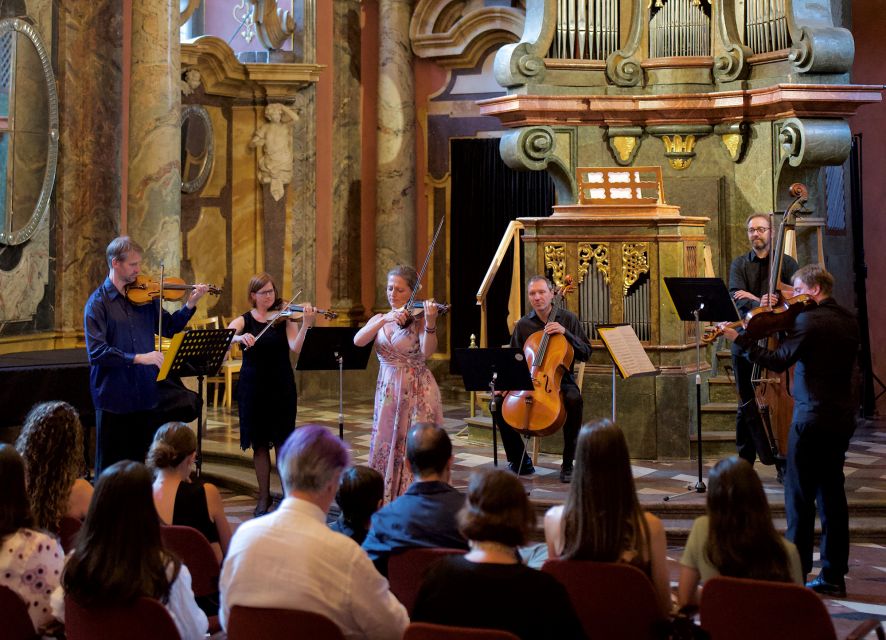
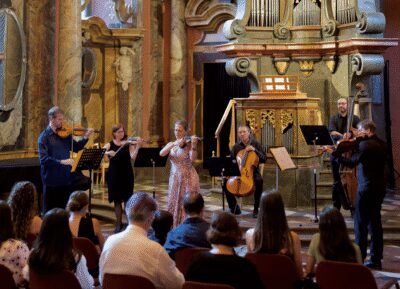
Prague’s Mirror Chapel turns a one-hour concert into a small piece of theater. You sit beneath Baroque decoration and mirrored walls while the Royal Czech Orchestra performs Vivaldi, Mozart, Beethoven, Smetana, and Dvořák, with soprano Eva Müllerová and a featured soloist. The music is familiar, the setting is extraordinary, and the price is a sensible $34.
I especially like the short, focused format, which gives you a proper classical music experience without taking over your evening. I also like the chance to hear organ, strings, piano, and soprano in a historic chapel, rather than in a large modern concert hall. The main caution is seating: the musicians sit without a raised stage, so some lower-priced seats may have limited views.
Key points before you book
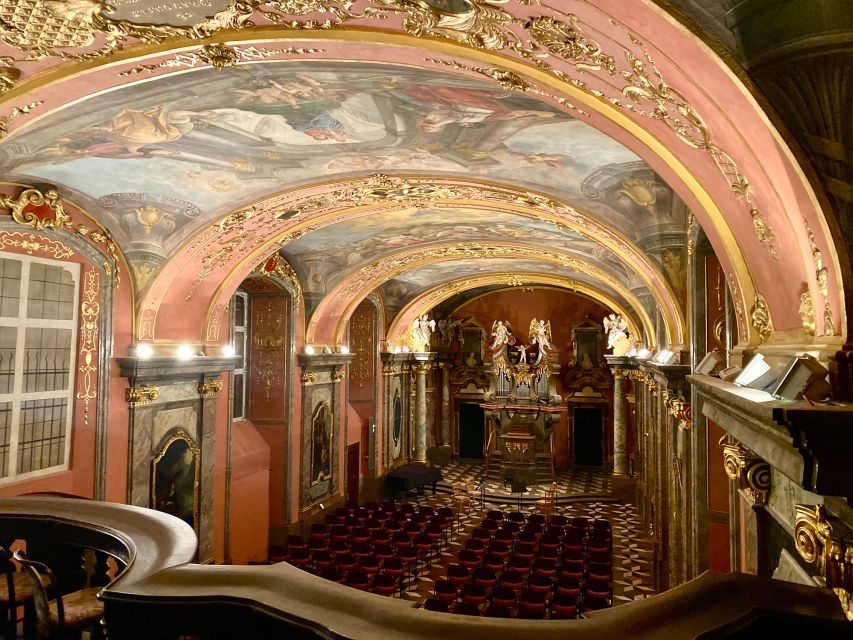
- The Mirror Chapel is the star setting: Its Baroque decoration and natural acoustics add atmosphere before the first note.
- The program is built around familiar favorites: Expect Vivaldi’s Four Seasons, Mozart’s Requiem Lacrimosa, Beethoven’s Fifth, Smetana’s Moldau, and other crowd-pleasers.
- The 5pm and 7pm concerts differ: The 5pm program features organist Robert Hugo, while the 7pm program includes pianist Stanislav Gallin.
- Eva Müllerová leads the vocal side: Her soprano gives the concert a welcome change of color between the instrumental pieces.
- Arrive earlier than the stated 15 minutes: The chapel fills quickly, and better seats matter because there is no stage.
- You get strong value for the money: At $34 for an hour of live music in a famous historic space, this is one of Prague’s easier cultural splurges.
Why the Mirror Chapel changes the concert
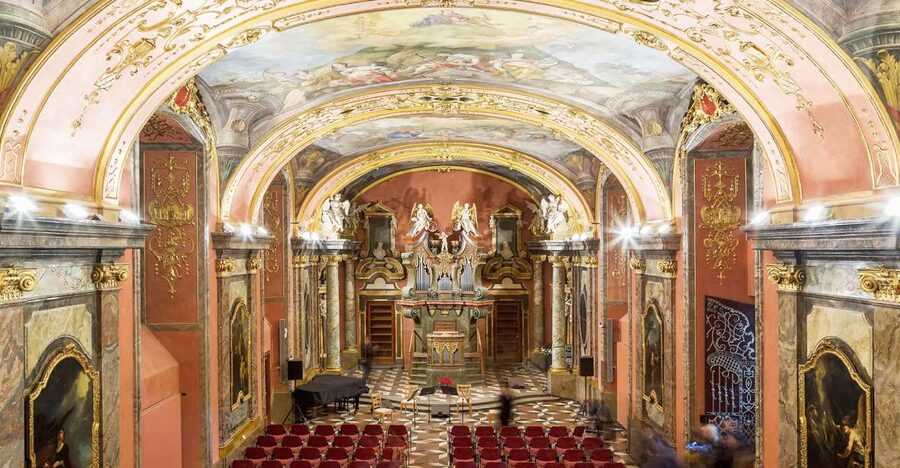
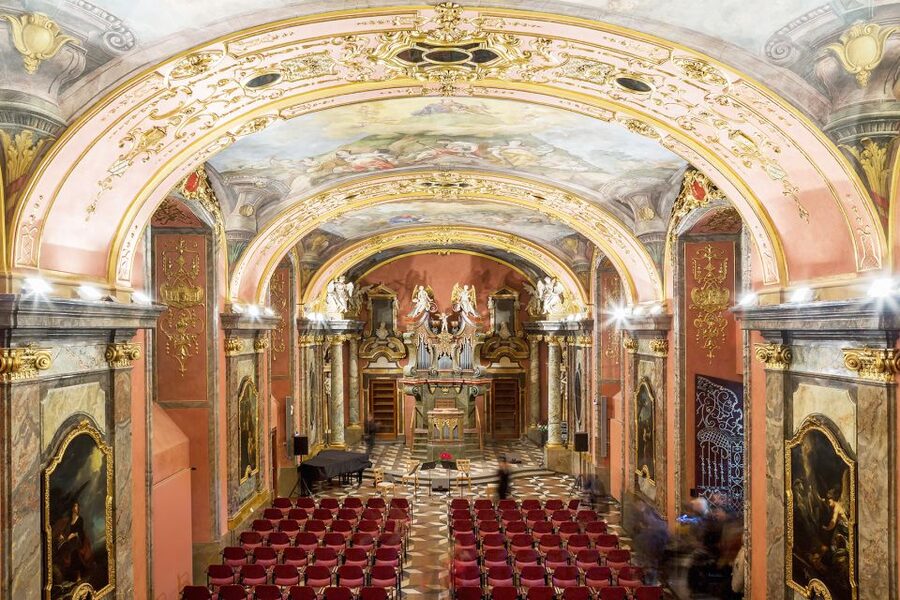
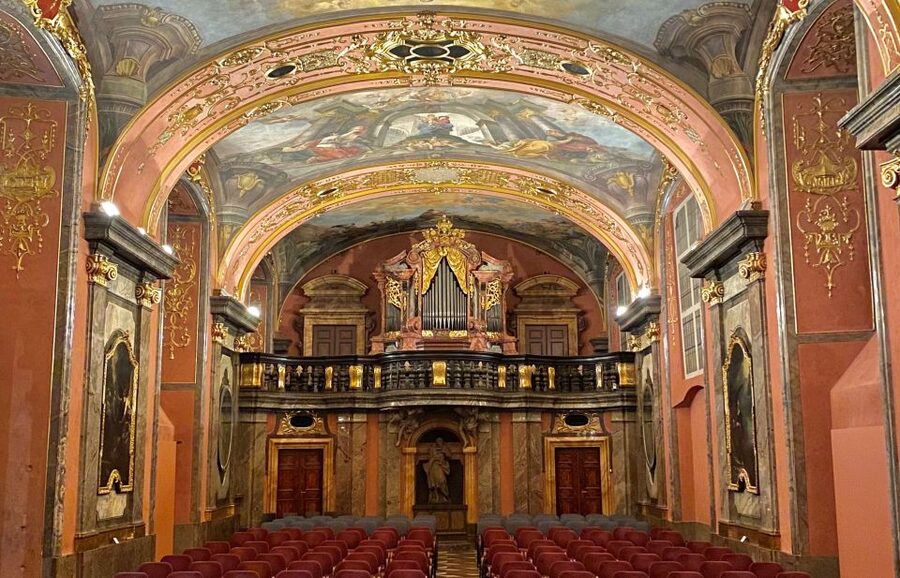
The Mirror Chapel is part of the Clementinum, Prague’s large former Jesuit complex in the city center. You do not enter a plain performance room and wait for the music to rescue it. The room itself gives you something to look at: Baroque ornament, reflective surfaces, and a formal chapel interior that feels made for ceremony.
That setting also affects the sound. The chapel has natural acoustics, and the instruments and soprano perform without relying on microphones. Strings can sound close and clear, while the organ adds a deeper, more solemn tone. The space is not huge, which helps the performance feel personal.
The visual effect is strongest when the music shifts from a lively string passage to something slower and more prayerful. Mozart’s Lacrimosa and Bach and Gounod’s Ave Maria fit the chapel naturally. Beethoven’s Fifth and Smetana’s Moldau bring a more dramatic sweep, while the room keeps the performance from feeling like a generic greatest-hits show.
You should know that a beautiful room does not guarantee perfect sight lines. The musicians are seated, and there is no raised stage. One attendee found Category B seating hard for seeing the players, especially when a soloist was not standing. If seeing every bow movement matters to you, pay attention to the available seating categories and consider a front section.
More concerts in Prague:
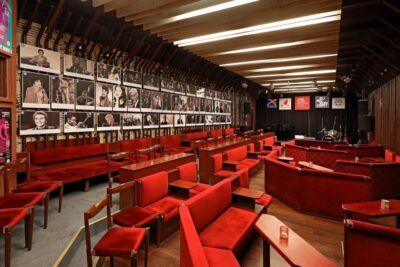
- Prague: Concert at Reduta Jazz Club
★ 4.5 · 2,170 reviews - Prague: Jazz Boat Cruise with Live Concert and Optional Meal
★ 4.6 · 1,682 reviews - Prague: Mozart Ballroom Concert Ticket with 3-Course Dinner
★ 4.8 · 1,200 reviews
What happens during the one-hour program
This is a compact concert, not a full symphony evening. The program moves quickly from one well-known work to the next, with handoffs between the orchestra, soprano, organist or pianist, and violin soloist.
You will not hear every musician playing continuously. The ensemble changes for different selections, so the organ may take the lead in one work, strings in another, and the soprano in a vocal number. That variety keeps the hour moving and gives you several distinct musical experiences.
The exact program depends on your chosen time.
The 5pm concert with organist Robert Hugo
The 5pm program opens with Mozart’s Overture to The Marriage of Figaro, a brisk and recognizable start. It then moves to Spring and Winter from Vivaldi’s Four Seasons. Hearing only two sections rather than the complete set is worth noting, especially if you are expecting all four seasons.
Mozart’s Requiem Lacrimosa brings the soprano into a more serious mood. Pachelbel’s Canon in D major follows, offering one of the program’s gentler and most instantly recognizable moments.
Verdi’s Triumphal March from Aida adds ceremony and weight. Mozart’s Symphony No. 40, Allegro, gives the strings a more urgent, restless passage, while Dvořák’s Sing Unto the Lord a Joyful Song adds a Czech connection to the international program.
Bach and Gounod’s Ave Maria provides another vocal highlight. Bach’s Toccata and Fugue in D minor then gives organist Robert Hugo the room’s most obvious showcase. Hugo is the titular organist at St. Salvator Church and specializes in Baroque organs and period music, so this part of the program is particularly appealing if you enjoy historic keyboard instruments.
The 5pm concert closes with Smetana’s Moldau and the Allegro from Beethoven’s Fifth Symphony. These are strong finishing pieces: one evokes the flow of the Vltava River through Czech musical imagination, and the other ends with Beethoven’s famous sense of fate and forward motion.
The 7pm concert with pianist Stanislav Gallin
The later program begins with Spring and Winter from Vivaldi’s Four Seasons, then shifts to the slow movement of Beethoven’s Emperor Concerto. The Adagio gives the piano a more lyrical role and creates a calm pause after Vivaldi’s energetic strings.
Mozart’s Requiem Lacrimosa returns, followed by Smetana’s Moldau. This pairing gives you both sacred vocal music and a distinctly Czech orchestral piece.
Chopin’s Nocturne No. 20 in C Sharp Minor, known from the film The Pianist, is the 7pm program’s intimate piano feature. It is a good choice if you want more than orchestral favorites and prefer a quiet, reflective solo work.
The second half includes Bach and Gounod’s Ave Maria, Bizet’s Habanera from Carmen, and Dvořák’s Slavonic Dance No. 8 in G minor. The Habanera gives soprano Eva Müllerová a chance to bring drama and character to the program, while the Slavonic Dance adds lively Czech flavor.
Beethoven’s Fifth Symphony, Allegro con brio, closes the 7pm concert. If you want a program packed with recognizable melodies and a strong final burst, the 7pm choice may suit you best. If organ music and Baroque keyboard tradition appeal more, choose 5pm.
A few more Prague half-days to weigh up
- Prague: 50-Minute Sightseeing Evening Cruise
★ 4.2 · 33,780 reviews - Prague: Medieval Dinner with Unlimited Drinks
★ 4.4 · 19,847 reviews - Prague: Skip-the-line Castle Ticket and Optional AudioGuide
★ 4.3 · 11,121 reviews - Prague: Castle Tour with Local Guide and Entry Ticket
★ 4.6 · 10,422 reviews
The musicians and soloists you will hear
The Royal Czech Orchestra provides the core ensemble, with strings forming much of the evening’s sound. Viktor Mazáček serves as violin soloist. He is a member of the Czech Philharmonic Orchestra and specializes in Baroque music, which makes him a natural fit for Vivaldi and the earlier works on the program.
Eva Müllerová is the featured soprano at both concert times. Her voice changes the character of the hour. An instrumental ensemble can create momentum and color, but a soprano adds words, breath, and a direct human presence. Her numbers include Lacrimosa, Ave Maria, and, at 7pm, Bizet’s Habanera.
At 5pm, Robert Hugo takes the organ role. His connection with St. Salvator Church and Baroque organ music gives the program a useful historical link to the chapel setting.
At 7pm, Stanislav Gallin appears as piano soloist. He comes from Prague’s Academy of Performing Arts and works internationally as a chamber and studio player. His Chopin Nocturne and the Beethoven Emperor Concerto movement offer a different sound from the organ and strings.
The performers do not all play at once. That is not a weakness. The changing combinations make the concert feel more like a carefully arranged sampler of classical music than a single large orchestral work.
Familiar music makes this easy to enjoy
You do not need a background in music to get something from this concert. The program is built around melodies you may already know from films, ceremonies, advertisements, or cultural memory.
Vivaldi’s Four Seasons gives you sharp contrasts between bright movement and wintry tension. Mozart’s Lacrimosa is solemn and immediately expressive. Pachelbel’s Canon is calm and graceful. Beethoven’s Fifth is dramatic from its opening notes, while Smetana’s Moldau provides a more flowing and spacious finish.
This familiarity is useful if you are new to classical concerts. You can focus on the sound, the room, and the changes between instruments without trying to understand an unfamiliar modern composition.
The tradeoff is that the program favors popular selections over a complete, large-scale work. You receive highlights and individual movements rather than an entire symphony, concerto, or opera. That is ideal for a first taste or a relaxed evening activity, but less satisfying if you want the full architecture of a major composition.
Seating, sight lines, and chapel etiquette
Doors open 15 minutes before the concert. I would not treat that as the ideal arrival time. The room can fill fast, and arriving well before the start gives you a better chance at a comfortable view within your ticket category.
This matters because the players are seated and there is no stage. A lower-priced seat may offer good sound but a partial view of the ensemble. Front seating costs more, yet it can be worthwhile if you care about watching the violinist, pianist, soprano, or organist at work.
The seating advice is not simple because the best choice depends on the layout available that evening. If you arrive early and see an open seat in a better position within your category, ask staff if moving is allowed. One practical suggestion is to consider seats toward the far left, where an open place closer to the front may sometimes offer a better view.
Phones are another issue. The event does not ban cameras or mobile phones, and light from screens can distract you during a quiet piece. Keep your phone off or fully silent, and avoid taking pictures during the music. Some people also move around or talk after the performance begins, which can be especially noticeable in a small chapel.
There is no official dress code. You can come in normal sightseeing clothes, though a neat outfit will feel right in the chapel. Food and drinks are not included, and the concert itself is only one hour, so plan dinner or a drink before or after.
Finding the Clementinum entrance
The meeting point is the entrance to the Mirror Chapel. This sounds simple, but the Clementinum complex covers a large area, and the performance entrance may not look like a grand theater entrance.
Some people find the location tricky, particularly because the entrance is down a side street and does not present itself like a conventional front door. Give yourself extra time, especially for the 5pm concert if you are arriving after a day of sightseeing.
If you need directions, ask for the Klementinum, the name commonly used locally for the complex. Once you locate the Mirror Chapel entrance, show your ticket there. Transportation is not included, so you make your own way to the central Prague venue.
The concert works well as an evening stop because it is central and brief. You can fit it between sightseeing plans instead of giving up an entire night. Just avoid cutting it close. A late arrival is more stressful in a historic complex, and you may lose the chance to choose a good seat.
Is $34 a fair price?
At $34 per person, this is good value if you want live classical music in a memorable room without committing to a formal concert hall evening. You receive one hour of music, a printed program, and performances by a professional ensemble with named soloists.
The value comes from the combination. A short concert in an ordinary room might feel less special. A longer concert in a prestigious hall might cost more and require more planning. Here, the Mirror Chapel supplies much of the atmosphere, while the familiar program lowers the barrier for first-time listeners.
I would be more cautious if your main goal is a full symphonic performance with a large orchestra. This is chamber-style music, and the musicians work in changing combinations. The format is intimate rather than massive.
I would also think carefully about seat category. Paying extra for a front seat can make sense because of the low stage setup. The cheapest ticket may still deliver the chapel acoustics, but your view of the performers may be limited.
Who will enjoy this most
I recommend this concert to you if you want a peaceful break from Prague’s busy streets, enjoy familiar classical music, or need an evening plan that lasts exactly one hour. It also suits couples, older family members, and first-time concertgoers who may not want a three-hour opera or symphony.
The program is especially friendly to people who recognize music more easily than composers’ names. Beethoven’s Fifth, the Habanera, Canon in D, and The Moldau give you plenty of points of entry.
It may be less suitable if you need a fully explained concert with introductions to every piece. The printed program is included, but no spoken musical orientation is specified. It may also disappoint you if you expect Vivaldi’s entire Four Seasons. The advertised selections are Spring and Winter only.
Unaccompanied minors are not allowed. For everyone else, there is no official dress requirement, and the one-hour length makes this an easy addition to a busy Prague schedule.
Should you book the Mirror Chapel concert?
Yes, if you want strong atmosphere, famous music, and a manageable price. The best reasons to book are the Baroque chapel, natural acoustics, talented soloists, and the chance to hear organ or piano alongside the Royal Czech Orchestra.
Choose 5pm for Robert Hugo’s organ feature and a program that includes Bach’s Toccata and Fugue, Verdi, and the full run from Mozart to Beethoven. Choose 7pm for Stanislav Gallin’s piano work, Chopin’s Nocturne, Bizet’s Habanera, and Dvořák’s Slavonic Dance.
Arrive earlier than 15 minutes before the start, check the entrance carefully, and pay attention to seating. If you accept those small practical limits, this is an easy cultural win in Prague, especially at $34.
FAQ
Where does the concert take place?
The concert takes place in the Mirror Chapel at the Clementinum in central Prague.
How long does the concert last?
The concert lasts one hour.
What time does the concert start?
Concert times include 5pm and 7pm. Check availability for the current starting times when booking.
What music is performed at the 5pm concert?
The 5pm program includes works by Mozart, Vivaldi, Pachelbel, Verdi, Dvořák, Bach and Gounod, Smetana, and Beethoven. It includes Spring and Winter from Vivaldi’s Four Seasons, Mozart’s Lacrimosa, Bach’s Toccata and Fugue in D minor, The Moldau, and Beethoven’s Fifth Symphony.
What music is performed at the 7pm concert?
The 7pm program includes works by Vivaldi, Beethoven, Mozart, Smetana, Chopin, Bach and Gounod, Bizet, and Dvořák. It includes Spring and Winter from Vivaldi’s Four Seasons, Chopin’s Nocturne No. 20, Bizet’s Habanera, The Moldau, and Beethoven’s Fifth Symphony.
Who performs at the concert?
The Royal Czech Orchestra performs with soloists. Eva Müllerová appears as soprano, Viktor Mazáček performs violin solo work, Robert Hugo is the organist at 5pm, and Stanislav Gallin is the piano soloist at 7pm.
What does the ticket include?
The ticket includes entry to the concert and a printed concert program.
Is transportation or food included?
No. Transportation, food, and drinks are not included.
Is there a dress code?
There is no official dress code for the event.
Can children attend the concert alone?
No. Unaccompanied minors are not allowed.
Recently added around Prague
- St Vitus Cathedral and Prague Castle Private Walking Tour★ 4.0 · 3 reviews
- Prague: Old Town and Jewish Quarter Small-Group Tour★ 5.0 · 3 reviews
- Royal Splendor Unveiled Private Prague Castle Interior Tour★ 3.5 · 3 reviews
- Prague Castle Interiors & Changing of the Guard-Small group★ 5.0 · 3 reviews
- Prague: Bohemian & Saxon Switzerland National Park Day Trip★ 5.0 · 3 reviews
- Running Tour of Prague. Your private 6-9K intro★ 5.0 · 3 reviews
- PRAGUE AIRSOFT SHOOTING GAMES★ 4.7 · 3 reviews
- Private walking tour and Boat cruise Best of Prague★ 5.0 · 3 reviews
Concerts, compared.
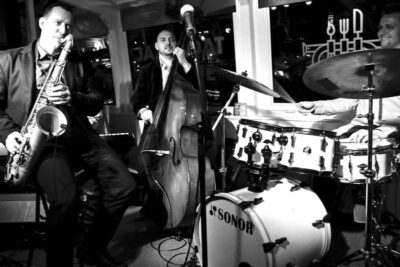
Jazz Boat Cruise with Live Concert and Optional Meal
Read our review →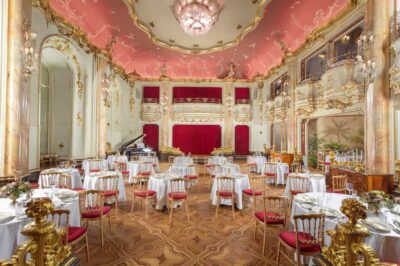
Mozart Ballroom Concert Ticket with 3-Course Dinner
Read our review →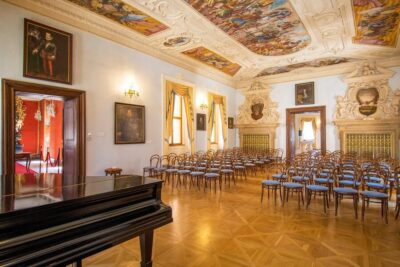
Prague Castle: Midday Classical Concert at Lobkowicz Palace
Read our review →
Browse the lists this tour appears in