
Reviewed · WALKING TOURS
Prague Hidden Gems Walking Tour
Prague’s most rewarding sights are not always the ones packed around the Old Town Astronomical Clock. This three-hour walk takes you from Old Town Square through quiet church interiors, Czech Cubist architecture, Franciscan Garden, Emmaus Monastery, and up to Vyšehrad’s river view.
I like the clear contrast between famous places and overlooked corners. I also like the guides’ personal approach: Mike is patient with questions, while Jack, also called Honza, adds thoughtful links between Prague’s past and Czech attitudes today.
The main consideration is the pace and finish. You walk uphill to Vyšehrad, including one notably steep street, and the tour ends away from the historic center. A few early stops may also repeat sights you have already seen if you book this after several days in Prague.
Key points at a glance
- Old Town to Vyšehrad: This is a one-way walk across central Prague, ending at a castle complex with a river overlook.
- Churches with stories: St. James, Our Lady of the Snows, and Emmaus Monastery each reveal a different chapter of Prague’s religious and political past.
- Czech Cubism: The House of the Black Madonna introduces a style especially associated with Prague and the Czech lands.
- Small group format: The maximum group size is 15, making it easier to ask questions than on a large coach tour.
- Guide quality matters: Mike and Jack, also known as Honza, are specifically named as warm, well informed, and generous with their time.
- Plan for walking: Wear proper shoes, bring water, and save your energy for the climb toward Vyšehrad.
Why this Prague walk is different
This is not a greatest-hits stroll that simply links Prague Castle, Charles Bridge, and the Astronomical Clock. Instead, you get a cross-section of the city, starting with the medieval core and moving through royal squares, churches, architecture, and a former royal stronghold.
That change of setting gives the walk its value. You see how Prague developed beyond its postcard center, and you get stories about places you might otherwise pass without a second glance. The route also gives you a useful introduction to several architectural styles, including Cubism, a subject especially suited to Prague.
The tour is offered in English and starts at 10:00 a.m. at Old Town Square. With a maximum of 15 people, the group is small enough for questions, but it is not a private walk. If your guide is Mike or Jack, you can expect a talk that goes beyond dates and names. Jack, also called Honza, is particularly good at connecting historical events with modern Czech life, while Mike has a reputation for answering a long run of questions with patience.
The advertised duration is about three hours. One guide gave an extra hour on one occasion, but you should treat that as a kindness rather than part of the schedule.
More Walking Tours in Prague:
- Prague: 3-Hour Walking Tour of Old Town & Prague Castle
★ 4.7 · 5,696 reviews - Prague: Ghost Walking Tour Where Legends Come To Life
★ 4.4 · 5,253 reviews - Prague: Jewish Quarter Walking Tour with Admission Tickets
★ 4.7 · 3,729 reviews
Old Town Square sets the stage
The tour begins at Staroměstské náměstí, Prague’s Old Town Square. You receive a short introduction to the city and the basic story of Prague before leaving the square.
This opening is useful even if you have already seen the square. Prague’s central sights can feel like a collection of pretty façades until someone explains how they fit together. Your guide gives you that framework before leading you toward less familiar places.
The stop itself is brief, about 15 minutes. Do not expect a long lecture on every building around the square. The point is to get your bearings and understand the broad historical forces behind the city you are about to walk through.
If you have never been to Prague, this is a good first or second-day activity. If you have already spent time around the square, listen for the wider context rather than expecting a new angle on every famous façade.
St. James and the House of the Black Madonna
After a short walk, you enter the Church of St. James the Greater. The church visit lasts only about seven minutes, but the interior gives the route an immediate change of mood. You leave the open square and step into a quieter, older setting where your guide can explain the church’s past and point out details inside.
The short timing means this is an introduction, not a full church study. Still, a guided look is worthwhile because religious buildings in Prague often reward attention to details that are easy to miss when you walk in alone.
Next comes the House of the Black Madonna, a compact stop of about five minutes. Its importance is architectural rather than religious. The building is one of Prague’s best-known examples of Cubism, a style strongly linked with Czech architecture.
This is one of the tour’s most distinctive subjects. You are not simply looking at an old building. You are learning to spot a local architectural language that can seem surprising in a city better known for Gothic towers, Baroque churches, and Art Nouveau façades.
The stop is quick, so do not expect a full survey of Czech Cubism. You will get the essential story and a chance to understand why this building matters.
Wenceslas Square and Our Lady of the Snows
Wenceslas Square is broad, long, and tied to major events in modern Czech history. Your guide spends about 10 minutes explaining some of the square’s most important twentieth-century stories.
This is a helpful counterpoint to Prague’s medieval center. The square connects the city you see today with the political changes that shaped modern Czech life. Jack’s style is especially well suited to this part of the walk because he is willing to discuss how history affects the way Czechs think and speak today.
The next stop, the Church of Our Lady of the Snows, lasts about 10 minutes. The church’s story is one of grand plans and incomplete ambition. It was intended to become one of Central Europe’s greatest churches, but the project did not reach its original scale.
That unfinished quality is part of the appeal. You see how a religious building can reflect the plans, wealth, and political power of its period, even when the final result falls short of the original design.
The first part of the walk includes several central Prague sights, so you might recognize some streets or buildings if you have already explored on your own. That is the chief weakness for people who spend several days sightseeing before booking. Still, the guide’s explanations can give familiar places a clearer purpose.
A few more Prague half-days to weigh up
- Prague: 50-Minute Sightseeing Evening Cruise
★ 4.2 · 33,780 reviews - Prague: Medieval Dinner with Unlimited Drinks
★ 4.4 · 19,847 reviews - Prague: Skip-the-line Castle Ticket and Optional AudioGuide
★ 4.3 · 11,121 reviews - Prague: Castle Tour with Local Guide and Entry Ticket
★ 4.6 · 10,422 reviews
Franciscan Garden offers a quiet pause
Leaving Our Lady of the Snows, you pass through Franciscan Garden, a small green retreat away from the city’s main flow. It is used as a quiet escape by local people, and its position makes it a useful reminder that Prague has calm pockets even close to busy downtown streets.
The garden is not listed with a formal admission time, and you should not expect a long stop. Its value comes from the change in pace. After squares, traffic, and architecture, a peaceful garden gives your eyes and feet a short break.
This is also the kind of place you might want to revisit on your own. Make a mental note of it, especially if your Prague days include shopping or sightseeing around Wenceslas Square. The garden offers a simple pause without requiring a separate trip.
Vodičkova reveals Prague in passing
The walk continues along Vodičkova Street for roughly 10 minutes. Your guide points out buildings and architectural details that are easy to overlook when you are focused on reaching the next major attraction.
This part shows how the tour works best. You are not stopping at a famous monument every few minutes. You are learning to look upward, compare façades, and notice how different periods sit beside one another.
The short stop also keeps the route moving. The full tour covers a fair distance, so the guide cannot linger at every building. If you enjoy architecture, have your questions ready and ask as you walk. A smaller group helps here, since a guide can respond without trying to manage a crowd of 40 people.
Charles Square and Prague’s lost clock
Karlovo náměstí, or Charles Square, receives about 20 minutes. It was once among the largest squares in the world, and its history reaches from its foundation to the modern city.
The guide also tells you about another astronomical clock in Prague, separate from the better-known clock at Old Town Square. That detail alone gives the square a useful surprise. It shows how Prague’s history includes abandoned plans, forgotten landmarks, and rival civic projects, not only the monuments that survived as tourist icons.
Charles Square is broad and open, so the guide’s storytelling matters. Without context, it can seem less immediately impressive than Old Town Square. With a clear explanation, you begin to understand its former scale and public role.
This is a good point to consider your energy. The tour is still moving toward Vyšehrad, and the final section includes a climb. If you need a longer rest, tell your guide before the route continues, though the schedule may not allow a full break.
Emmaus Monastery gives the route real depth
Emmaus Monastery is one of the strongest stops on the walk. You spend about 20 minutes there, and admission is included.
The monastery is among Prague’s oldest. It was financed by the emperor and once had interiors richly decorated with frescoes. Many of those paintings survived, even though the monastery was badly damaged by twentieth-century events.
That combination of age, art, and damage makes Emmaus more than a quick photo stop. You can see how Prague’s buildings carry evidence of both grand patronage and later upheaval. The surviving frescoes also give the tour a visual payoff after several stops that focus mainly on exterior architecture and stories.
Do not expect a long museum visit. Twenty minutes is enough for an introduction, but not enough to examine every detail. If you want a slow study of the monastery, you would need to return independently. As part of a walking route, though, this is an excellent use of time.
Emmaus also gives the tour a stronger sense of progression. The route has moved from the crowded historic center into a quieter part of Prague, and the monastery feels like a meaningful bridge between the old city and Vyšehrad.
The climb to Vyšehrad rewards your effort
The final section takes you up to Vyšehrad, the former seat of Czech kings in the early medieval period. Your guide explains its role in Prague’s defense system before ending at a viewpoint over the river.
This is a fitting finish because Vyšehrad feels separate from the main tourist circuit. You are not ending at another crowded central square. You arrive at a historic fortified site with room to breathe and a broad outlook across the city.
The approach includes a fairly steep street, so comfortable walking shoes are not optional advice. You should also bring water and avoid treating the tour as a gentle promenade. The physical demand is moderate, but the distance and uphill finish will be tiring for some people.
The tour ends at Vyšehrad Castle rather than returning you to Old Town Square. That is both a strength and a practical issue. You finish near a major historic site and public transportation, but you must arrange your own way onward. Hotel pickup and drop-off are not included.
If you have plans in central Prague immediately afterward, allow time for transportation. If you are happy to continue exploring Vyšehrad, the ending works well. You can also use the finish as a starting point for a separate visit, though the tour itself does not include a full exploration of the complex.
What the $44.32 price buys you
At $44.32 per person, this is not the cheapest way to walk around Prague. You can see many central streets for free, and several churches may be visited independently when open.
The value comes from the route and the explanation. You are paying for an English-speaking local guide, entry to Emmaus Monastery, access to church interiors during the visit, and the time saved by linking seven distinct areas in one direction. You also get architectural context that is difficult to gather from plaques alone.
The price makes the most sense if you enjoy history, architecture, and stories about how Prague changed. It is less compelling if you only want the city’s headline sights or prefer to stop for long periods at each location.
Food and drinks are not included, so eat before the 10:00 a.m. start or plan a meal after reaching Vyšehrad. Since the walk lasts about three hours and keeps moving, carrying a small bottle of water is sensible.
Who should book this walk
I would choose this tour for a first visit, especially on the second day. You get the basic Old Town setting, then quickly move beyond the most familiar route.
It also suits repeat visitors who have already seen Charles Bridge, the Old Town Astronomical Clock, and the main square. The churches, Cubist building, Emmaus Monastery, and Vyšehrad offer a different view of Prague.
Families can join, but children under 18 must be accompanied by an adult. The route calls for moderate physical fitness, and the uphill finish may not suit anyone who struggles with extended walking or steep streets.
The small maximum group of 15 is another reason to book if you want to ask questions. The strongest part of the experience depends on the guide, and the named guides Mike and Jack, also known as Honza, bring the kind of energy that can turn a short church visit into a memorable lesson.
The published record is five out of five from 19 ratings, with 100 percent recommending the experience. That is a very strong result, though the small number means you should still weigh the route and walking demands against your own plans.
Practical details before you go
Meet at Staroměstské náměstí 1, at Old Town Square, for the 10:00 a.m. start. The activity is available in English and uses a mobile ticket.
Wear comfortable clothing and proper walking shoes. The route includes several hours on foot, uneven city surfaces may occur, and the last section climbs toward Vyšehrad.
Service animals are allowed, and the route is near public transportation. The activity does not include hotel pickup, hotel drop-off, food, or drinks.
Children under 18 need an adult with them. Confirmation normally arrives when you book, although bookings made within two days of departure may receive confirmation within 48 hours, subject to availability.
Free cancellation is available up to 24 hours before the start time for a full refund. Changes or cancellations made inside that window are not accepted for a refund.
Should you book it?
Book this walk if you want Prague explained rather than simply photographed. The route gives you churches, Cubist architecture, a quiet garden, a major square, an old monastery, and a castle viewpoint in one well-shaped outing.
I would be less keen if you have already spent many days covering central Prague and dislike repeated early stops. Even then, the later sections at Emmaus and Vyšehrad may justify the price.
For most people with moderate fitness, the strongest plan is to take it early in your stay, listen closely to Mike or Jack if available, and leave the afternoon open for Vyšehrad or a relaxed meal. You pay for the guide’s stories and the route’s structure, not for a long list of admissions. If that sounds useful, this is a smart way to see a quieter, more thoughtful side of Prague.
FAQ
Where does the Prague walking tour begin?
It begins at Staroměstské náměstí 1, 110 00 Prague 1, at Old Town Square.
What time does the tour start?
The tour starts at 10:00 a.m.
Where does the tour end?
It ends at Vyšehrad Castle in Prague, at a viewpoint over the river.
How long does the tour last?
The scheduled duration is approximately three hours.
What language is the tour offered in?
The tour is offered in English.
What is included in the price?
A local guide is included. Admission to Emmaus Monastery is also included during the visit.
Are food and drinks included?
No. You must arrange your own food and drinks.
Is hotel pickup and drop-off included?
No. Hotel pickup and drop-off are not included.
How large is the group?
The tour has a maximum of 15 people.
What should I wear?
Comfortable clothing and walking shoes are recommended. You should also be prepared for a moderate level of physical activity and an uphill walk toward Vyšehrad.
Recently added around Prague
- St Vitus Cathedral and Prague Castle Private Walking Tour★ 4.0 · 3 reviews
- Prague: Old Town and Jewish Quarter Small-Group Tour★ 5.0 · 3 reviews
- Prague Castle Interiors & Changing of the Guard-Small group★ 5.0 · 3 reviews
- Royal Splendor Unveiled Private Prague Castle Interior Tour★ 3.5 · 3 reviews
- Prague: Bohemian & Saxon Switzerland National Park Day Trip★ 5.0 · 3 reviews
- Running Tour of Prague. Your private 6-9K intro★ 5.0 · 3 reviews
- Discover Prague’s most Photogenic Spots with a Local★ 3.5 · 3 reviews
- PRAGUE AIRSOFT SHOOTING GAMES★ 4.7 · 3 reviews
Walking Tours, compared.
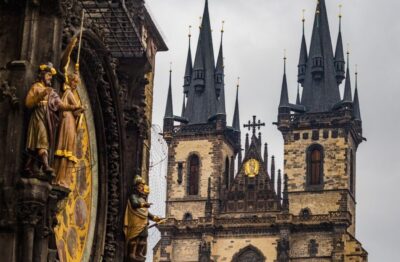
3-Hour Walking Tour of Old Town & Prague Castle
Read our review →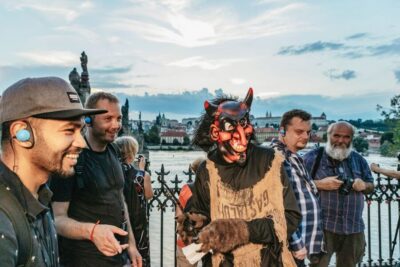
Ghost Walking Tour Where Legends Come To Life
Read our review →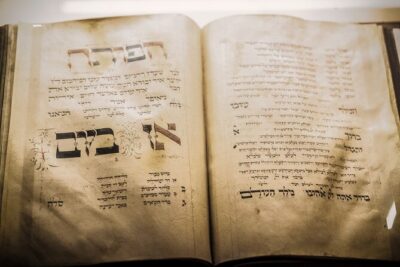
Jewish Quarter Walking Tour with Admission Tickets
Read our review →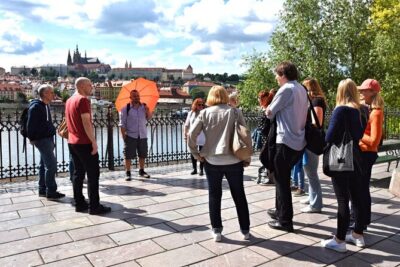
Prague Guided Walking Tour and Cruise with Authentic Czech Lunch
Read our review →
Old Town and Jewish Quarter Guided Walking Tour
Read our review →
Prague Ghost and Legend of Old Town Walking Tour
Read our review →
Prague 3-hour Afternoon Walking Tour including Prague Castle
Read our review →
Ghosts and Legends Nighttime Guided Walking Tour
Read our review →Browse the lists this tour appears in