Reviewed · PRAGUE TOURS
Prague Immersive Tour: Travel back in time with virtual reality
Prague’s streets reveal plenty, but virtual reality lets you see what has vanished. This tour takes you from Charles IV’s Prague in 1377 to the Jewish ghetto under Rudolph II and the troubled year 1621. You do not simply hear dates. You are shown earlier versions of places you can still visit today.
I like the clear four-stop plan and the small maximum of 15 people. I also like the way the tour links the VR scenes to real places, especially Old Town Square, Charles Bridge, and Josefov. The main caution is that the experience depends on good weather, and a single hour and 45 minutes leaves limited time for each historical setting.
Key points at a glance
- See four lost versions of Prague: Visit Old Town Square in 1377, the Vltava riverfront in 1342, Josefov in 1600, and Old Town Square again in 1621.
- Travel through time with VR: The headsets help you picture buildings, bridges, walls, and public spaces that no longer look the same.
- Keep the group personal: The maximum group size is 15 people, useful for a guided activity involving equipment and questions.
- Meet in the historic center: The tour starts and finishes at Numinos Praga on Celetná Street, near Prague’s Old Town sights.
- Expect English guidance: Guides including Anna, Lara, Santi, and María have led sessions, with especially strong praise for clear explanations.
- Check the forecast: Poor weather can cause cancellation, with a new date or full refund offered.
Why virtual reality works well in Prague
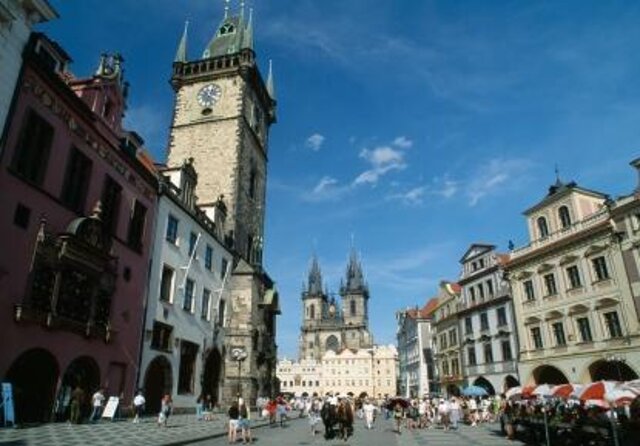
Prague has an unusual advantage for a time-travel tour: many major historical sites remain close together. You can stand in today’s Old Town Square, walk toward the river, pass Josefov, and return to the square without spending the day on transport.
The headset scenes add a missing layer. A church, bridge, wall, or row of houses may have vanished, leaving only a name or a few stones behind. VR gives you a visual comparison between the present city and earlier Prague. That is useful if you enjoy history but find dates and dynasties hard to place.
This is not a long museum visit or a walking tour built around dozens of minor details. The format is tighter. You move through four major periods, with about 20 minutes assigned to each stop. The guide supplies the thread that connects the scenes, and the equipment supplies the visual punch.
The experience is offered in English. The guides’ teaching style seems to matter as much as the technology. Anna has been praised for explaining the city’s development in an easy-to-follow way, while Lara has been singled out for making the experience clear and engaging. Santi and María have also led sessions. Since guide assignments can change, book this for the format and subject rather than for one guaranteed guide.
A few more Prague half-days to weigh up
- Prague: 50-Minute Sightseeing Evening Cruise
★ 4.2 · 33,780 reviews - Prague: Medieval Dinner with Unlimited Drinks
★ 4.4 · 19,847 reviews - Prague: Skip-the-line Castle Ticket and Optional AudioGuide
★ 4.3 · 11,121 reviews
Celetná Street to Prague in 1377
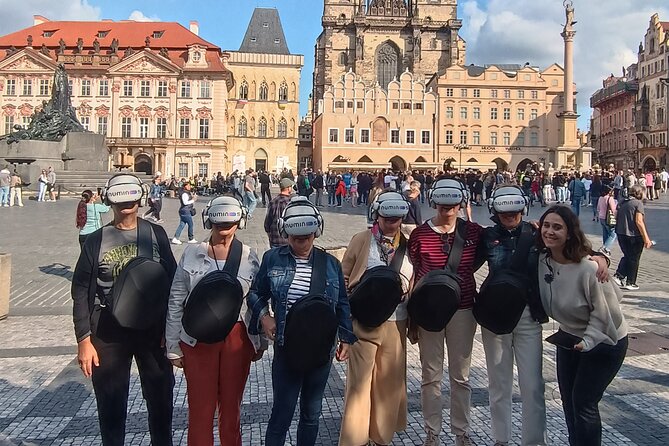
You begin at Numinos Praga, Celetná 558/12, in Staré Město. The start time is 3:00 pm, and the activity returns to this same meeting point. That location makes sense for a tour centered on Prague’s medieval core, since you are already near the city’s main Old Town sights.
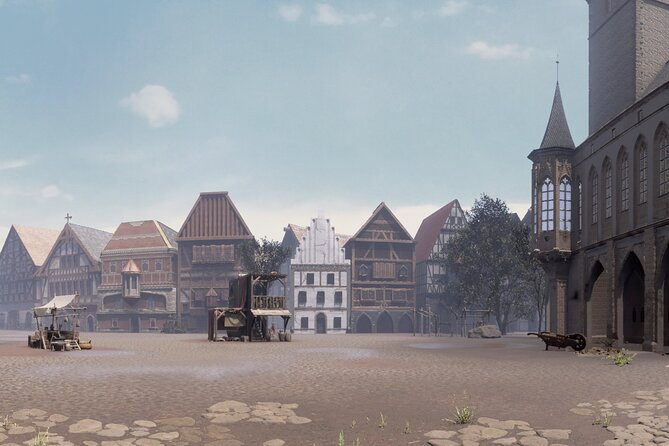
The first historical scene takes you to 1377, during the era of Charles IV. The focus is Stare Mesto, especially Old Town Square. Instead of seeing the square as it appears now, you get a picture of a medieval city shaped by different buildings, streets, and public spaces.
This is a strong opening because Old Town Square is easy to recognize in the present. The familiar setting gives the VR scene a useful reference point. You can compare the square you have just seen with the older version presented through the headset.
The first stop lasts about 20 minutes. That is long enough for the guide to explain the setting and let you take in the reconstruction, but it is not enough for every side story. If you want a detailed account of Charles IV, Prague’s religious life, and medieval daily life, you will need another source or a separate walking tour.
Still, the time limit keeps the first scene from turning into a lecture. You get one historical setting, one visual shift, and a clear start to the city’s story.
Charles Bridge before the bridge you know
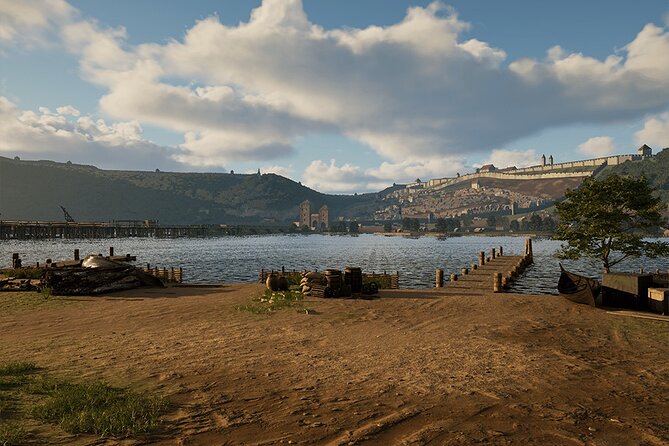
The second stop moves toward the Vltava River and reaches farther back, to 1342. The scene presents the beginnings of the city in a period before the Charles Bridge familiar to modern visitors.
The key image here is the old Judith Bridge. You see it in its last moments, along with a panoramic view of both riverbanks and a medieval Malá Strana still protected by walls. This gives the stop a special value: it is not simply an older view of a famous monument, but a look at the bridge and river crossing that came before the present structure.
The riverfront is one of the places where modern Prague can hide its earlier shape. Crowds, later buildings, statues, and the current bridge dominate what you see today. A reconstructed panorama can help you understand how the river connected the two sides of the city and why bridges mattered so much to Prague’s growth.
Again, the planned time is about 20 minutes. That should suit you if you want a focused introduction rather than a long technical explanation of medieval construction. You may find the scene especially useful before visiting Charles Bridge on your own, because it gives the crossing a longer timeline.
One practical point: the tour includes several locations, but the supplied details do not state how much of the route between stops is walked or how much time is spent outdoors. Plan for a city-center activity rather than assuming it is entirely indoors.
Josefov in 1600, under Rudolph II
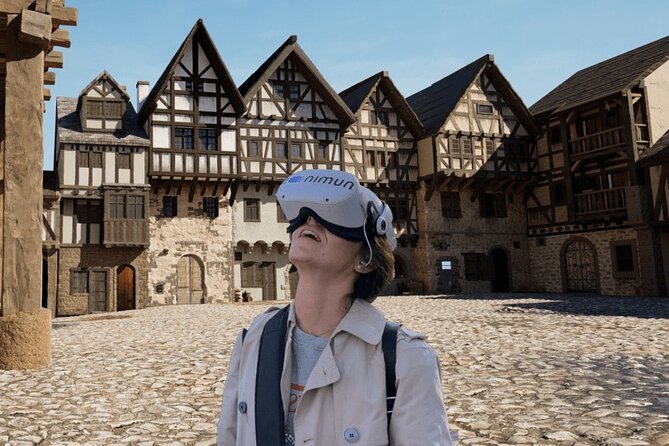
The third stop shifts to Josefov in 1600, during the reign of Rudolph II. Here you see the former Jewish ghetto as it looked more than four centuries ago.
This scene adds social and urban context to the tour. Josefov is often visited for its synagogues and cemetery, but the district’s wider shape is harder to picture from the remaining landmarks alone. The VR presentation can show the ghetto as a lived-in neighborhood rather than a collection of isolated monuments.
The year 1600 also gives the guide a chance to place Prague in the period of Rudolph II. The supplied information does not promise a full political or cultural program, so you should expect the guide to focus on the reconstructed location and its place in the city’s development.
I like the position of this stop in the sequence. After the medieval city and the early river crossing, you see Prague at a later point, with Josefov as its own distinct part of the urban story. The change helps you notice that Prague was not one fixed city preserved through time. Its streets, boundaries, and communities changed.
The 20-minute limit is both useful and restrictive. It keeps the program moving, but it may leave you wanting more detail about Jewish Prague. If Josefov is a major reason for your visit, pair this activity with time at the district’s historic sites rather than treating the VR scene as a complete introduction.
A different way to spend an afternoon here:
- Prague: Castle Tour with Local Guide and Entry Ticket
★ 4.6 · 10,422 reviews - Prague Castle 2.5-Hour Tour Including Admission Ticket
★ 4.7 · 8,927 reviews - Prague: Oldtown, Medieval Underground & Dungeon History Tour
★ 4.2 · 8,244 reviews - Prague: Vltava River Night Cruise with Buffet
★ 4.3 · 7,338 reviews
The Old Town Square in 1621
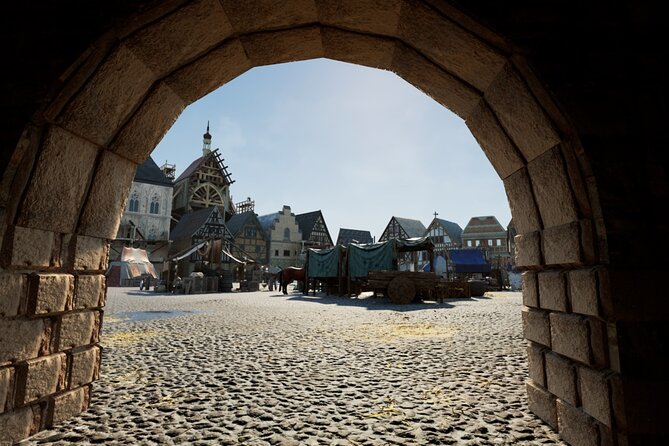
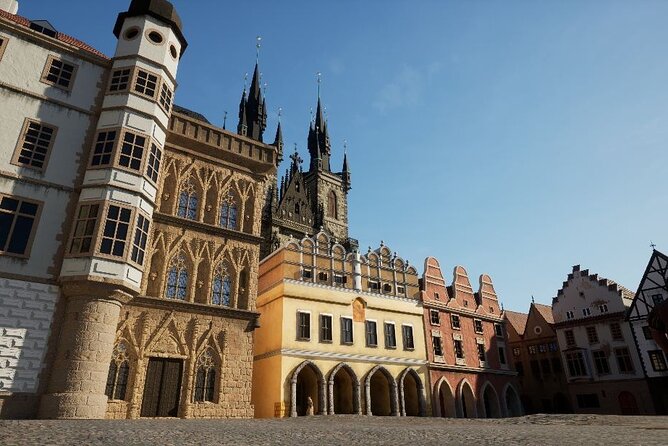
The final stop returns to the central square, this time in 1621, almost 250 years after the first scene. The focus is an event that shaped Prague’s future.
The tour description does not name the event, so you should let the guide set the historical context during the session. The date points to a serious moment in Prague’s political and religious history, and placing it in the same square used in the opening scene creates a strong sense of change.
This return is a smart piece of structure. You revisit a familiar location, but the square now belongs to a different age. You can compare the medieval setting from 1377 with the Prague of 1621 and see how much the city’s public heart had altered.
The final scene also gives the tour a clear ending. Rather than stopping at a random point in the timeline, it returns you to the place where the experience began. After roughly 20 minutes here, you finish back at the Celetná Street meeting point.
What the 1-hour-45-minute format means
The advertised duration is about one hour and 45 minutes. The four historical stops account for around 80 minutes, with the remaining time allowing for movement, explanations, equipment, and transitions.
That makes this a compact activity for a first or second day in Prague. You can fit it into an afternoon without giving up a full day of sightseeing. The 3:00 pm start may also work well after a morning of churches, museums, or a walk through the Old Town.
The short format requires reasonable expectations. You will not receive a full university course on Prague. Instead, you get four carefully chosen windows into the city, tied to places you can see around you.
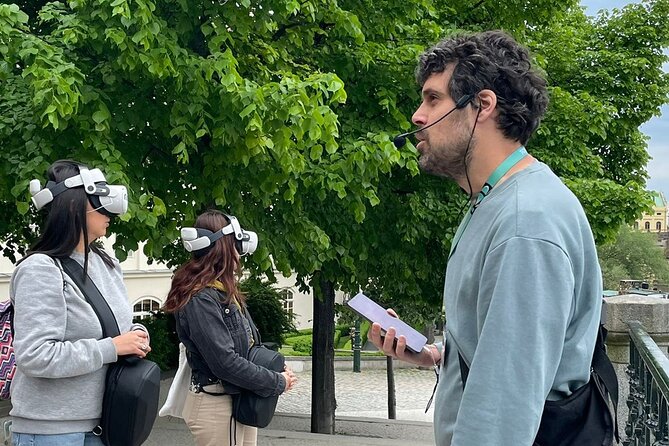
A maximum of 15 people is another plus. A small group usually makes it easier to hear the guide and ask questions. It also matters when everyone is using equipment and moving through a timed program. The information does not specify the number of headsets or the exact viewing procedure, so you may want to ask the operator if that detail matters to you.
Guides, language, and the human side
The tour is offered in English, and the guide is central to making the technology useful. A headset can show an old street, but it cannot decide which detail deserves your attention or explain why a particular bridge mattered.
The experience has featured guides named Anna, Lara, Santi, and María. Anna has been praised for making Prague’s development easy to understand, while Lara has been noted for clear explanations. Santi and María have also been associated with warm, interesting sessions. These names help you know the style of guiding available, but they do not guarantee who will lead your departure.
The strongest part of the experience is likely the combination of explanation and visual comparison. The VR scenes give you something concrete to look at, while the guide turns those images into a connected story.
If you prefer to explore alone and set your own pace, the fixed 20-minute scenes may feel restrictive. If you like having a guide organize the timeline and point out the meaning of what you see, the structure should suit you well.
Is $18.15 a fair price?
At $18.15 per person, the tour is priced like a short city activity rather than a full-day historical program. I see the value in the four separate time periods, the English guide, the central meeting point, and the small group limit.
You are paying for more than a headset. The operator has to prepare a guided sequence that joins four locations and four dates, and the guide has to explain what you are seeing. The price is easier to justify if you enjoy visual learning or want a fresh way to understand places you plan to visit afterward.
The value is weaker if you want extensive walking, entry to historic monuments, or a long discussion at each stop. Admission tickets are not listed for the four stops, and the experience does not appear to replace visits to Prague Castle, the Jewish Museum, or other major sights.
For a compact activity under two hours, the price is reasonable. It is particularly attractive for families, first-time visitors, and anyone who has trouble picturing old buildings from written descriptions.
Practical details before you book
You receive confirmation at booking, and the tour uses a mobile ticket. The meeting point is Numinos Praga, Celetná 558/12, 110 00 Praha 1-Staré Město. The tour ends where it starts.
Public transportation is nearby, and service animals are allowed. Most people can participate. Since the activity includes VR equipment and a city-center route, contact the provider if you have a specific mobility or equipment concern, as the supplied details do not explain the exact physical setup.
The activity requires good weather. If poor weather cancels the tour, you are offered a different date or a full refund. You can also cancel for a full refund up to 24 hours before the 3:00 pm start time. Cancellations or changes made less than 24 hours ahead are not accepted for a refund.
One disappointing account describes locked doors and no contact from the operator. It is an isolated but important warning. Keep your confirmation available, arrive at the stated meeting point, and contact Numinos Praga promptly if anything seems wrong.
Who will enjoy this Prague time machine?
I would choose this tour for you if you want a quick historical overview with strong visual support. It suits first-time visitors who need context, families looking for an activity beyond standard sightseeing, and history-minded people who enjoy seeing lost buildings and districts reconstructed.
It may also work well for repeat visitors. You may know today’s Old Town Square or Charles Bridge already, but the earlier versions give those places a new frame.
I would be more cautious if you dislike headsets, want a long outdoor walk, or expect a large number of historical scenes. One session covers four periods, and the program itself suggests there could be room for more scenarios.
Should you book the Prague Immersive Tour?
Book it if you want to understand Prague by comparing the city you see with the city that came before it. The 1377 Old Town Square, the 1342 river crossing, Josefov in 1600, and the 1621 return to the square form a tidy, memorable path through time.
Skip it if your priority is entering monuments, spending hours in one district, or following a fully detailed scholarly lecture. For everyone else, $18.15 buys a focused introduction, a small group setting, English guidance, and a useful visual way to read Prague’s streets. Check the weather, allow the full 1 hour and 45 minutes, and keep your afternoon flexible enough to enjoy the Old Town afterward.
FAQ
How long does the Prague Immersive Tour last?
The experience lasts approximately 1 hour and 45 minutes.
What time does the tour begin?
The stated start time is 3:00 pm.
Where does the tour start?
It starts at Numinos Praga, Celetná 558/12, 110 00 Praha 1-Staré Město, Czech Republic.
Where does the tour finish?
The activity ends back at the meeting point on Celetná Street.
Which language is offered?
The tour is offered in English.
How many people can join?
The maximum group size is 15 people.
Is the tour suitable for most people?
Most people can participate, and service animals are allowed. The activity is also near public transportation.
What happens if bad weather cancels the tour?
You can choose a different date or receive a full refund if the tour is canceled because of poor weather.
Recently added around Prague
- St Vitus Cathedral and Prague Castle Private Walking Tour★ 4.0 · 3 reviews
- Prague: Old Town and Jewish Quarter Small-Group Tour★ 5.0 · 3 reviews
- Prague Castle Interiors & Changing of the Guard-Small group★ 5.0 · 3 reviews
- Royal Splendor Unveiled Private Prague Castle Interior Tour★ 3.5 · 3 reviews
- Prague: Bohemian & Saxon Switzerland National Park Day Trip★ 5.0 · 3 reviews
- Running Tour of Prague. Your private 6-9K intro★ 5.0 · 3 reviews
- Discover Prague’s most Photogenic Spots with a Local★ 3.5 · 3 reviews
- PRAGUE AIRSOFT SHOOTING GAMES★ 4.7 · 3 reviews
Prague Tours, compared.
Skip-the-line Castle Ticket and Optional AudioGuide
Read our review →
Castle Tour with Local Guide and Entry Ticket
Read our review →
Prague Castle 2.5-Hour Tour Including Admission Ticket
Read our review →
Oldtown, Medieval Underground & Dungeon History Tour
Read our review →