
Reviewed · OLD TOWN TOURS
Prague Old Town: Private Tour
Prague’s Old Town is a tight bundle of grand churches, medieval lanes, royal power, Jewish history, and architectural surprises. This private walk brings those pieces together, beginning at the Powder Tower and ending near Charles Bridge, with a guide to explain what you are looking at and why it matters.
I like the private format, since your group can ask questions and set the pace without trying to hear a guide over a crowd. I also like the route’s range: you move from the first Cubist building in Prague to Mozart’s theatre, Charles University, the Astronomical Clock, and the Jewish Quarter in one well-packed walk.
The main consideration is the pace. Two and a half hours is enough for an excellent introduction, not enough for lengthy interior visits or a slow study of every stop. You should also expect a fair amount of walking over old city streets and bring sensible shoes.
Key points at a glance
- A private walk for your group only: You get a more personal experience than a large public tour, with room for questions and adjustments.
- A strong route through central Prague: The walk links the Powder Tower, Old Town Square, the Jewish Quarter, and Charles Bridge.
- History with plenty of variety: Architecture, Mozart, Charles IV, Jan Hus, Jewish Prague, and the Astronomical Clock all appear in one route.
- English-speaking guides with different strengths: Guides named Iva, Tereza, Via, and Tony have led this experience, with particular praise for clear explanations and an upbeat manner.
- A useful first look at Prague: The tour gives you orientation and context before you explore the city on your own.
- A practical two-and-a-half-hour length: It fits well into a morning or afternoon, though the schedule leaves little time for extended stops.
Starting beneath Prague’s Powder Tower
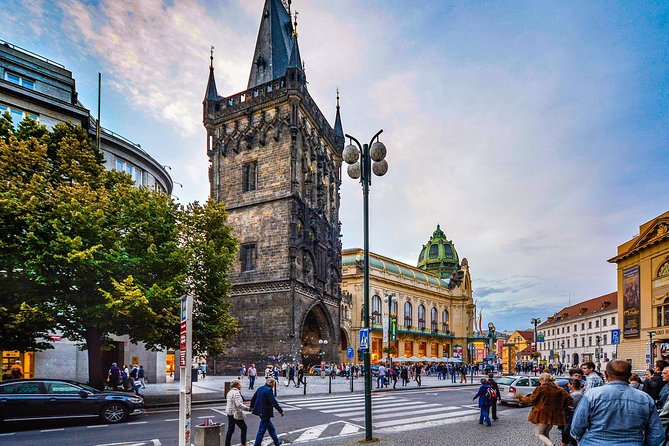
The tour begins at the Powder Tower on Náměstí Republiky, at the edge of Prague’s Old Town. This is a smart meeting point because it places you near major public transportation and right beside one of the city’s historic gateways.
Your guide starts with an introduction to the walk. That opening matters more than it might sound. Prague can feel like a parade of handsome façades at first, and without a little orientation, it is easy to admire the buildings without understanding how the city fits together.
The Powder Tower marks a transition between the newer city areas and Old Town. From here, the route moves into a compact historic center where many sights are close together. You will spend the tour on foot, so the location helps you get moving right away rather than losing time on a long transfer.
The exact amount of time spent at the tower is not specified. Think of it as the starting landmark, not necessarily a full tower visit. The listed experience includes a walking guide, not food, drinks, or a separate admission package.
More Old Town Tours in Prague:
- Prague: Old Town Hall Tower Entry Ticket
★ 4.5 · 6,749 reviews - Prague: 3-Hour Walking Tour of Old Town & Prague Castle
★ 4.7 · 5,696 reviews - Prague: 3-Hour Old Town and Prague Castle Tour in German
★ 4.8 · 5,671 reviews
Prague’s first Cubist building
One early stop focuses on what is described as the first Cubist building in Prague. This gives the walk an important change of tone. The city is famous for Gothic towers and Baroque churches, but its architectural story does not stop in the Middle Ages.
Cubism is often associated with painting, yet Prague applied the style to buildings and decorative details in a distinctive way. Your guide can help you read the sharp shapes and unusual geometry instead of treating the building as just another attractive façade.
I especially like this stop for repeat visitors and architecture fans. It breaks up the usual checklist of Old Town highlights and shows that Prague’s identity includes modern artistic movements as well as royal monuments.
The stop is also a reminder to look upward. In Prague, details may sit around windows, entrances, or upper floors, and a guide can direct your attention to features you might pass without noticing. Since this is a walking tour, the experience focuses on explanation from the street rather than promising an interior architectural visit.
Mozart’s Prague at the city’s oldest theatre
The route then reaches Prague’s oldest theatre, known for its connection with Mozart. This is one of the most appealing historical links on the walk because it connects the city to European music rather than only to politics and religion.
A stop here gives your guide a chance to explain why Prague mattered to Mozart and how theatre life fit into the city’s cultural world. The available details do not promise a performance or admission inside, so you should treat this as a historical and exterior sightseeing stop unless your guide tells you otherwise.
That distinction helps set expectations. You are paying for a guided walk, not a theatre ticket. Still, a good explanation can make the building far more memorable than a quick photograph would.
The guide names supplied for this experience include Iva, Tereza, Via, and Tony. Individual assignments can vary, but the descriptions of these guides point to a friendly, engaging approach. Tereza, in particular, is credited with clear English and a talent for making Prague’s long timeline understandable without making the walk feel like a lecture.
Charles University and the age of Charles IV
The next major subject is Charles University, founded in 1348 by Charles IV. It is identified as the oldest university in Central Europe, giving the tour a direct connection to Prague’s role as a center of learning and power.
This is the kind of fact that benefits from context. Charles IV was not simply a medieval ruler adding another grand institution to the city. The university helped reinforce Prague’s importance within Central Europe, and its foundation belongs to the same wider period that shaped many of the city’s best-known monuments.
You might find this stop especially useful if Prague’s history seems crowded with unfamiliar names and dates. The guide can link Charles IV’s building projects and political ambitions to the streets around you, helping you see the city as a planned center of authority rather than a random collection of old buildings.
The tour’s strength here is compression. You receive a clear framework in a short period. The tradeoff is that you will not get a full academic treatment of the university’s many centuries. For a first visit, that is usually a sensible balance.
A few more Prague half-days to weigh up
- Prague: 50-Minute Sightseeing Evening Cruise
★ 4.2 · 33,780 reviews - Prague: Medieval Dinner with Unlimited Drinks
★ 4.4 · 19,847 reviews - Prague: Skip-the-line Castle Ticket and Optional AudioGuide
★ 4.3 · 11,121 reviews - Prague: Castle Tour with Local Guide and Entry Ticket
★ 4.6 · 10,422 reviews
Old Town Square: Týn Church, Jan Hus, and Saint Nicholas
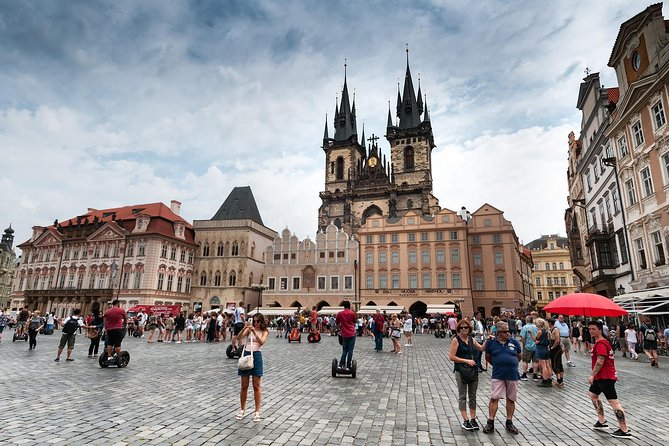
Old Town’s central square brings several major sights into one stop. The route includes Týn Church, the statue of Jan Hus, Saint Nicholas Church, and other nearby landmarks.
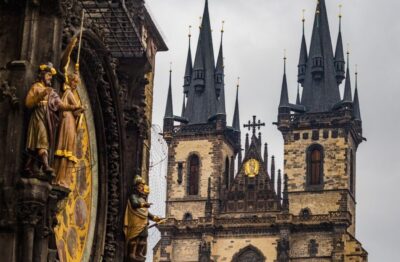
Týn Church gives the square its dramatic Gothic profile. Its twin towers are among Prague’s most recognizable sights, but the church is more than a postcard backdrop. It reflects the religious and political tensions that shaped Bohemia, and your guide can place it within that larger story.
The statue of Jan Hus adds another layer. Hus was a major religious reformer whose ideas had lasting consequences in Czech history. The monument is not simply a statue to admire, but a doorway into questions of belief, authority, and national identity.
Saint Nicholas Church provides a sharp contrast in style. Its Baroque character shows how Prague changed over time, adding theatrical decoration to a square already marked by medieval architecture. I like having these sights presented together because the comparison makes the city’s changing styles easier to understand.
This is likely one of the busiest parts of the route. The square is a major public space, and your experience may depend on crowd levels. A private guide helps because you can stop where your group can hear clearly, though the tour cannot control how busy the area is.
Reading Prague’s Astronomical Clock
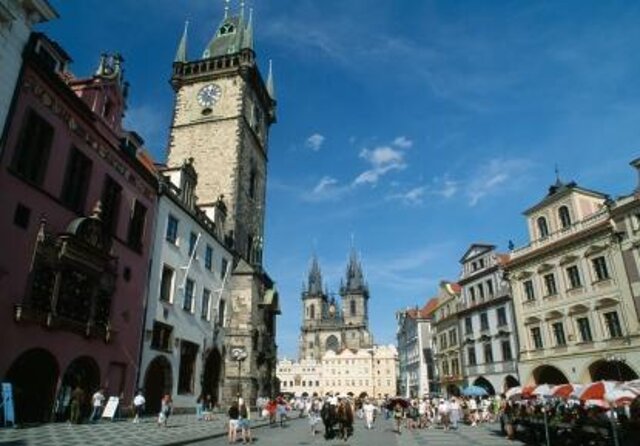
The Astronomical Clock is another central focus, along with the history of the building that houses it. Many people arrive, take a picture, and move on. A guide adds value here by explaining what the clock represents and how the surrounding building fits into Prague’s civic story.
The clock is best appreciated as a working expression of medieval science, religion, and civic pride. Its face can look complicated at first, so an explanation helps you understand what to watch rather than simply waiting for a moving figure or a familiar photo angle.
The details provided for the tour do not promise entry into the Old Town Hall or a special timed viewing. This is a street-level visit and explanation. If you want the tower view or interior rooms, you would need to confirm separately whether those options are available.
That limitation is worth keeping in mind when comparing tours. The walk gives you a strong introduction to the clock and its setting, but it is not an admission-based Old Town Hall tour. The benefit is that you keep moving through the city instead of spending a large part of the afternoon inside one sight.
The Jewish Quarter and its difficult past
The visit to Prague’s Jewish Quarter is the most historically weighty part of the route. The walk includes the synagogues, Jewish Town Hall, Jewish Ceremonial Hall, and Old Jewish Cemetery.
This section deserves careful attention. The buildings and cemetery are not just attractive historic sites. Together, they point to the long presence of Jewish life in Prague, its institutions, religious traditions, and the severe losses suffered by the community.
A guide is particularly helpful here because the quarter contains layers that are easy to miss. The Jewish Town Hall and ceremonial buildings had practical and communal roles, while the cemetery conveys the passage of time in a very physical way. The route lets you see these places as parts of a community, not as isolated stops.
The wording of the experience describes a visit in the Jewish Quarter and names these sites, but it does not specify admission to each synagogue or museum. Do not assume that entrance tickets are included. The confirmed inclusions are the friendly English-speaking guide, while food and drinks are not included.
This part of the tour may feel more serious than the earlier architectural stops. That is appropriate. A good guide should give the subject enough weight while still answering questions clearly. The guides described for this experience have been praised for connecting older events with more recent ones, which can help make this complicated history easier to follow.
Reaching Charles Bridge after two and a half hours
The tour usually ends near Charles Bridge. This is a strong finish because the bridge is one of Prague’s essential landmarks and a useful point for continuing your day.
From here, you can remain in the central area, cross toward the Lesser Town, or use the location as a simple reference point for later plans. The tour does not include a return transfer, and none is needed for most people staying in central Prague.
The route is listed at approximately two hours and thirty minutes. That length gives you enough time to cover the major subjects without turning the day into a full historical seminar. You should expect a steady walk with frequent explanations rather than long breaks at each landmark.
A moderate level of physical fitness is recommended. The tour information does not give a precise distance or promise step-free access, so anyone concerned about mobility should ask the provider before booking. Comfortable shoes are a basic necessity on Prague’s historic streets.
Why a private guide changes the experience
The clearest advantage here is control. Only your group participates, so you can ask about a building, pause for clarification, or tell the guide what interests you most. That is especially useful in Prague, where a single square can raise questions about architecture, religion, music, and politics.
The experience also suits families and mixed-interest groups. One person can ask about Mozart, another about the Jewish Quarter, and someone else about Charles IV without holding up a large group. An upbeat guide such as Iva or Via can make the history easier for younger visitors to follow, while Tereza’s clear explanations may appeal to people who prefer a more structured account.
The private format comes at a cost. At $54.42 per person, the value depends heavily on the size of your party. For a small group, you are paying for personal attention and a focused route. For a larger group, the per-person price may feel more reasonable, especially if everyone wants the same introduction to Old Town.
I would compare this price with the time and confidence it saves. In two and a half hours, you cover several major districts and themes, receive local interpretation, and finish at a key landmark. If you would otherwise walk the same streets without understanding the connections, the fee can be sensible.
Guides, language, and the tone of the walk
The tour is offered in English and includes an English-speaking guide. The guide names associated with the experience are Iva, Tereza, Via, and Tony, though you should not assume a particular person will lead your departure unless the provider confirms it.
The strongest qualities to look for are clear English, flexibility, and the ability to make a large amount of history feel manageable. The descriptions of this experience repeatedly point to guides who are friendly, enthusiastic, and good at answering questions.
That style matters. Prague’s past is full of rulers, religious conflicts, artistic movements, and changing borders. A guide who simply recites dates can make the city tiring. A guide who links political events to the buildings around you can help you remember the story after the walk ends.
You should also tell the guide at the beginning if you have a particular interest. The private setup makes it easier to give extra attention to architecture, music, political history, family questions, or the Jewish Quarter, within the limits of the fixed route and two-and-a-half-hour schedule.
Who should book this Old Town walk
I would choose this tour for a first visit to Prague, especially if you want orientation early in your stay. The route covers the central sights that many people want to see, but it adds the historical links that are hard to pick up from a map or guidebook alone.
It is also a good fit for:
- Couples who want a private introduction without joining a large group
- Families who need a guide to keep the history lively
- Small groups with different interests
- Architecture fans who want more than Gothic and Baroque landmarks
- Visitors with only a short window in central Prague
- People who prefer walking and conversation to museum-heavy sightseeing
You may want a different experience if your priority is extended interior access. The tour description does not include food, drinks, entrance tickets, or a specific promise of time inside the monuments. It is best understood as a guided overview of Prague’s historic core.
The route may also feel too packed if you prefer to linger. You can ask questions and enjoy a private pace, but the itinerary covers many subjects in about 150 minutes. This is a city orientation with substance, not a slow photographic walk.
Practical details before you reserve
The starting point is the Powder Tower, Náměstí Republiky 5, in Prague’s Old Town. The end is usually near Charles Bridge. Both locations are central and near public transportation, which makes the tour easy to fit into a day of sightseeing.
Departure times are offered as a choice, giving you flexibility around meals, museum visits, or other bookings. Since the walk averages being booked 57 days ahead, reserving early is sensible if your Prague dates are fixed.
You receive confirmation at booking in most cases. If you book within seven days of the tour, confirmation can arrive within 48 hours and remains subject to availability.
The activity allows free cancellation up to 24 hours before the start time for a full refund. Changes or cancellations made less than 24 hours before the start are not accepted for a refund, and the cut-off uses Prague local time.
Should you book it?
Book this private Prague Old Town tour if you want a lively, well-organized introduction that connects famous sights rather than treating them as separate photo stops. The combination of Cubist architecture, Mozart, Charles University, Old Town Square, the Astronomical Clock, the Jewish Quarter, and Charles Bridge gives you a broad picture in a manageable two and a half hours.
The strongest reason to choose it is the private guide. You get the chance to ask questions and shape the conversation, with guides such as Iva, Tereza, Via, and Tony bringing different personalities to the walk. Skip it if you mainly want entrance tickets, long visits inside monuments, or a slow day with few stops.
For a first day in Prague, the tour offers good value when personal attention matters. Wear comfortable shoes, allow for a steady pace, and arrive ready to look above street level. The city will provide the scenery. The guide’s job is to help you understand it.
FAQ
How long does the Prague Old Town private tour last?
The tour lasts approximately two hours and thirty minutes.
Where does the tour begin?
The meeting point is the Powder Tower at Náměstí Republiky 5, Staré Město, Prague 1.
Where does the tour end?
The tour usually ends near Charles Bridge.
Is the tour private?
Yes. Only your group participates in the activity.
Is the tour offered in English?
Yes. The experience is offered in English and includes an English-speaking guide.
Which Prague sights are included?
The route includes the first Cubist building in Prague, Prague’s oldest theatre with its Mozart connection, Charles University, Týn Church, the statue of Jan Hus, Saint Nicholas Church, the Astronomical Clock, and sites in the Jewish Quarter.
Does the price include food and drinks?
No. Food and drinks are not included unless specifically stated.
What level of fitness is needed?
A moderate level of physical fitness is recommended because this is a walking tour.
Can I cancel for a full refund?
Yes. You can cancel at least 24 hours before the start time for a full refund. Cancellations made less than 24 hours before the start are not refunded.
Recently added around Prague
- St Vitus Cathedral and Prague Castle Private Walking Tour★ 4.0 · 3 reviews
- Prague: Old Town and Jewish Quarter Small-Group Tour★ 5.0 · 3 reviews
- Royal Splendor Unveiled Private Prague Castle Interior Tour★ 3.5 · 3 reviews
- Prague Castle Interiors & Changing of the Guard-Small group★ 5.0 · 3 reviews
- Prague: Bohemian & Saxon Switzerland National Park Day Trip★ 5.0 · 3 reviews
- Running Tour of Prague. Your private 6-9K intro★ 5.0 · 3 reviews
- PRAGUE AIRSOFT SHOOTING GAMES★ 4.7 · 3 reviews
- Private walking tour and Boat cruise Best of Prague★ 5.0 · 3 reviews
Old Town Tours, compared.
3-Hour Walking Tour of Old Town & Prague Castle
Read our review →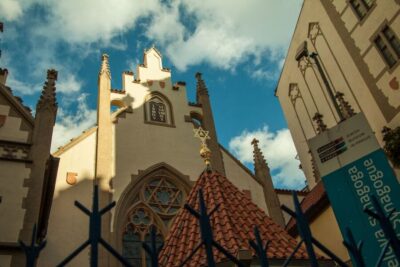
3-Hour Old Town and Prague Castle Tour in German
Read our review →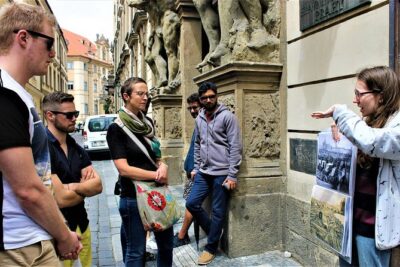
Prague Old Town, Medieval Underground and Dungeon Historical Tour
Read our review →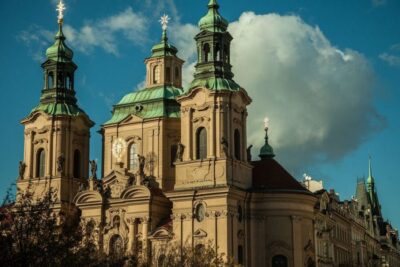
Old Town and Jewish Quarter Guided Tour in German
Read our review →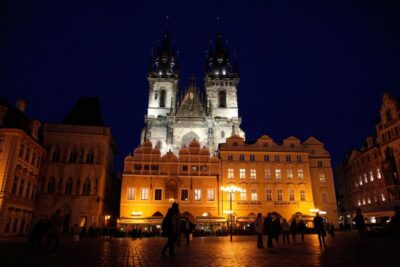
Ghosts and Legends of the Old Town Evening Tour
Read our review →
Old Town and Jewish Quarter Guided Walking Tour
Read our review →
Prague Ghost and Legend of Old Town Walking Tour
Read our review →Browse the lists this tour appears in