
Reviewed · WALKING TOURS
Prague Renaissance and Baroque Gardens Walking Tour
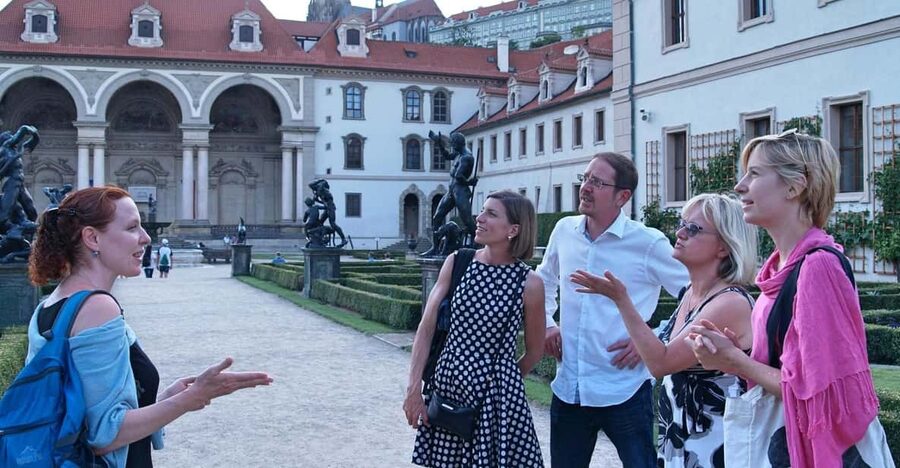
Prague’s grandest gardens tell a story of power, taste, and imported fashion. This three-hour walk links Ferdinand I’s Italian-inspired Castle Gardens with Wallenstein’s theatrical Baroque grounds and the intimate Vrtba Garden. I especially like the Singing Fountain, which rings when water strikes its bronze bowl, and the chance to see the Fig House and Orangery, where Mediterranean fruit was first grown in Central Europe.
I also like the way this tour connects gardens to the people who commissioned them. You hear about Ferdinand I, Albrecht von Wallenstein, tulips from Constantinople, and Italian architects rather than simply walking past flowerbeds. The main caution is practical: the route includes narrow, steep, and sometimes awkward stairs, and admission fees for the Castle Gardens and Vrtba Garden cost extra.
Key points
- Italian Renaissance in Prague: Learn why Ferdinand I brought Italian gardeners and architects north of the Alps.
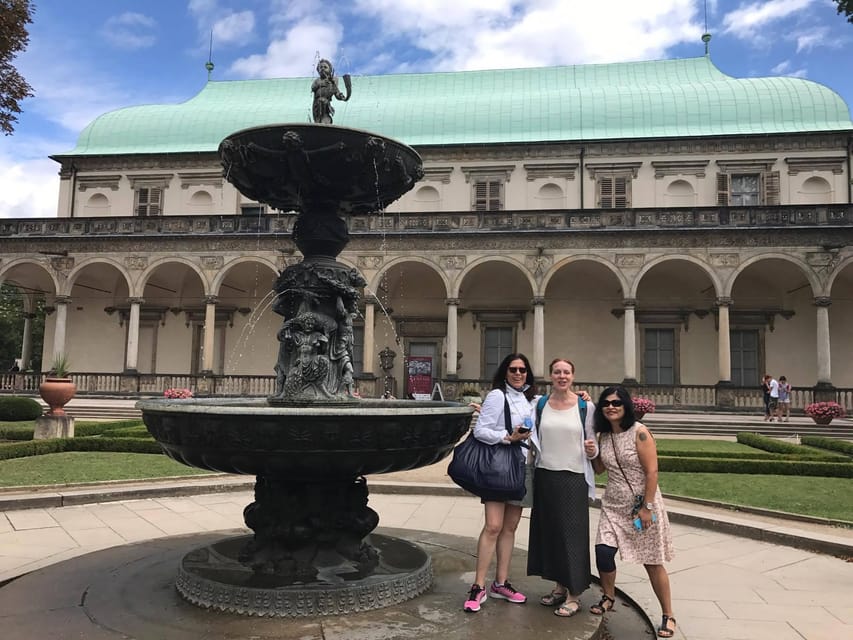
- The Singing Fountain: Hear the unusual bell-bronze fountain in front of the Belvedere Summer Palace.
- Mediterranean crops: Visit the Fig House and Orangery, tied to the early cultivation of figs, almonds, oranges, and lemons in Central Europe.
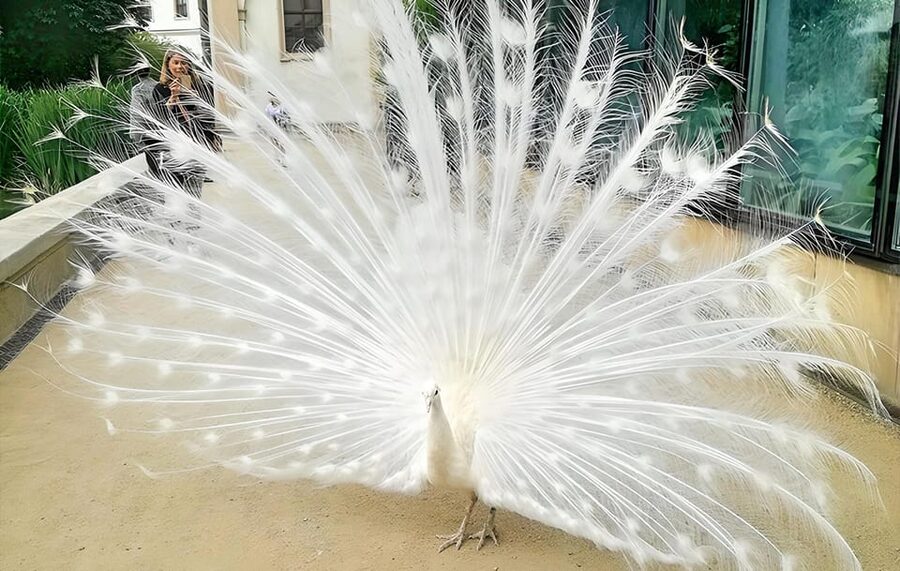
- Wallenstein’s theatrical garden: See albino peacocks, Mannerist statues, a grotto wall, and myth-inspired fountains.
- Vrtba Garden views: Climb through a Baroque walled garden to a marine-themed grotto and broad views over Prague.
- A history-focused walk: An English-speaking historian guide, with private and small-group options, gives the gardens their political and cultural context.
Why Prague’s gardens tell a better story than a palace room
A palace can show you how rulers lived. A garden shows you what they wanted the world to think about them.
That idea guides this walk. Medieval gardens in Prague were mainly practical places for growing herbs used in cooking and medicine. Vineyards also covered hills around the city before the time of Charles IV. Large palace gardens arrived later, when rulers began using plants, fountains, terraces, and carefully ordered views to display learning and status.
The turning point came in the 1500s with Emperor Ferdinand I. He admired the formal gardens of the Italian Renaissance and brought Italian gardeners and architects to Prague. Their work introduced a new taste north of the Alps: symmetrical paths, classical buildings, pleasure gardens, and plants that were as much a conversation piece as a source of food.
I like this approach because the tour gives you a reason to notice details. A fountain is not just decoration. A terraced garden is not simply a pleasant slope. These places reflect changing ideas about monarchy, science, religion, and control over nature.
Your guide leads in English and is described as a historian. Miriam, one guide associated with the tour, has been praised for an informative yet relaxed manner. That matters on a three-hour walk, since a guide who can explain without turning every stop into a lecture will help you stay engaged.
More Walking Tours in Prague:
- Prague: 3-Hour Walking Tour of Old Town & Prague Castle
★ 4.7 · 5,696 reviews - Prague: Ghost Walking Tour Where Legends Come To Life
★ 4.4 · 5,253 reviews - Prague: Jewish Quarter Walking Tour with Admission Tickets
★ 4.7 · 3,729 reviews
Ferdinand I and the Italian idea of a palace garden
The Castle Gardens are the first major chapter. Ferdinand I commissioned the Belvedere Summer Palace as a gift for his wife, Queen Anne. She died before the building was completed, which gives the elegant structure a sad edge beneath its festive Renaissance style.
The building was designed by the Italian architect Paola della Stella. It is often described as the finest Renaissance structure outside Italy, and the tour uses it to explain how Italian classicism took root in Prague.
Look for the relief showing Ferdinand presenting his wife with a flower from the Royal Gardens. It is a small scene, but it captures the purpose of the place. This was a pleasure palace surrounded by cultivated beauty, built to express affection, refinement, and imperial confidence.
In front of the palace is a small Giardinetto, or little garden, with the Singing Fountain. Cast in bell bronze in 1564, the fountain creates a resonant sound as water drops strike the bowl. You should pause here rather than treating it as a quick photo stop. The sound is one of those details that makes the garden feel engineered as well as ornamental.
The Castle Gardens are also useful for understanding the Renaissance taste for order. The design does not try to imitate untouched nature. It arranges nature into a controlled setting around architecture, giving the ruler a calm and measured stage.
Admission to the gardens is not included in the tour price, so allow for that extra cost when comparing this experience with a standard city walk. The exact opening arrangements are not supplied here, so check availability when booking.
The Fig House, Orangery, and Prague’s early exotic plants
The route continues to the Fig House and Orangery. These buildings give the walk a practical and scientific side.
Figs, almonds, oranges, and lemons were grown here for the first time in Central Europe. In the 1500s, keeping Mediterranean plants alive so far north required skill, money, and protected growing spaces. The plants were not only useful. They also showed that a powerful court could import and maintain things that did not naturally belong to the local climate.
This is one of my favorite parts of the itinerary because it moves beyond statues and grand views. You get a sense of how royal gardens functioned as places for experiments, display, and food production.
The guide also explains how tulips reached the Royal Gardens as an exotic gift from the Sultan of Constantinople. Tulips were unknown in Europe before their introduction, so their arrival says something about trade and diplomacy as well as gardening. A flower could travel across borders as a gift, a curiosity, and a sign of access to distant courts.
The route then approaches the western end of the garden and the stag moat. The moat adds another layer to the Castle Gardens. It is not just a defensive feature left over from the medieval past. From the garden route, it becomes part of the changing relationship between fortress, palace, and formal grounds.
The South Gardens and the descent below the castle
After crossing a castle courtyard, you descend the Bull Stairs toward the South Gardens. This is where the walking becomes more demanding.
You pass through the Garden of Paradise and the Garden on the Bulwark, then continue down a series of terraced gardens below Prague Castle. The terraces make good visual sense from above, but they also mean repeated changes in level. Expect stairs rather than a flat promenade.
For a person interested in Prague’s development, this descent is valuable. You move from the formal royal setting above to a chain of gardens arranged on the hillside. The city gradually opens around you as the route drops toward Lesser Town.
The regular tour includes narrow and sometimes steep stairs. If you have mobility concerns, a private booking is the wiser choice. The guide can adjust the pace, leave out selected sites, and focus on places that are easier for you to reach. That option is more than a luxury here because the route’s character depends on hills and stairs.
Wear sensible shoes and keep your attention on the footing. The tour lasts three hours, and the combination of uneven levels and continuous historical explanation can feel tiring if you are not prepared for an active walk.
A few more Prague half-days to weigh up
- Prague: 50-Minute Sightseeing Evening Cruise
★ 4.2 · 33,780 reviews - Prague: Medieval Dinner with Unlimited Drinks
★ 4.4 · 19,847 reviews - Prague: Skip-the-line Castle Ticket and Optional AudioGuide
★ 4.3 · 11,121 reviews - Prague: Castle Tour with Local Guide and Entry Ticket
★ 4.6 · 10,422 reviews
Wallenstein Garden and the drama of Baroque power
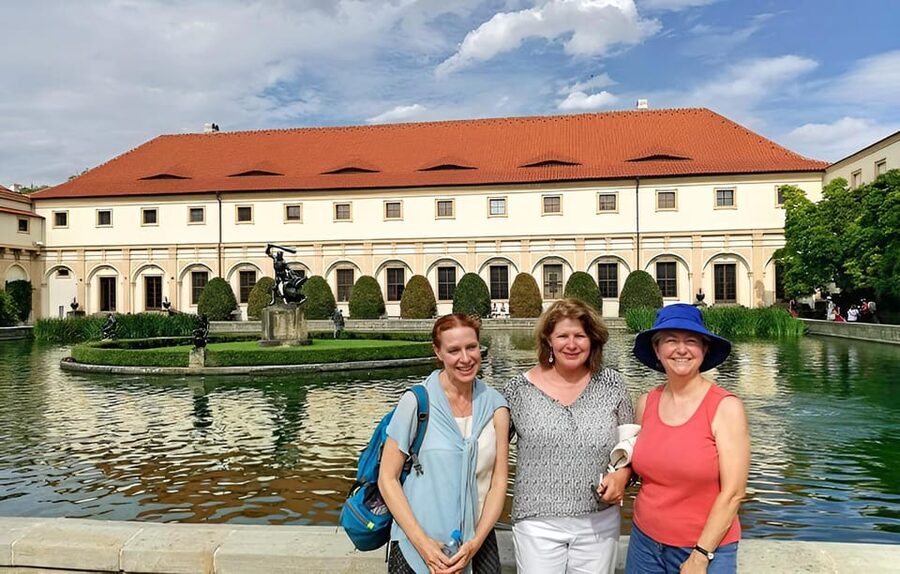
At the bottom of the hill, the mood changes sharply in the Wallenstein Garden.
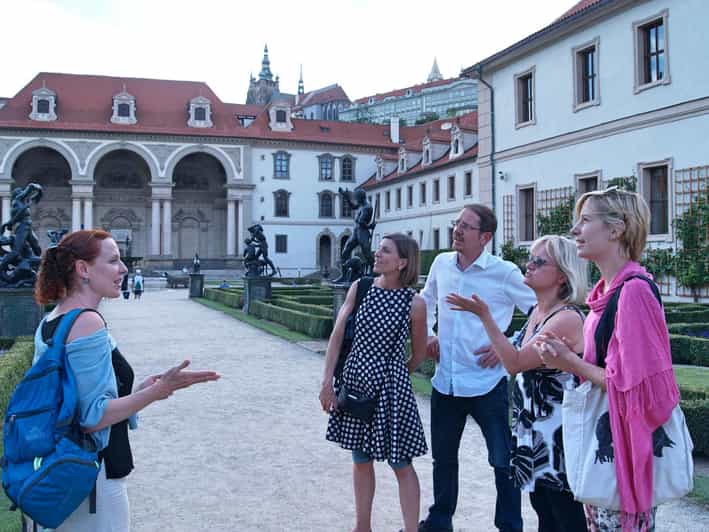
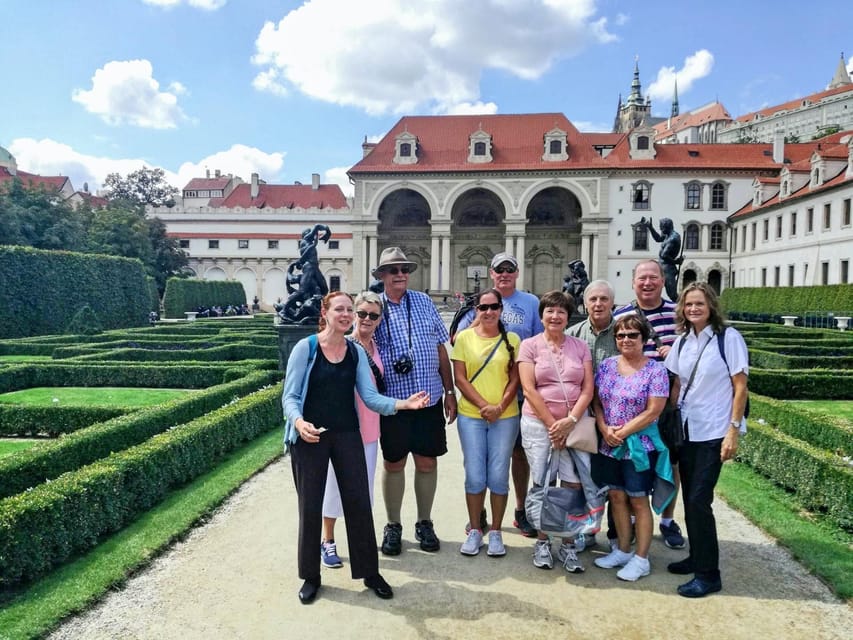
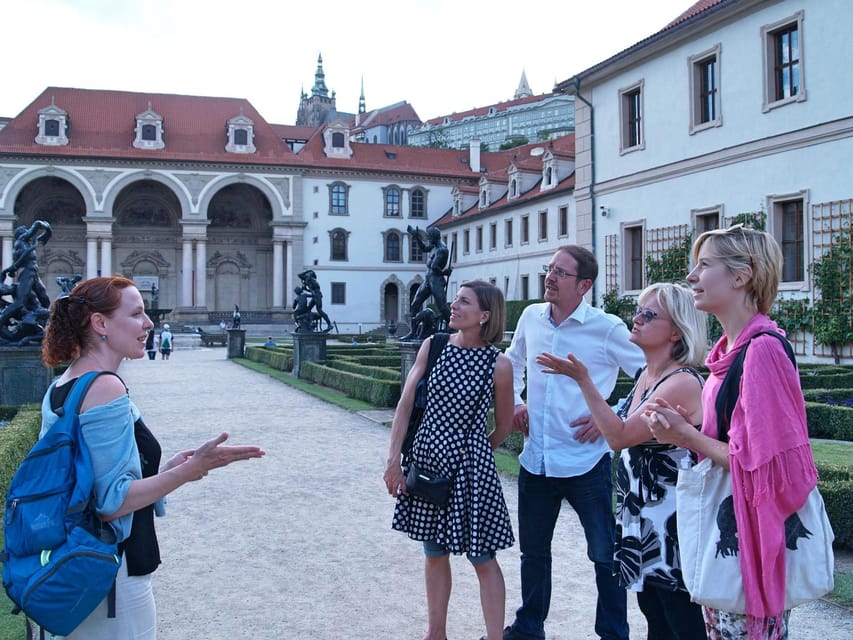
This is a grand Mannerist and early Baroque garden, built for Albrecht von Wallenstein. It feels theatrical in a way the more restrained Renaissance gardens do not. Statues, fountains, architectural settings, and unusual animals all contribute to the effect.
The albino peacocks are an especially memorable detail. They are not a minor footnote, since rare animals fit the garden’s message: Wallenstein wanted a setting that displayed wealth, status, and access to wonders.
The grotto wall adds a more artificial, almost dreamlike element. Its rough surfaces and openings contrast with the garden’s ordered paths and formal design. Mythical fountains and Mannerist statues continue that mix of controlled geometry and fantasy.
Your guide also sets the garden within Wallenstein’s dramatic life. That context matters because the garden was not built by an anonymous patron. It was part of the public image of a powerful and ambitious nobleman.
The shift from Renaissance classicism to Baroque thinking becomes clear here. Renaissance design favored classical balance and measured forms. Baroque gardens pushed toward movement, surprise, theatrical views, and emotional effect. You can see that change in the fountains and sculpture, even if you know little about art history before arriving.
Wallenstein Garden is also a good place to slow down. After the descent from the castle, you may want a moment to take in the arrangement before following the guide to each feature. The garden has enough visual detail that a rushed visit would miss part of its appeal.
Vrtba Garden, a compact Baroque finish
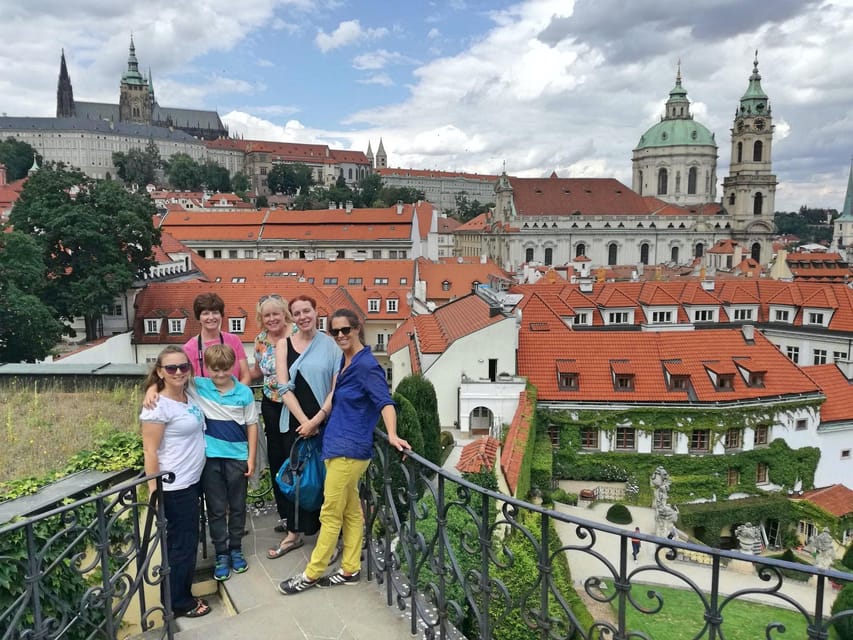
The final stop is Vrtba Garden in Lesser Town, dating from 1720. It is a walled Baroque garden, more intimate than the Castle Gardens or Wallenstein Garden.
Its scale is part of the charm. Instead of an imperial complex, you see how an 18th-century noble residence could use a compact hillside garden to create a carefully managed world of its own.
The climb takes you through the garden’s courtyards to the top. There you find a marine-themed grotto and views across Prague. The city vista gives the tour a satisfying finish because you can look back toward the areas you have crossed on foot.
Vrtba Garden admission is not included, so add that charge to your budget. The garden is also not the place for a completely flat stroll. You climb through the site, and the narrow route may be uncomfortable for anyone who struggles with stairs.
Still, this stop adds something the larger gardens cannot. It gives you a closer look at noble life in the 18th century and shows how Baroque design could fit into a smaller urban setting. The garden is easy to miss if you explore Prague without a guide, so including it makes the route feel more carefully chosen than a basic Castle District walk.
What the $123 price includes
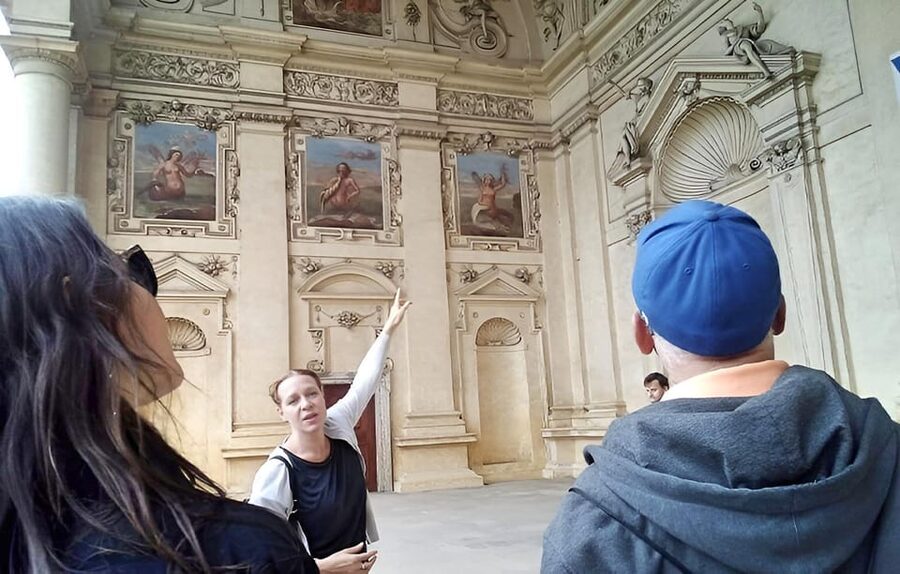
The listed price is $123 per person for three hours. That is a serious price for a walking tour, especially since admission to the gardens under Prague Castle and Vrtba Garden is extra.
The value depends on what you want from your time in Prague. If you only want to see attractive gardens, you can visit individual sites on your own for less. You would, however, need to connect the sites, understand their different periods, and make sense of why Italian Renaissance ideas, Mediterranean plants, tulips, Wallenstein’s ambition, and Baroque theater belong in one story.
Here, you are paying for a historian guide and a focused route through several locations that are easy to treat as separate sights. The experience is strongest for you if context is a major part of sightseeing. It also makes practical sense if you have only a short stay and want three hours devoted to a clear subject rather than a broad introduction to Prague.
Private and small-group formats are available. A private tour is especially useful if you need a slower pace or want to skip some stairs. If your main concern is keeping costs down, remember to include the two separate admission fees before booking.
How the three hours are likely to feel
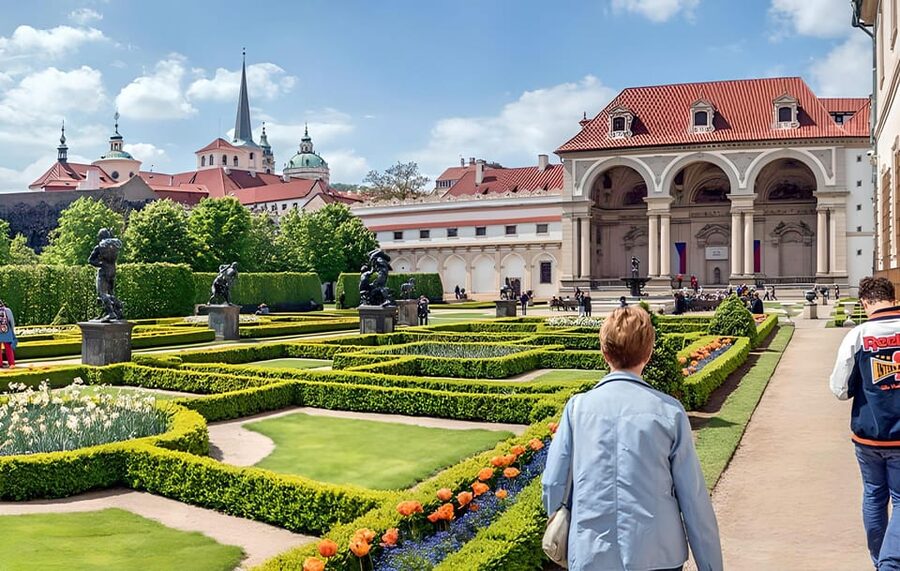
This is not a quick hop between photo stops. It is a sustained walking history lesson with gardens as the setting.
The opening Castle Gardens section gives you the most Renaissance material: Ferdinand I, Queen Anne, Paola della Stella, the Belvedere, the Giardinetto, and the Singing Fountain. The Fig House and Orangery then add plants, court science, and trade.
The middle portion changes the physical rhythm. You cross the castle courtyard, descend the Bull Stairs, and move through the South Gardens and terraces. That part gives you views and transitions, but it is also where the stairs matter most.
Wallenstein Garden brings the largest burst of Baroque drama, with peacocks, statues, fountains, and the grotto wall. Vrtba Garden closes the route on a smaller scale, with a climb to the marine grotto and city views.
The walk received a perfect five-star score from five recorded ratings. Praise has focused on the guide’s relaxed, informative style. Miriam in particular has been singled out as an excellent guide, which suggests the tone should suit you if you prefer clear explanation without a stiff classroom feel. Other feedback is brief but warmly positive, including praise for Bonita Rhoads as an excellent guide.
Who should book this garden walk
I would choose this tour if you already plan to see Prague Castle and want to understand the gardens rather than simply pass through them.
It suits:
- Garden and design enthusiasts who want to compare Renaissance, Mannerist, and Baroque styles.
- History-minded visitors interested in Ferdinand I, Wallenstein, royal courts, and diplomatic exchange.
- Repeat Prague visitors looking for sites beyond the city’s best-known streets and churches.
- Short-stay visitors who want a tightly organized three-hour experience.
- Small groups and couples who value a guide’s interpretation and can manage the walking.
- People interested in unusual details, from tulips and Mediterranean fruit to albino peacocks and a fountain that sings.
I would think twice if you dislike stairs, need a fully accessible route, or want a relaxed garden visit with lots of free time. A private tour can help with mobility limits, but the standard route is still built around hills and narrow steps.
Meet at the door of Bagel Lounge Malostranska. Starting times vary, so check availability before committing your schedule. The tour is offered in English, and you can reserve now and pay later. Free cancellation is available up to 24 hours before the start time.
FAQ
How long is the Prague Renaissance and Baroque Gardens Walking Tour?
The tour lasts three hours.
What language is the tour conducted in?
The tour is conducted in English with a live guide.
Is a historian guide included?
Yes. The experience includes a three-hour guided history walk led by a historian guide.
Are garden admission fees included in the price?
No. Admission to the gardens under Prague Castle and Vrtba Garden is not included.
Where is the meeting point?
Meet at the door of Bagel Lounge Malostranska.
Is the route suitable for people with mobility issues?
The regular route includes narrow, steep, and sometimes difficult stairs. If you expect difficulty, a private tour is recommended so the guide can adjust the pace, leave out some sites, and focus on other parts of the route.
Should you book it?
Book this tour if you want Prague’s gardens explained as works of art, political statements, and places of scientific curiosity. The strongest moments are the Singing Fountain, the early Mediterranean plants, Wallenstein’s theatrical garden, and the final climb through Vrtba Garden to the city view.
At $123 per person, plus admission fees, it is not a bargain city walk. It can be good value for you if a historian’s interpretation is worth paying for and you want several garden sites connected in one efficient route. Choose a private option if stairs or pace are concerns. Otherwise, bring comfortable shoes, allow for the extra entrance costs, and expect a focused, hill-and-stair-heavy tour with plenty of memorable detail.
Recently added around Prague
- St Vitus Cathedral and Prague Castle Private Walking Tour★ 4.0 · 3 reviews
- Prague: Old Town and Jewish Quarter Small-Group Tour★ 5.0 · 3 reviews
- Royal Splendor Unveiled Private Prague Castle Interior Tour★ 3.5 · 3 reviews
- Prague Castle Interiors & Changing of the Guard-Small group★ 5.0 · 3 reviews
- Prague: Bohemian & Saxon Switzerland National Park Day Trip★ 5.0 · 3 reviews
- Running Tour of Prague. Your private 6-9K intro★ 5.0 · 3 reviews
- PRAGUE AIRSOFT SHOOTING GAMES★ 4.7 · 3 reviews
- Private walking tour and Boat cruise Best of Prague★ 5.0 · 3 reviews
Walking Tours, compared.

3-Hour Walking Tour of Old Town & Prague Castle
Read our review →
Ghost Walking Tour Where Legends Come To Life
Read our review →
Jewish Quarter Walking Tour with Admission Tickets
Read our review →
Prague Guided Walking Tour and Cruise with Authentic Czech Lunch
Read our review →
Old Town and Jewish Quarter Guided Walking Tour
Read our review →
Prague Ghost and Legend of Old Town Walking Tour
Read our review →
Prague 3-hour Afternoon Walking Tour including Prague Castle
Read our review →
Ghosts and Legends Nighttime Guided Walking Tour
Read our review →Browse the lists this tour appears in