
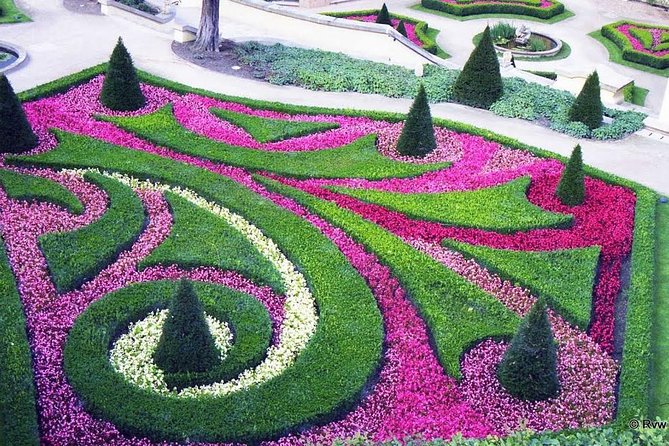
Reviewed · WALKING TOURS
Prague Renaissance & Baroque Gardens Walking Tour
Prague’s finest gardens are not simply pretty places to stroll. They are political stages, botanical experiments, and open-air galleries. This three-hour walk connects the Royal Garden at Prague Castle, Wallenstein Garden, and the compact Vrtba Garden, showing how rulers used plants, fountains, statues, and classical myths to project power.
I like the small maximum of eight people, which gives your guide room to answer questions and adjust the conversation. I also like the unusual details: figs, almonds, oranges, and lemons grown in central Europe, tulips arriving in Prague, and mythological statues that quietly served political purposes.
The main consideration is cost and effort. At $126.03 per person, this is not a cheap garden stroll, and you should budget separately for the Vrtba Garden and possibly the Prague Castle gardens. The Vrtba route also includes steep stairs.
Key points to know before you book
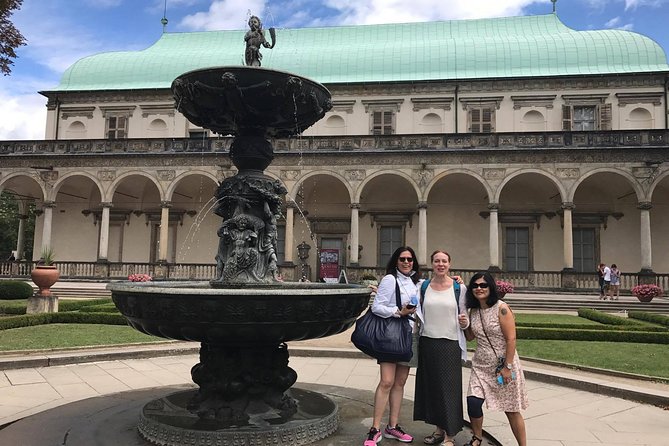
- Royal gardens with Renaissance architecture: See Queen Anne’s Summer Palace, the Orangery, Fig House, South Gardens, and Ball Game Hall.
- A very small group: The tour accepts no more than eight people, useful for questions and a more flexible pace.
- Mythology in the statues: Wallenstein Garden’s sculptures are more than decoration. Your guide explains the Greek and Roman stories and their political meaning.
- A tram ride is part of the outing: The group takes tram 22 from Malostranská toward Prague Castle.
- Vrtba Garden brings the best city views: This walled Baroque garden from 1720 ends the walk with Prague Castle and Old Town views.
- Check the extra fees: Vrtba Garden costs CZK 130 for an individual, or CZK 100 for students and seniors. The Prague Castle gardens are listed at CZK 90, or CZK 60 for students and seniors.
Why these Prague gardens are worth your time
Most first-time visits to Prague focus on the castle, Charles Bridge, and the Old Town streets. Those sights deserve their place, but the city’s gardens give you a quieter way to understand its ruling families, architects, artists, and religious ideas.
I especially like the way this tour changes your attention. You are not only looking for flowers or a pleasant bench. You are studying the placement of a fountain, the pose of a statue, the design of a palace façade, and the plants chosen to show wealth and connections beyond Bohemia.
The guides, including Bonita and Vadim, bring an art and history background to the walk. Bonita is particularly good at linking the gardens to Greek and Roman mythology, explaining why a particular god or hero appeared in a courtly garden and what that image told the people who entered it.
That approach makes this a better choice for a curious visitor than for someone who wants a fast list of famous sights. The tour asks you to look closely and listen to the stories behind what you see.
More Walking Tours in Prague:
- Prague: 3-Hour Walking Tour of Old Town & Prague Castle
★ 4.7 · 5,696 reviews - Prague: Ghost Walking Tour Where Legends Come To Life
★ 4.4 · 5,253 reviews - Prague: Jewish Quarter Walking Tour with Admission Tickets
★ 4.7 · 3,729 reviews
Meeting at Malostranská and riding tram 22
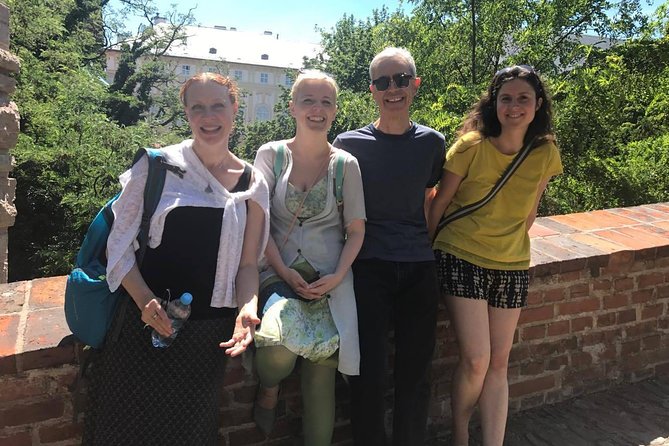
The meeting point is Bagel Lounge Malostranská, at Letenská 118/1 in Prague’s Malá Strana district. You meet the guide and group near Malostranská Metro station, then take tram 22 together toward the castle gardens.
This shared tram ride is practical, since it avoids beginning with a long uphill walk. It also places you in the city’s everyday transport system instead of treating the gardens as isolated attractions. Keep your meeting details handy, arrive with enough time to find the café, and expect some walking once you reach the castle area.
The experience lasts about three hours. You can choose a 10 a.m. or 2 p.m. departure, so you can fit it around a castle visit, lunch, or an evening program.
The group limit is eight people. That matters here. Garden interpretation works best when you can stop beside a statue and ask why it is there, rather than stand at the back of a large crowd while the guide speaks to a dozen people.
The Royal Garden beside Queen Anne’s Summer Palace
The walk begins around the Royal Garden at Prague Castle. The garden was created in the 1500s on land that had previously held medieval vineyards. It later became known for unusual plants and botanical specimens brought from distant places.
That history gives the garden more weight than a simple public park. The planting was part of a ruler’s display of reach and wealth. Growing exotic plants in central Europe required money, care, and connections, and the garden offered a way to present all three.
The first major architectural focus is Queen Anne’s Summer Palace, completed in the middle of the 16th century. It is described as one of the purest examples of Renaissance architecture outside Italy. Its arcades, Tuscan capitals, and carved frieze reward a slow look.
Pay attention to the reliefs on the walls. They show scenes tied to mythology, hunting, and warfare, along with Ferdinand I wearing the Order of the Golden Fleece. One particularly charming detail is the image of Ferdinand offering Queen Anna a fig-tree blossom.
You do not go inside the palace as part of the stated route, and only about five minutes is assigned to this stop. The value comes from the guide’s explanation and from seeing how the building fits within the garden rather than from an extended interior visit.
Fig House, Orangery, and Prague’s early exotic plants

The Royal Garden continues toward the Fig House and Orangery. This is one of the most unusual parts of the tour because it connects courtly taste with practical horticulture.
Figs, almonds, oranges, and lemons were grown here at a time when such plants were not ordinary sights in central Europe. The garden therefore served as both pleasure ground and experiment. It showed that the court could bring distant crops into a colder climate and protect them through careful cultivation.
The route also touches on the arrival of tulips in Prague. That small botanical detail is easy to miss during a normal castle visit, yet it helps explain how gardens linked Prague with wider European trade and fashion.
This section will appeal to you if you enjoy the story behind an object or plant. If you are mainly interested in formal flower beds at their peak season, the experience may feel more historical than horticultural. The emphasis is on meaning, origins, and court culture rather than on a plant-by-plant garden tour.
A few more Prague half-days to weigh up
- Prague: 50-Minute Sightseeing Evening Cruise
★ 4.2 · 33,780 reviews - Prague: Medieval Dinner with Unlimited Drinks
★ 4.4 · 19,847 reviews - Prague: Skip-the-line Castle Ticket and Optional AudioGuide
★ 4.3 · 11,121 reviews - Prague: Castle Tour with Local Guide and Entry Ticket
★ 4.6 · 10,422 reviews
South Gardens and the Ball Game Hall
The walk passes through the South Gardens before reaching the Ball Game Hall. The hall was built in the middle of the 16th century above the Stag Moat, on the south side of the Royal Garden.
Its original purpose was recreation. It served as a hall for ball games and later became a riding school and stables. That changing use gives you a glimpse of how royal buildings were adapted over time rather than preserved for one single function.
The stop lasts about five minutes, so do not expect a long architectural study. Instead, think of it as another piece in the larger story: the Prague Castle grounds were not just ceremonial spaces. They included places for sport, animals, plants, entertainment, and private court life.
Wallenstein Garden and its mythological gallery
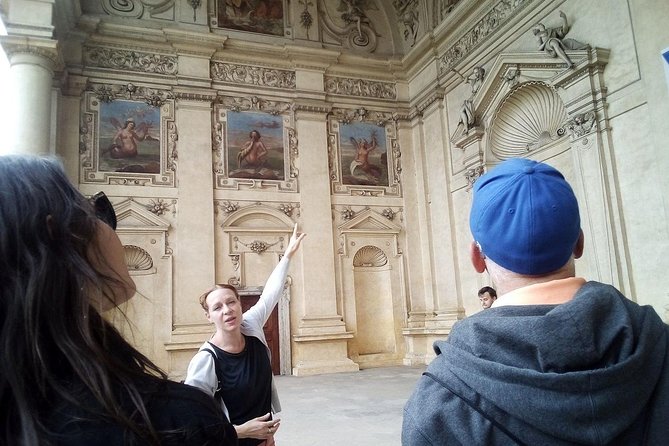
From the castle area, the route continues to Wallenstein Garden, the grounds of the Wallenstein Palace. The palace was built in the 1600s, and the garden is now open to the public as part of the Senate of the Czech Republic.
Wallenstein Garden has a strong Italian influence. Its features include an aviary, an artificial grotto, a sculptural gallery of mythological heroes, and a fountain by Adrian de Vries.
The statues are the heart of this stop. With the right explanation, they become a lesson in political imagery. Greek and Roman gods and heroes were chosen carefully, allowing a powerful patron to associate himself with courage, wisdom, victory, or divine favor.
This is where Bonita’s approach is especially useful. She connects the sculptural program to the myths behind it, then explains how those myths served political propaganda in a modern European court. You come away seeing the statues as messages, not just ornaments.
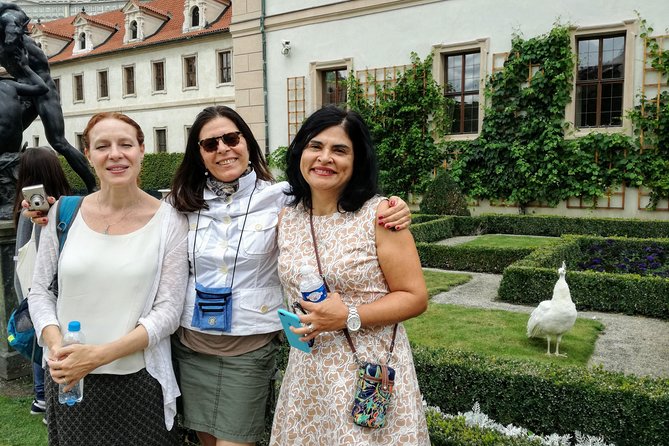
The garden also has a lighter touch. Brightly colored peacocks may appear among the formal features, giving the visit a touch of living theater. The grotto, fountains, and statues create plenty to examine, but the area can still feel calm even during the busy season.
The stated time at Wallenstein Garden is about 25 minutes. That is enough for a focused introduction, though not enough for a leisurely solo visit. If you want to study every statue or sit quietly in the garden, plan to return on your own.
Vrtba Garden, steep stairs, and the final view
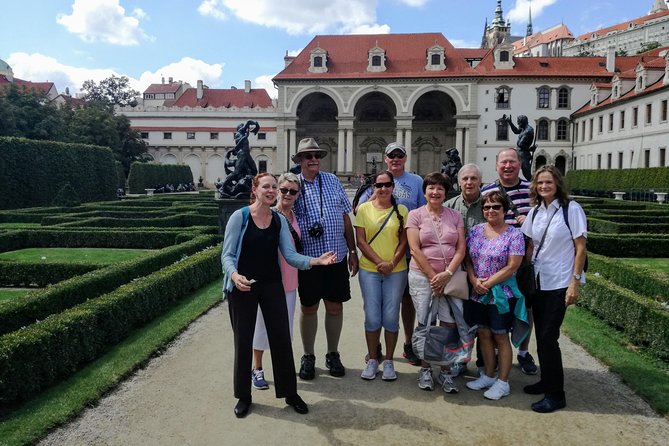
The final garden is Vrtba Garden, also called Vrtbovská Garden. Created in 1720, it is a walled Baroque garden with terraces rising above Malá Strana.
Its compact size is part of its appeal. You move through a carefully arranged series of levels, sculptures, and architectural details, then reach views across Prague and toward Prague Castle. The city appears as part of the garden’s composition, not merely as scenery beyond the walls.
The itinerary allows about 25 minutes here. Admission is not included. The individual fee is CZK 130, while students and seniors pay CZK 100.
You need to climb steep stairs to reach the highest terrace. If that is difficult, you can wait with the group on the second terrace while the guide continues upward, then returns about 10 minutes later. A private tour may allow more changes for a personal group, according to the tour information.
Wear shoes that are comfortable on stairs and uneven walking surfaces. You do not need an athletic level of fitness, but the stated requirement for moderate physical fitness is worth taking seriously.
There is a small inconsistency in the supplied meeting details. The route description says the guide leaves you at Vrtba Garden, while the meeting information says the activity ends back at the starting point. Confirm the end point when you book, especially if you have an afternoon reservation or a dinner plan.
What the three-hour format gives you
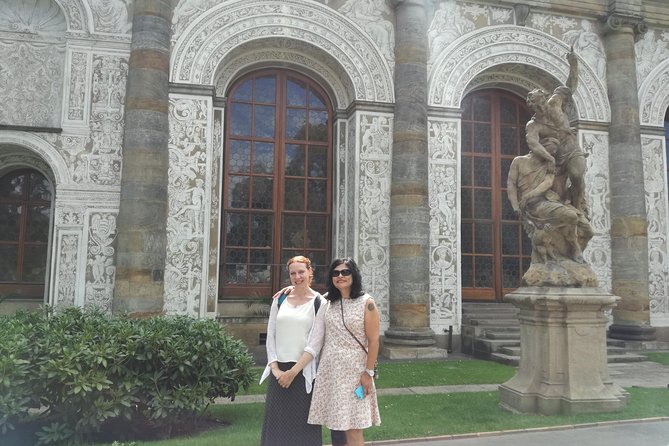
Three hours is a useful length for this subject. It gives you enough time to connect several gardens without turning the day into a full historical lecture.
You will not explore every corner of the Prague Castle grounds, and the short stops at Queen Anne’s Summer Palace and the Ball Game Hall are introductory. But the route covers distinct types of garden design:
- The Royal Garden presents Renaissance order and botanical curiosity.
- Wallenstein Garden shows aristocratic power through sculpture, architecture, and Italian design.
- Vrtba Garden offers a more intimate Baroque setting and broad city views.
The pace also leaves room for conversation. The best moments may come when you ask about a statue, a plant, or a building that catches your eye. Several participants who already knew Prague well found the tour gave familiar places a new meaning, which tells you something important about its level of detail.
The price and what you receive
The price is $126.03 per person. That is a serious outlay for a three-hour walking tour, especially since two garden charges are listed separately.
The value depends on what you want from a guide. If you only need directions to the gardens, you can visit some of them independently for much less. If you want the political, artistic, botanical, and mythological connections explained as you walk, the cost buys a more specialized experience.
Admission to Vrtba Garden is not included. The supplied information also lists admission to the gardens under Prague Castle as not included, at CZK 90 for an individual and CZK 60 for students and seniors. This conflicts slightly with the headline statement that garden admission is included except for Vrtba, so I would confirm exactly what is covered before paying.
The small group improves the value. With no more than eight people, you receive more direct access to the guide than on a large city tour. The professional scholar guide is also central to the experience. Without that interpretation, several stops would look pleasant but seem disconnected.
Group discounts are available, and the booking is offered with a mobile ticket. Confirmation arrives at booking, and free cancellation is available up to 24 hours before the start time.
Who will enjoy this garden walk most
I would choose this tour if you enjoy architecture, sculpture, court life, classical mythology, or the history of plants. It is also a good fit if you have already seen Prague’s standard sights and want a different angle on the city.
Locals can get plenty from it, too. The guide’s explanations are not limited to basic dates, and the route can make familiar gardens feel new. The comments from local participants describe learning to read gardens as historical documents, with each statue carrying a story.
First-time visitors can also benefit, especially if you plan to visit Prague Castle. The walk gives you a frame for understanding the castle grounds before or after seeing the main buildings.
I would think twice if you want a relaxed, flat walk with no admission costs. The stairs at Vrtba are real, and the extra fees should be part of your budget. I would also skip it if you prefer a quick photo stop at each garden rather than extended discussion of art and symbolism.
Practical tips for a smoother visit
Choose the 10 a.m. departure if you want to keep the afternoon open. Choose 2 p.m. if you prefer a slower morning or want to pair the walk with other sights earlier in the day.
Bring water and wear shoes suited to a moderate walk with steep stairs. The route includes public transport, garden paths, and terraces, so comfort matters more than dressing up for the palace setting.
Keep a little time after the tour for your own exploration. The guide leaves you at the final garden according to the route description, giving you the option to stay in Malá Strana, continue to another sight, or find a café nearby. Since the meeting details also mention a return to the starting point, ask the guide to confirm the actual finish before the walk begins.
Should you book the Prague gardens tour?
Book it if you want Prague explained through its gardens rather than simply photographed from them. The small group, scholar guide, and focus on mythology make this a serious cultural walk with an unusually personal feel.
The price is high, and the additional garden fees and stairs require planning. Still, if Bonita, Vadim, or another guide brings the same art-historical storytelling described in the tour details, you will see the Royal Garden, Wallenstein Garden, and Vrtba Garden with a sharper eye.
For a first visit, it adds meaning to Prague Castle. For a return visit, it offers a fresh way to read places you may think you already know.
FAQ
How long does the Prague Renaissance and Baroque Gardens Walking Tour last?
The guided walk lasts approximately three hours.
Where does the tour begin?
The meeting point is Bagel Lounge Malostranská at Letenská 118/1 in Prague’s Malá Strana district, near Malostranská Metro station.
What departure times are available?
You can choose between a 10 a.m. departure and a 2 p.m. departure.
Is admission to Vrtba Garden included?
No. Vrtba Garden admission costs CZK 130 for an individual, or CZK 100 for students and seniors.
How large is the group?
The activity has a maximum of eight participants.
Is the tour suitable for someone who has difficulty climbing stairs?
The tour includes steep stairs in Vrtba Garden. You can wait on the second terrace while the guide visits the highest terrace with the group, then rejoins you about 10 minutes later. A private tour may allow changes to this part of the route.
Recently added around Prague
- St Vitus Cathedral and Prague Castle Private Walking Tour★ 4.0 · 3 reviews
- Prague: Old Town and Jewish Quarter Small-Group Tour★ 5.0 · 3 reviews
- Royal Splendor Unveiled Private Prague Castle Interior Tour★ 3.5 · 3 reviews
- Prague Castle Interiors & Changing of the Guard-Small group★ 5.0 · 3 reviews
- Prague: Bohemian & Saxon Switzerland National Park Day Trip★ 5.0 · 3 reviews
- Running Tour of Prague. Your private 6-9K intro★ 5.0 · 3 reviews
- PRAGUE AIRSOFT SHOOTING GAMES★ 4.7 · 3 reviews
- Private walking tour and Boat cruise Best of Prague★ 5.0 · 3 reviews
Walking Tours, compared.

3-Hour Walking Tour of Old Town & Prague Castle
Read our review →
Ghost Walking Tour Where Legends Come To Life
Read our review →
Jewish Quarter Walking Tour with Admission Tickets
Read our review →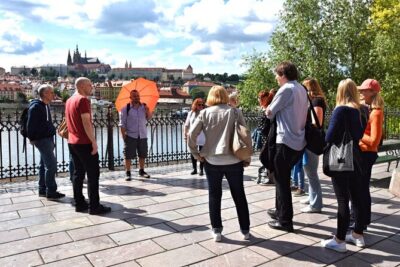
Prague Guided Walking Tour and Cruise with Authentic Czech Lunch
Read our review →
Old Town and Jewish Quarter Guided Walking Tour
Read our review →
Prague Ghost and Legend of Old Town Walking Tour
Read our review →
Prague 3-hour Afternoon Walking Tour including Prague Castle
Read our review →
Ghosts and Legends Nighttime Guided Walking Tour
Read our review →Browse the lists this tour appears in