
Reviewed · PRAGUE TOURS
Prague: WWII Tour with Local Historian SMALL GROUP
Prague’s WWII story is not confined to a museum. It happened along ordinary streets, inside a church, and near places you might otherwise pass without a second look. This small-group walking tour connects those sites to the assassination of Reinhard Heydrich, the Nazi official who helped plan the Holocaust, and the daring Operation Anthropoid.
I like the limited group of seven, which allows for a more personal exchange with the historian, and I like that the tour includes the parachutists’ church rather than stopping at a plaque outside. The main consideration is pace: this is a serious 2.5-hour walk, and the activity information gives conflicting details about wheelchair access and the ending point, so check both before booking.
Key points to know before booking
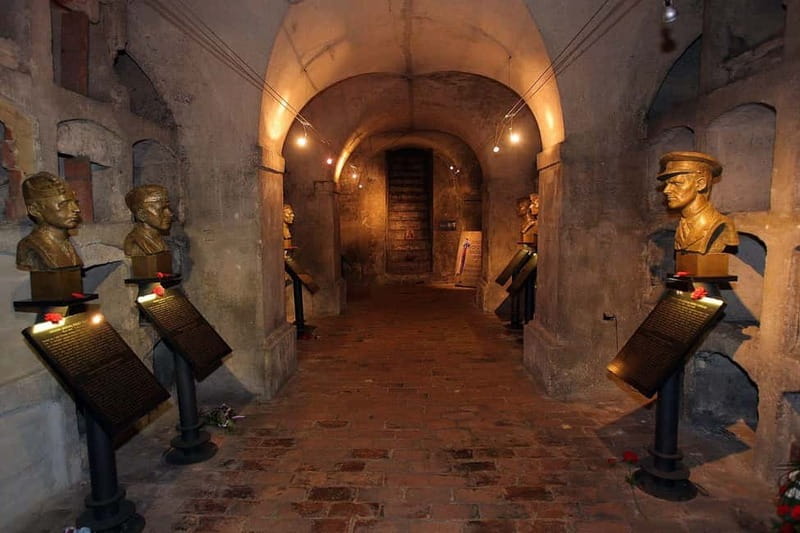
- Operation Anthropoid is the central story: Learn how Czech and Slovak resistance fighters targeted Reinhard Heydrich, one of the highest-ranking Nazis killed during World War II.
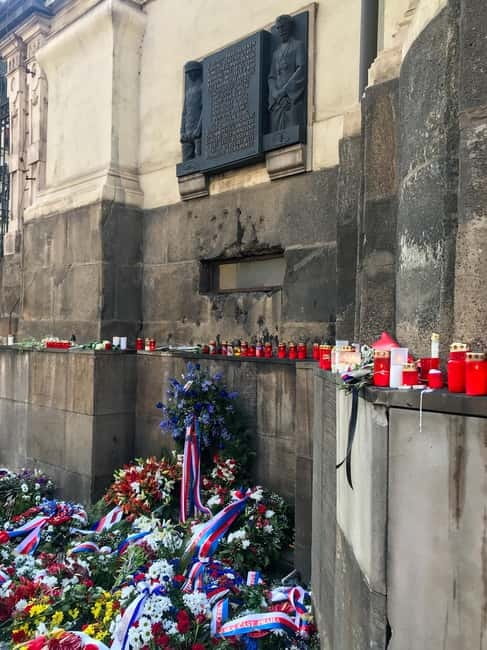
- The church visit adds physical detail: Enter the parachutists’ church and see distinctive bullet holes connected with the final resistance stand.
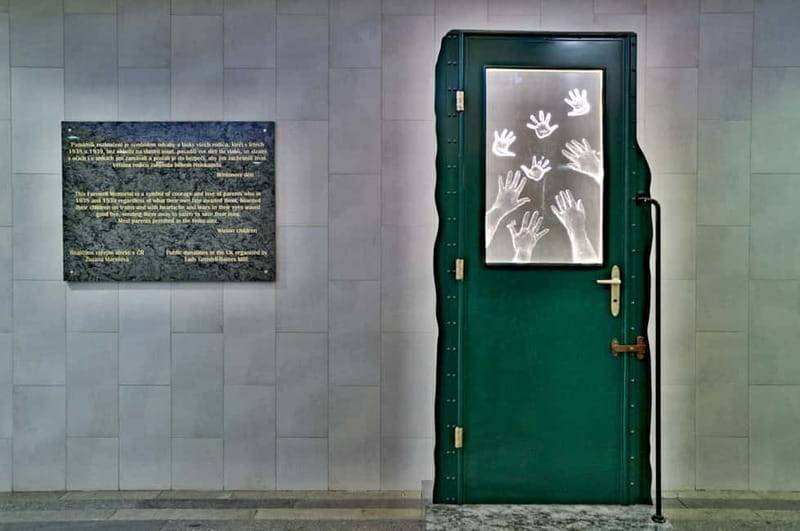
- Nicholas Winton gets proper attention: Hear how he helped 669 Jewish children escape through the Kindertransports, a story also shown in the film One Life.
- The tour covers more than the assassination: Expect discussion of the Nazi occupation, the Prague uprising in 1945, the bombing of Prague, and the former Gestapo headquarters.
- The group is capped at seven: That suits anyone who wants to ask questions and avoid the feel of a large, noisy city walk.
- The $61 price includes useful extras: A public transport ticket, church admission, water, and all listed fees are included.
Why Prague’s WWII story feels so immediate
Prague is often introduced through castles, churches, grand squares, and medieval lanes. This tour asks you to read the same city through the years of Nazi occupation and the final months of the war.
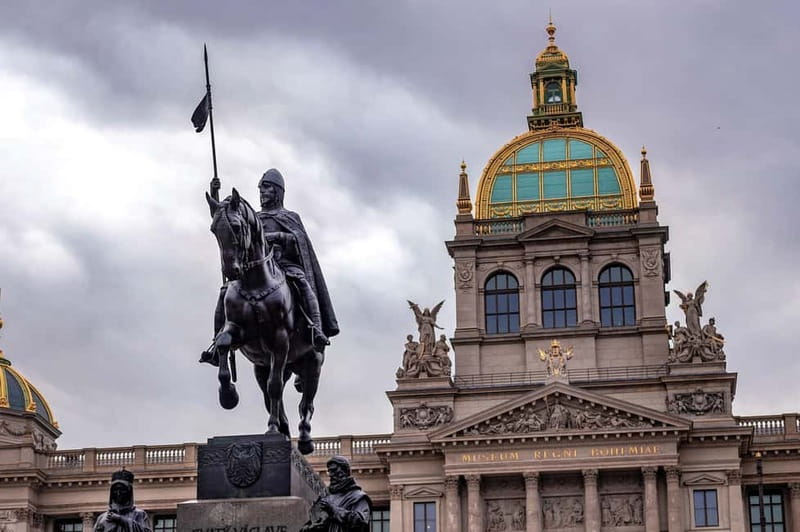
The power comes from the contrast. You begin at the statue of Saint Wenceslas, in front of the National Museum on Wenceslas Square, a familiar central meeting place. From there, the guide turns the city into a sequence of wartime decisions, acts of courage, and terrible consequences.
The focus on Reinhard Heydrich gives the walk a clear spine. Heydrich was not simply a German official stationed in Prague. He was a senior Nazi leader and one of the architects of the Holocaust. His rule in occupied Bohemia and Moravia earned him the name Butcher of Prague.
That context matters. You are not just hearing about one assassination. You are learning why Heydrich mattered to the Nazi system, why killing him carried such enormous risks, and why his death became one of the most significant resistance actions of the war.
More Small Group Tours in Prague:
- Prague Castle: Small-Group Tour with Visit to Interiors
★ 4.7 · 388 reviews - Prague Bike City Tour with Small Group or Private Option
★ 5.0 · 355 reviews - From Prague: Bohemian & Saxon Switzerland Small-Group Hike
★ 5.0 · 354 reviews
Starting at Saint Wenceslas in central Prague
Meet in front of the National Museum at the statue of Saint Wenceslas on Wenceslas Square. The nearby McDonald’s is given as an easy landmark, which is useful in a large open square where meeting a guide can otherwise take a few minutes.
Starting here makes practical sense. The location is central, familiar, and easy to reach by Prague public transport. It also gives the guide a broad public setting in which to explain how the city changed under occupation and how national events later unfolded in Prague’s streets.
You should arrive ready to walk rather than expecting a museum lecture with seats. The tour lasts 2.5 hours, and the route includes several locations connected with wartime resistance and repression. Wear comfortable shoes and bring water, even though a bottle is included.
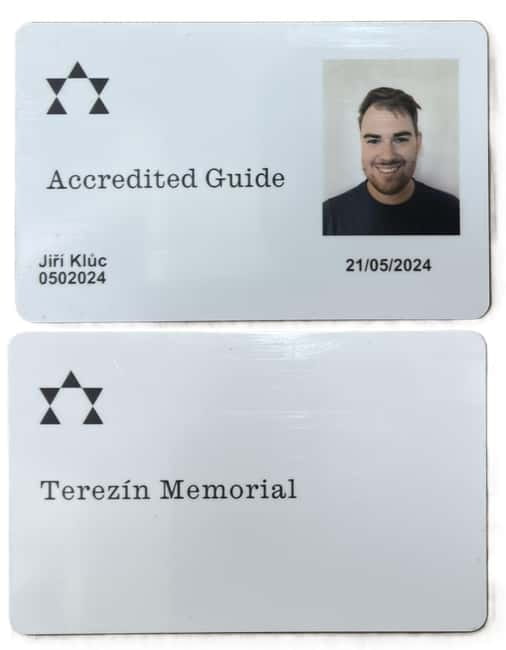
The guide is the key to the experience. Local Historian Tours describes its approach as personal, with attention to quality rather than large numbers. Past departures have been led by historians named Gerry and Jiri. Gerry has gathered accounts from people who survived the war, while Jiri has been praised for turning the material into a personal, clear story. You may not get the same guide on every departure, so check the booking details if a particular guide matters to you.
Operation Anthropoid and the killing of Heydrich
The heart of the tour is the story of Operation Anthropoid. In 1942, resistance fighters attacked Reinhard Heydrich in Prague. The assassination was a bold attempt to strike at the Nazi leadership and show that occupied Europe was not passive.
The story works best on foot because the guide can connect the people, streets, and decisions in a way a general city tour usually cannot. You hear about the planning, the danger, and the consequences without reducing the event to a simple heroic tale.
The assassination also opens a difficult part of the tour. Nazi reprisals were severe, and the wider story includes the human cost of resistance. This is not a light sightseeing walk. You should expect serious subject matter, including Nazi persecution, murder, and the destruction caused by occupation.
For anyone interested in military or political history, the Heydrich section is the strongest reason to book. The guide’s local connection can also add value, particularly if you want more than the familiar version of the story often repeated in guidebooks.
The parachutists’ church and its bullet holes
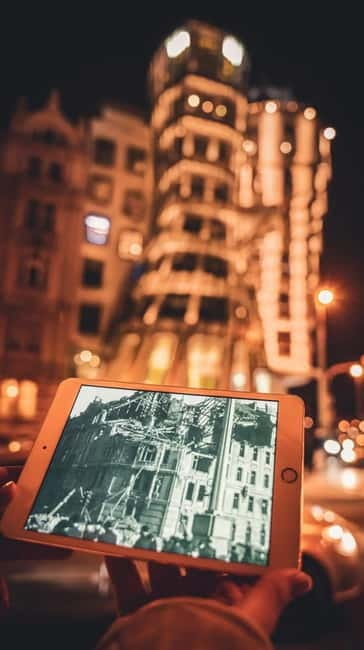
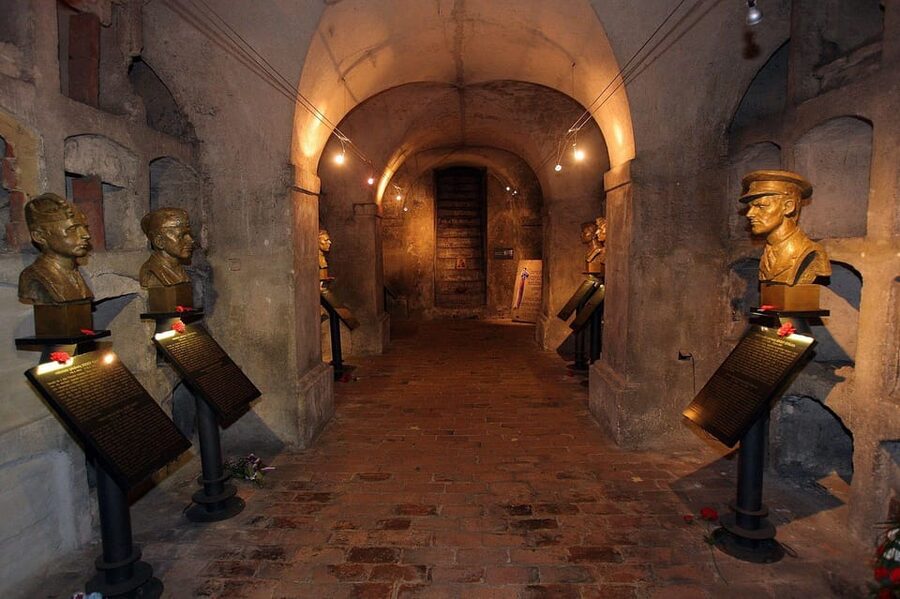
The church connected with the paratroopers is the tour’s most important physical stop. It is not just a place where the guide points out a memorial. You enter the church, see the space where the resistance fighters made their final stand, and observe distinctive bullet holes tied to the confrontation.
That kind of evidence changes the tone of a tour. A date and name on a page can feel distant. Bullet holes make the violence immediate, even after many decades.
Entrance to the church is included, and the tour includes skip-the-ticket-line access. This is helpful during busy periods, though the visit remains part of a timed walking route rather than a long independent stop. If you want to study every display at length, you may find the group schedule too brisk.
The church visit is also where a small group matters most. With no more than seven participants, you should have a better chance to hear the guide clearly and ask about the site. A large group would make this kind of intimate stop less effective.
A few more Prague half-days to weigh up
- Prague: 50-Minute Sightseeing Evening Cruise
★ 4.2 · 33,780 reviews - Prague: Medieval Dinner with Unlimited Drinks
★ 4.4 · 19,847 reviews - Prague: Skip-the-line Castle Ticket and Optional AudioGuide
★ 4.3 · 11,121 reviews - Prague: Castle Tour with Local Guide and Entry Ticket
★ 4.6 · 10,422 reviews
Nicholas Winton and the children saved by train
The tour also tells the story of Nicholas Winton, who helped save 669 Jewish children through the Kindertransports. This adds an important civilian and humanitarian side to the tour.
Winton’s work involved arranging the movement of children out of danger before the war spread further. His story is now better known through the film One Life, but the tour places it within Prague’s wartime setting rather than presenting it as an isolated biography.
I like this part because it prevents the tour from becoming only a story of soldiers, assassins, and Nazi officials. You also hear about organization, courage, and the rescue of children. The scale is easy to grasp: 669 children is a precise number, and it gives you a clear sense of the effort involved.
Do not book this walk expecting a separate, lengthy Winton-focused program. His story is one section of a wider route. Still, it gives the experience emotional range and shows that resistance could take forms other than armed action.
The 1945 uprising and the bombing of Prague
The route moves beyond the early occupation and assassination to the Prague uprising in 1945. This helps explain the final stage of the war in the city, when resistance and political uncertainty shaped events on the streets.
The bombing of Prague is another important subject. Many people associate World War II with the destruction of better-known European capitals, so hearing about Prague’s wartime bombing can correct an overly polished view of the city.
The guide may connect these events to the city you see today, but the supplied details do not specify every exact street or surviving building used for these stories. That is worth keeping in mind. You are paying for an expert-led narrative across central Prague, not a guaranteed stop at every wartime site in the city.
The value is in the links between events. The walk covers occupation, resistance, reprisals, rescue work, bombing, and the uprising in a single compact route. You leave with a broader understanding of how the war affected Prague rather than only one famous episode.
The former Gestapo headquarters
The former Gestapo headquarters adds a darker stop to the route. It represents the machinery of Nazi control, surveillance, interrogation, and terror behind the public events.
This part may be less visually dramatic than the church. That is precisely why a guide matters. A former headquarters can look like an ordinary city building if you do not know what happened there. The historian’s job is to give the place meaning without relying on grand architecture.
You should expect the emphasis here to be on what the building represented and the secrets connected with it. The tour information does not promise access inside the former headquarters, so treat it as a location discussed along the route rather than an interior museum visit.
What the small group changes
The group limit is seven people, one of the clearest advantages of this tour. A small group makes it easier to stay together on city streets, hear the guide, and ask questions about details that interest you.
It also suits the subject. A guide discussing survivors’ accounts and the last stand of resistance fighters needs room for conversation and a respectful tone. The experience is likely to feel more like a historian walking you through the city than a guide delivering a speech to a crowd.
There is a tradeoff. Small-group tours have less flexibility if you want to wander, take long photographs, or stop for coffee. The route covers a lot in 2.5 hours, so keep personal detours for later.
The English-language guide is live, not an audio recording. That matters if you want to ask about a name, event, or place as it comes up. Gerry and Jiri have both been described as passionate storytellers, but guide assignments can vary, so book for the subject and format rather than for a guaranteed personality.
Is $61 a fair price?
At $61 per person, this is not the cheapest way to walk around Prague. It is a reasonable price if you want a focused WWII program led by a local historian rather than a broad introductory tour.
The cost includes the guide, public transport ticket, entrance to the parachutists’ church, water, and all fees and taxes. Those inclusions reduce the small extra costs that can collect around a guided outing.
The real value is the subject. A standard Prague sightseeing walk may pass close to several important places without explaining their wartime role. Here, the guide provides the connections, background, and personal accounts that make those places meaningful.
I would not choose this tour as your only Prague introduction. It does not appear designed to cover the castle, Old Town, Charles Bridge, or the city’s full architectural story. I would book it after you have seen the main sights, or for a second day when you want a more focused look at the city.
Walking, timing, and practical limits
The tour lasts 2.5 hours, with starting times depending on availability. Because the route includes city streets and a church visit, you should plan for steady movement and standing.
The activity information says it is not suitable for children under 10, pregnant women, people with mobility impairments, or wheelchair users. It also separately describes the tour as wheelchair accessible, which is contradictory. Contact the provider before booking if accessibility is important to you, and ask about the exact route, church access, public transport, and walking conditions.
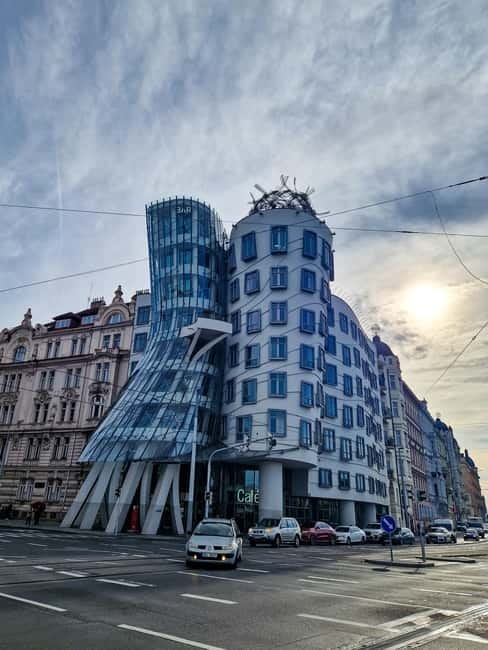
The ending information also needs checking. The route lists the Dancing House as the finish, while the meeting details say the activity ends back at the starting meeting point. Confirm the endpoint for your departure so you can plan your next stop.
Free cancellation is available up to 24 hours before the tour for a full refund. You can also reserve now and pay later, which is useful if you are building a Prague schedule before your plans are fixed.
Who should book this Prague WWII walk?
I would recommend it to adults and older children with a serious interest in World War II, Nazi occupation, resistance movements, and Prague’s modern history.
It is especially suited to you if you want:
- A guide who treats the subject as history rather than a quick sightseeing add-on
- A small group with space for questions
- A church interior tied directly to Operation Anthropoid
- Stories of both armed resistance and civilian rescue
- A route covering Heydrich, Winton, the uprising, bombing, and the Gestapo
I would be more cautious if you want a relaxed city stroll, have limited walking ability, or prefer upbeat sightseeing. The subject is grim, and the pace leaves little room for lingering.
Should you book it?
Book this tour if the story of Prague under Nazi occupation is one of your priorities. The combination of a local historian, a group capped at seven, church admission, and several major wartime subjects gives the $61 fee solid value.
The best reasons to go are the Operation Anthropoid story, the bullet-marked church, and the personal approach associated with guides such as Gerry and Jiri. Check the accessibility wording and final stop before paying, especially if you use a wheelchair or need a slower route.
If you want Prague’s WWII past explained with care and human detail, this is a strong choice. If you want a general overview of the city, choose a broader sightseeing tour first.
FAQ
How long does the Prague WWII tour last?
The tour lasts 2.5 hours. Starting times vary, so check availability for the date you want.
Where does the tour start?
It starts at the statue of Saint Wenceslas on Wenceslas Square, in front of the National Museum. A nearby McDonald’s is provided as an additional landmark.
Where does the tour finish?
The route information lists the Dancing House as the finish, while the meeting details say the activity ends back at the meeting point. Confirm the endpoint with the provider before booking.
What language is the tour in?
The live tour guide speaks English.
How many people can join the group?
The group is limited to seven participants.
Is entrance to the church included?
Yes. Entrance to the parachutists’ church is included in the price, along with skip-the-ticket-line access.
Is public transport included?
Yes. A Prague public transport ticket is included.
Is the tour suitable for children?
The activity is not suitable for children under 10 years old.
Can I cancel for a full refund?
Yes. You can cancel up to 24 hours in advance for a full refund. You can also reserve now and pay later.
Recently added around Prague
- St Vitus Cathedral and Prague Castle Private Walking Tour★ 4.0 · 3 reviews
- Prague: Old Town and Jewish Quarter Small-Group Tour★ 5.0 · 3 reviews
- Prague Castle Interiors & Changing of the Guard-Small group★ 5.0 · 3 reviews
- Royal Splendor Unveiled Private Prague Castle Interior Tour★ 3.5 · 3 reviews
- Prague: Bohemian & Saxon Switzerland National Park Day Trip★ 5.0 · 3 reviews
- Running Tour of Prague. Your private 6-9K intro★ 5.0 · 3 reviews
- Discover Prague’s most Photogenic Spots with a Local★ 3.5 · 3 reviews
- PRAGUE AIRSOFT SHOOTING GAMES★ 4.7 · 3 reviews
Prague Tours, compared.
Skip-the-line Castle Ticket and Optional AudioGuide
Read our review →
Castle Tour with Local Guide and Entry Ticket
Read our review →
Prague Castle 2.5-Hour Tour Including Admission Ticket
Read our review →
Oldtown, Medieval Underground & Dungeon History Tour
Read our review →
Browse the lists this tour appears in