
Reviewed · WALKING TOURS
Private Prague Art Nouveau and Cubism Walking Tour
Prague’s grand historic center gets most of the attention, but this tour points your eyes toward a more surprising city: one of curving Art Nouveau facades and crystalline Cubist buildings. You begin at Prague Main Station and finish near Albertov, following a line through New Town and beneath Vyšehrad.
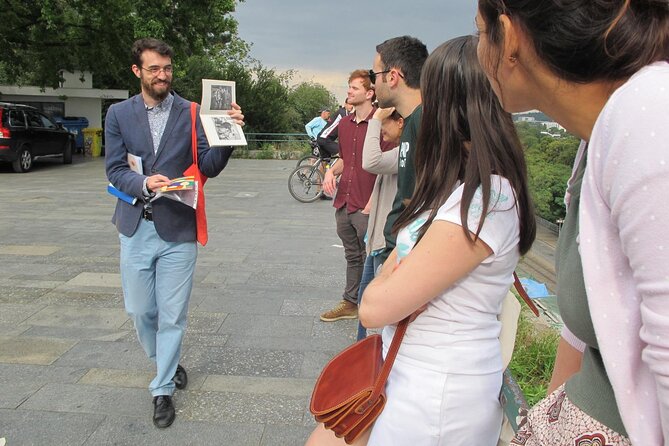
I like the private format, which gives Max Hutar room to adjust his explanations to your interests. I also like the clear visual lesson: by the end, you should be able to spot Art Nouveau and Cubism on your own instead of simply collecting building names.
The main caution is timing. The advertised length is about two and a half hours, but the walking, stops, and public transport can push the outing longer. This is not a quick stroll, so wear comfortable shoes and leave a little space in your day.
Key points about this Prague architecture tour
- Private group of up to 15: You tour with only your own party, which makes it easier to ask questions and set the pace.
- Two very different styles: Art Nouveau brings flowing lines and ornament, while Prague Cubism turns buildings and street furniture into sharp geometric forms.
- A route beyond the standard old-town circuit: The tour links Central Station, Wenceslas Square, Vodičkova, and the streets below Vyšehrad.
- Guide Max Hutar: Max leads in English and is known for lively storytelling, strong subject knowledge, and an ability to make architectural theory approachable.
- Walking plus public transport: Short walks connect many stops, and public transport is used for part of the route.
- Good value for a group: At $94.93 per group of up to 15, the cost can be modest per person when several people share the booking.
Why Prague’s modernist buildings deserve your time
Prague is often sold through medieval lanes, Baroque churches, and castle views. Those sights are essential, but they can make the city seem frozen in an earlier age. This tour shows you Prague at the turn of the 20th century, when architects were testing new ideas and the city was changing fast.
Art Nouveau is easy to recognize once you know what to look for. Expect decorative curves, floral details, elaborate metalwork, and facades designed as a complete visual composition. Prague’s version often mixes local traditions with newer European trends, so the buildings feel both familiar and inventive.
Cubism is a different challenge. Instead of soft lines and surface decoration, it favors angled planes, faceted shapes, and a sense that the building has been folded into itself. Prague is especially important for this style because local architects adapted Cubist ideas to architecture, furniture, interiors, and even ordinary street objects.
That is the tour’s real value. You are not just being shown attractive facades. You are being taught a way to read the city.
More Walking Tours in Prague:
- Prague: 3-Hour Walking Tour of Old Town & Prague Castle
★ 4.7 · 5,696 reviews - Prague: Ghost Walking Tour Where Legends Come To Life
★ 4.4 · 5,253 reviews - Prague: Jewish Quarter Walking Tour with Admission Tickets
★ 4.7 · 3,729 reviews
Starting at Prague Main Station
The tour begins at Praha hlavní nádraží, Prague’s main train station on Wilsonova. The historic building opened in 1909 and is an early, important example of Prague Art Nouveau.
Allow about 15 minutes here. The recently reconstructed halls and corridors give you a useful first lesson in the style. Look for the relationship between structure and decoration. A railway station had a practical job, but its public spaces were designed to make arrival feel grand.
This is a smart starting point because many visitors rush through the station on their way to the center. Here, you get a reason to pause and look upward and around the corners. Admission to the station area is free.
From there, the route moves toward several New Town buildings. The stop-to-stop walks are short, but the tour is not simply a series of stationary talks. You will spend much of the time moving through the city, shifting from one architectural example to the next.
Moorish color at the Jerusalem Synagogue
The Jerusalem Synagogue takes the route in a different direction. Built in 1906, it uses a traditional Moorish style while incorporating Art Nouveau elements.
The stop is brief, about five minutes, and admission is not included. That matters because the tour may focus on the exterior rather than providing a full interior visit. Even from outside, the building helps show that Prague’s architecture of this period did not follow one narrow formula.
The synagogue adds cultural and historical variety to the route. It also reminds you that Art Nouveau was not a single look. Architects combined it with Moorish, Gothic, Baroque, and other influences, creating buildings that can be difficult to place in one category.
Senovážné Square and Hotel Central
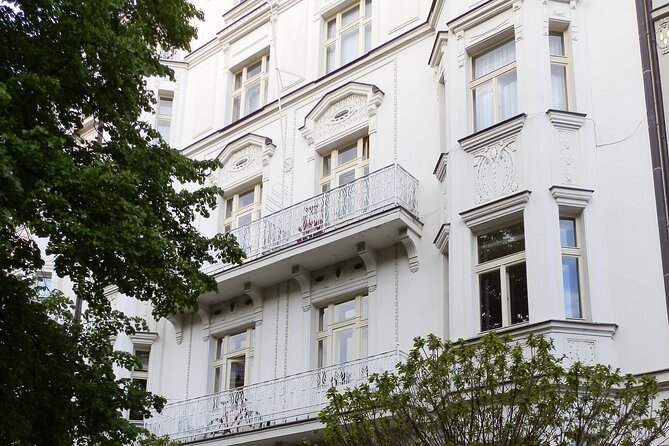
At Senovážné náměstí, you see three luxurious apartment buildings from the Art Nouveau era. The stop lasts only around five minutes, but the cluster is useful because you can compare several facades in one place.
Pay attention to the typical Prague details: ornament around windows, decorative upper stories, and the way the facade is arranged as a unified design. These were homes as well as works of architecture, so they help you understand how the style shaped everyday urban streets, not just public monuments.
The next stop is Hotel Central at Hybernská 10. Built in 1899, it is one of Prague’s earliest Art Nouveau buildings. Again, this is a short stop, about five minutes, and admission is not included.
Its early date gives Max a chance to explain how the style was taking shape. You are looking at a building from the period when Art Nouveau was still new in Prague, before it became a familiar decorative language.
A few more Prague half-days to weigh up
- Prague: 50-Minute Sightseeing Evening Cruise
★ 4.2 · 33,780 reviews - Prague: Medieval Dinner with Unlimited Drinks
★ 4.4 · 19,847 reviews - Prague: Skip-the-line Castle Ticket and Optional AudioGuide
★ 4.3 · 11,121 reviews - Prague: Castle Tour with Local Guide and Entry Ticket
★ 4.6 · 10,422 reviews
Municipal House, Prague’s grand Art Nouveau statement
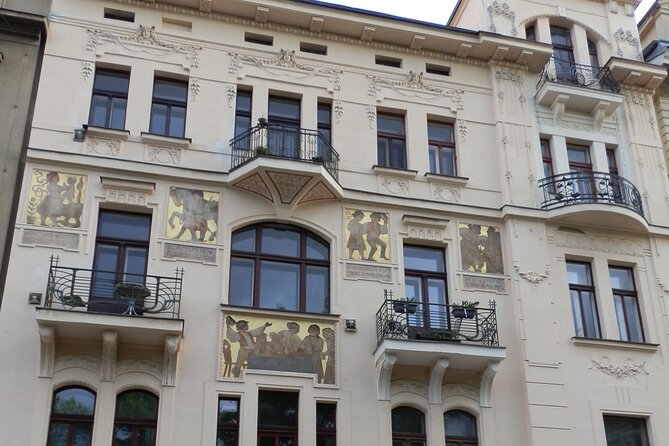
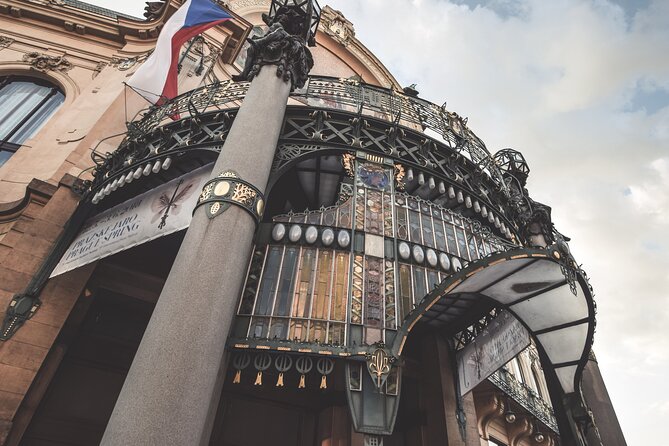
Obecní dům, or the Municipal House, is one of the major highlights of the route. Projected in 1905, it still functions as a cultural and representative center for Prague.
The scheduled stop is about 10 minutes. Admission is not included, so do not assume this tour provides a full interior visit. The building is still worth seeing from the outside, where its scale, ornament, and formal presence make the style easy to grasp.
This is where Art Nouveau moves from apartment blocks and hotels into civic architecture. The Municipal House was designed to represent the city, and its lavish treatment reflects that public role.
I especially like having this stop before the Cubist section. It gives you a strong visual reference point. Once you have seen the Municipal House, the harder angles of later Cubist buildings feel like a deliberate break from the past rather than a random collection of unusual facades.
House of the Black Madonna and the birth of Prague Cubism
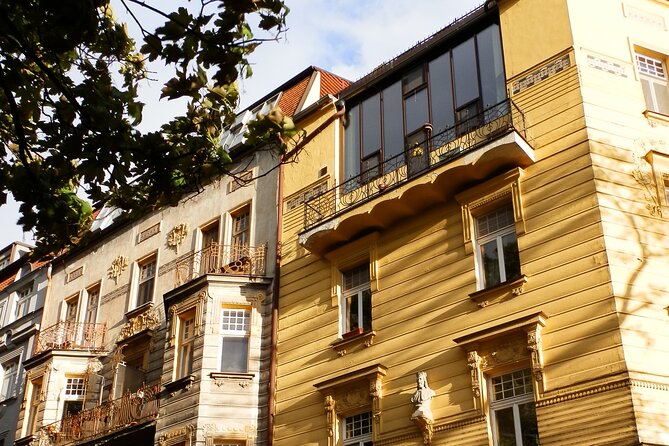
The House of the Black Madonna is the tour’s key Cubist stop. Built in 1912, it is widely regarded as a flagship of Prague Cubist architecture.
Its central location makes it easy to reach, but its real importance is stylistic purity. This is not a building with a few geometric decorations added as an afterthought. The Cubist approach shapes the building’s overall appearance.
The visit is scheduled for about 10 minutes, with admission not included. The tour description does not promise entry, so plan to examine the exterior unless your guide confirms otherwise.
This is the point where the tour’s art lesson becomes especially useful. Cubism can seem vague when discussed in a gallery. Here, you can connect the idea to a real building on a busy Prague street. The result is much easier to remember.
Na Příkopě and the Cubist lamppost
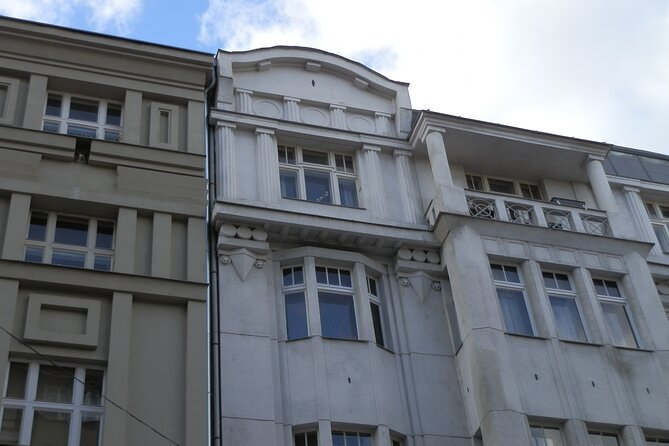
Na Příkopě forms the border between Prague’s Old Town and New Town. It is a major downtown boulevard lined with banks and other buildings, including several strong Art Nouveau examples.
The stop is brief, only about five minutes. That may sound short, but the route is designed to keep moving. You are seeing the city as an architectural sequence, not spending half an hour at every facade.
Then comes one of the tour’s most unusual details: Emil Králiček’s Cubist lamppost. This small piece of street furniture remains one of the most radical Cubist interventions in Prague.
It is easy to miss a lamppost when surrounded by monumental buildings. That is precisely why this stop works. Cubism was not limited to major buildings. It could shape the objects placed on the street as well.
The lamppost also gives the tour a touch of humor. After all the grand facades, a sharply designed lamp can make the same point in a smaller, stranger way.
Wenceslas Square and Vodičkova
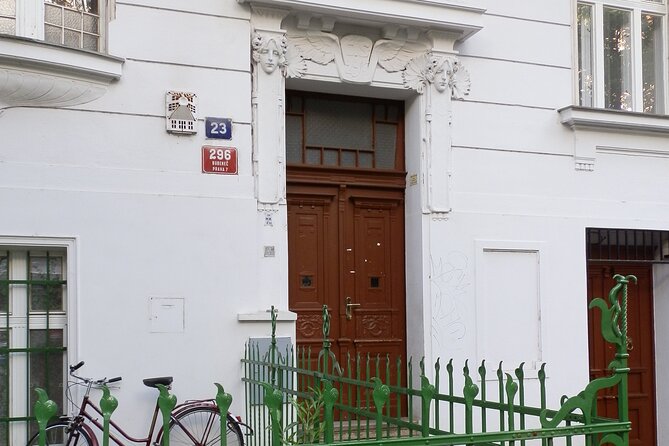
Wenceslas Square receives about 20 minutes, one of the longer stops on the route. The central downtown square includes several Art Nouveau hotels and department stores.
The square is broad and busy, so this is a good place to step back and compare buildings rather than inspect only one facade. Look at how commercial architecture used ornament to attract attention. Hotels and department stores had to announce themselves, and Art Nouveau gave them plenty of visual tools.
The route then continues along Vodičkova, where multiple Art Nouveau and Cubist buildings appear. This section is valuable because the two styles share the same streets. You can compare them without needing a textbook.
Art Nouveau tends to guide your eye along curves and decorative patterns. Cubism interrupts that flow with planes, corners, and angular projections. Once Max explains the difference, you may find yourself noticing examples elsewhere in Prague for the rest of your stay.
Several people who take this tour begin with little background in either style. That is not a problem. You do not need an art degree, and the best part of the experience is learning a visual vocabulary you can use immediately.
The Three Cubist Houses below Vyšehrad
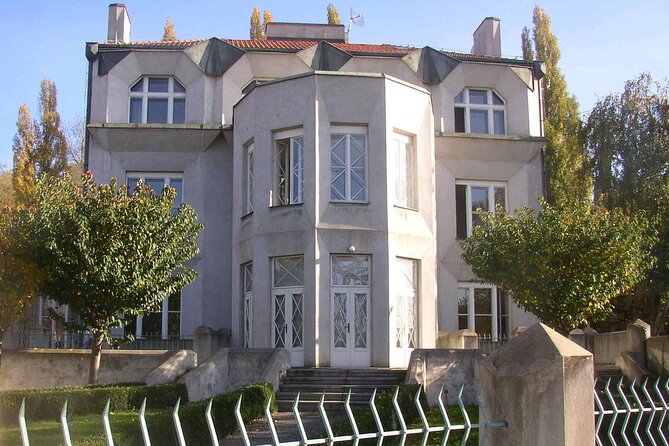
The route eventually moves toward the area beneath Vyšehrad, where you see the Three Cubist Houses. This group of three buildings is among Prague’s most famous Cubist constructions.
The stop lasts about five minutes, and admission is not included. These buildings are especially useful as a group because Cubism becomes easier to understand when you can compare repeated geometric ideas across several facades.
The setting also changes the mood of the tour. Earlier stops sit in the commercial heart of New Town, among major roads and department stores. Here, the buildings feel tied more closely to the slopes and old fortress area around Vyšehrad.
The tour is not a standard fortress visit, and you should not expect a full tour of Vyšehrad itself. The focus remains architecture. Still, the location adds context and shows how modernist buildings were inserted into Prague’s older urban fabric.
Villa Kovařovic and Neklanova
Villa Kovařovic, built on the Vltava river banks in 1912, is described as a Cubist masterpiece inspired by Gothic and Baroque architecture. That blend is one of the most interesting ideas in the entire tour.
Cubism may look like a clean break from the past, but Prague architects often connected it to older local forms. Villa Kovařovic shows how a new style could borrow from Gothic and Baroque traditions while changing their shapes into something sharper and more modern.
The scheduled stop is about 10 minutes, and admission is not included. As with several other stops, the experience centers on the building and its setting rather than a guaranteed interior visit.
The final architectural stop is on Neklanova, where an apartment building from 1913 brings the Cubist portion to a close. It is a fitting ending because it returns the focus to residential architecture. Cubism was not only for grand public projects. It could also shape an apartment building on an ordinary city street.
How the timing and transport work
The official duration is about two hours and 30 minutes, but the stop times add up to less than that. The difference comes from walking between locations and using public transport for part of the route.
That point is important when planning your day. One person who joined the tour found that the walking and explanations could make it run longer than two and a half hours. The guide may also spend extra time with a group that is curious and engaged.
You should wear comfortable shoes. The route is not described as difficult, and most people can participate, but it is still a city walk with many stops and a final section near Vyšehrad.
The tour ends at the Albertov tram stop, near Na Slupi. The public transport ticket used for the last part remains valid long enough to take you back toward central Prague. That makes the ending practical, though you should not expect to finish where you started.
What Max Hutar adds to the experience
Max Hutar leads the tour for Prague Articulate. His strength is not simply identifying buildings. He connects architectural style with the period’s history, cultural changes, and human stories.
The tone appears to suit people who enjoy questions as much as answers. Max has been described as engaging, passionate, well-prepared, and willing to adapt to a group’s needs. One particularly useful result of his approach is that you finish with enough understanding to identify Art Nouveau and Cubist examples on your own.
That is a better outcome than memorizing 13 stops. Prague is full of buildings you will pass without a guide. A good architecture tour gives you tools that continue working after the tour ends.
Do keep an eye on the clock if you have a concert, train, or dinner reservation. The guide’s enthusiasm can make a scheduled 10-minute stop feel worth extending, but the route already includes a lot of ground.
Is $94.93 good value for a private tour?
The price is $94.93 per group of up to 15 people. For one person, that is expensive compared with a large public walking tour. For a couple or family, it becomes more reasonable, and for a full group it can be excellent value.
You are paying for a private English-language guide, a focused subject, and a route that would be hard to assemble on your own. The experience also saves you from trying to identify buildings while checking maps and reading background notes.
Admission fees are not included at certain stops, including the Jerusalem Synagogue, Hotel Central, Municipal House, House of the Black Madonna, Three Cubist Houses, and Villa Kovařovic. The supplied details do not state that entry is provided, so treat these as exterior-focused stops unless you arrange otherwise.
The best value comes when you care about architecture and can share the cost. If you mainly want Prague’s famous historic sights, a general city tour may serve you better.
Who should book this experience?
I would choose this tour if you like buildings, design, city planning, or the cultural changes around 1900. It also suits repeat visitors who have already seen the Old Town and want a less familiar side of Prague.
It works well for a private family group, a small design-minded party, or anyone who enjoys learning through comparison. You do not need prior art training. The tour begins with recognizable Art Nouveau and gradually introduces the more demanding Cubist style.
I would think twice if you dislike walking, have a tight schedule, or want long interior visits. Many stops are only five or 10 minutes, and some admission is not included. The experience is about seeing a broad range of buildings in their city setting, not settling into one museum or monument.
Booking at least several weeks ahead is sensible. This experience is booked, on average, about 25 days in advance. Free cancellation is available until 24 hours before the start time, but changes or cancellations inside that window are not accepted for a refund.
Should you book the Prague Art Nouveau and Cubism tour?
Book it if you want a fresh way to understand Prague. The route covers major landmarks such as Central Station and the Municipal House, then leads you toward unusual Cubist details, including Emil Králiček’s lamppost and the Three Cubist Houses below Vyšehrad.
The strongest reason to choose it is the guide-led visual education. Max Hutar can turn a city walk into a practical lesson, helping you recognize the difference between flowing Art Nouveau and angular Cubism long after the tour ends.
Skip it if you want only Prague Castle, Charles Bridge, and medieval lanes, or if your schedule cannot handle a tour that may run over two and a half hours. For architecture and design lovers, though, this private route offers a focused, personal look at a Prague many first-time visitors walk right past.
FAQ
How long is the Prague Art Nouveau and Cubism Walking Tour?
The tour lasts approximately two hours and 30 minutes. The walking between stops and the public transport portion are included in the overall experience, and the outing may run longer than the advertised duration.
Where does the tour begin?
The tour begins at Prague Main Station, Praha hlavní nádraží, at Wilsonova 300/8 in Prague 2.
Where does the tour end?
The tour concludes at the Albertov tram stop near Na Slupi. The public transport ticket used for the final part remains valid long enough to return toward central Prague.
Is this a private tour?
Yes. Only your group participates, with a maximum group size of 15 people.
Is the tour offered in English?
Yes. The tour is offered in English and uses a mobile ticket.
Can I cancel for a full refund?
You can cancel for a full refund up to 24 hours before the experience start time. Cancellations or changes made less than 24 hours before the start time are not accepted for a refund.
Recently added around Prague
- St Vitus Cathedral and Prague Castle Private Walking Tour★ 4.0 · 3 reviews
- Prague: Old Town and Jewish Quarter Small-Group Tour★ 5.0 · 3 reviews
- Royal Splendor Unveiled Private Prague Castle Interior Tour★ 3.5 · 3 reviews
- Prague Castle Interiors & Changing of the Guard-Small group★ 5.0 · 3 reviews
- Prague: Bohemian & Saxon Switzerland National Park Day Trip★ 5.0 · 3 reviews
- Running Tour of Prague. Your private 6-9K intro★ 5.0 · 3 reviews
- PRAGUE AIRSOFT SHOOTING GAMES★ 4.7 · 3 reviews
- Private walking tour and Boat cruise Best of Prague★ 5.0 · 3 reviews
Walking Tours, compared.
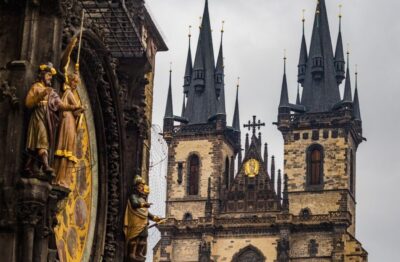
3-Hour Walking Tour of Old Town & Prague Castle
Read our review →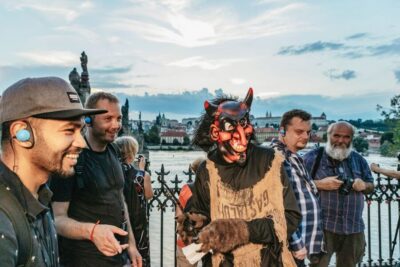
Ghost Walking Tour Where Legends Come To Life
Read our review →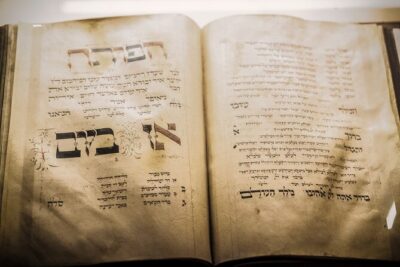
Jewish Quarter Walking Tour with Admission Tickets
Read our review →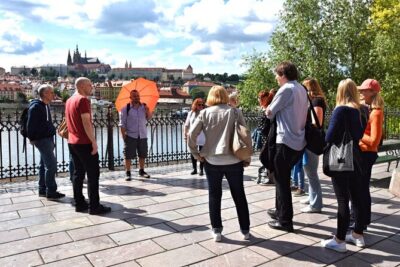
Prague Guided Walking Tour and Cruise with Authentic Czech Lunch
Read our review →
Old Town and Jewish Quarter Guided Walking Tour
Read our review →
Prague Ghost and Legend of Old Town Walking Tour
Read our review →
Prague 3-hour Afternoon Walking Tour including Prague Castle
Read our review →
Ghosts and Legends Nighttime Guided Walking Tour
Read our review →Browse the lists this tour appears in