
Reviewed · PRAGUE TOURS
Small-Group World War 2 & Operation Anthropoid Tour in Prague
The most moving part of this Prague walking tour comes at the end, inside St. Cyril and St. Methodius Cathedral. In its crypt, you see where Czech paratroopers hid after the 1942 assassination of Reinhard Heydrich. The church is not just another old building. It is the place where the resistance fighters made their last stand.
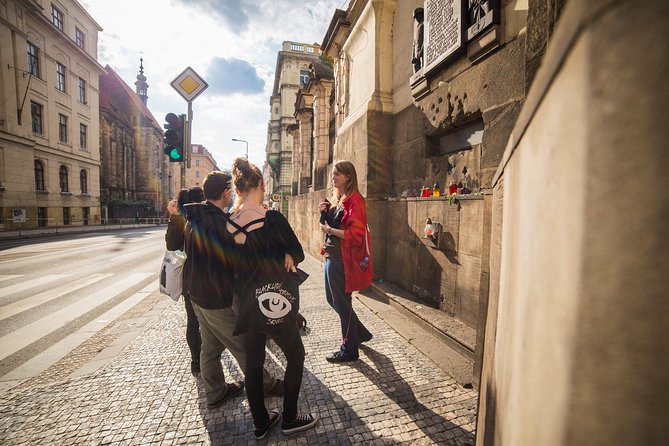
I like the way the tour connects big European events with ordinary Prague streets, including the Munich Agreement, Nazi rule, the resistance network, and the 1945 uprising. I also like the final church and crypt visit, which gives the history a human scale. The drawback is that much of the tour consists of standing outdoors while the guide explains events and shows historical photos, so it suits history-minded visitors more than anyone seeking constant sightseeing.
Key points to know before booking
- The three-hour route ends at the most important site: St. Cyril and Methodius Cathedral and the National Memorial to the Heroes of the Heydrich Terror.
- Operation Anthropoid is the main thread: You follow the events leading to Heydrich’s assassination and the Nazi search for those responsible.
- Several stops are ordinary city buildings: The value comes from the guide’s explanation, not from elaborate exhibits at every location.
- Guides vary, but the strongest praise goes to Allen, Daniel, Dana, Martin, Richard, Pablo, Rafek, and Robin: Each has been described as enthusiastic and well prepared.
- The walking is manageable but continuous: Expect roughly three hours of walking and standing, with a moderate fitness level needed.
- At $33.88, the tour offers solid value: You get a local guide and admission to the cathedral, crypt, and memorial without paying for transport between stops.
Why Prague’s World War II story needs a walking tour
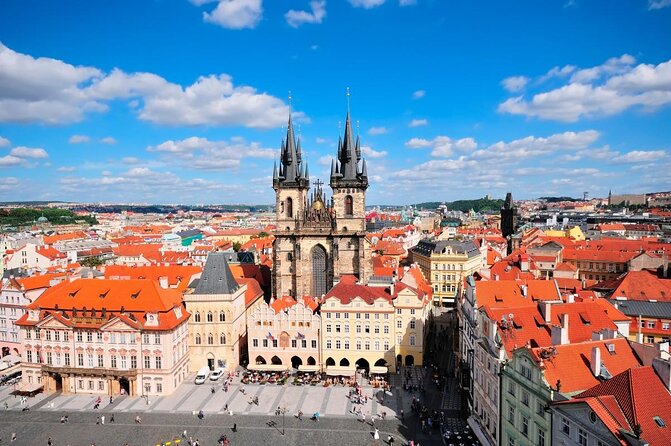
Prague can give you a misleading first impression of the war. Much of the historic center remains beautiful and intact, with Gothic towers, grand squares, and busy streets that show few obvious scars from the occupation.
That is exactly why a guided walk helps. Important wartime places are scattered among shops, hotels, offices, and ordinary streets. You could pass several of them without realizing what happened there.
This tour begins with the political causes of the war rather than jumping straight to 1942. At U Budovce, the guide explains the Treaty of Versailles, the breakup of old empires, the creation of new states including Czechoslovakia, economic collapse, runaway inflation, and the growth of nationalism. This opening takes about eight minutes, but it gives you the framework needed to understand why Czechoslovakia became vulnerable to German pressure.
I appreciate this approach because Operation Anthropoid did not happen in isolation. The assassination plot grew out of the occupation, the exiled government in London, and the effort to organize resistance inside the Protectorate of Bohemia and Moravia.
More Small Group Tours in Prague:
- Prague Castle: Small-Group Tour with Visit to Interiors
★ 4.7 · 388 reviews - Prague Bike City Tour with Small Group or Private Option
★ 5.0 · 355 reviews - From Prague: Bohemian & Saxon Switzerland Small-Group Hike
★ 5.0 · 354 reviews
Old Town stops: Munich, occupation, and daily life
At Stone Bell House, the story turns to the Sudeten German Party and the Munich Agreement. You learn how pressure over the Sudeten borderlands helped weaken Czechoslovakia and led to the creation of the Protectorate.
This is a short stop, around five minutes, so expect a clear explanation rather than a long lecture. The nearby Gothic church provides a pleasant visual pause, but the building itself is not the main reason you stop there. The historical setting matters more than the architecture.
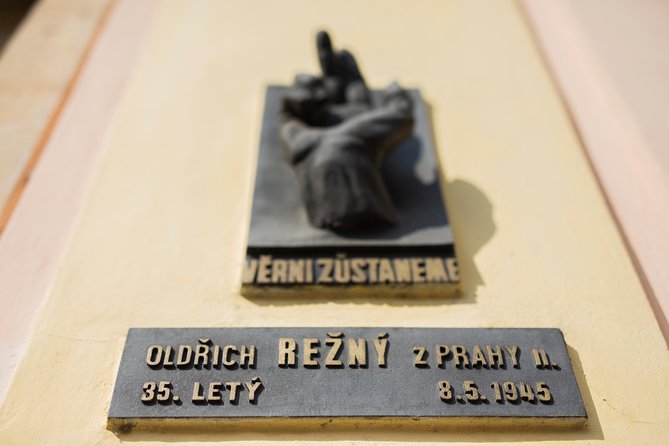
The route continues to the Old Town Hall. Here, you see the section damaged during the Prague Uprising in May 1945. The guide explains daily life under occupation and how the uprising used barricades and improvised tactics as German control began to collapse.
This part is useful because it broadens the story beyond famous leaders and resistance heroes. You hear how the occupation affected the city and how the war ended in Prague on May 8, 1945. The stop lasts about eight minutes.
Next comes Celetna Street, where the guide discusses the execution of Czech students and the closure of Czech universities on November 17, 1939. You also learn about Konstantin von Neurath, the early head of the Protectorate, and Reinhard Heydrich’s appointment on September 27, 1941.
Heydrich’s arrival changed the tone of Nazi rule. His role in the tour is not treated as a distant name in a textbook. The guide links his policies to the fear and repression experienced in the Czech lands, then sets up the operation that targeted him.
Resistance hideouts and the road to Operation Anthropoid
At Melantrichova, the tour begins tracing the resistance network. The guide covers the exiled government in London and covert missions known as Operation Benjamin, Silver A, and Silver B.
You also see the building connected with the apartment of Josef and Marie Svatoš. It served as one of the resistance hideouts, a detail that makes the danger more immediate. These were not secret underground bunkers in a film set. They were apartments and buildings woven into the normal city.
This is one of the places where a guide earns the ticket price. The address alone tells you little. A guide such as Allen, Daniel, or Dana can explain who used the building, why it mattered, and how the resistance relied on people willing to offer shelter despite the risk.
The tour then reaches the Baťa department store. The store was used to display objects found at the scene of Heydrich’s assassination. The stop is brief, around five minutes, and you should not expect a large exhibition inside.
The assassination itself is the heart of the tour. You learn how Czech and Slovak paratroopers were brought into the country, how the mission was planned, and how the attack unfolded. The story includes the work of the London-based government and the network of local helpers who made the operation possible.
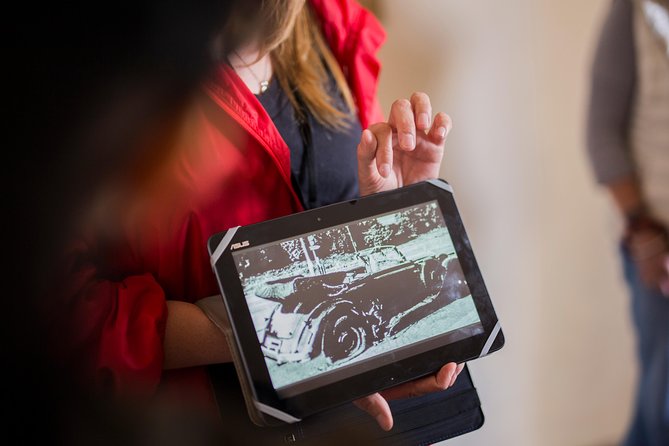
The guides use photographs to fill in details that are not visible from the street. This is important to understand before booking: the tour is a moving history lesson, not a sequence of preserved wartime rooms. If you need a museum display at every stop, the experience may feel light on physical remains.
Wenceslas Square and the destruction of Lidice
At Wenceslas Square, the focus shifts to the Nazi response after Heydrich was attacked. The guide tells the story of Lidice, the village destroyed on June 10, 1942.
The men were executed, and the women were sent to concentration camps. The village ceased to exist. This is one of the darkest moments in the tour, and the subject is handled as part of the broader story of reprisals and terror.
Wenceslas Square is also a useful place to consider how the city’s public spaces changed meaning across the twentieth century. The guide does not simply point out a famous square. You are shown how events in Prague and beyond affected the people living under occupation.
At the Esplanade Hotel, you hear that it was favored by Nazi officials during the occupation. The stop takes only about three minutes, but it adds another piece to the picture of how occupying authorities used Prague’s hotels and public buildings.
A few more Prague half-days to weigh up
- Prague: 50-Minute Sightseeing Evening Cruise
★ 4.2 · 33,780 reviews - Prague: Medieval Dinner with Unlimited Drinks
★ 4.4 · 19,847 reviews - Prague: Skip-the-line Castle Ticket and Optional AudioGuide
★ 4.3 · 11,121 reviews - Prague: Castle Tour with Local Guide and Entry Ticket
★ 4.6 · 10,422 reviews
Petschek Palace and the machinery of Nazi terror
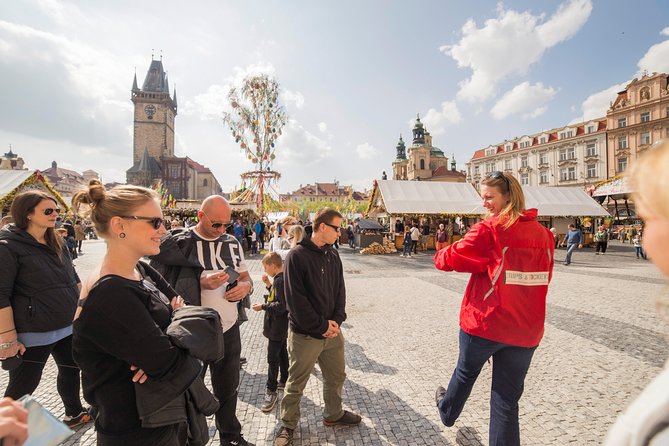
Petschek Palace is among the most serious stops on the route. The building served as Gestapo headquarters, where Czechoslovaks were interrogated, tortured, and killed.
The guide also explains the role of Karel Čurda, who entered the building on June 16, 1942, and betrayed fellow resistance members. His decision became a turning point in the search for Heydrich’s assassins.
This stop helps you see the operation from both sides. The tour celebrates the courage of the paratroopers and helpers, but it also shows how quickly a resistance network could be damaged by fear, betrayal, and systematic police work.
You pass the National Museum and continue through Vodičkova, one of the central streets of Prague’s New Town. Here, the guide covers two unsuccessful covert missions, Tin and Bioscop. These smaller operations may appeal especially to people who already know the main Anthropoid story and want a wider view of Czech resistance efforts.
At Karlovo namesti, the subject changes again to the bombing of Prague in 1945. The stop lasts about eight minutes. It reminds you that the city’s wartime experience did not end with Heydrich’s death or the liberation of much of Europe. Prague still faced destruction and uncertainty during the final months of the war.
The cathedral and crypt: the tour’s essential final hour
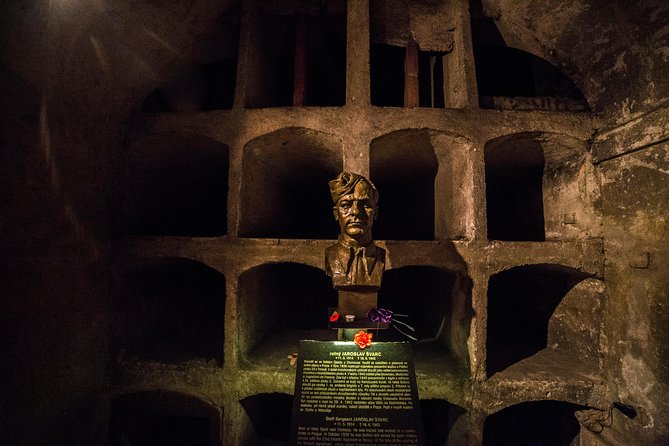
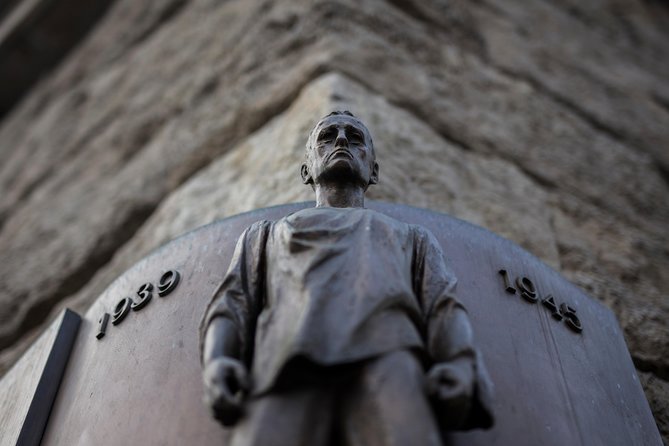
The tour ends at St. Cyril and St. Methodius Cathedral, followed by the National Memorial to the Heroes of the Heydrich Terror. Admission to the church is included.
The cathedral is an Orthodox church with a quiet, serious atmosphere. The guide visits the interior with you and explains its connection to the resistance. The church became the final hiding place of the paratroopers involved in the assassination.
The crypt is the emotional center of the walk. The memorial preserves the space where the fighters hid and died after the Nazi search closed in. You see the cramped setting and gain a clearer sense of the pressure they faced than any street-side explanation can provide.
Allow yourself time to look carefully. The atmosphere is subdued, and the memorial asks for attention rather than hurried sightseeing. One of the useful details from the experience is that the crypt itself can also be visited independently, but the guided tour gives you the full chain of events leading to it.
The cathedral visit lasts about 15 minutes, followed by about 20 minutes at the memorial and crypt. For many people, this final section justifies the walking route. It turns the earlier names, dates, safehouses, and operations into a physical place.
How the guides handle a difficult subject
The guides are not identical in style, so your experience depends partly on who leads your group. Allen is repeatedly praised for his enthusiasm, strong English, and ability to explain the Czech struggle before, during, and after the war. Daniel is described as passionate and especially well prepared on World War II and Operation Anthropoid.
Dana has been praised for keeping up a steady flow of facts while remaining patient and friendly. Richard, a history student in Prague, is noted for clear English and strong storytelling. Other named guides include Martin, Pablo, Rafek, and Robin.
The best guides do more than recite dates. They use photographs, explain family connections, and answer questions. Rafek, for example, has been described as using photographs, museum displays, and personal family memories when appropriate. A guide may also adjust the pace if the group is small or if you have another appointment afterward, though you should not count on a private tour.
There is a fair warning here. One experience was cut short because the guide’s delivery felt monotone and too fact-heavy. The tour covers a lot, and a three-hour stream of names can become tiring. The company addressed that criticism, but the point remains useful: this is best for someone who enjoys listening closely and taking in historical detail.
Price, group size, and practical planning
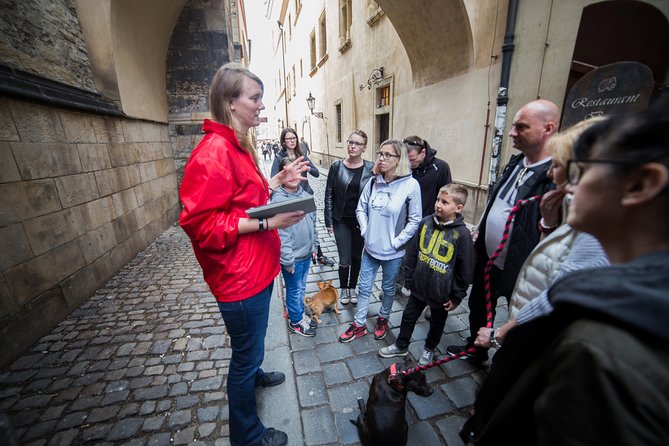
The price is about $33.88 per person, and the group can have up to 30 people. That is a reasonable cost for a three-hour guided route plus admission to St. Cyril and Methodius Cathedral and the memorial.
You are not paying for transport, food, or hotel pickup. The guide leads you through central Prague on foot, and the tour ends in New Town at Resslova 9a. Since the start is in Old Town and the finish is elsewhere, plan your afternoon around the route rather than treating the tour as a short loop near the meeting point.
The meeting point is in front of the building at Týnská 627/7, near the Old Town. It is not inside the ticket shop. Arrive early, especially because one group missed the tour after struggling to find the meeting point and arriving late. The guide generally waits only a short time, and this is not a tour where you can easily catch up by walking to the next stop.
The tour starts at 1:30 pm and lasts about three hours. Wear comfortable shoes, since there is plenty of walking and standing. Snowy or rainy weather can make the outdoor explanations less pleasant, and there may be limited shelter while the guide speaks.
Children up to age six are free, but the subject matter is not recommended for small children. Service animals are allowed, and the route is near public transportation. You need a moderate level of physical fitness.
Free cancellation is available up to 24 hours before the start time. If the minimum number of participants is not reached and the tour is canceled, you are offered another date or experience, or a full refund.
Who will get the most from this Prague tour
I would choose this tour if you want to understand Prague during the Nazi occupation and do not want to build the route yourself. It is especially useful if Operation Anthropoid is new to you, or if you have seen the film version and want to separate the real events from dramatization.
It also suits history fans who want the full chain of events. You begin with the aftermath of World War I, move through the Munich Agreement and occupation, follow resistance contacts and covert missions, then end with Heydrich’s assassination, Lidice, the Gestapo response, and the final battle in the crypt.
I would be less likely to recommend it if you want grand interiors, long museum visits, or frequent changes of scenery. Prague itself suffered less visible wartime destruction than many European capitals, and several stops involve looking at buildings from the outside while listening to the guide.
The tour also may not suit anyone who tires quickly from standing or who prefers a light, entertaining introduction to the city. The material includes executions, torture, betrayal, concentration camps, and the destruction of Lidice. It is serious from beginning to end.
Should you book the Operation Anthropoid tour?
Book it if you want the human story behind Prague’s wartime streets, especially the resistance helpers and paratroopers who are easy to miss when sightseeing independently. The final crypt visit is powerful, and the price is fair for three hours with an English-speaking local guide.
Go with realistic expectations. You will spend plenty of time listening outdoors, and some locations are meaningful mainly because of what happened there, not because much remains to see. Arrive early, dress for the weather, and save enough energy for the cathedral and crypt.
For a visitor interested in Czech twentieth-century history, this is a focused and worthwhile addition to a Prague itinerary. For everyone else, it depends on your appetite for serious history. The tour does not try to make the occupation comfortable, and that is part of its value.
FAQ
Where does the World War II and Operation Anthropoid tour begin?
The tour begins at Týnská 627/7 in Prague 1, in front of the building near McGee’s Trips & Tickets. The listed start time is 1:30 pm.
Where does the tour end?
The tour ends at the Orthodox Cathedral of Saints Cyril and Methodius and the National Memorial to the Heroes of the Heydrich Terror at Resslova 9a in Prague’s New Town.
How long does the tour last?
The tour lasts approximately three hours, including the walking route, the cathedral visit, and the memorial and crypt.
Is admission to St. Cyril and Methodius Cathedral included?
Yes. The tour includes a visit to the church, and admission to the cathedral and the National Memorial to the Heroes of the Heydrich Terror is included.
Is this tour suitable for young children?
The subject includes Nazi occupation, executions, torture, concentration camps, and resistance deaths, so it is not recommended for small children. Children up to six years old are free, and children must be accompanied by an adult.
What happens if I need to cancel?
You can cancel up to 24 hours before the experience for a full refund. Cancellations or changes made less than 24 hours before the start time are not accepted for a refund.
Recently added around Prague
- St Vitus Cathedral and Prague Castle Private Walking Tour★ 4.0 · 3 reviews
- Prague: Old Town and Jewish Quarter Small-Group Tour★ 5.0 · 3 reviews
- Royal Splendor Unveiled Private Prague Castle Interior Tour★ 3.5 · 3 reviews
- Prague Castle Interiors & Changing of the Guard-Small group★ 5.0 · 3 reviews
- Prague: Bohemian & Saxon Switzerland National Park Day Trip★ 5.0 · 3 reviews
- Running Tour of Prague. Your private 6-9K intro★ 5.0 · 3 reviews
- PRAGUE AIRSOFT SHOOTING GAMES★ 4.7 · 3 reviews
- Private walking tour and Boat cruise Best of Prague★ 5.0 · 3 reviews
Prague Tours, compared.
Skip-the-line Castle Ticket and Optional AudioGuide
Read our review →
Castle Tour with Local Guide and Entry Ticket
Read our review →
Prague Castle 2.5-Hour Tour Including Admission Ticket
Read our review →
Oldtown, Medieval Underground & Dungeon History Tour
Read our review →
Browse the lists this tour appears in