
Reviewed · BRNO TOURS
Trip to the Austerlitz Battlefield near BRNO in the Czech Republic
Austerlitz is not one tidy monument with a battlefield behind it. It is a broad area of villages, hills, roads, ponds, and farm fields spread across roughly 12 by 8 kilometers. This private tour with Helena of BRNOguide gives you the context to understand how Napoleon used that ground on December 2, 1805.
I like the door-to-door pickup in Brno, especially if you arrive by train from Prague or Vienna. I also like the mix of major monuments and small battlefield positions, including the hill where Napoleon commanded and the French cannon position on Santon Hill. The main consideration is cost: at $216.04 per person, it makes the most sense for history fans or a small group that values a private guide.
Key points to know before you book
- A battlefield spread across several villages: You visit the main positions instead of seeing only one memorial.
- Private transport from Brno: Helena picks you up at your hotel, station, or another agreed location in Brno or nearby.
- Strong local interpretation: The tour connects hills, villages, troop positions, and the movement of the battle.
- A hands-on stop in Tvarožná: Expect a replica French cannon and a diorama showing 1,500 soldiers.
- Museum entry costs extra: The museum at the Cairn of Peace costs €10 per person.
- Lunch is flexible but not included: Sokolnice is normally the lunch stop, so plan for that added expense.
Why Austerlitz makes a better guided day than a quick photo stop
The Battle of Austerlitz is often called the Battle of the Three Emperors. Napoleon defeated the forces of Austria and Russia here on December 2, 1805, but the useful part for you is not memorizing names and dates. It is seeing how the battle used the ground.
From a car, the area can look like ordinary countryside. A hilltop, a village church, or an old road may not mean much without an explanation of who held it and why it mattered. Helena’s route links those pieces together as you move across the former battle zone.
This is a private tour, so your group does not share the vehicle with strangers. That matters here. You can ask questions, spend longer at a place that interests you, or keep moving if a stop does not appeal. The guide has also helped people arriving by train meet near the station, which makes the outing easy to fit into a Brno visit.
The normal start is 9 a.m., with about seven hours on the schedule. The tour uses an air-conditioned vehicle, a welcome feature if you are crossing the area in cold weather, summer heat, or the thick fog that occasionally settles over the battlefield.
A few more Brno half-days to weigh up
- Brno: Historic Downtown Walking Tour
★ 3.9 · 278 reviews - 3-Hour Brno Themed Walking Tours
★ 3.9 · 65 reviews - Skip the Line: 10-Z Bunker Entrance Ticket in Brno
★ 4.5 · 37 reviews
Slavkov Chateau, Napoleon’s post-battle setting
Your first stop is Slavkov Chateau, also called Austerlitz Chateau. You get about 20 minutes here, with free admission to the grounds included in the visit.
The chateau matters because Napoleon spent time here after the battle. Its park gives you a gentler opening to the day before the tour turns toward command posts, artillery positions, and monuments. You should not expect a long indoor palace tour from this schedule. The stop is brief and works mainly as a setting for the events that followed the fighting.
If you love grand interiors, you may want to ask Helena how much time can be devoted to the chateau. The listed visit focuses on the building and park, not a separate paid palace admission.
The Cairn of Peace on Pratzen Heights
The most important museum stop is at the Pratzen Heights, where you visit the Cairn of Peace, or Mohyla míru. The monument is a chapel-like memorial, and the site includes a museum about the Battle of the Three Emperors.
You get roughly 50 minutes here. Museum admission is not included, and the stated price is €10 per person. Bring that extra cost into your budget, since this is the only listed entrance fee and one of the day’s main indoor stops.
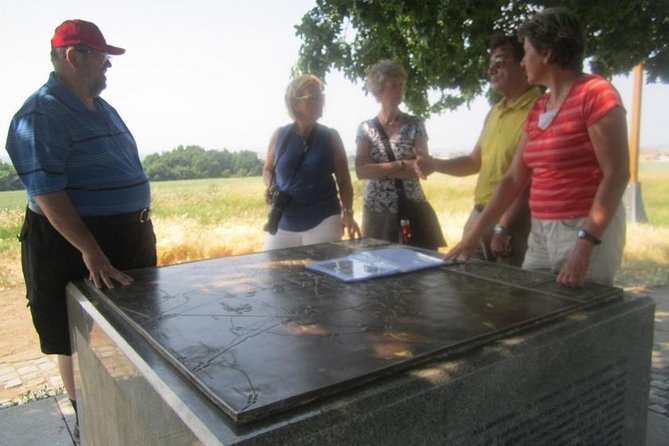
The Pratzen Heights are especially useful for understanding the battle’s shape. From high ground, you can look across much of the former combat area and better follow the movement between the villages and positions. Without a guide, it is easy to admire the view but miss why this ridge was so important.
The museum adds physical material to the outdoor explanation. You may see displays such as replica weapons and dioramas during the tour, giving you something more concrete than a list of military maneuvers. The stop is a good balance of memorial, view, and museum.
Žuráň, where Napoleon commanded
At Žuráň, you stop for about 10 minutes. This hilltop is identified as Napoleon’s command post during the battle on December 2, 1805.
It is a short stop, but it gives the day a strong sense of place. You are not simply hearing that Napoleon directed the battle from a hill. You are visiting the position associated with that command, then using the view to imagine how an army leader might have read the ground.
Ten minutes will not allow for a long walk or a detailed visit. Think of Žuráň as a focused viewpoint and explanation rather than a full attraction. The value comes from Helena’s account of what happened there and how it fits with the next stops.
A different way to spend an afternoon here:
- PUNKVA CAVES, ABYSS and PERNSTEJN CASTLE =only from Apr to Sep
★ 5.0 · 25 reviews - Brno Historical Walking Tour
★ 3.5 · 18 reviews - Discover Moravian Karst: Seven Stops, One Tailored Tour
★ 5.0 · 17 reviews - Brno Food Tasting Tour of Hidden Gems for Small Groups
★ 4.5 · 13 reviews
Santon Hill and the French artillery line
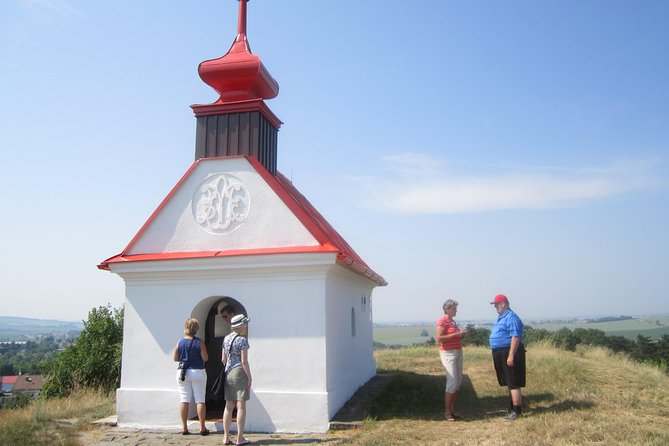
Near Tvarožná, Santon Hill marked the French left flank. French forces dug trenches here for 19 cannons, making this one of the clearest places to connect the physical ground with the battle plan.
The itinerary includes a short stop near the church of St. Nicholas, followed by time in Tvarožná. Santon Hill itself involves a hike to the top, so you need a moderate level of fitness. The walk is not presented as a major trek, but comfortable shoes are sensible.
The reward is the view across much of the battlefield. This is one of the tour’s best moments for anyone who wants to understand scale. A battle fought across 12 kilometers by 8 kilometers cannot be grasped from a single plaque. From the hill, Helena can point out the wider area and explain how the French left flank fit into the day’s action.
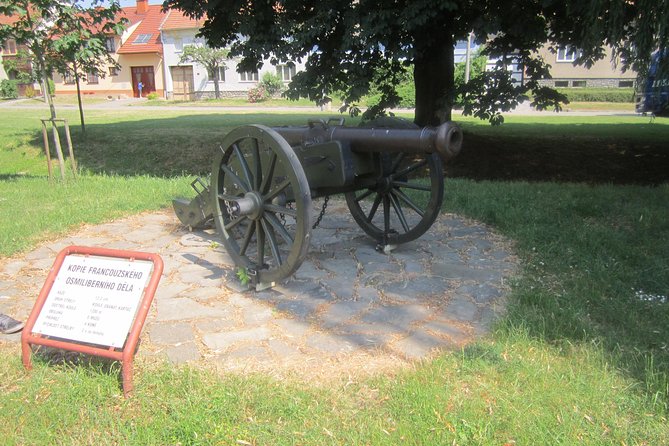
At Tvarožná, you can also see a replica French cannon and a diorama with 1,500 soldiers. The diorama helps turn a large, confusing battle into something you can follow with your eyes. It is a small display, but it may be one of the most useful stops for younger visitors or anyone who prefers visual explanations.
Sokolnice, the practical midday pause
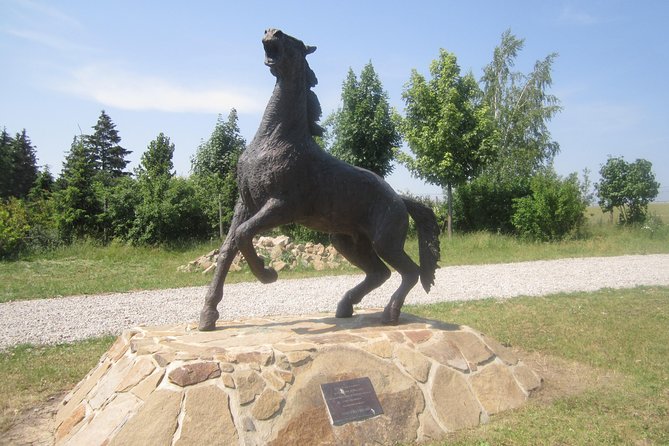
The tour usually reaches Sokolnice around lunchtime, with about an hour set aside. Lunch is not included, so you pay for your own meal.
This break is useful because the day involves several outdoor stops and short bursts of explanation. You can sit down, eat, and ask Helena to clarify anything that has become tangled in the story. The village also adds a local element to a day that could otherwise feel like a military study trip.
The planned sights here include Sokolnice Chateau, a granary, and a pheasantry. Admission is listed as free, though the schedule does not promise an extended interior visit. Treat these as part of the village setting rather than separate full-length attractions.
An hour is enough for a relaxed pause, but lunch service can vary. If you have dietary needs or a tight schedule, ask Helena in advance what the lunch arrangement will be. The tour gives you the stop, not a prepaid meal.
Telnice and the southern end of the battle
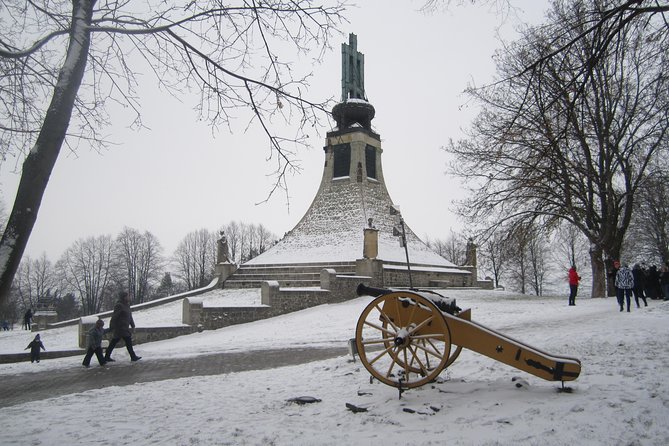
Telnice, also known as Telnitz, lies at the southern end of the battlefield. You stop for about 15 minutes, and Helena points out where ponds once stood.
The former ponds are a good reminder that the battlefield has changed in some ways even though much of the area remains open and recognizable. Water, roads, villages, and slopes affected how troops moved, so the old pond locations help explain why this southern section mattered.
The tour may also include the local church and nearby parish. These visits depend on what is open and how the day is progressing, so do not treat them as guaranteed long indoor visits. Their value is in seeing the village fabric around the battle, not just another memorial.
What the guide adds to the day
Helena’s biggest strength is the way she ties separate locations into one story. Her guiding covers the major positions, but she also knows smaller spots that would be hard to find on your own. That matters more at Austerlitz than at a compact museum, because the battlefield crosses several communities.
Her English guiding is included, and multiple accounts describe her English as clear. One poor rating raised a concern about language, so if precise English explanation is essential to you, confirm the arrangements before paying. The advertised service is English-language guiding.
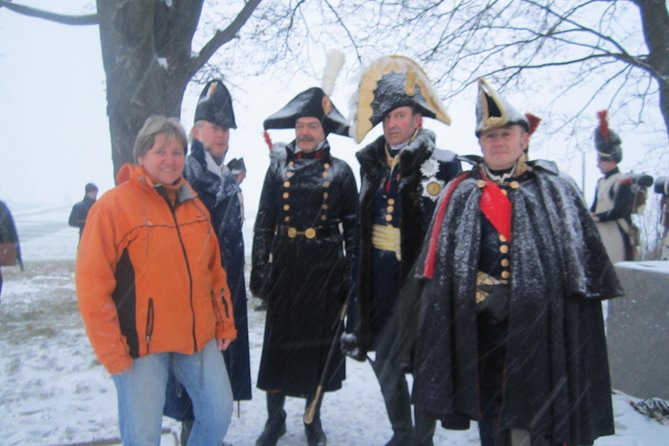
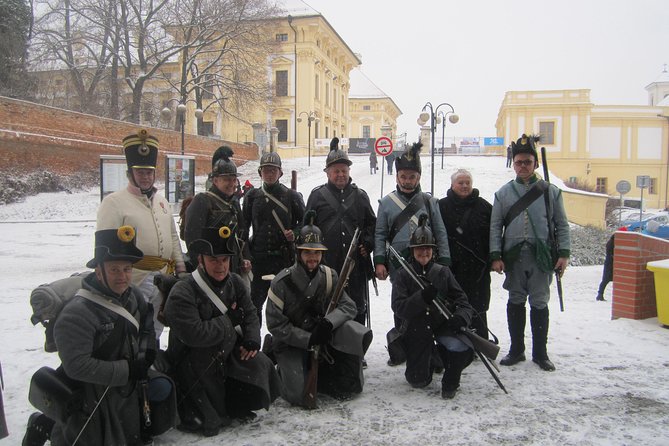
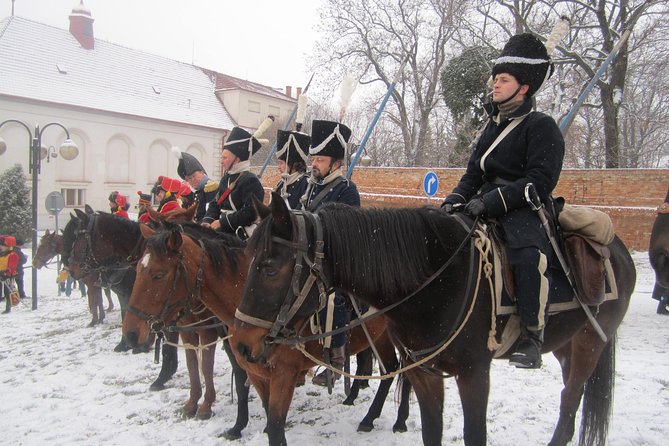
Helena also offers flexibility within reasonable limits. Past outings have included extra contact with reenactors around the December 2 anniversary, though reenactment events are not part of the standard tour and can be canceled. One planned reenactment was canceled during the COVID period, while some uniformed participants still appeared at the site.
A dog named Marco Polo, associated with the guide, has also joined some past outings. Do not book on the assumption that a dog will be present, but animal lovers may appreciate knowing that service animals are allowed and that the guide has been comfortable around dogs.
Price, private value, and group size
The price is $216.04 per person. That is a serious day-trip price, especially once you add the €10 museum admission and lunch.
The calculation looks better for a small group. You are paying for private transport, pickup and drop-off, English guiding, and a full route across a large area. A public excursion would likely cost less, but it might not stop at the same command posts or allow you to shape the day around your interests.
The private format is also useful for families and history-focused pairs. An 18-year-old and a parent, for example, can ask detailed questions without worrying about slowing down a larger group. The vehicle takes care of the long connections between villages, while you get out for the key views and displays.
I would not choose this tour simply because you have one free morning in Brno and want a general countryside outing. The subject is specific, the day is built around military history, and several stops are short. You get the best value if Austerlitz is a main reason for your visit.
Timing, fitness, and what to bring
The stated duration is about seven hours, beginning at 9 a.m. The stop times add up to a little over three hours, leaving the rest for driving, explanations, and the flexible pace of a private day. Some past descriptions place the visit closer to five hours, so allow the full seven hours rather than planning a tight afternoon appointment.
You need moderate physical fitness because the route includes a walk up Santon Hill. Much of the day is vehicle-based, but you will be stepping out repeatedly for viewpoints and outdoor sites.
Bring:
- Comfortable shoes for Santon Hill
- Money for the €10 museum entry
- A lunch budget
- Weather protection for open hilltops
- Questions about the battle, since the private format gives you room to ask them
Pickup is available from any location in Brno or near Brno. Train arrivals from Prague and Vienna can be met near the station by prior arrangement. Confirm the exact pickup point and time within the booking process, since the general start time is 9 a.m.
The tour is near public transportation, and service animals are allowed. It is a private activity for your group only.
Who should book the Austerlitz battlefield tour?
I would recommend it first to Napoleon enthusiasts, military history fans, and anyone who wants to understand a battlefield through its terrain rather than only through museum panels.
It also suits visitors with limited time in Brno who want a well-organized trip into the surrounding area. The pickup removes the need to arrange a rental car, and Helena’s local knowledge helps you reach positions that are not obvious from a standard map.
Families can benefit from the replica cannon and soldier diorama, while photographers and countryside lovers will enjoy the hilltop views. The tour is less suitable if you dislike outdoor stops, have difficulty walking uphill, or want a full palace tour and long museum visits.
Should you book this private day from Brno?
Book it if you want the battlefield explained as a connected story and value having Helena’s full attention. The combination of Žuráň, Pratzen Heights, Santon Hill, Telnice, Sokolnice, and Tvarožná gives you far more than a single monument visit.
Think carefully about the price, the extra museum fee, and the nonrefundable booking terms before committing. If you are only mildly interested in Napoleon, spend your Brno time in the city instead. If Austerlitz is on your must-see list, private transport and a local guide make this one of the most practical ways to cover the site in a day.
FAQ
How long does the Austerlitz battlefield tour take?
The advertised duration is approximately seven hours, starting at 9 a.m. The exact day can vary with driving time, lunch, museum visits, and the pace of your private group.
What is the price per person?
The listed price is $216.04 per person. Museum admission and lunch are not included.
Is pickup available in Brno?
Yes. Pickup and drop-off are offered from any location in Brno or near Brno, including arrangements for people arriving by train.
Can the tour meet passengers arriving from Prague or Vienna?
Yes. The pickup details specifically note that people often arrive by train from Prague or Vienna, Austria, and can meet the guide near the station.
Is the tour private?
Yes. Only your group participates in the activity.
Is English guiding included?
Yes. Guiding in English is included, and the experience is offered in English.
How much does the Pratzen Heights museum cost?
The museum entrance fee is €10 per person. It is not included in the tour price.
Is lunch included?
No. Lunch is excluded. The tour usually stops in Sokolnice for about an hour, where you can take a midday meal.
Recently added around Brno
- Fullday Private Tour in Lednice and Valtice with Castle Visiting★ 5.0 · 6 reviews
- 2 Hours Private Walking Tour in Brno★ 5.0 · 6 reviews
- Get to know South Moravia with us. 6 hour tour.★ 5.0 · 9 reviews
- Fullday Private Tour in Lednice & Valtice with Wine Tasting★ 5.0 · 10 reviews
- Moravian Karst Cave Private Guided Tour★ 5.0 · 11 reviews
- Brno Food Tasting Tour of Hidden Gems for Small Groups★ 4.5 · 13 reviews
- Discover Moravian Karst: Seven Stops, One Tailored Tour★ 5.0 · 17 reviews
- Brno Historical Walking Tour★ 3.5 · 18 reviews
Brno Tours, compared.
Skip the Line: 10-Z Bunker Entrance Ticket in Brno
Read our review →
PUNKVA CAVES, ABYSS and PERNSTEJN CASTLE =only from Apr to Sep
Read our review →
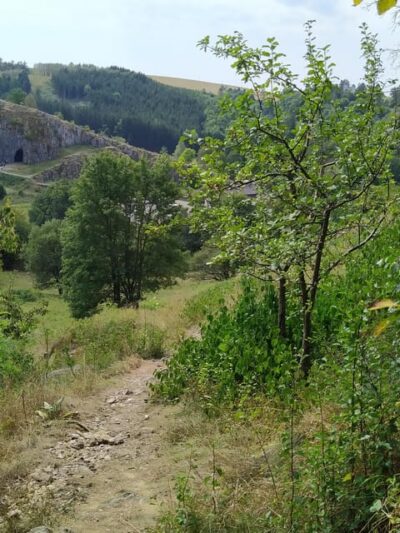
Discover Moravian Karst: Seven Stops, One Tailored Tour
Read our review →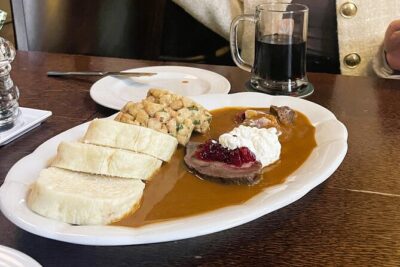
Brno Food Tasting Tour of Hidden Gems for Small Groups
Read our review →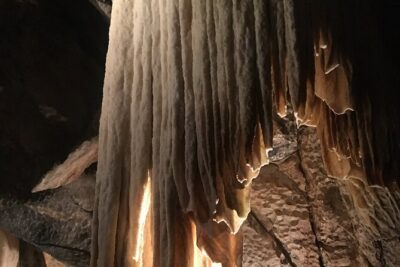
Browse the lists this tour appears in