
Reviewed · HISTORICAL TOURS
The Ultimate Prague History Tour
Prague’s story comes into focus on foot, one neighborhood at a time. Günther leads you from the quiet Nový Svět quarter to Prague Castle, down through Lesser Town, across the Vltava, and into Old Town, tying Gothic churches, religious conflict, Czech independence, modern art, and Art Nouveau into one long day.
I especially like the crowd-avoiding route and the way the tour uses side streets rather than rushing from one famous photo stop to the next. I also like the private format, since Günther can adjust the pace, answer your questions, and shift the focus toward architecture, politics, art, or daily life.
The main drawback is simple: seven hours of walking is a serious outing, and the $216.25 price per person is easier to justify for a couple or small group that wants a custom experience than for someone seeking a quick introduction. Some interior admissions are extra, and Prague Castle access may depend on crowds and your interests that day.
Key details before you book
- A quiet start at Nový Svět: Reach Prague Castle by tram, then approach through a picturesque quarter that is often far calmer than the main castle entrance.
- Günther’s specialty is connection: Expect architecture explained through religion, politics, art, and Czech national identity rather than as a list of dates.
- Seven hours, mostly on foot: The route covers Castle Hill, Lesser Town, Kampa, the river, Old Town, and possibly Municipal House.
- A private tour for your group: Only your party participates, so the pace and emphasis can change during the day.
- Interior visits cost extra: Loreta and Museum Kampa are not included, and the Castle’s interior plan is decided on site.
- Best for curious visitors: This suits you if you want context and conversation, not just a parade of Prague’s famous sights.
Why this Prague tour feels different
Many Prague sightseeing walks begin in the center and follow the same crowded loop. This one begins beyond Prague Castle, at Nový Svět, then works downhill toward the river and Old Town.
That choice matters. You get a gentler start, a sense of Prague’s older residential quarters, and a route that can avoid some of the heaviest foot traffic. You still see the city’s headline sights, but the day is shaped around how Prague developed rather than around a checklist.
Günther is the guide behind the experience. His interests reach across Czech history, architecture, politics, religion, and art. He also speaks English, Italian, German, Czech, and another language, according to the tour information, which can help when dealing with local transport, restaurants, shops, or practical problems.
The strongest feature is his ability to explain why a building matters. You will not simply hear that a church is Gothic or that a square is Baroque. You will hear how religious belief, political power, artistic fashion, and the growth of the city affected its shape.
More Historical Tours in Prague:
- Prague: Oldtown, Medieval Underground & Dungeon History Tour
★ 4.2 · 8,244 reviews - Prague Old Town, Medieval Underground and Dungeon Historical Tour
★ 4.5 · 3,227 reviews - Prague: Communism History and Nuclear Bunker Guided Tour
★ 4.7 · 2,417 reviews
Nový Svět: Prague Castle by the back door
The day begins with pickup anywhere within the defined service area. From there, you take a tram beyond Prague Castle and get off at Nový Svět, or New World.
This small quarter is one of the prettiest ways to approach the Castle. Its narrow lanes and old houses feel removed from the grand ceremonial spaces nearby. The walk takes about 30 minutes and has no admission charge.
I like this opening because it gives you time to settle into Prague. Instead of stepping directly into a mass of visitors at the Castle gates, you start with a quieter neighborhood and let the city reveal itself gradually.
The tradeoff is that the route begins with walking before the main sights. If you want to reach the Castle immediately, this may feel indirect. If you value atmosphere and old residential streets, it is a smart choice.
Loreta and the religious imagination of Prague
The next stop is Loreta Praha, a monastery-like sanctuary dedicated to St. Mary. Plan about an hour here, though the admission fee is not included.
Loreta is important for its church, treasury, and religious setting. Günther uses the site to discuss the legends surrounding it and recent research connected with those stories. That gives the stop a different tone from a standard church visit. You are not only looking at decoration; you are considering how faith, legend, and evidence interact.
You should ask in advance how much time will be spent inside and what the current admission cost is. The tour can include the setting without making the entrance fee part of the price.
For visitors interested in religious art, Catholic tradition, and the political force of belief in Central Europe, Loreta may be one of the day’s most rewarding stops. If church interiors are not a priority, you may prefer to use the time for Prague Castle or Old Town.
Prague Castle and the birth of Gothic architecture
Prague Castle is the city’s major attraction, and crowds can be heavy. The plan is flexible: Günther decides with you on the spot whether it makes sense to walk through the main Castle area.
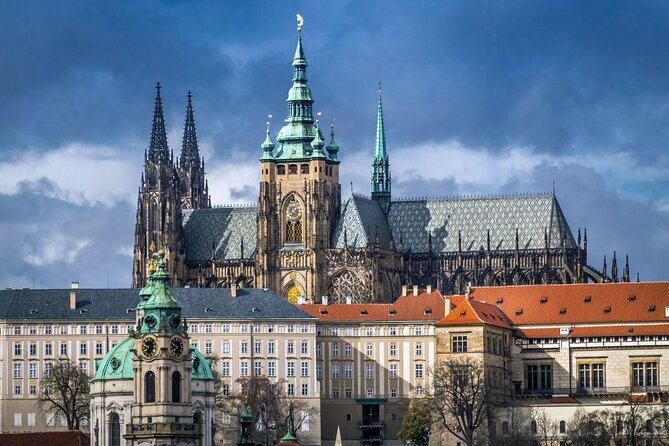
That flexibility is useful. A private guide can look at the queues, the atmosphere, and your interests before committing the day to the busiest part of the complex. The itinerary gives particular attention to the cathedral and its unusual position, including the religious and political reasons behind it.
Günther’s Gothic architecture explanation is a major reason to choose this tour. Rather than treating Gothic design as a collection of pointed arches and tall windows, he explains how the style developed and why it carried such force in medieval Europe.
The listed Castle stop lasts about 90 minutes and shows no separate admission charge in the supplied details. Still, do not assume every interior visit is included. Ask before booking which parts of the Castle you will enter and which you will see from outside.
The Castle portion will work best if you enjoy explanation more than speed. You may not see every room, courtyard, or exhibit, but you should come away with a clearer sense of why the complex became Prague’s center of power.
A few more Prague half-days to weigh up
- Prague: 50-Minute Sightseeing Evening Cruise
★ 4.2 · 33,780 reviews - Prague: Medieval Dinner with Unlimited Drinks
★ 4.4 · 19,847 reviews - Prague: Skip-the-line Castle Ticket and Optional AudioGuide
★ 4.3 · 11,121 reviews - Prague: Castle Tour with Local Guide and Entry Ticket
★ 4.6 · 10,422 reviews
Nerudova and the quieter side of Lesser Town
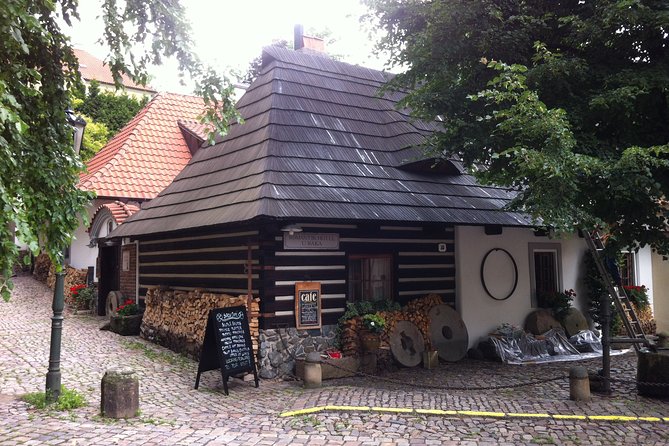
From the Castle district, you descend toward Nerudova. This street is handsome and historic, but it is also one of Prague’s most visited routes.
Günther does not stay on the busiest stretch for long. The tour turns toward St. John’s Hill, a quieter neighborhood that once attracted Italian artists. The stop lasts about an hour, and the route can include paid admissions, which are not included.
This is where the tour’s theme of connected stories becomes clear. The Italian artists, the local religious setting, and the political forces that shaped Lesser Town are part of one larger story. You get a chance to see how art and religion affected an actual neighborhood.
Nerudova is also a practical reminder to wear good walking shoes. The descent can be tiring, and the day continues for several hours.
Lesser Town Square and Maltese Square
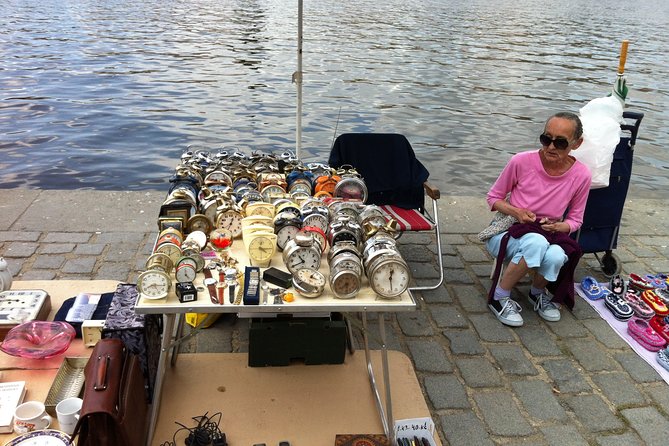
Malostranské náměstí, or Lesser Town Square, takes about 30 minutes. It is a handsome urban room filled with architecture, religious conflict, Baroque decoration, and stories of espionage during the First World War.
This is a good place to pause and understand Lesser Town as more than a postcard district. Its churches and palaces reflect power, but its streets also preserve the tension between different religious and political forces.
The route then continues to Maltézské náměstí, or Maltese Square, near the Vltava. Here you see the church and embassy of the Knights of Malta, along with the palace of the French Embassy.
A visit to the French Embassy may be possible by prior request, but it is not guaranteed. If that interests you, raise the subject before the tour rather than waiting until you arrive.
The route also reaches the Lennon Wall. The description is candid about its current condition, calling it a sad remnant of what it once was. That honesty is useful. You will see a piece of Prague’s modern cultural memory, but you should not expect an untouched symbol from its earlier years.
Kampa Island and Museum Kampa
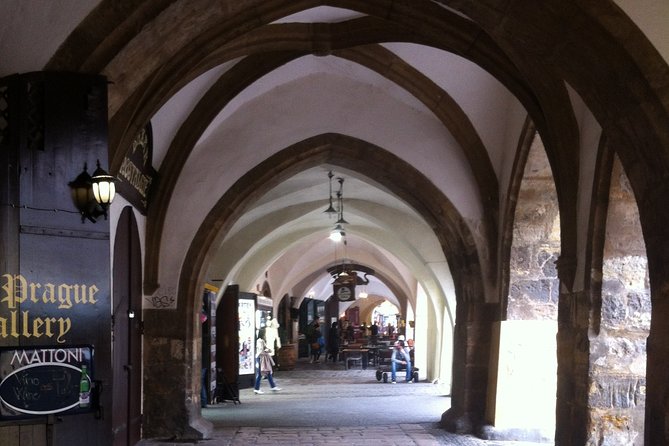
Kampa Island provides a green break near the river, with several attractions packed into a small area. It is a pleasant change after the formal squares and steep streets of Lesser Town.
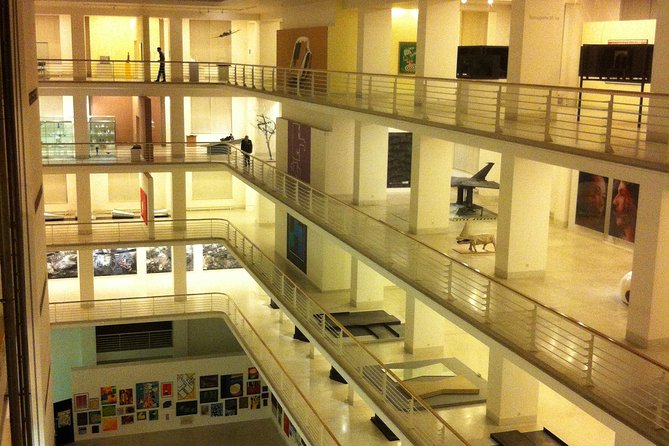
The main cultural stop here is Museum Kampa, housed in a former mill. The museum is known for contemporary art and the largest collection of works by František Kupka, one of the pioneers of abstract painting.
The visit takes about 30 minutes, and admission is not included. That short time is enough for a focused introduction, but not for a slow museum visit. If modern art matters to you, ask whether the schedule can give Museum Kampa more time.
Günther also tells the story of the woman who initiated the museum, drawing from a biography in his library. That personal and local angle makes the museum more than a quick art stop. You learn how Prague’s recent cultural life was shaped by individual commitment.
Crossing the Vltava on Legions’ Bridge
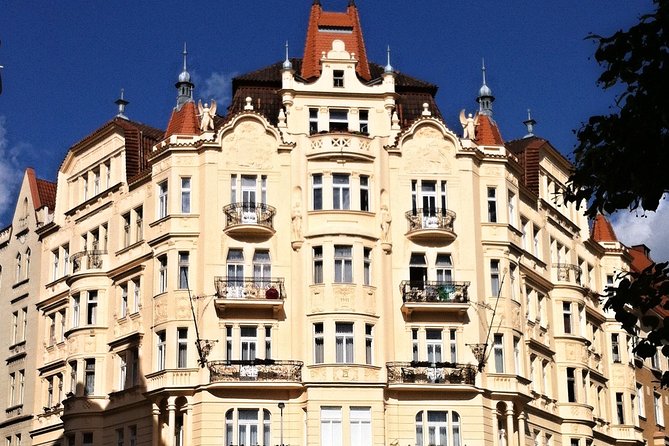
If Charles Bridge is too crowded, the tour crosses the Vltava on Most Legií, or Legions’ Bridge. This is one of the route’s most practical choices.
Charles Bridge is a must-see, but it can be difficult to appreciate when packed. Legions’ Bridge offers a calmer crossing and leads toward the National Theatre, whose role in the Czech struggle for independence receives a detailed introduction.
The bridge crossing takes about 30 minutes as part of the broader stop. You still get river views and a sense of Prague’s geography without losing half an hour to a slow-moving crowd.
This is a good example of what you are paying for in a private tour. A fixed group itinerary might insist on Charles Bridge no matter the conditions. Here, the route can respond to the day.
Old Town beyond the standard route
In Stare Mesto, or Old Town, you walk in several directions according to what you have already seen. The purpose is not to repeat every famous landmark. Instead, Günther focuses on less familiar places and explains how medieval villages developed into cities.
That approach gives Old Town more depth. Prague’s 1,000 years of urban growth remain visible in its streets, buildings, and changing patterns of use. You begin to see the center as a living city rather than a museum set.
The Old Town portion is listed at about 30 minutes, but the actual time can depend on the earlier stops and your interests. If you have already visited the Astronomical Clock, Charles Bridge, or major churches, tell Günther. The route is designed to avoid unnecessary repetition.
This is also the part of the day where questions are especially valuable. Ask about daily life, city growth, political change, or architecture, and the walk can move toward the subjects you care about most.
Municipal House and Prague’s Art Nouveau
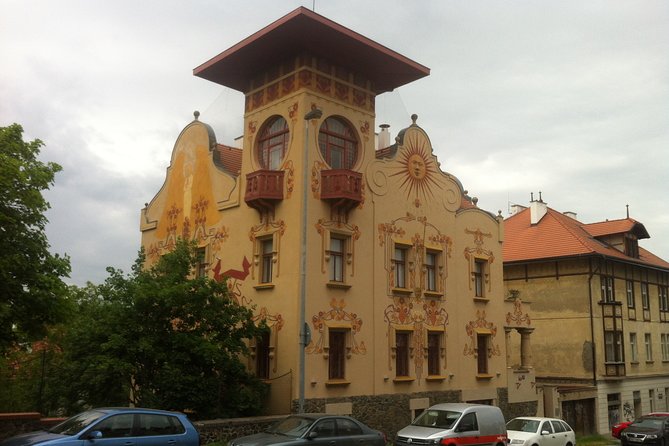
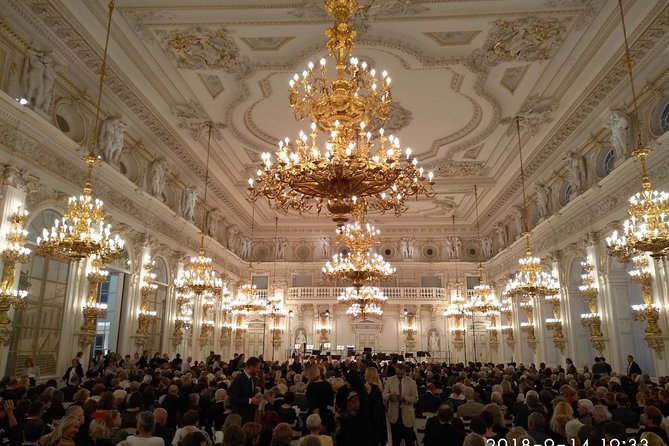
If time allows, the tour finishes at Obecní dům, Prague’s Municipal House. The building is considered the city’s finest Art Nouveau structure and contains a concert hall, exhibition space, restaurants, and an ornate café.
The planned stop lasts about 30 minutes and has no listed admission charge. The café offers a natural place to sit with coffee while Günther explains how Art Nouveau developed.
Ending here gives the day a satisfying final chapter. You begin with medieval streets and Gothic architecture, pass through religious and political struggles, and finish with the artistic confidence of modern Prague.
The stop is conditional on time, so it may disappear if earlier visits take longer. That is not necessarily a flaw. A relaxed Castle or museum visit may be worth more than a rushed coffee stop.
Walking, transport, and physical effort
This is a walking tour with some public transportation. Pickup is offered, and the route begins with a tram ride to the Castle area, but you should still prepare for a full day on your feet.
The itinerary includes narrow streets, hills, bridge crossings, and several neighborhood changes. One direct review calls the outing intensive and urges you to wear your best walking shoes. That is sound advice.
The tour requires a moderate level of physical fitness. Bring water, even though bottled water is included, and dress for the weather. The experience requires good weather, and poor conditions can lead to a new date or a full refund.
Because this is a private activity, you can ask for breaks or adjustments. The guide has also helped with practical emergencies, including locating a pharmacy, communicating with staff, assisting with police and embassy procedures after a wallet theft, and helping sick clients find soup and drinks. Those actions are not part of the formal itinerary, but they show the level of personal support you may receive from Günther.
What the $216.25 price buys you
At $216.25 per person, this is not a budget walking tour. The price makes the most sense when you want a private guide for the full day and plan to ask plenty of questions.
You are paying for more than admission and transport. You get a route adjusted to your group, direct conversation with Günther, crowd-avoidance decisions, and explanations that connect architecture with Czech society and politics.
The value improves for a small group, especially if everyone shares an interest in history, art, or architecture. Group discounts are offered, though the exact terms are not provided. Admission to Loreta and Museum Kampa is extra, and dinner is not included.
If you want a short orientation or a low-cost introduction, choose something shorter. If you want one person to help you understand Prague and offer ideas for the rest of your stay, this price can be reasonable.
Who should book it
I would choose this tour if you like cities explained through their buildings and people. It is especially suited to first-time visitors who want a strong foundation, as well as returning visitors who have already seen the main sights and want less familiar streets.
It also suits people who value flexibility. The route can change based on crowds, your health, what you have already visited, and the subjects you want to discuss.
You should think twice if your main interest is Prague after 1900. The tour leans heavily toward medieval and early modern history, though it also covers independence, modern art, Art Nouveau, and twentieth-century stories such as the Lennon Wall.
The walking demands matter, too. This is not a gentle sightseeing ride. You will cover a large section of the city over about seven hours.
Should you book the Ultimate Prague History Tour?
Book it if you want Prague to make sense, not just look pretty. Günther’s strength is the connection between places: Gothic design and politics, churches and religious struggle, art and national identity, bridges and city growth.
The best reason to book is the private format and the guide’s ability to adapt. The best reason to hesitate is the cost, extra admission fees, and demanding pace.
For a history-minded couple, family, or small group that wants a personal day with a strong local guide, this is a solid choice. Wear good shoes, tell Günther what interests you, and ask in advance about interior admissions and the possible French Embassy visit.
FAQ
How long is the Ultimate Prague History Tour?
The tour lasts approximately seven hours.
What is the price?
The listed price is $216.25 per person. Group discounts are offered.
Is this a private tour?
Yes. Only your group participates.
Is hotel pickup available?
Pickup is offered, and Günther will pick you up personally anywhere within the defined service area.
What language is the tour offered in?
The tour is offered in English.
Is transportation included?
The experience uses some public transportation, including a tram at the beginning of the route. Bottled water is included.
Are entrance fees included?
Admission is not included for Loreta Praha or Museum Kampa. The Castle portion is flexible, and the plan for walking through it is decided on site.
Does the tour include dinner?
No. Dinner is not included.
How much walking is involved?
The tour is primarily on foot and requires a moderate level of physical fitness. Good walking shoes are recommended.
Can the tour be canceled for bad weather?
Yes. The experience requires good weather. If it is canceled because of poor weather, you will be offered another date or a full refund. You can also cancel up to 24 hours before the start time for a full refund.
Recently added around Prague
- St Vitus Cathedral and Prague Castle Private Walking Tour★ 4.0 · 3 reviews
- Prague: Old Town and Jewish Quarter Small-Group Tour★ 5.0 · 3 reviews
- Royal Splendor Unveiled Private Prague Castle Interior Tour★ 3.5 · 3 reviews
- Prague Castle Interiors & Changing of the Guard-Small group★ 5.0 · 3 reviews
- Prague: Bohemian & Saxon Switzerland National Park Day Trip★ 5.0 · 3 reviews
- Running Tour of Prague. Your private 6-9K intro★ 5.0 · 3 reviews
- PRAGUE AIRSOFT SHOOTING GAMES★ 4.7 · 3 reviews
- Private walking tour and Boat cruise Best of Prague★ 5.0 · 3 reviews
Historical Tours, compared.
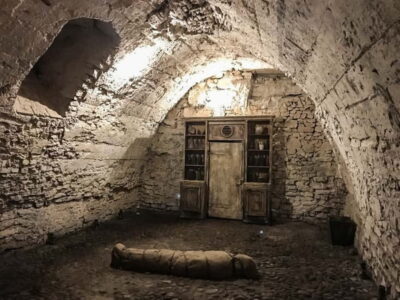
Oldtown, Medieval Underground & Dungeon History Tour
Read our review →
Prague Old Town, Medieval Underground and Dungeon Historical Tour
Read our review →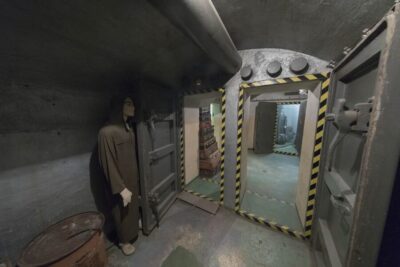
Communism History and Nuclear Bunker Guided Tour
Read our review →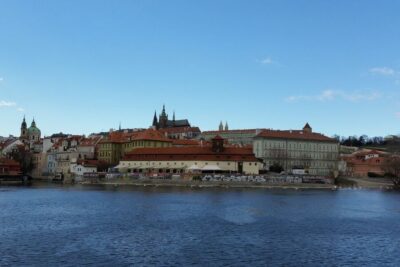
Historic City Center Bus Tour with Top Sights
Read our review →
Prague Historic Pub Tour with Drinks Included
Read our review →
Prague Communism History and Nuclear Bunker Tour
Read our review →
Hop-on Hop-Off Historical Tram Ticket for Line 42
Read our review →
Top Sights and Historic Center Introduction Tour
Read our review →Browse the lists this tour appears in