
Reviewed · COMMUNISM AND COLD WAR TOURS
Prague Communism History and Nuclear Bunker Tour
Four floors below Prague, a Cold War bunker turns political history into something you can feel in your legs and see in concrete. Before you go underground, this tour walks through the streets where secret police, Soviet tanks, student protests, and the 1989 Velvet Revolution shaped modern Czech life.
I like the mix of real city locations and the bunker museum. I also like the chance to hear personal memories from guides such as Stan, Pavel, Ladislav, and Lada, several of whom grew up under communism. The main drawback is that the quality depends heavily on the guide, and some groups spend too much time on personal commentary or repeated points.
Key points to know before booking
- The bunker sits four floors underground: Expect stairs, ramps, narrow spaces, and a museum built around Cold War survival.
- The walking portion connects major events: You visit the former secret police cells, the Velvet Revolution Memorial, Národní třída, and Wenceslas Square.
- Personal stories can make the history feel immediate: Guides have shared memories of growing up under the communist regime and, in some cases, leaving Czechoslovakia.
- Transport to the bunker is included: The journey can include a Prague tram ride, and transport back to the original meeting point is covered.
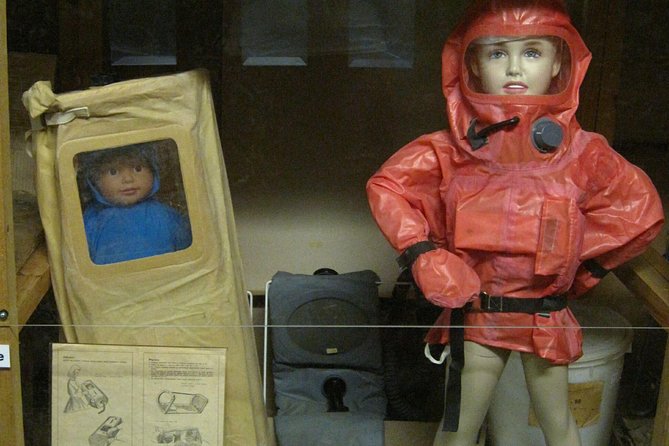
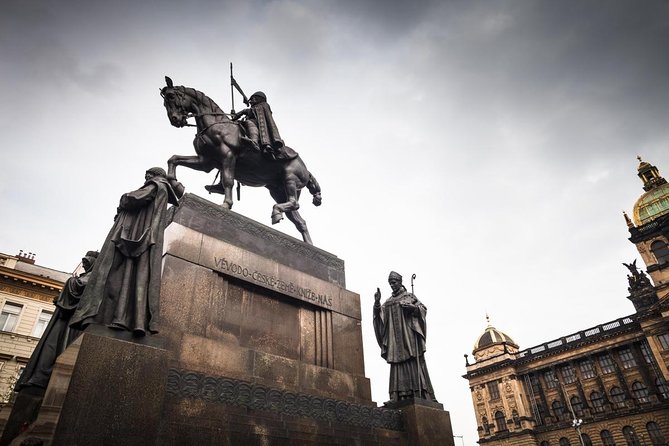
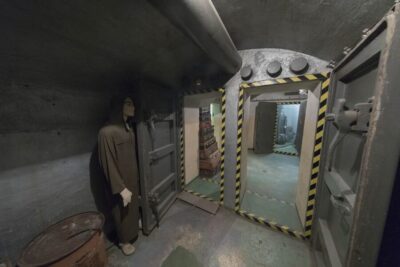
- This is not a polished museum tour: The bunker uses mannequins, old equipment, and 1980s objects, with a plain, no-frills presentation.
- Plan for a full 2 hours and 20 minutes: The time can vary by 10 to 15 minutes, and the bunker alone takes about an hour.
Why Prague’s communist past works best on foot
Prague’s medieval center gets most of the attention, but the city’s modern political story happened on the same streets you cross for cafés and churches. This tour gives those familiar places a different meaning.
You begin at Malé Náměstí, inside a passage about 20 meters to the right of Hotel U Prince. The ticket office is easy to miss, so arrive with enough time to locate the passage rather than searching at the last minute. From there, the guide leads the group through central Prague before the trip to the bunker.
The route is useful because it links events instead of treating them as isolated dates. You hear about the communist period, the Soviet invasion of August 1968, Alexander Dubček, and the Velvet Revolution of 1989. The history reaches back to the period between the world wars and the Second World War, then moves into the Cold War and the end of communist rule.
I find this approach more helpful than visiting a bunker alone. A room full of old objects can be hard to interpret. The city walk gives you the political setting first, so the underground museum has a clearer purpose.
More communism and Cold War walks:
- Prague: Communism History and Nuclear Bunker Guided Tour
★ 4.7 · 2,417 reviews - Communism & Nuclear Bunker Tour + 70s Canteen Lunch (own expense)
★ 5.0 · 1,036 reviews - Prague: Communism and Bunker Tour with 70s Canteen Lunch
★ 4.8 · 250 reviews
The former StB holding cells and Václav Havel
One of the first meaningful stops is the former secret police building and its holding cells. The StB was the communist-era state security service, and this location offers a direct reminder that political control was not just an idea discussed in government offices. People could be watched, questioned, detained, and pressured.
The stop is brief, about 10 minutes, so do not expect a long museum visit inside the building. Its value comes from hearing the story tied to the site, including the experiences of Václav Havel, the playwright, dissident, and later president.
This is one place where the guide matters a great deal. A good guide can explain how a building connected to state security fits into Havel’s life and the broader opposition movement. A weaker presentation may reduce the stop to a quick address and a few general remarks.
Národní třída and the Velvet Revolution
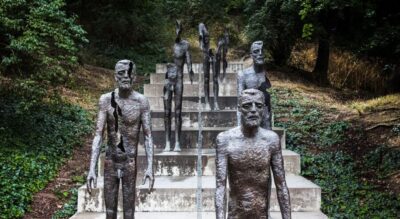
At the Velvet Revolution Memorial, the focus shifts to the events of 1989. The memorial marks the student demonstration and police crackdown that helped set off the final collapse of communist rule in Czechoslovakia.
The next stop at Národní třída adds physical context. This was not simply a change announced from above. Public protests, student action, civic pressure, and growing opposition made the old system impossible to maintain.
You have about 10 minutes at each of these stops. That is enough to hear the basic story and see the location, but it is not enough for a full lecture on the revolution. If you want dates, names, and political detail, listen closely and ask questions at natural pauses.
Some guides bring humor to difficult material. That can help keep a long history walk from becoming heavy. Still, the best experience comes when humor supports the facts rather than replacing them.
Wenceslas Square and August 1968
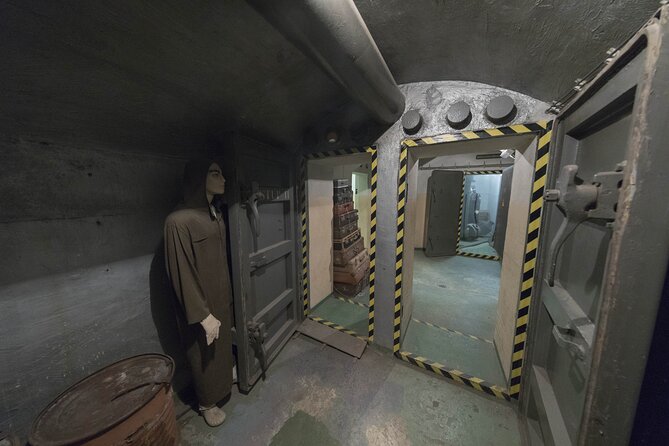
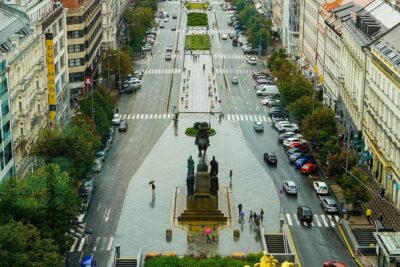
Wenceslas Square is one of Prague’s key public spaces, and the tour uses it to explain the Soviet-led invasion of August 1968 and the rise of Alexander Dubček.
This part is important because it shows that communist Czechoslovakia was not politically still throughout the Cold War. The reform period associated with Dubček raised hopes for a more open form of socialism. The invasion crushed those hopes and began a period of tighter control often called normalization.
The guide’s job here is to explain why 1968 still matters. It was not only a military event. It affected public life, careers, travel, speech, and the expectations of an entire generation. Guides who lived through communism can add a personal layer that a standard city walk cannot provide.
You may hear differing levels of detail. Several guides, including Pavel and Stan, have been praised for combining facts with personal stories. But the tour can feel thin if your guide focuses only on the message that communism was bad without explaining how ordinary people lived within the system.
More Historical Tours in Prague:
- Prague: Oldtown, Medieval Underground & Dungeon History Tour
★ 4.2 · 8,244 reviews - Prague Old Town, Medieval Underground and Dungeon Historical Tour
★ 4.5 · 3,227 reviews - Prague: Historic City Center Bus Tour with Top Sights
★ 4.4 · 2,360 reviews - Prague Historic Pub Tour with Drinks Included
★ 5.0 · 2,084 reviews
Olšanské náměstí and the concrete city
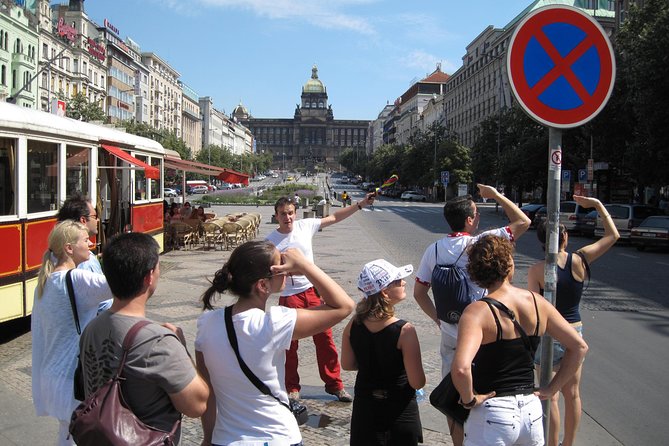
Olšanské náměstí lies in a former workers’ district with socialist-era buildings and concrete architecture from the 1970s. This stop is less dramatic than the revolution memorials, but it helps you see how ideology shaped daily surroundings.
The buildings here reflect the practical, heavy style associated with socialist construction. They are not decorative highlights, and that is precisely why the stop has value. You get a look at the city beyond Prague’s historic center, where housing and workers’ districts carried much of everyday life.
The stop is short, so you will not examine a whole neighborhood in detail. Think of it as a visual bridge between the political stories downtown and the bunker visit ahead.
Riding out to the nuclear bunker
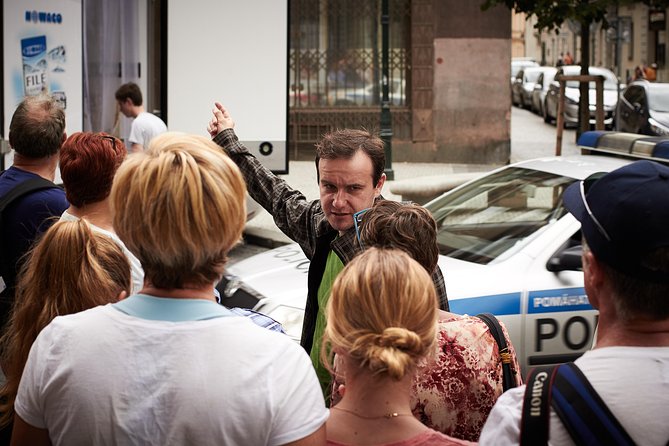
Transport to and from the bunker is included in the price. Some tours use a Prague tram, which adds a pleasant local touch and lets you see a bit more of the city between the walking route and the museum.
One caution: the ride takes time. A long transfer can use a noticeable part of the 2-hour, 20-minute experience. If you are expecting two and a half hours of constant historical commentary and museum time, adjust your expectations.
On the other hand, the journey helps the tour feel like an outing rather than a single room underground. You are moving from public squares and protest sites to a facility built around the fear of nuclear war.
Group size is capped at 26 people. That is large enough for the guide to have to manage a crowd, but small enough to remain workable in the bunker. A smaller group can make the questions and underground movement easier.
Inside the bunker, one hour below Prague
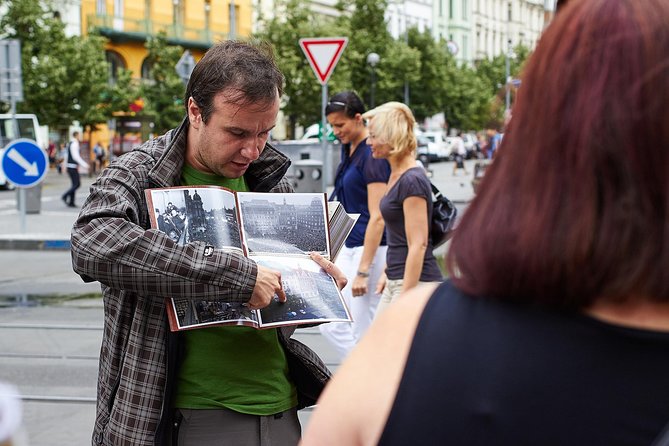
The nuclear bunker is the main event. It lies four floors underground and operates as the Prague Nuclear Bunker Communism and Cold War Museum.
Expect a plain presentation rather than a high-tech attraction. Displays include mannequins, Cold War equipment, and 1980s memorabilia. Some objects may feel loosely connected to Czech history, and the collection can seem like a mixed group of artifacts rather than a tightly arranged museum.
That limitation is worth knowing before you pay. If you want a large, carefully designed museum with extensive labels and a clear academic structure, this may disappoint you. The bunker is strongest as a physical space. The concrete corridors, stairs, ramps, and underground rooms give you a direct sense of the fear that shaped civil-defense planning.
The museum visit lasts about an hour. You will see emergency facilities and survival-related material, while the guide explains how a nuclear attack was imagined and how people were expected to respond. The included photo booklet and bunker survival guide give you something to read afterward.
There are lots of steps and some ramps. Comfortable walking shoes are essential. People with claustrophobia, serious heart issues, high-stage pregnancy, or mobility problems should think carefully before booking. The activity is not suitable for people with walking disabilities or significant mobility issues, and the smallest children below school age are not allowed.
The value of personal stories
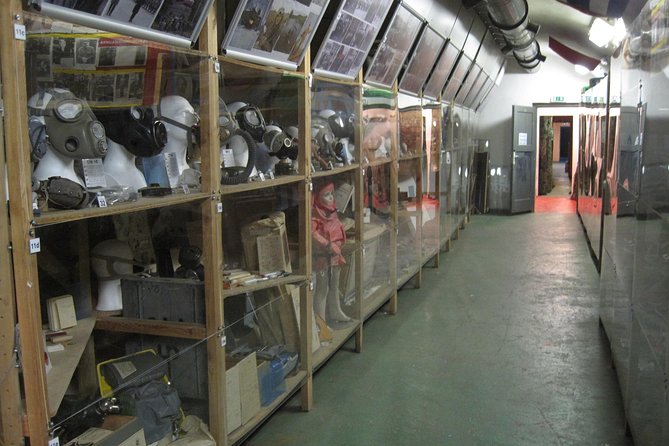
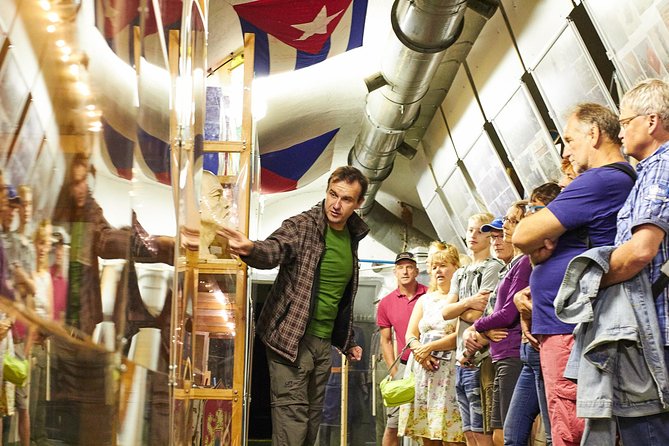
The strongest part of this experience may be the guide rather than the bunker itself. Guides named Stan, Pavel, Lada, Ladislav, Karl, and Tom have all been singled out for different strengths, including humor, energy, historical detail, and memories of life under communism.
A guide who grew up in the system can explain details that are difficult to get from a display case. Personal memories can show how political rules affected school, work, family life, speech, and travel. One guide has been described as having escaped through Yugoslavia to Italy during the Cold War, while another shared what it was like to grow up in Czechoslovakia from the 1960s onward.
You should also recognize the risk. Personal experience can make history powerful, but it can also produce a one-sided presentation. Some guides may return often to the same points or spend too much time on subjects that do not help explain the specific site. The best guides combine their own memories with clear historical context and allow space for questions.
The tour is conducted in one fixed language, with a live guide. You must speak the selected language. Translation during the tour is not allowed, which keeps the group moving but makes the language choice important.
What $45.16 gets you
At $45.16 per person, this is not the cheapest way to learn about Prague’s communist past. The price includes the English-speaking guide, entrance to the bunker museum, transport to and from the bunker, a photo booklet, and a bunker survival guide.
The value depends on what you want. If the bunker is your main goal, the included admission and transport make the package convenient. If you are mostly interested in the Velvet Revolution, you could see several central sites independently, though you would lose the guide’s explanations and the connection between them.
I consider the price reasonable for a focused history experience, especially if your guide is one of the strong storytellers. It is less appealing if you expect a large museum collection or a long, detailed treatment of everyday life under communism.
A 95 percent recommendation rate and a 4.8 rating from 1,742 ratings suggest that the tour works very well for many people. Still, the lower ratings point to real concerns: one participant felt the bunker portion was underwhelming, another found the historical context too limited, and others thought the tour was expensive or poorly paced.
That spread tells you how to book wisely. Choose it for the guide-led route and the physical experience of entering a Cold War bunker, not as the only serious study of Czech communist history.
Practical details that affect your day
The tour begins and ends at Malé Náměstí 459/11 in Prague’s Old Town. The meeting point is inside the passage near Hotel U Prince, not directly on the square. Online tickets can be made up to 30 minutes before departure, but once the group leaves, joining later is not guaranteed.
The full experience usually takes about 2 hours and 20 minutes, with a possible variation of 10 to 15 minutes depending on group size. Keep the rest of your schedule flexible.
Wear normal walking shoes. You will walk through the city, ride transport, and handle stairs and ramps underground. Photos are allowed, but video recording requires special permission.
The tour is not for bachelor parties, costumed groups, pets, smoking, or disruptive behavior. Alcohol and drug impairment are not allowed. Those rules make sense in a confined bunker, where the guide needs to keep everyone together and safe.
Free cancellation is available if you cancel at least 24 hours before the start time. Inside that 24-hour window, you should expect no refund.
Who should book this experience
I would choose this tour if you want recent Czech history placed on real streets rather than presented only in a museum. It suits adults, older children above school age, and anyone interested in the Cold War, Soviet influence, political protest, or the fall of communism.
It is also a good choice if you enjoy guides who tell personal stories. The experience can be especially moving when the guide connects public events with memories of ordinary life.
I would skip it if you dislike underground spaces, have trouble with stairs, or want a quiet, self-paced museum visit. I would also look for another option if you already have a strong background in Czechoslovak history and want detailed political analysis. The short stops and uneven guiding may not give you enough depth.
Should you book the Prague bunker tour?
Book it if you want a compact introduction to Prague’s Cold War past, a walk through Velvet Revolution locations, and the unusual experience of entering a four-floor nuclear bunker. The combination is practical and distinctive, and strong guides such as Stan, Pavel, or Lada can make the history personal.
Go in expecting a simple museum, not a polished exhibition. Allow the full 2 hours and 20 minutes, wear good shoes, and keep your expectations centered on storytelling and atmosphere. For the right audience, this is one of the more unusual ways to see Prague beyond its medieval streets.
FAQ
Where does the Prague Communism History and Nuclear Bunker Tour start?
It starts at the ticket office inside the passage at Malé Náměstí 459/11, about 20 meters to the right of Hotel U Prince in Prague’s Old Town.
Where does the tour end?
The tour ends at the same Malé Náměstí 459/11 location where it begins.
How long does the tour last?
The tour lasts about 2 hours and 20 minutes. The total time can vary by 10 to 15 minutes depending on group size.
Is transport to the bunker included?
Yes. Transport to the bunker and back to the original meeting point is included in the tour price.
What is included in the admission price?
The price includes entrance to the Nuclear Bunker Museum, a live guide in the selected language, transport, a photo booklet, and a bunker survival guide.
Is the tour conducted in English?
An English live guide is available when English is selected at booking. You must speak the chosen tour language, and translation into other languages is not allowed during the tour.
Is the bunker suitable for people with claustrophobia?
No. The tour is not recommended for people with claustrophobia. It is also not recommended for people with serious heart issues or similar medical concerns.
Does the tour involve stairs?
Yes. The bunker is four floors underground, and the experience involves many stairs and ramps. Comfortable walking shoes are recommended.
Can I cancel for a full refund?
Yes, if you cancel at least 24 hours before the experience begins. Cancellations or changes made less than 24 hours before the start time are not refunded.
Recently added around Prague
- St Vitus Cathedral and Prague Castle Private Walking Tour★ 4.0 · 3 reviews
- Prague: Old Town and Jewish Quarter Small-Group Tour★ 5.0 · 3 reviews
- Royal Splendor Unveiled Private Prague Castle Interior Tour★ 3.5 · 3 reviews
- Prague Castle Interiors & Changing of the Guard-Small group★ 5.0 · 3 reviews
- Running Tour of Prague. Your private 6-9K intro★ 5.0 · 3 reviews
- Prague: Bohemian & Saxon Switzerland National Park Day Trip★ 5.0 · 3 reviews
- PRAGUE AIRSOFT SHOOTING GAMES★ 4.7 · 3 reviews
- Private walking tour and Boat cruise Best of Prague★ 5.0 · 3 reviews
Communism and Cold War Tours, compared.
Communism History and Nuclear Bunker Guided Tour
Read our review →
Communism & Nuclear Bunker Tour + 70s Canteen Lunch (own expense)
Read our review →
Communism and Bunker Tour with 70s Canteen Lunch
Read our review →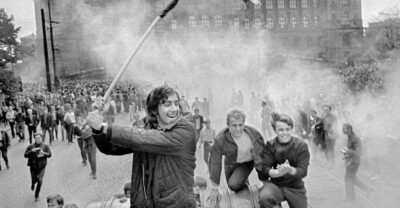
Second World War & Communism (Tip-based 3 hour tour)
Read our review →
Browse the lists this tour appears in