
Reviewed · HISTORICAL TOURS
Prague Literary & Historical Tours – Literature Route
Prague’s literary past is not confined to museums or famous statues. This two-hour walking route links pubs, streets, an island, and urban squares to the writers and political currents that shaped the city. Guide Fergus turns each stop into a chapter, moving from modern Prague back toward the nineteenth century.
I like two things right away: the route takes you beyond the usual Old Town circuit, and the stories connect literature with social change, scandal, language, and identity. The main consideration is focus. If you want grand interiors or a long list of monuments, this is not that tour. You are paying for thoughtful storytelling while walking outdoors, not admission to attractions.
Key points to know
- Five stops from Mariánské Square to Charles Square: The route crosses Old Town and New Town, ending near the New Town Hall and river promenades.
- Fergus leads the English tour: His approach links writers such as Hrabal, Kundera, and Kafka with Prague’s political and social past.
- The route moves backward through time: You begin near the busier central streets and finish with nineteenth-century literary figures near Charles Square.
- The interwar avant-garde gets its own chapter: Slovanský Ostrov, also known as Žofín, receives the longest stop at about 40 minutes.
- Small-group format: The maximum is 25 people, enough to keep the walk manageable without promising a private-tour feel.
- Good value at $21.66: There are no extra admission tickets on the route, so the fee mainly pays for the guide’s preparation and interpretation.
Prague’s writers are hiding in plain sight
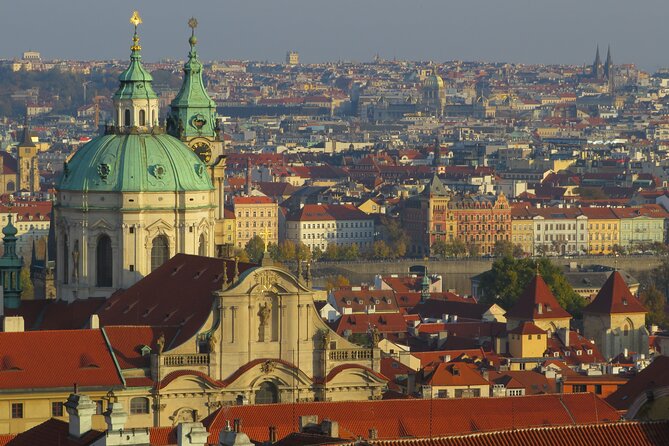
This experience works because it treats Prague as a working city rather than a backdrop. A café, a narrow street, or a leafy square can tell you as much about Czech literature as a formal museum, especially when someone explains who gathered there, what they argued about, and how the city’s political shifts affected their work.
Fergus is the guide named for this route, and his style appears to be the main reason the experience lands so well. He brings together literary figures, history, social conditions, and personal anecdotes. You should expect more than dates and book titles. The route may take you from a writer’s favorite gathering place to the larger question of how Czech, German, Jewish, and other communities shared, contested, and reshaped Prague.
That makes this useful even if you have not read much Czech literature. You do not need a degree in Kafka or Kundera to follow the walk. The stories are designed to explain what was happening around the writers, which gives their work a clearer setting.
More Historical Tours in Prague:
- Prague: Oldtown, Medieval Underground & Dungeon History Tour
★ 4.2 · 8,244 reviews - Prague Old Town, Medieval Underground and Dungeon Historical Tour
★ 4.5 · 3,227 reviews - Prague: Communism History and Nuclear Bunker Guided Tour
★ 4.7 · 2,417 reviews
Starting at U Zlatého tygra
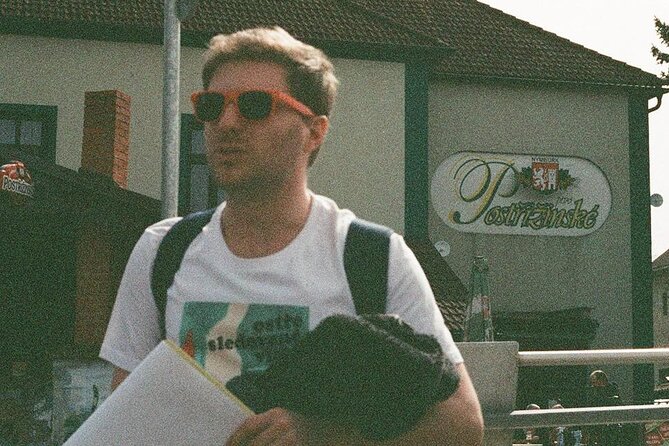
The first stop is U Zlatého tygra, a well-known Old Town pub. You spend about 20 minutes here, with admission included because the tour does not require a separate ticket at any stop.
The pub gives the walk an immediate sense of place. Rather than beginning with a dry lecture, Fergus uses a real Prague meeting place as the opening chapter. This is the sort of setting that helps literature feel connected to ordinary city life: people gathered, talked, argued, drank, and built friendships or rivalries.
The route also begins in the busier central streets, so you may be near the Prague most visitors already recognize. That is useful for orientation. As the walk continues, the streets and stories gradually move away from the standard sightseeing path.
Do not expect a long pub visit or a meal. The listed stop is about storytelling, not dining. If you want to sit down with a drink, you should treat that as a separate plan rather than part of the tour.
Bartolomějská and the pleasure of a reveal
The second stop is on Bartolomějská, where the group spends another 20 minutes. The subject is intentionally not laid out in advance, which gives this part of the route a small element of surprise.
That choice can work well on a literary walk. You are not simply checking off names you already know. You are asked to pay attention to the street and then connect it with a less obvious piece of Prague’s past.
This is also where Fergus’s storytelling matters. The route is designed around revelations, and the details may include drama, unusual personal stories, or facts that do not appear in a basic city guide. The tone is not solemn all the time. Expect some humor alongside darker or more melancholy episodes.
For me, this kind of stop is most valuable when you want to see Prague through a different set of clues. The street itself may not be a major attraction in the usual sense. Its importance comes from the people and events attached to it.
Forty minutes on Slovanský Ostrov, Žofín
The longest stop comes at Slovanský Ostrov, commonly called Žofín. Allow about 40 minutes here, almost one-third of the total tour.
The focus is Prague’s interwar avant-garde, a period when artists and writers were testing new forms while the city was adjusting to the birth of the First Republic. This is the strongest section for anyone interested in literary movements rather than only individual authors.
A longer pause makes sense here. Avant-garde culture can be hard to understand as a list of names, but it becomes easier when you hear how writers and artists related to the city around them. Fergus places personalities within their social and historical setting, helping you see why certain ideas took hold at that time.
The island also gives the walk a change of pace. After the central streets, the setting offers a more open break before the route continues. The information provided does not promise a formal view stop or a scheduled rest, so you should think of Žofín mainly as a storytelling location, not a separate sightseeing excursion.
This section should especially suit readers who like Hrabal, Kundera, or Prague’s modern cultural life. One of the most useful parts of the tour is the way it connects literary movements with political and economic changes, rather than treating books as isolated works.
A few more Prague half-days to weigh up
- Prague: 50-Minute Sightseeing Evening Cruise
★ 4.2 · 33,780 reviews - Prague: Medieval Dinner with Unlimited Drinks
★ 4.4 · 19,847 reviews - Prague: Skip-the-line Castle Ticket and Optional AudioGuide
★ 4.3 · 11,121 reviews - Prague: Castle Tour with Local Guide and Entry Ticket
★ 4.6 · 10,422 reviews
Pštrossova and Prague around the First Republic
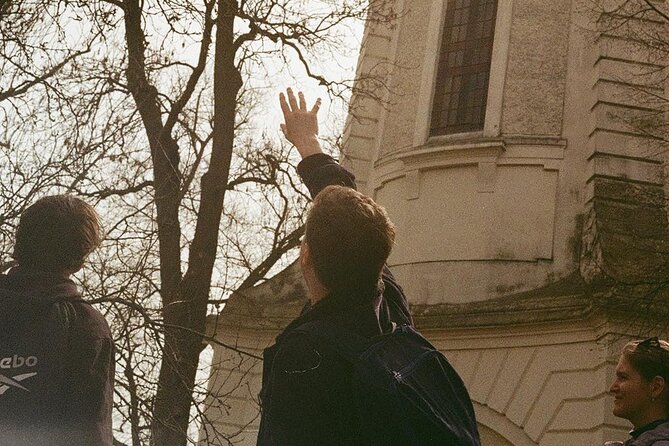
At Pštrossova, another 20-minute chapter brings the story to the start of the twentieth century and the birth of the First Republic. This was a city where several ethnic and language communities lived alongside one another, and that mix shaped Prague’s literary world.
The stop gives you a chance to think about identity in practical terms. Which language did writers use? Which audience did they address? How did different groups share the same streets while holding different ideas about the city and the new country around them?
That context is especially useful if your knowledge of Czech literature begins and ends with a few famous names. Prague’s literary story is not one straight line. It includes competing cultures, changing borders, different political systems, and writers who did not all experience the city in the same way.
The tour’s backward movement through time also becomes clearer here. You have started with more recent literary associations and are now working toward the nineteenth century. It is a smart structure because each stop adds another layer instead of presenting a disconnected sequence of facts.
Finishing among the trees at Charles Square
The walk ends at Karlovo náměstí, or Charles Square, after about 20 minutes at the final stop. Important nineteenth-century writers lived nearby, so the square provides a fitting close to the route.
Charles Square is a practical ending point. The tour finishes in New Town, near the New Town Hall and river promenades, rather than sending you back to the starting point. You can continue exploring from there, plan a meal, or simply use the square as a pause after the walk.
The setting also changes the mood. After conversations about pubs, urban streets, artistic circles, and political shifts, the greenery offers breathing room. The tour does not end with a museum visit or a grand theatrical finale. Instead, it leaves you in a real city square with more context for the streets you have crossed.
That understated finish suits the subject. Prague’s literary past is spread through the city. You are not being asked to admire one single monument. You are being encouraged to notice the places where writers lived, met, worked, and became part of the city’s story.
What Fergus adds to the experience
The guide is the heart of this tour. Fergus is repeatedly described as warm, clear, and able to handle both broad historical context and small, memorable details. His strongest skill seems to be making complicated periods understandable without flattening them.
You can expect the material to range from literary figures and movements to scandal, humor, and less cheerful episodes. The route includes discussion of Hrabal and Kundera, with references to Kafka and other writers connected to Prague. The emphasis is not simply on famous authors. It is on how their lives and work fit into the city’s changing social world.
I also like that the tour seems to work for different levels of preparation. If you already enjoy Czech literature, you may get more from the discussion of movements and historical context. If you know only a few names, the walk can give you a sensible starting point for further reading.
The group limit is 25 people. That is not the same as a private walk, but it is smaller than many large city tours. You should still expect to share the guide’s attention with others, particularly at busy streets or popular public spaces.
The $21.66 price and what you receive
At $21.66 per person, this is a modestly priced cultural walking tour. Since the route uses public streets, a pub exterior or interior setting, an island, and squares rather than paid monuments, there are no extra admission costs built into the experience.
That means the value depends on the guide. You are not paying for an expensive entry ticket. You are paying for two hours of selection, research, explanation, and connections that would be difficult to assemble from a standard map.
I consider that fair value if you enjoy literature, urban history, or guided walks with a strong point of view. It is less compelling if you prefer sightseeing with lots of photo stops, interior visits, or free time to explore alone.
The walk is offered in English, with a mobile ticket. Most people can take part, service animals are allowed, and the route is near public transportation. The provided details do not state the total walking distance or the surface conditions, so wear sensible shoes and be ready to remain outdoors for roughly two hours.
Who should book this literary route?
I would choose this tour if you have an interest in Kafka, Kundera, Hrabal, Czech writers, or the cultural life of Central Europe. It also fits you if you have already seen Prague’s major sights and want a second look at streets you might otherwise pass without noticing.
It is a good pick for readers who enjoy context. Fergus links literature to economics, politics, ethnic communities, and personal drama, so you get a sense of why writers mattered in their own time.
You do not need to be a literary expert. The explanations are meant to make the period understandable, and the stories include enough humor and human detail to keep the walk moving.
I would hesitate to book it for very young children unless they already enjoy stories about writers and history. The tour is also not the best fit if you want a relaxed ride, a short route with little standing, or a conventional list of Prague’s top monuments.
The experience has a maximum of 25 participants and received a 5 out of 5 rating from 10 submitted reviews, with 100 percent recommending it. That is a small sample, but it supports the clear pattern: Fergus’s storytelling and the unusual subject are the main attractions.
A few practical points before you go
The meeting point is Mariánské náměstí 2/2 in Prague’s Old Town. The walk ends at Karlovo náměstí 550/35 in New Town, near the New Town Hall and river promenades, so plan your next activity from the finish rather than assuming you will return to Old Town.
Confirmation arrives when you book, and the mobile ticket keeps the process simple. Free cancellation is available up to 24 hours before the start time for a full refund. Cancellations or changes made less than 24 hours before the start time are not accepted for a refund.
The activity is offered in English. Since each stop is outdoors or in public urban space, check the weather before setting out and allow yourself enough time to reach the Old Town meeting point.
Should you book Prague’s Literature Route?
Book it if you want Prague explained through its writers, arguments, friendships, and changing communities rather than through its postcard buildings alone. The combination of U Zlatého tygra, Bartolomějská, Žofín, Pštrossova, and Charles Square gives you a route with a real sense of progression.
The best reason to go is Fergus. His ability to connect Hrabal, Kundera, Kafka, avant-garde culture, and Prague’s political past gives the walk a clear purpose. The main limitation is just as clear: this is a storytelling walk, not an attraction-packed sightseeing tour.
At $21.66, I think it is a strong choice for readers and curious first-time visitors, especially if you want to leave Prague with a better understanding of what happened behind the city’s familiar façades.
FAQ
Where does the Literature Route begin?
The tour begins at Mariánské náměstí 2/2, 110 00 Praha 1-Staré Město, Prague.
Where does the tour end?
It ends at Karlovo náměstí 550/35 in New Town, near the New Town Hall and river promenades.
How long does the tour last?
The tour lasts approximately two hours.
What language is the tour offered in?
The tour is offered in English.
Who guides the Literature Route?
The named guide for this experience is Fergus.
How many people can join the tour?
The maximum group size is 25 travelers.
Are admission tickets included?
Each listed stop has free admission, so no separate admission ticket is required for the route.
Can I cancel for a full refund?
Yes. You can cancel at least 24 hours before the experience start time for a full refund. Changes or cancellations made less than 24 hours before the start time are not accepted for a refund.
Recently added around Prague
- St Vitus Cathedral and Prague Castle Private Walking Tour★ 4.0 · 3 reviews
- Prague: Old Town and Jewish Quarter Small-Group Tour★ 5.0 · 3 reviews
- Prague Castle Interiors & Changing of the Guard-Small group★ 5.0 · 3 reviews
- Royal Splendor Unveiled Private Prague Castle Interior Tour★ 3.5 · 3 reviews
- Prague: Bohemian & Saxon Switzerland National Park Day Trip★ 5.0 · 3 reviews
- Running Tour of Prague. Your private 6-9K intro★ 5.0 · 3 reviews
- Discover Prague’s most Photogenic Spots with a Local★ 3.5 · 3 reviews
- PRAGUE AIRSOFT SHOOTING GAMES★ 4.7 · 3 reviews
Historical Tours, compared.
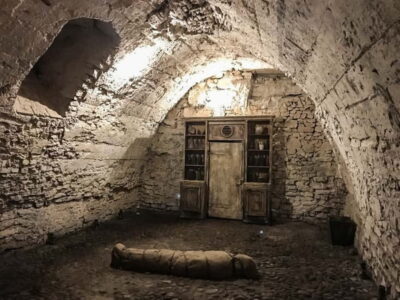
Oldtown, Medieval Underground & Dungeon History Tour
Read our review →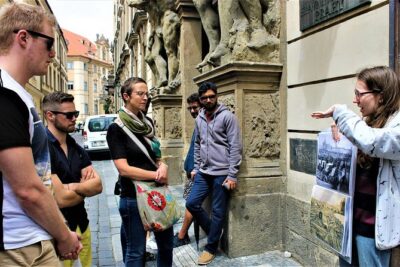
Prague Old Town, Medieval Underground and Dungeon Historical Tour
Read our review →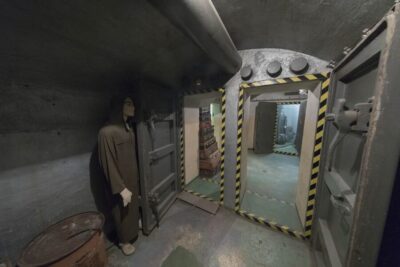
Communism History and Nuclear Bunker Guided Tour
Read our review →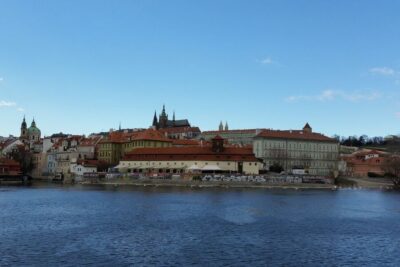
Historic City Center Bus Tour with Top Sights
Read our review →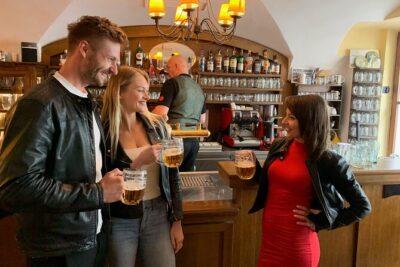
Prague Historic Pub Tour with Drinks Included
Read our review →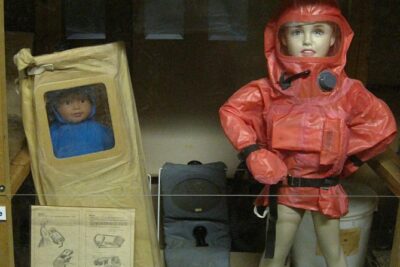
Prague Communism History and Nuclear Bunker Tour
Read our review →
Hop-on Hop-Off Historical Tram Ticket for Line 42
Read our review →
Top Sights and Historic Center Introduction Tour
Read our review →Browse the lists this tour appears in