
Reviewed · HISTORICAL TOURS
Prague: Historical Walking Tour with Focus on World War 2
Prague’s World War II story comes into sharp focus on this three-hour walking tour. You move from classroom-style background to real streets, former Nazi sites, uprising battle grounds, and the church crypt where resistance fighters made their last stand. I like the clear Czech point of view and the way the guide uses photographs to connect today’s Prague with wartime scenes. I also like the stop at the former Gestapo headquarters, where a minute of silence gives the subject proper weight.
This is serious material, not a light city stroll. The pace can be brisk, and one lower-rated experience found some explanations too limited at major sights. You’ll get the most from it if you already care about modern European history and are comfortable with difficult subjects.
Key points at a glance
- The Heydrich assassination takes center stage: Follow the plot, its consequences, and the resistance fighters’ final stand in the church crypt at Resslova 9a.
- Prague’s May 1945 uprising comes alive: Visit Old Town Square, Wenceslas Square, and the Czech Radio headquarters, all linked to the heaviest fighting.
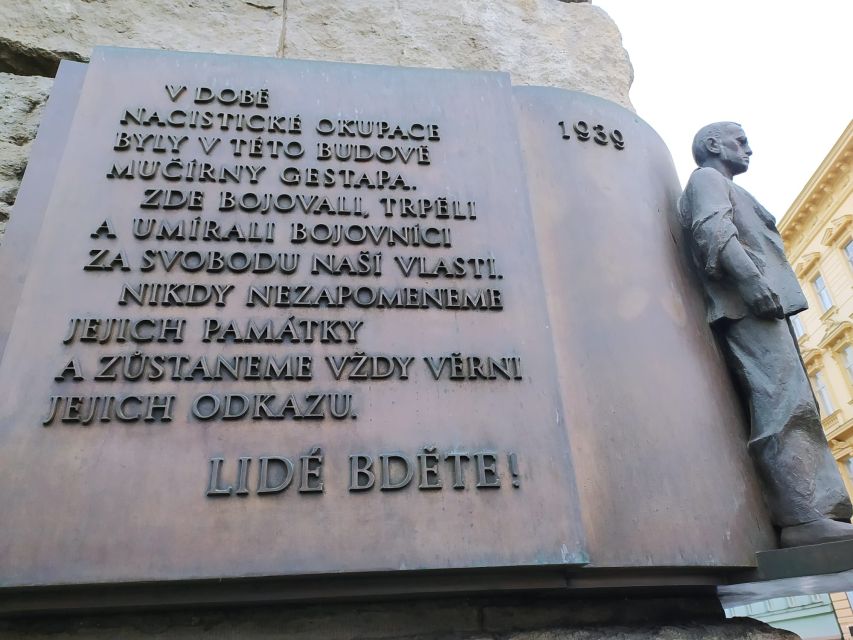
- The former Gestapo headquarters carries real emotional weight: Pause for a minute of silence at the memorial to victims of Nazism.
- Photographs add useful context: The guide shows wartime images while explaining what you are seeing in the present-day city.
- The tour can be private: This is useful if you want more time for questions or prefer a smaller, more personal setting.
- English, German, and Czech are offered: Comfortable walking shoes are essential, and children under 10 cannot join.
Why this Prague history walk feels different
Many city tours touch on the Second World War for a few minutes, then rush back to castles, churches, and royal stories. This one gives the war its own three-hour frame. You begin with a substantial introduction to the conflict and Czech history, then test that background against actual locations.
That order matters. Without context, a former headquarters or a square can look like another attractive Prague address. With the guide’s explanation and old photographs, the places gain a human scale. You can compare the wartime scene with the modern street in front of you.
I especially like the balance between broad history and specific episodes. The tour covers the occupation and the Czech wartime experience, but it does not stop there. It focuses closely on Reinhard Heydrich, one of the highest-ranking Nazis until his death in 1942, and on the Prague Uprising of May 1945.
The subject is painful. Expect discussion of Nazi rule, repression, resistance, assassination, and death. This is not the right outing for a young family looking for an easy introduction to Prague. The minimum age is 10, and older children should already be ready for sober historical material.
More Historical Tours in Prague:
- Prague: Oldtown, Medieval Underground & Dungeon History Tour
★ 4.2 · 8,244 reviews - Prague Old Town, Medieval Underground and Dungeon Historical Tour
★ 4.5 · 3,227 reviews - Prague: Communism History and Nuclear Bunker Guided Tour
★ 4.7 · 2,417 reviews
Beginning with the Czech side of World War II
The opening lecture gives you a framework for the walk. You’ll hear details about Czech history and the country’s place in World War II before setting off to the physical sites.
The supplied details do not set out the exact length of the introduction, so you should allow for a fairly talk-heavy beginning. That is a plus if you enjoy political and military history. It may feel slow if you want to get moving immediately.
The guide supports the talk with many photographs and professional commentary. This is one of the tour’s strongest tools. A photograph can show barricades, uniforms, buildings, and crowds in a way that a spoken description cannot. It also helps you notice changes in streets and facades that you would otherwise miss.
A guide called Petr received particular praise for his grasp of history and present-day politics, as well as for sharing personal experiences of growing up in Prague. The exact guide can vary, but Petr’s approach gives you an idea of the personal tone possible on a private tour. You may get formal historical explanation, local memory, or both.
One caution: the range of guide experiences may not be perfectly even. One assessment found limited explanation at some major sights, while other feedback praised the guide’s preparation, friendliness, passion, and historical skill. I would ask questions as you go, especially if a stop feels underexplained.
The former Gestapo headquarters and a minute of silence
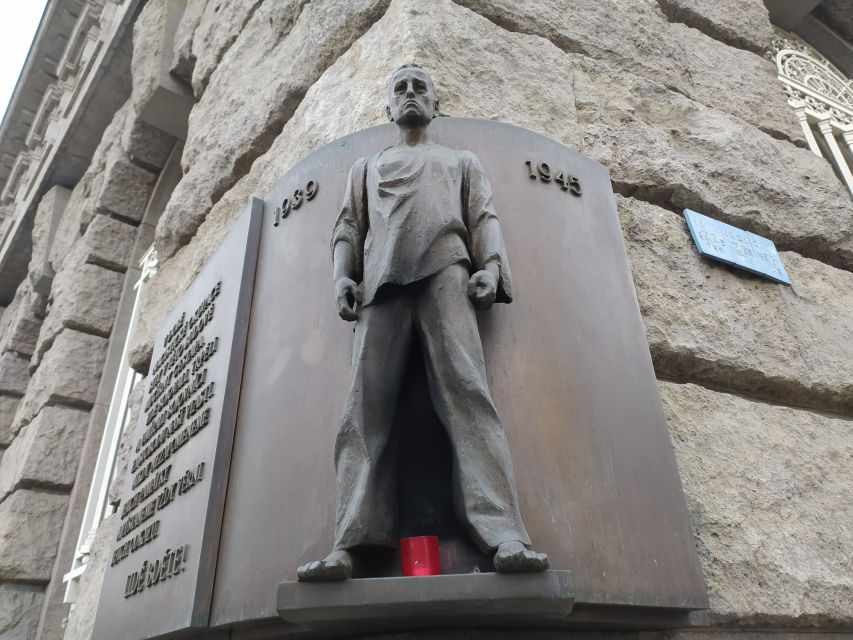
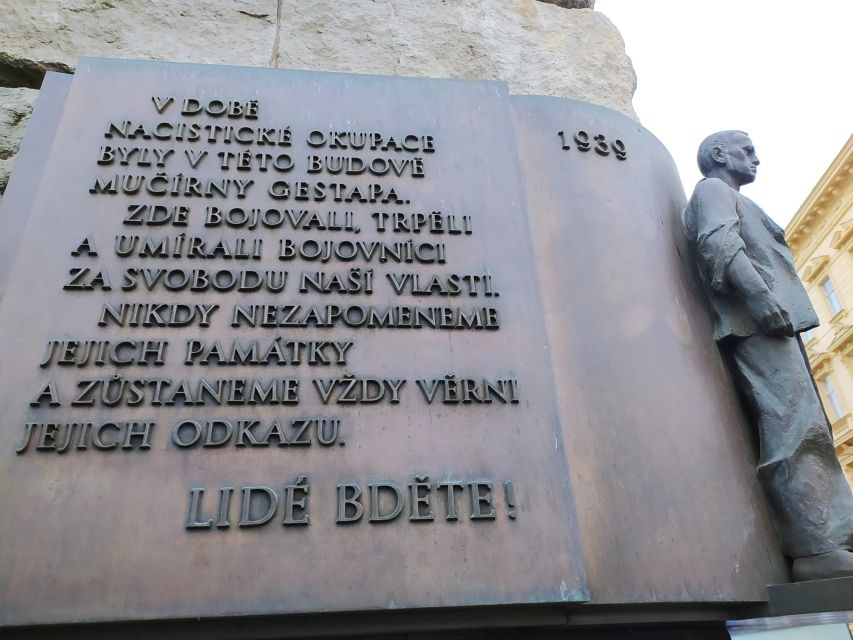
The visit to the former Gestapo headquarters is not treated as a quick photo stop. You hold a minute of silence at a memorial to the victims of Nazism.
That pause is important. It gives the tour a moment without commentary, facts, or movement. You are not simply collecting locations on a map. You are being asked to recognize what happened to people connected with this place.
The available details do not identify the building’s current use or describe its interior, so expect this part to focus on the site and memorial rather than a museum visit. That distinction matters when you compare the tour with a dedicated war museum or prison exhibition.
For me, this is the kind of stop that works best when the guide does not overtalk it. The minute of silence gives the history room to settle. Bring a respectful attitude and expect a quiet, serious atmosphere.
Old Town Square and Wenceslas Square in May 1945
The walking route then connects the Prague Uprising with two of the city’s best-known public spaces: Old Town Square and Wenceslas Square.
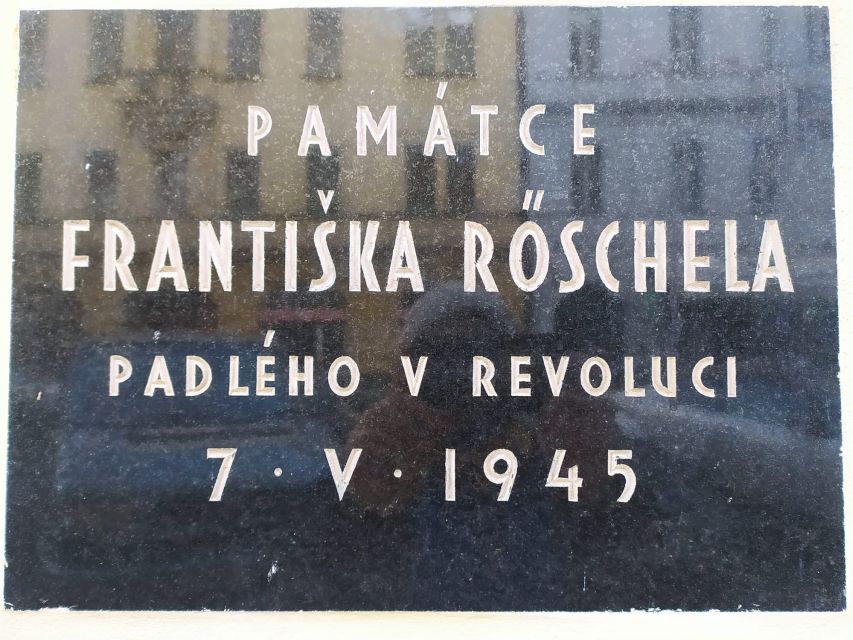
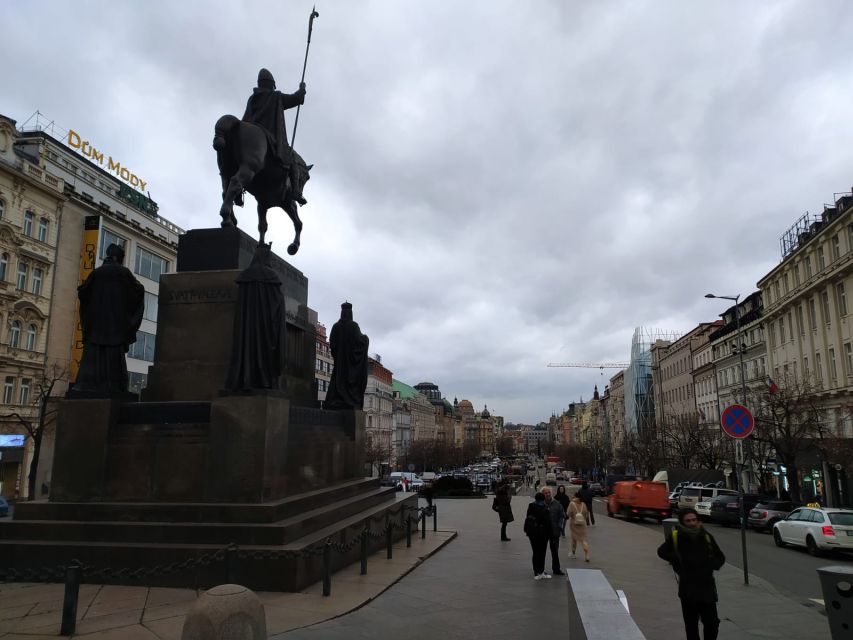
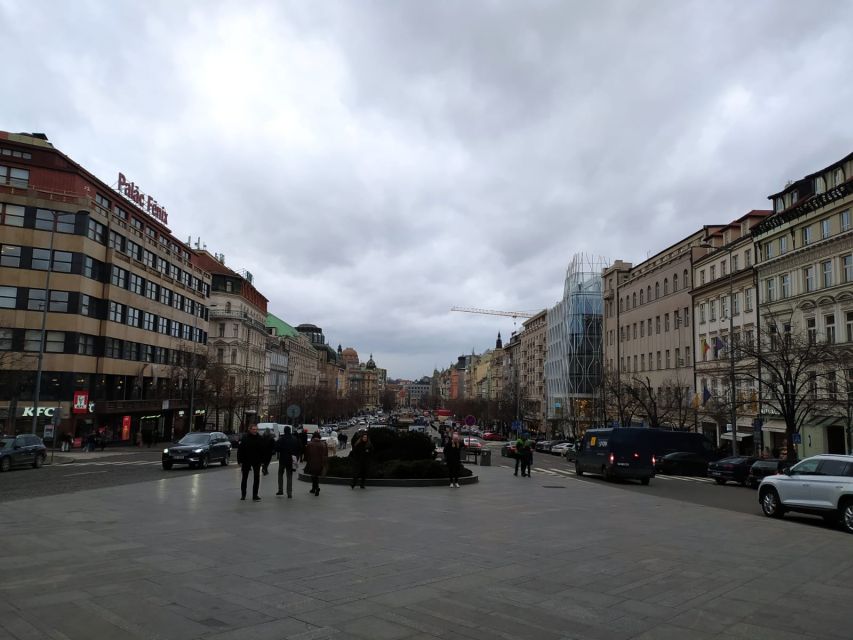
Today, these squares are among Prague’s main sightseeing areas. During the uprising in May 1945, they were linked to some of the heaviest fighting. The tour asks you to look beyond the polished city center and picture streets caught in open conflict.
Old Town Square is valuable here because it disrupts the usual postcard view. You may know it for its architecture and public life, but the wartime story adds another layer. The same is true of Wenceslas Square, where the guide’s photographs and commentary help place the 1945 events in their setting.
The information provided does not specify individual buildings, barricade positions, or the exact route between the squares. Do not expect a detailed reconstruction of every military movement. Instead, you get a guided connection between major places and the Czech experience of the final phase of the war.
This section should suit you if you like history attached to ordinary urban spaces. It is less suited to anyone expecting preserved battle ruins or a large collection of artifacts. The city itself is the setting, and the guide’s explanation does much of the work.
More Walking Tours in Prague:
- Prague: 3-Hour Walking Tour of Old Town & Prague Castle
★ 4.7 · 5,696 reviews - Prague: Ghost Walking Tour Where Legends Come To Life
★ 4.4 · 5,253 reviews - Prague: Jewish Quarter Walking Tour with Admission Tickets
★ 4.7 · 3,729 reviews - Prague Guided Walking Tour and Cruise with Authentic Czech Lunch
★ 5.0 · 3,627 reviews
Czech Radio headquarters and the final days of the war
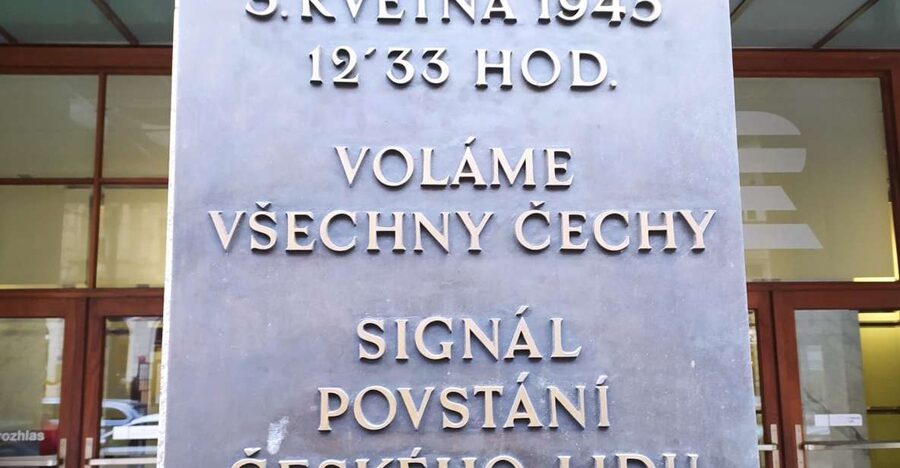
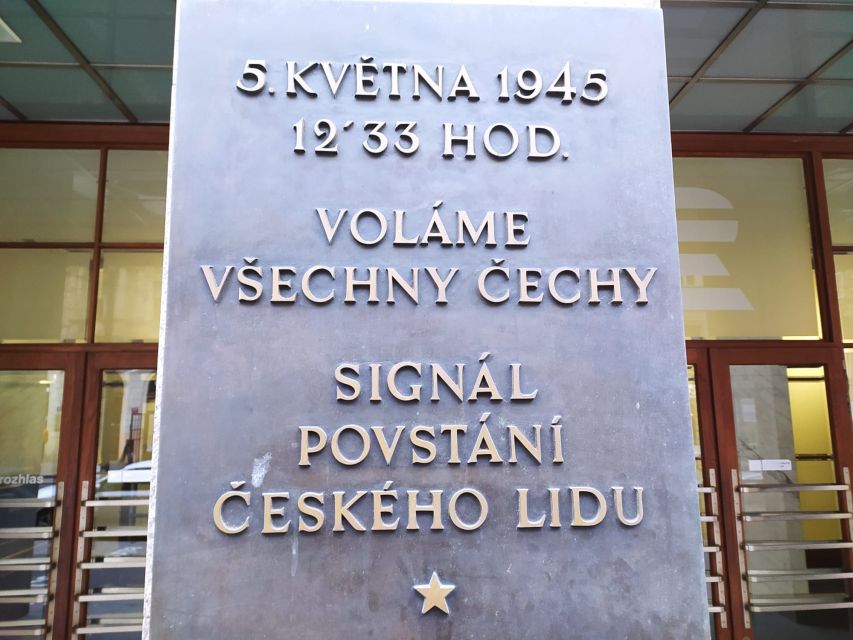
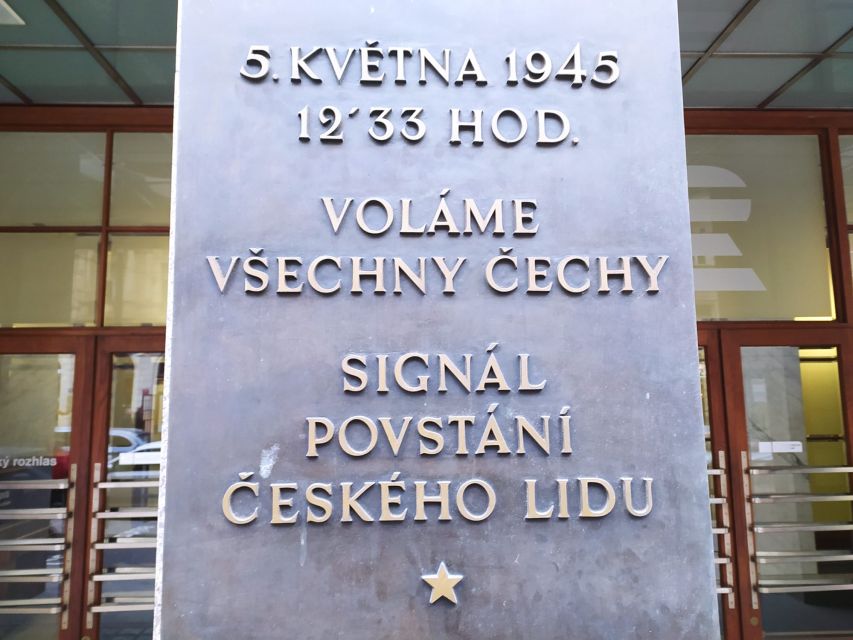
The Czech Radio headquarters is another key stop tied to the Prague Uprising. The station became an important location during the fighting, and the tour places it alongside Old Town Square and Wenceslas Square as one of the central battle sites.
This is a useful reminder that resistance was not only fought in military buildings. Communication mattered. Radio, public information, and control of the city’s message were part of the struggle.
Again, the tour description does not promise entry into the headquarters, so plan for an exterior visit and explanation rather than an indoor broadcast museum. The guide’s wartime photos should help you understand why the location mattered.
I appreciate that the route includes several uprising sites instead of reducing May 1945 to one dramatic anecdote. Three hours is not enough to cover every event, but the sequence gives you a usable map of the conflict in central Prague.
Reinhard Heydrich and the operation that changed Prague
The most focused section concerns Reinhard Heydrich’s assassination. The guide covers the operation in detail, explains Heydrich’s position within the Nazi leadership, and takes you to places connected with the resistance.
This subject has several layers. It is a story of planning and courage, but also of danger, retaliation, and the cost paid by people involved in or connected with the resistance. A responsible explanation needs more than a simple hero story, and the tour promises attention to the wider problem surrounding the assassination.
The word problemacy in the tour description points to that wider treatment. You should expect discussion of difficult choices and consequences, not just a dramatic account of the attack itself.
The guide’s photographs are especially useful here. They can show the people, uniforms, streets, and buildings connected with the event. You will not rely only on modern Prague, where the passage of time can make a major episode feel remote.
The exact details of the assassination route are not listed, so you should not assume every location involved in the operation is included. What is clear is that the assassination receives major attention and leads to the most powerful stop of the day.
The church crypt at Resslova 9a
The tour finishes at Resslova 9a in Prague 2, at the church crypt connected with the resistance fighters involved in Heydrich’s assassination. This was the place of their last resistance and deaths.
The description calls the crypt incredibly impressive. That reaction makes sense because the setting is close, enclosed, and directly tied to the final chapter of the operation. You are no longer hearing about resistance in general. You are standing at the place where those involved faced their last stand.
The finish point is specific: Resslova 9a, 120 00 Praha 2-Nové Město. That makes it easier to plan the rest of your day. You should also note that the tour ends there rather than returning to the starting point.
The crypt is likely to be the most memorable part for anyone interested in the period. It also carries the greatest emotional weight, so give yourself a little space afterward rather than scheduling an immediate demanding activity.
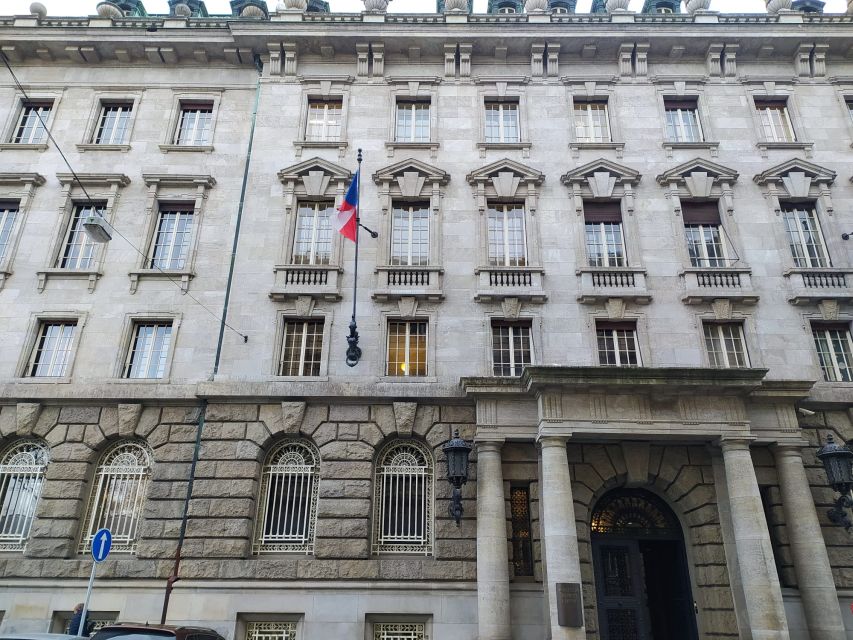
The tour begins outside the entrance to Skautský Institut in an archway. Look for a guide holding a paper marked Spectrum Tours. The starting location can depend on the option you select, so check your booking details carefully before setting out.
Three hours on foot, with a serious pace
Three hours is a useful length for this subject. It gives the guide time to explain the background, visit several locations, and cover the assassination without turning the experience into an all-day commitment.
You will need comfortable shoes. The route links several central Prague locations, and the information does not promise regular seating or long breaks. Even a mostly central walk can feel tiring if you are carrying luggage or have already spent the morning on your feet.
The tour is listed as wheelchair accessible, but the provided details do not explain the condition of every pavement, entrance, or the crypt itself. If access needs are important for you, confirm the practical route details before booking.
German, Czech, and English are available. Language choice can make a big difference here, since the tour depends on precise explanation rather than simple sightseeing labels.
Private groups are also available. I would consider that option if you want to stop often for questions, are traveling with serious history fans, or prefer a quieter tone for the material. A private setting may also help if your group wants the guide to spend more time on Czech politics and personal memories, as Petr did on one private outing.
Is the $58 price fair?
At $58 per person, this is not the cheapest way to walk around Prague. You are paying for a licensed local guide, three hours of focused subject matter, photographs, and access to a carefully connected set of historical locations.
The value depends on what you want from a tour. If you only need directions between Old Town Square and Wenceslas Square, the price is hard to justify. You can walk through those public spaces yourself.
If you want the history explained in place, the cost is more reasonable. The former Gestapo headquarters, the uprising sites, the Heydrich story, and the final crypt form a clear subject-led route. A private group option adds flexibility, though the price structure for that option is not provided.
The rating of 4.3 from 12 reviews suggests a generally positive but not flawless experience. The strongest praise centers on the guide’s historical ability, passion, professionalism, friendliness, and personal connection to Prague. The weaker feedback points to a real risk: some major sites may receive less explanation than you expect.
That makes your own preparation useful. Read a short account of the Prague Uprising and Heydrich’s assassination before you go. You will follow the route more easily and can use the guide’s time for sharper questions.
Who should book this walk?
I would choose this tour if you want Prague history beyond medieval kings and grand architecture. It suits adults, older children, students, and anyone interested in the Czech side of World War II.
It is also a good choice for visitors who learn best by seeing places rather than reading a timeline. The photographs and physical stops give the subject shape.
I would skip it if you want a relaxed stroll, broad Prague sightseeing, or a family activity for children under 10. The material is grave, the pace may be quick, and the tour spends its time on one period rather than covering the city’s full story.
Should you book it?
Book this tour if Heydrich, the Prague Uprising, Nazi occupation, and Czech resistance are central interests. The strongest parts are the former Gestapo headquarters, the connected uprising sites, the photograph-led explanations, and the final church crypt at Resslova 9a.
Before paying, confirm the starting point, language, and guide details. Go prepared for a serious history lesson with a lot of walking. If you want the most personal version, request a private group and ask questions throughout.
FAQ
How long is the Prague World War II walking tour?
The tour lasts three hours.
Where does the tour finish?
It finishes at Resslova 9a, 120 00 Praha 2-Nové Město, Czechia.
Where do I meet the guide?
The meeting point is outside the entrance door to Skautský Institut in an archway. The guide will hold a paper marked Spectrum Tours. The starting location can depend on the option selected.
Which languages are available?
The tour is available in English, German, and Czech.
What places connected with the Prague Uprising are included?
The route visits Old Town Square, Wenceslas Square, and the Czech Radio headquarters, all connected with the heaviest fighting during the May 1945 Prague Uprising.
Does the tour cover Reinhard Heydrich’s assassination?
Yes. The tour gives detailed coverage of the assassination and visits the church crypt where the resistance members involved made their last stand and died.
Is the tour suitable for children?
Children under 10 are not permitted. The subject includes Nazi persecution, resistance, and death, so older children should be comfortable with serious historical material.
Is the tour wheelchair accessible?
The activity is listed as wheelchair accessible. The supplied information does not give further details about individual surfaces or the crypt, so confirm specific access needs before booking.
Can I cancel or pay later?
You can cancel up to 24 hours in advance for a full refund. Reserve now and pay later is available, so you do not have to pay at the time of booking.
Recently added around Prague
- St Vitus Cathedral and Prague Castle Private Walking Tour★ 4.0 · 3 reviews
- Prague: Old Town and Jewish Quarter Small-Group Tour★ 5.0 · 3 reviews
- Royal Splendor Unveiled Private Prague Castle Interior Tour★ 3.5 · 3 reviews
- Prague Castle Interiors & Changing of the Guard-Small group★ 5.0 · 3 reviews
- Prague: Bohemian & Saxon Switzerland National Park Day Trip★ 5.0 · 3 reviews
- Running Tour of Prague. Your private 6-9K intro★ 5.0 · 3 reviews
- PRAGUE AIRSOFT SHOOTING GAMES★ 4.7 · 3 reviews
- Private walking tour and Boat cruise Best of Prague★ 5.0 · 3 reviews
Historical Tours, compared.
Oldtown, Medieval Underground & Dungeon History Tour
Read our review →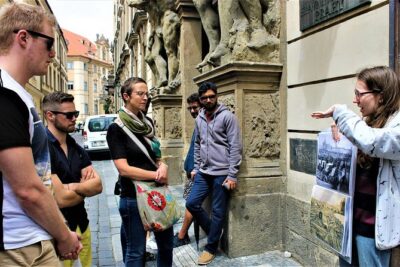
Prague Old Town, Medieval Underground and Dungeon Historical Tour
Read our review →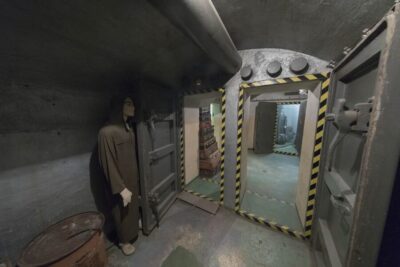
Communism History and Nuclear Bunker Guided Tour
Read our review →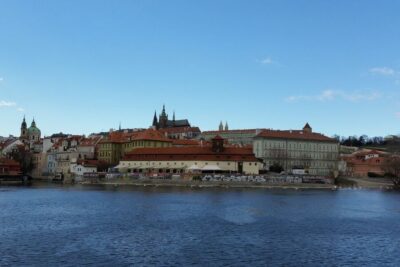
Historic City Center Bus Tour with Top Sights
Read our review →
Prague Historic Pub Tour with Drinks Included
Read our review →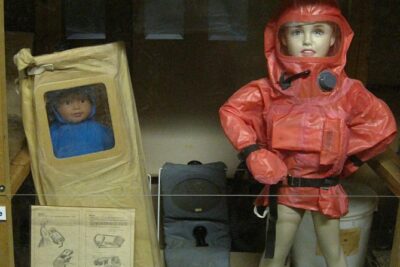
Prague Communism History and Nuclear Bunker Tour
Read our review →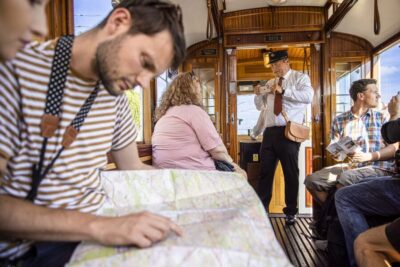
Hop-on Hop-Off Historical Tram Ticket for Line 42
Read our review →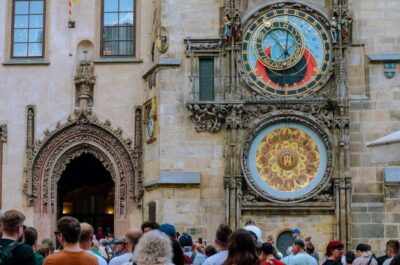
Top Sights and Historic Center Introduction Tour
Read our review →Browse the lists this tour appears in