
Reviewed · HISTORICAL TOURS
Wars and Totality History tour in Prague
Prague’s prettiest streets often hide its hardest stories. This three-hour walk puts you at the places tied to independence, wartime upheaval, communist rule, and the end of that era, rather than leaving you with only towers and baroque façades. Wenceslas Square and Národní třída become pieces of a modern Czech story, not just spots on a sightseeing map.
I like two things here: the small group limit of 15, which should make questions easier, and the personal angle a guide can bring to Prague’s recent past. I also like the flexible departure times and the simple route through central New Town. The main drawback is that the experience depends heavily on the guide. One account describes a late arrival, smoking throughout the walk, walking ahead, and behavior that made the group uncomfortable, while another praises the guide’s personal attention and family history. Ask for a clear, engaged guide at the start.
Key points to know before you book
- A modern-history walk, not a classic Prague highlights tour: The focus is World War I, World War II, communist rule from 1948 to 1989, and the Velvet Revolution.
- Municipal House marks a declaration of independence: The tour begins near the Modernista Art Shop at Municipal House, a place linked to the creation of an independent Czech state.
- Two hours are spent in New Town: This is the main portion of the route, so expect a history lesson built around streets and buildings rather than a series of interior visits.
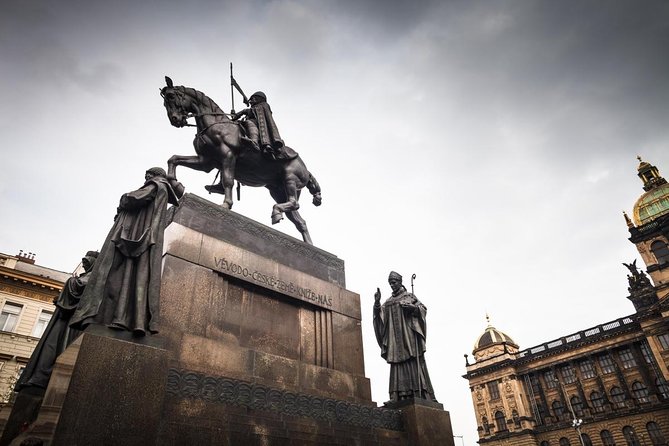
- Wenceslas Square is the central stage: The Wenceslas Monument introduces a square tied to major events in Czech history.
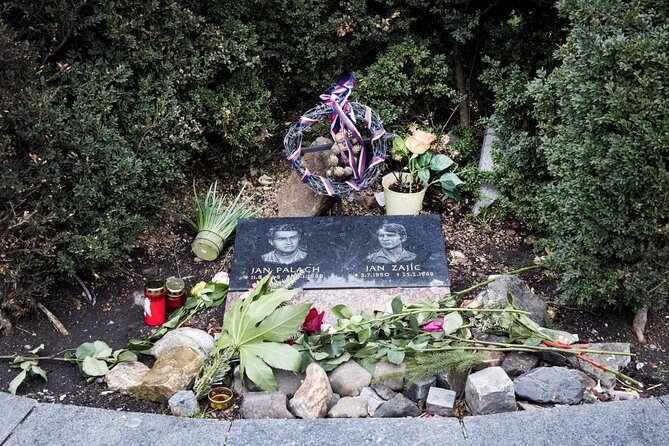
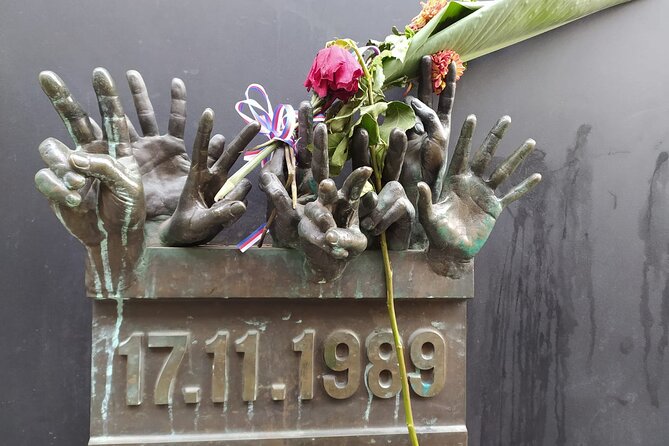
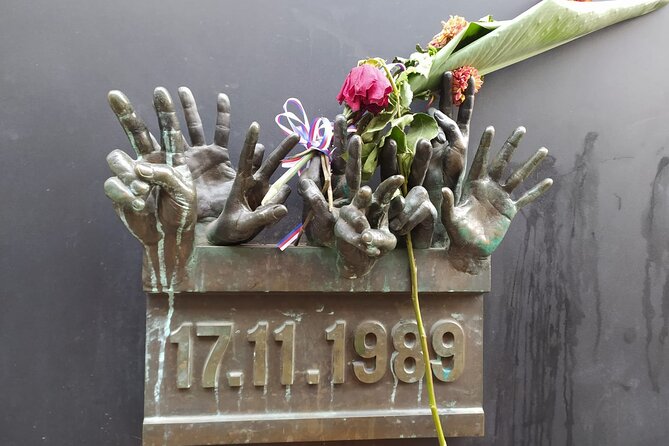
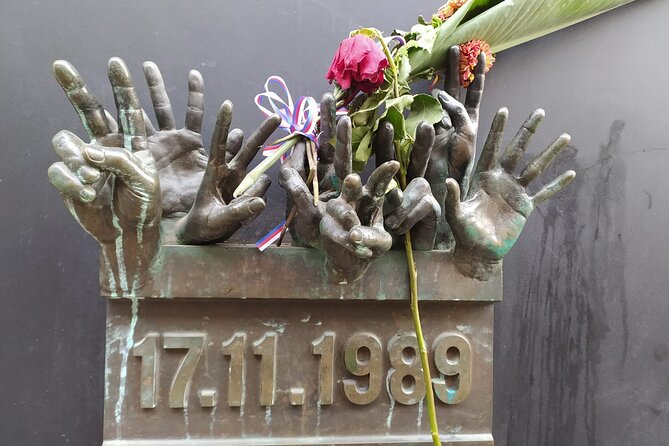
- The finish at Národní třída recalls 1989: Hands reaching from a wall and a memorial desk mark the place linked to the start of the Velvet Revolution.
- The $34.39 price buys context more than admissions: The stops are free, so the value rests on the guide’s storytelling, route planning, and ability to connect events.
Why Prague’s recent past needs a walking tour
Prague can feel like a city of medieval lanes, church domes, and grand palaces. That beauty can also hide the events of the last century. A café, office block, square, or tram stop may look ordinary until someone explains its place in the story of war, dictatorship, protest, or independence.
This walk keeps its attention on the 20th century. You hear about World War I, World War II, the years of communist rule from 1948 to 1989, and the political changes that followed. The point is not simply to memorize dates. It is to understand how public places became stages for national decisions and popular action.
I find that a walking route works well for this subject because the city itself is the material. You are not shut inside a museum looking at objects removed from their setting. You are moving through the streets where public life unfolded. At the same time, you should know that this is an exterior-focused experience. The listed stops are free, and the description does not promise museum entry or access inside major buildings.
More Historical Tours in Prague:
- Prague: Oldtown, Medieval Underground & Dungeon History Tour
★ 4.2 · 8,244 reviews - Prague Old Town, Medieval Underground and Dungeon Historical Tour
★ 4.5 · 3,227 reviews - Prague: Communism History and Nuclear Bunker Guided Tour
★ 4.7 · 2,417 reviews
Starting at Municipal House and a declaration of independence
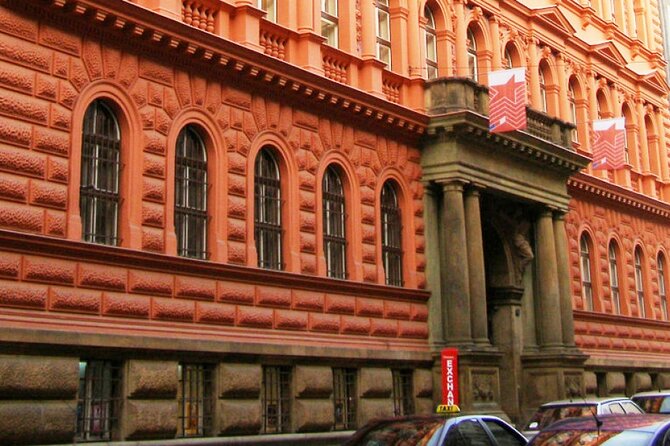
The tour begins at Na Příkopě 864/28 in Nové Město, near the Modernista Art Shop at Municipal House. The opening stop lasts about 10 minutes and has no admission charge.
This is a useful starting point because Municipal House is connected here with a declaration of independence. That gives the tour an immediate political frame. You are not beginning with a general architectural introduction. You are beginning with the question of how the modern Czech state took shape.
The short stop also helps you get oriented. If you arrive early, check the exact meeting point carefully. The address is on Na Příkopě in Prague 1, and the group then moves into New Town. A mobile ticket is provided, and confirmation arrives when you book.
Do not expect this first stop to carry the full weight of the tour. Ten minutes is enough for an introduction and a few key points, not an extended visit. Its value comes from setting up the themes that appear later: national identity, political control, and the use of public places.
Two hours through New Town
New Town takes up about two hours, making it the real heart of the experience. The route stays in central Prague, with buildings and locations tied to the World Wars, communist rule, and the people who lived through those periods.
This length matters. A quick city walk can point out a plaque and move on. Two hours in one part of town gives the guide room to explain connections and answer questions. One account describes receiving personal attention and hearing family history from the guide, which is exactly the sort of detail that can turn a general history talk into something more human.
The quality of this section rests on organization. Another account found the tour less organized, so I would keep your expectations practical. Streets are not a museum display. The group may pause at several points, shift position on busy sidewalks, and listen while other city life carries on around you.
You should also expect the route to be primarily about seeing places from outside. The description highlights buildings and locations, but it does not list interior visits or entrance tickets. If you want a detailed look inside Municipal House or another landmark, you will need to arrange that separately.
The New Town portion should suit you if you want a broad account of the last century rather than one narrow subject. It is also a good choice if you have already seen Prague Castle, Old Town Square, and Charles Bridge and now want a different way to understand the city.
Wenceslas Square and the Wenceslas Monument
The stop at the Wenceslas Monument lasts about 20 minutes. The monument sits at the head of Wenceslas Square, which the tour presents as a central point in Czech history.
That description tells you how to read the square. Do not treat it as only a broad shopping avenue or a place to cross between sights. Here, the open space represents public life and major national events. The guide uses the setting to explain why this location mattered during the 20th century.
I like this kind of stop because it connects a large public space with the people who gathered there. The monument gives you a fixed point, while the square provides the scale. You can better picture how political events in a capital city move from private decisions into public view.
The drawback is that a 20-minute pause cannot cover every event associated with the square. You will get selected stories and context, not a full course in Czech political history. Take notes if a particular period interests you, then use the tour as a starting point for further reading.
This part also gives the route a natural midpoint. After spending most of the walk in New Town, you pause at one of the city’s most important civic spaces before continuing toward Národní třída.
A few more Prague half-days to weigh up
- Prague: 50-Minute Sightseeing Evening Cruise
★ 4.2 · 33,780 reviews - Prague: Medieval Dinner with Unlimited Drinks
★ 4.4 · 19,847 reviews - Prague: Skip-the-line Castle Ticket and Optional AudioGuide
★ 4.3 · 11,121 reviews - Prague: Castle Tour with Local Guide and Entry Ticket
★ 4.6 · 10,422 reviews
Národní třída and the end of communist rule
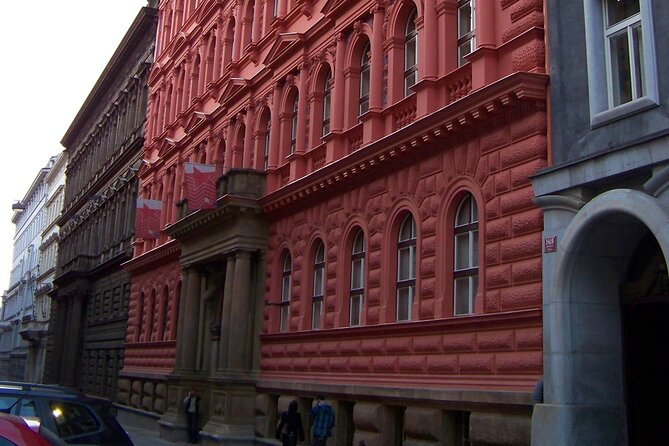
The final stop is on Národní třída, near the tram and subway station Národní třída. The route ends here after about 10 minutes at a memorial desk and a wall marked by hands reaching outward.
This place is linked to the Velvet Revolution, the movement that brought the communist era to an end. The tour connects the site with the events of 1989, giving the walk a clear finish. You begin with independence and end with the collapse of communist rule.
The memorial is especially useful because it makes a large political change feel local. Instead of hearing only about a regime ending in distant government offices, you stand at a marked site in the middle of the city. You can see how memory remains attached to an ordinary street route.
The tour ends at Národní, rather than returning to the starting point. That is convenient if you plan to continue sightseeing in central Prague, use the tram, or take the subway. It is less convenient if you need to return to Municipal House, so plan your next stop from the Národní třída area.
What the guide can add to the walk
A guide is the product here. The free public sites are easy to reach on your own, but the tour is meant to supply the links between them.
The strongest version of this walk will explain why a location mattered, who was involved, and how ordinary life changed under the political systems discussed. One account describes the experience as emotional because the guide placed the group at the actual locations of Nazi and communist-era events. That is a useful measure of what you are paying for: not access, but interpretation and personal connection.
The same account also notes that the guide shared family history. That can make the past feel close and specific. It can also mean that the tone varies from one guide to another. The company supplies a professional local guide, but no guide name is provided in the tour details, so you cannot choose a particular person in advance.
There is one clear warning to keep in mind. One account describes a guide who arrived late, smoked constantly, walked ahead without waiting, and was rude to people during the walk. That behavior is not a minor style difference if you are trying to listen, keep pace, or feel comfortable in a group.
I would use the first few minutes to judge the pace and tone. If you cannot hear, if the guide keeps moving ahead, or if the group is not being managed well, speak up early. A small group should make that easier.
Is $34.39 a fair price?
At $34.39 per person, this is not an expensive tour for about three hours in central Prague. But the price needs to be judged correctly. You are not paying for admission to a major attraction, since the listed stops are free. You are paying for a planned route and a guide’s time.
That makes the tour good value if you want structure. In three hours, you cover several locations tied to different periods and finish near public transport. Exploring alone would cost less, but you would need to research the sites, arrange the order, and supply the connections yourself.
The value drops if you already know Prague’s modern history well or prefer to read plaques and guidebooks at your own pace. It also drops if the guide is poorly organized or disengaged. The mixed accounts make that a real consideration, not a theoretical one.
Group discounts may lower the cost for some bookings. The group cap of 15 is a useful middle ground. You avoid the scale of a large coach group, though you should not expect a private tour. A group of 15 can still spread out on a city sidewalk, so stay close and keep listening for movement.
Who should book this experience?
I would recommend this walk to first-time visitors who have already seen Prague’s famous older sights or want to understand the city beyond its postcard views. It suits people interested in political history, wartime Prague, communist rule, and the end of that period.
It also works for anyone who prefers learning in place. If you remember a story better after standing where it happened, the route has a clear advantage. The personal family-history element described by one participant suggests that the right guide can make the material feel unusually direct.
Families can join, but children must be accompanied by an adult. The subject matter concerns war, dictatorship, and political conflict, so parents should decide if that tone fits their children. The tour is near public transportation, and most people can participate, but the information does not give a detailed accessibility description.
You may want to skip it if your Prague schedule is very tight and you only want famous buildings, interiors, or photographs. This is a history walk first. Its best moments come from listening and connecting places, not collecting entrance tickets.
Timing, meeting point, and practical planning
The tour lasts approximately three hours. Departure times vary, which gives you a useful choice when fitting the walk around meals, museums, or other bookings.
Meet at Na Příkopě 864/28, Nové Město, Prague 1, near the Modernista Art Shop at Municipal House. Since the route begins in a busy central area, arrive with your mobile ticket ready and allow enough time to locate the exact spot.
The finish is at Národní, near the Národní třída tram and subway station. You do not return to the starting point, so think of the end as part of your plan. It is a good place from which to continue around central Prague.
Service animals are allowed, and the tour operates near public transportation. Children need an accompanying adult. Free cancellation is available if you cancel at least 24 hours before the start time. After that cut-off, the amount paid is not refunded, and late changes are not accepted.
Should you book the Wars and Totality History tour?
Book it if you want Prague’s 20th-century story in the streets where it unfolded, and if you value a guide’s explanations more than paid entries. The route has a clear shape, a manageable three-hour length, a small maximum group, and a finish beside tram and subway connections.
I would book with realistic expectations. The stops are exterior sites, the tour is not a full survey of every event, and the guide makes a major difference. The personal, emotional approach can be the best part, while poor pacing or unprofessional behavior can weaken the experience.
At $34.39, it is a reasonable buy for a visitor who wants context and does not want to build a history route alone. If you prefer complete control, museum interiors, or guaranteed polish from a named guide, spend your time elsewhere. If you want to see Municipal House, Wenceslas Square, New Town, and Národní třída as connected chapters of modern Czech history, this walk earns its place in your Prague plans.
FAQ
How long does the Wars and Totality History tour last?
The tour lasts approximately three hours.
How much does the tour cost?
The listed price is $34.39 per person. Group discounts are available.
What historical periods does the tour cover?
The walk covers Prague’s 20th-century history, including World War I, World War II, communist rule from 1948 to 1989, and the end of the communist era.
Where does the tour begin?
The meeting point is Na Příkopě 864/28, Nové Město, 110 00 Prague 1, near the Modernista Art Shop at Municipal House.
Where does the tour end?
The tour ends at Národní, near the tram and subway station Národní třída.
What places are included?
The route includes Municipal House, New Town, the Wenceslas Monument and Wenceslas Square, and the memorial site on Národní třída with hands reaching from a wall.
Are admission tickets included?
The listed stops have no admission charge. The tour information does not list paid interior admissions.
How many people can join the tour?
The maximum group size is 15 people.
Can children take the tour?
Yes. Children must be accompanied by an adult.
Can I cancel for a full refund?
Yes, if you cancel at least 24 hours before the experience starts. Cancellations made less than 24 hours before the start time are not refunded.
Recently added around Prague
- St Vitus Cathedral and Prague Castle Private Walking Tour★ 4.0 · 3 reviews
- Prague: Old Town and Jewish Quarter Small-Group Tour★ 5.0 · 3 reviews
- Royal Splendor Unveiled Private Prague Castle Interior Tour★ 3.5 · 3 reviews
- Prague Castle Interiors & Changing of the Guard-Small group★ 5.0 · 3 reviews
- Prague: Bohemian & Saxon Switzerland National Park Day Trip★ 5.0 · 3 reviews
- Running Tour of Prague. Your private 6-9K intro★ 5.0 · 3 reviews
- PRAGUE AIRSOFT SHOOTING GAMES★ 4.7 · 3 reviews
- Private walking tour and Boat cruise Best of Prague★ 5.0 · 3 reviews
Historical Tours, compared.
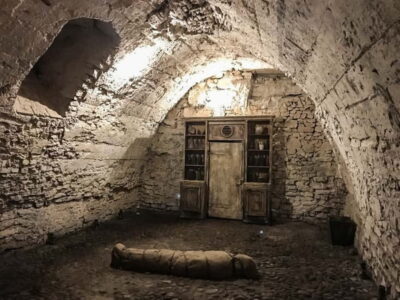
Oldtown, Medieval Underground & Dungeon History Tour
Read our review →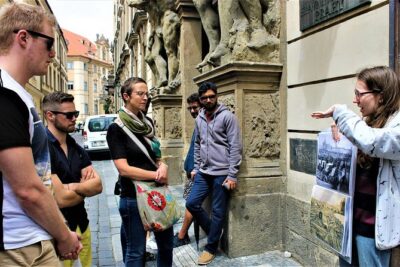
Prague Old Town, Medieval Underground and Dungeon Historical Tour
Read our review →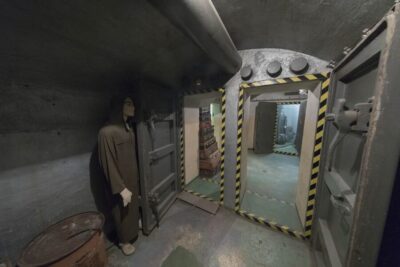
Communism History and Nuclear Bunker Guided Tour
Read our review →
Historic City Center Bus Tour with Top Sights
Read our review →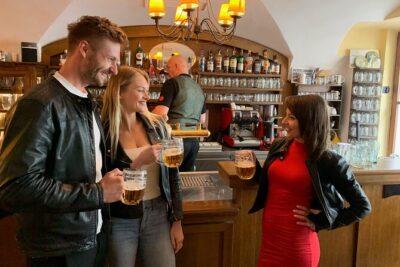
Prague Historic Pub Tour with Drinks Included
Read our review →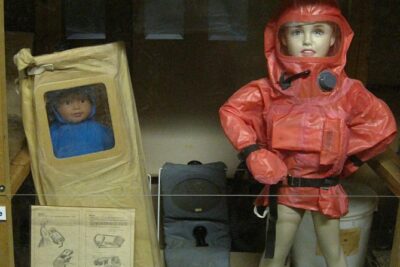
Prague Communism History and Nuclear Bunker Tour
Read our review →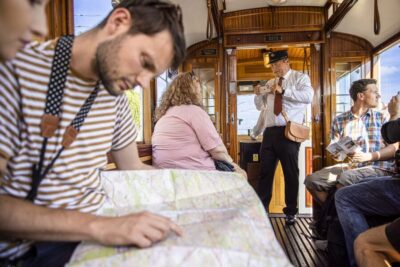
Hop-on Hop-Off Historical Tram Ticket for Line 42
Read our review →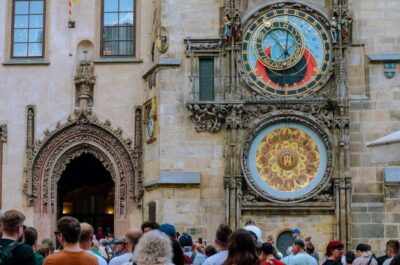
Top Sights and Historic Center Introduction Tour
Read our review →Browse the lists this tour appears in