
Reviewed · COMMUNISM AND COLD WAR TOURS
Prague: 3–Hour Communism and World War 2 E-Bike Tour
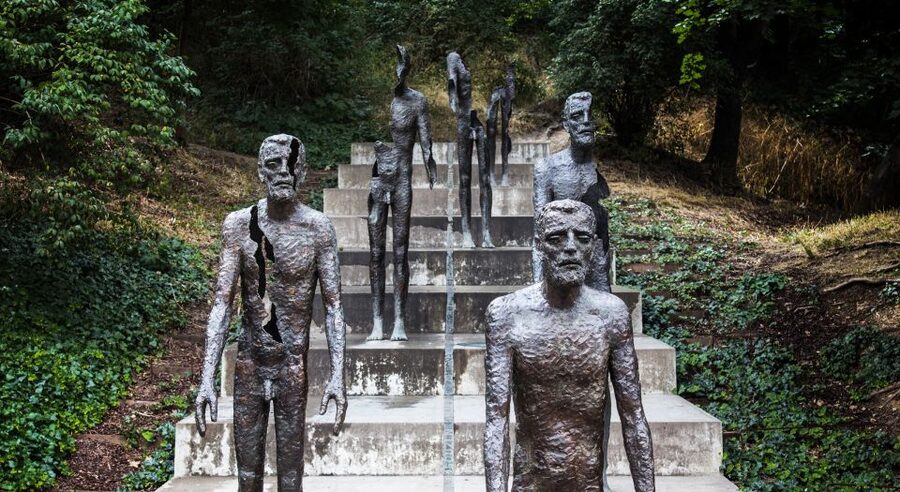
Prague’s modern story comes sharply into focus on this 3.5-hour e-bike tour, which links Nazi occupation, World War II resistance, Soviet-backed Communism, and the Velvet Revolution. You move between more than 30 sites, including the Jewish Old Town, SS headquarters, the Victims of Communism memorial, and the church tied to Operation Anthropoid.
I like the small groups of up to 10 and the way an electric bike lets you cover far more ground than a walking tour. I also like the free Museum of Communism admission, which gives you time with photographs, objects, artwork, and period rooms rather than only a guide’s spoken account.
The main caution is the riding surface. Prague’s cobbles can be rough, and one part of the route may require walking your bike through crowded streets. The bikes have worked well for most people, but some are older models, so this is best for anyone comfortable handling a bicycle in city traffic.
Key points at a glance
- Over 30 modern-history sites: Cover Prague’s Nazi occupation, wartime resistance, Jewish Old Town, Communist era, and Velvet Revolution in one outing.
- Electric assistance matters: The motor helps you travel farther without arriving sweaty, especially on a warm day.
- Museum of Communism included: Use the free admission to see objects, images, artwork, and rooms arranged to show daily life under the regime.
- A route through turning points: Follow the student march connected with the Velvet Revolution and visit the Cyril and Methodius Church, linked with the film Anthropoid.
- Small English-speaking groups: The maximum of 10 people leaves room for questions, and guides including Michal, Marek, Tatiana, and Nayeem have been praised for clear, engaging explanations.
- Finish with a Czech drink: Water is supplied during the ride, and a cold beer is included at the end.
Why this Prague history tour works so well
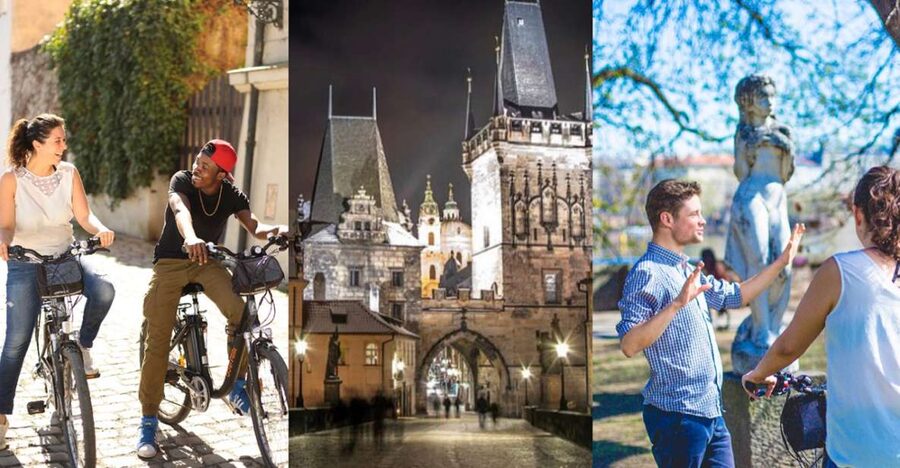
Many Prague tours focus on medieval churches, castle views, and grand Baroque streets. This one takes a different route through the city’s painful and still-relevant 20th-century past.
You begin in Malá Strana, near the Újezd tram stop, then use the e-bike to connect sites spread across central Prague. That matters because the story is not confined to one museum or square. The evidence of occupation, dictatorship, protest, and resistance is scattered through several neighborhoods.
I like this approach because the bike gives you a sense of geography. You do not just hear that an event happened somewhere in Prague. You ride from one location to the next and see how the city’s districts fit together.
The guide leads in English, and the small group size should make it easier to ask about details or request a little general background on Prague. Guides named in the feedback include Niam, Marek, Michal, Michelle, Tatiana, Tatyana, and Nayeem. Several were praised for being friendly, clear, and able to explain difficult history in an engaging way.
The experience is not only about pedaling from one photo stop to the next. The best part is the explanation of how Nazi rule was followed by Communist rule, and how resistance and public protest eventually helped bring that system down.
More communism and Cold War walks:
- Prague: Communism History and Nuclear Bunker Guided Tour
★ 4.7 · 2,417 reviews - Prague Communism History and Nuclear Bunker Tour
★ 5.0 · 1,742 reviews - Communism & Nuclear Bunker Tour + 70s Canteen Lunch (own expense)
★ 5.0 · 1,036 reviews
Starting at Újezd in Malá Strana
The meeting point is Prague by E-Bike at Besední 440/2 in Prague 1, close to the Újezd tram station. Arrive 15 minutes early. You need to bring a passport or ID card, and the tour information specifically asks you to carry it with you.
This is a practical starting point. Malá Strana sits beneath Prague Castle and beside the Vltava, so you are close to some of the city’s most visited sights even before the history route begins. The tour ends back at the same meeting point, which makes it easy to plan dinner or another activity afterward.
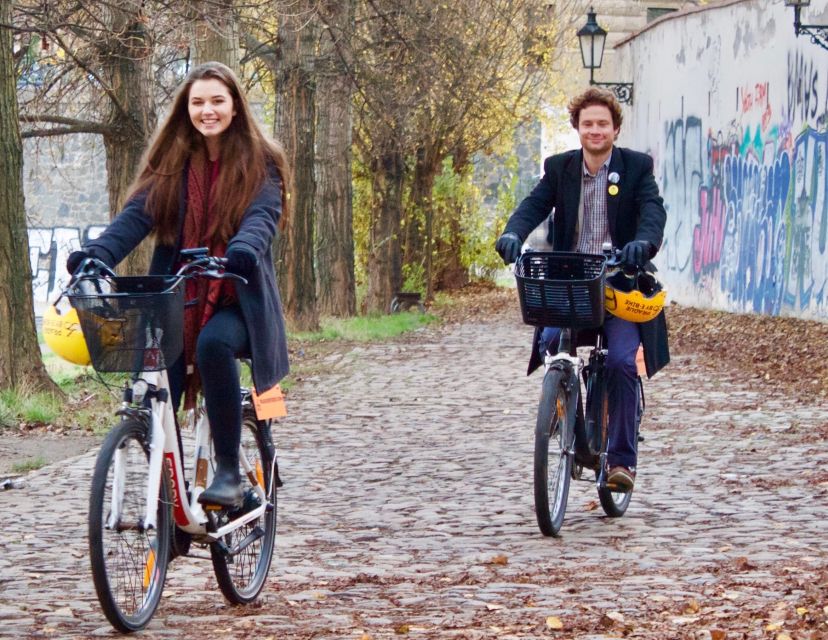
Before setting off, you receive an e-bike, helmet, and a bottle of water. A poncho is available if requested. The bikes provide motor assistance, but you still need ordinary cycling skills and awareness of pedestrians, cobbles, and other city traffic.
You should not think of this as a smooth countryside ride. Parts of central Prague are paved with uneven stone, and one rating specifically warns that cobblestones make up much of the route. The motor helps with effort, not with bumps.
Old Town, Jewish Prague, and the marks of occupation
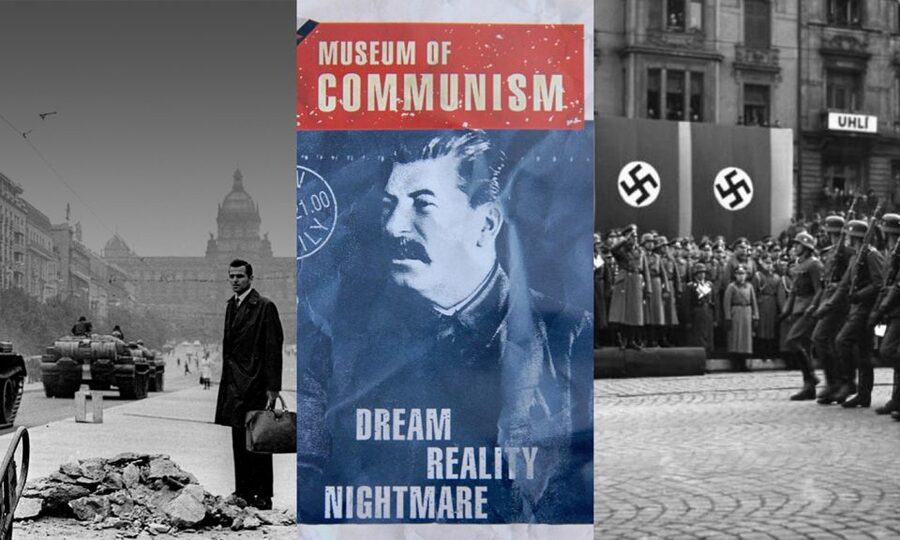
The route includes Prague’s Old Town and the Jewish Old Town, two places where the city’s long story is visible in streets and buildings. Here, the guide places the events of World War II and Nazi occupation into the physical setting of Prague.
The Jewish Old Town adds an important human dimension. It is not simply another attractive quarter to pass through. It is one of the places where the city’s Jewish history and the destruction caused by Nazi rule can be discussed alongside the buildings and streets that remain.
The tour also takes you to locations connected with Nazi administration, including the former SS headquarters, and to sites linked with anti-Nazi resistance. You will also see locations affected by World War II bombing.
The value of this portion depends heavily on the guide. A good explanation can connect a quiet street, an office building, or a church with the fear and choices faced by people living under occupation. Guides such as Michal and Marek received especially strong praise for their command of the subject, while Tatiana and Tatyana were noted for making the material understandable and adapting to questions.
This section may feel heavier than a standard sightseeing ride. That is part of its purpose. The tour deals with persecution, occupation, resistance, and loss, so you should expect serious subject matter rather than a light city tour with a few historical anecdotes.
Cyril and Methodius Church and Operation Anthropoid
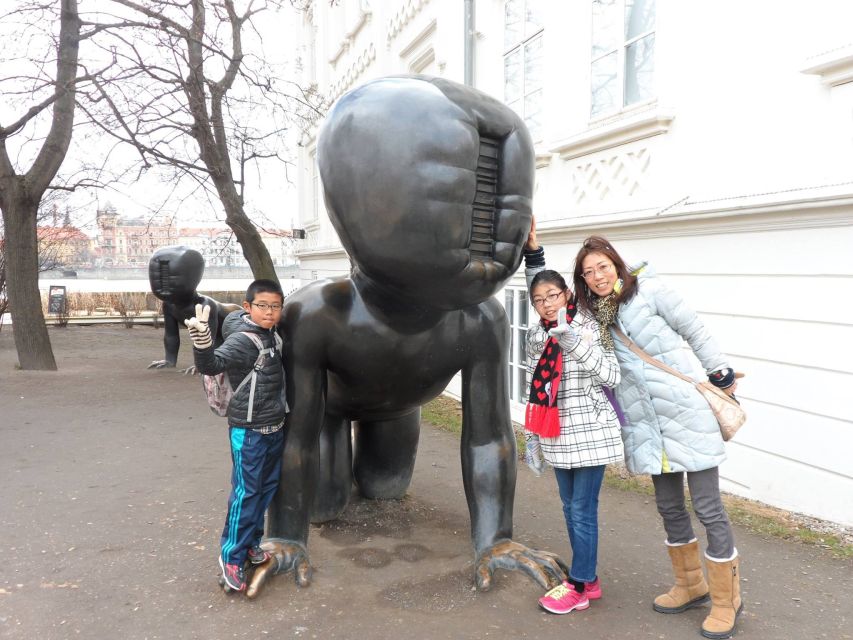
One of the most distinctive stops is the Cyril and Methodius Church, associated with the anti-Nazi resistance and used as a filming location for the 2016 war film Anthropoid.
The supplied information does not promise a full interior visit or a long museum presentation here, so think of this as a meaningful stop on the route rather than a separate church tour. The guide uses the location to explain the resistance story and its place in Prague during World War II.
This is exactly the kind of stop that benefits from having a local guide. Without context, a church can look like one more historic building. With context, it becomes part of a tense story about resistance, hiding, and the consequences of opposing Nazi rule.
The route also includes other sites tied to anti-Nazi resistance, but the exact order can vary. That flexibility is normal for a small city cycling tour, especially when the guide needs to manage pedestrians, road conditions, and the pace of the group.
More bike rides around Prague:
- 3-hour Complete Prague Bike Tour
★ 5.0 · 3,674 reviews - Prague E-Bike City Tour with A Local Guide
★ 5.0 · 924 reviews - 7 BEST VIEWS – PRAGUE eBIKE TOUR
★ 5.0 · 793 reviews - Prague: Complete Bike Tour
★ 4.8 · 769 reviews
The Velvet Revolution and the fall of Communism
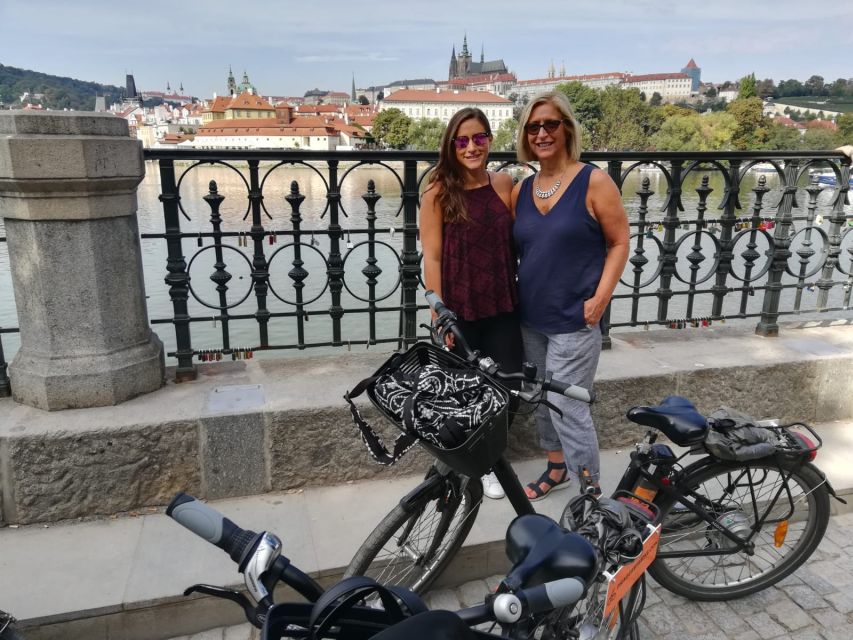
The Communist part of the ride focuses strongly on the places where public protest gathered force. You follow the footprints of the student march that helped spark the Velvet Revolution, the movement that contributed to the fall of the Communist regime.
This is one of the tour’s most useful links between place and politics. You see how a student demonstration grew into a wider movement, rather than treating the end of Communism as an abstract date in a textbook.
The route also includes the Victims of Communism memorial. Its stark form gives the guide a natural opening to discuss repression, imprisonment, political control, and the human cost of the period.
One point to keep in mind: the tour appears to focus more on the Velvet Revolution and the collapse of Communism than on a detailed survey of Communist-era architecture or ordinary household life. One rating wished for more buildings from the Communist period and more explanation of daily life under the system.
That is a fair limitation. If your main interest is Communist-era housing, design, shops, or domestic life, you may want a dedicated museum visit or architecture tour as well. If you want the political story, protest sites, and the path to 1989, this route is better suited.
John Lennon Wall and the Kafka Museum area
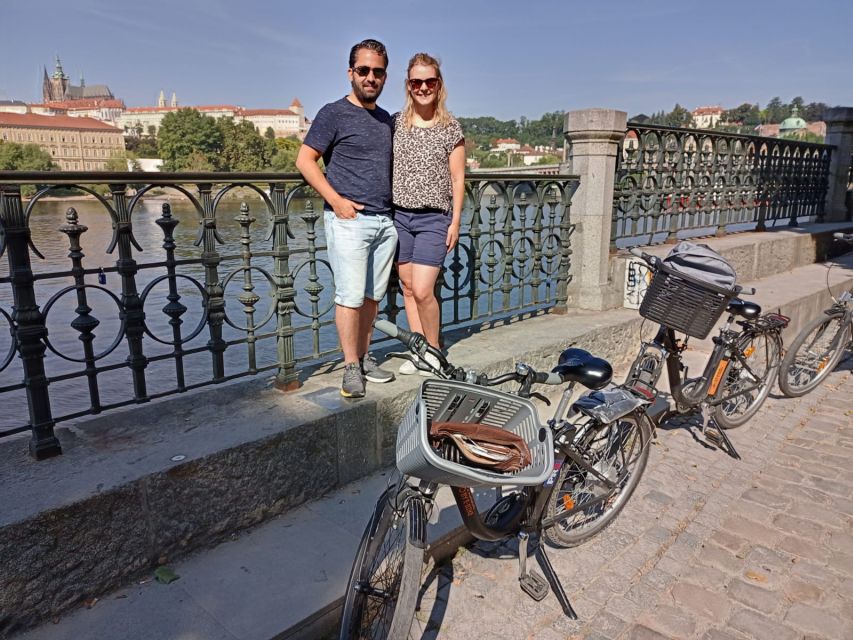
The John Lennon Wall adds a more visual and public side to the story. It became associated with peace, artistic expression, and opposition to the Communist regime, making it a natural stop on a tour about protest and freedom.
You should expect this to be a brief sightseeing stop within a larger route, not a private art lesson. The wall changes over time, and the guide can explain its place in Prague’s late Communist-era culture.
The tour also visits the Kafka Museum. The information provided does not describe a full museum admission here, so do not assume that the Kafka Museum ticket is included. Its presence on the route gives you another way to connect Prague’s literary identity with the city’s streets and political atmosphere.
These stops help vary the pace. After the grim details of occupation and resistance, public art and literature show other ways Prague has expressed unease, dissent, and individual identity.
The Museum of Communism: the tour’s indoor anchor
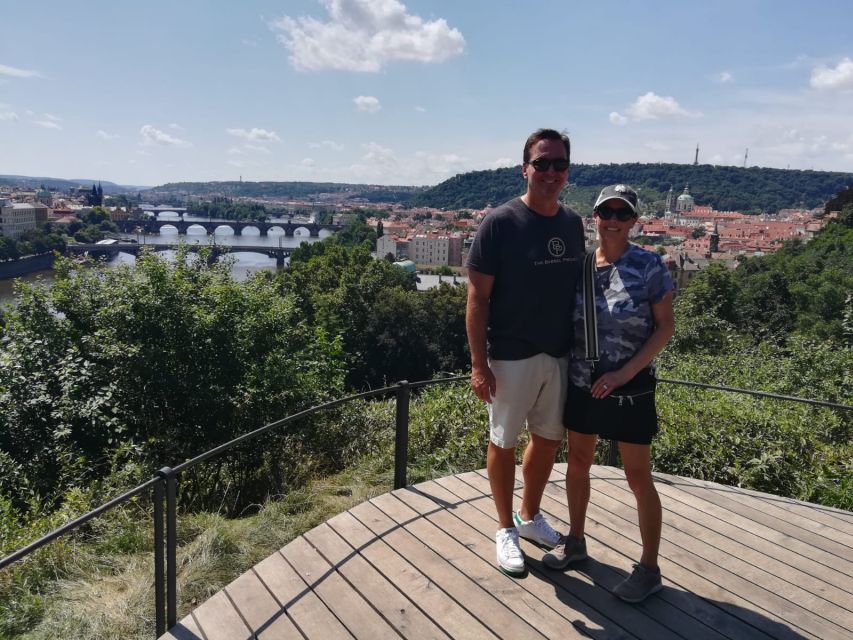
Admission to the Museum of Communism is included, and this is one of the strongest practical benefits of the experience.
The museum uses photographs, written displays, objects, artwork, and rooms styled to resemble Communist-era interiors. You get a chance to read and look at exhibits at your own speed, which balances the faster movement of the bike route.
I especially like having an indoor stop built into a cycling tour. It gives you a break from cobbles and traffic, and it lets the subject breathe. Spoken explanations are useful, but museum displays can show the texture of daily life in a way a roadside stop cannot.
The visit also helps fill in the gap noted above. The ride may concentrate on political events and the Velvet Revolution, while the museum adds a broader look at the Communist period through visual material and reconstructed spaces.
The exact timing of the museum stop can affect the rhythm of your outing. Some people may prefer to use the admission during the tour, while others may be able to return at another time, depending on the day’s arrangements. Ask your guide how the stop will fit into your schedule.
Do not expect a huge collection. The museum is described as offering about an hour of reading and viewing, with images and a limited number of physical exhibits. Still, it gives the tour a useful foundation and is more than a token included attraction.
What the e-bike changes
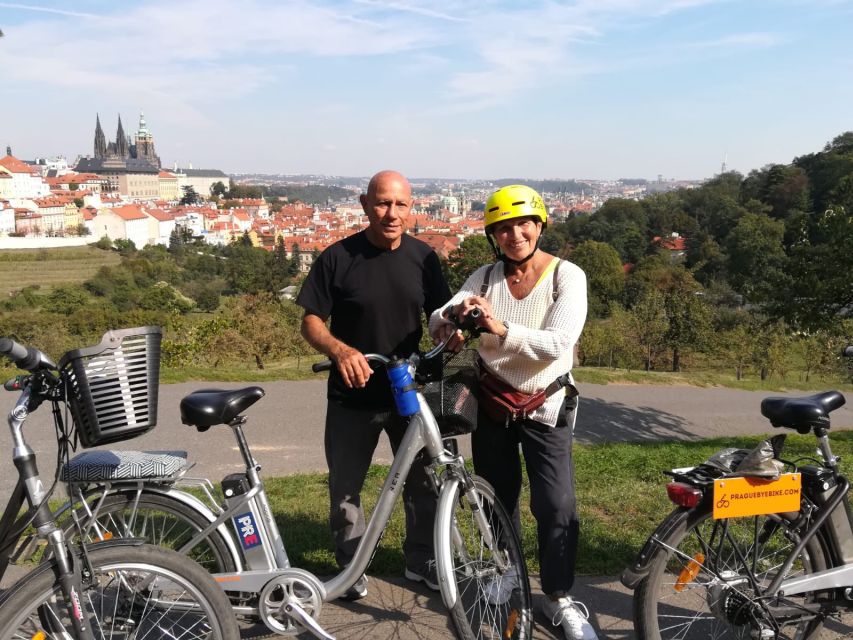
The electric bike is not just a gimmick here. Prague’s historical sights are spread across several central districts, and the motor allows the group to cover more ground in 3.5 hours.
On a hot day, this can make a major difference. One particularly positive account found the e-bike comfortable and useful for seeing much of the city without exhaustion. The bike helps you arrive at the next stop ready to listen instead of needing a long rest.
At the same time, the e-bike does not turn this into a carefree ride. You may need to walk the bike through crowded areas, and some of the route runs over cobblestones. A rating also described the bikes as older, though still functional.
I would choose this tour if you are comfortable cycling at a city pace and want a broad route. I would choose a walking tour instead if uneven paving, frequent stops, or bicycle handling would make you uneasy.
The helmet is included, and a poncho is available on request. Water is provided, which is useful on a warm afternoon. At the end, you receive one cold beer, a pleasant Czech-style finish after the ride.
Group size, guides, and the pace of the visit
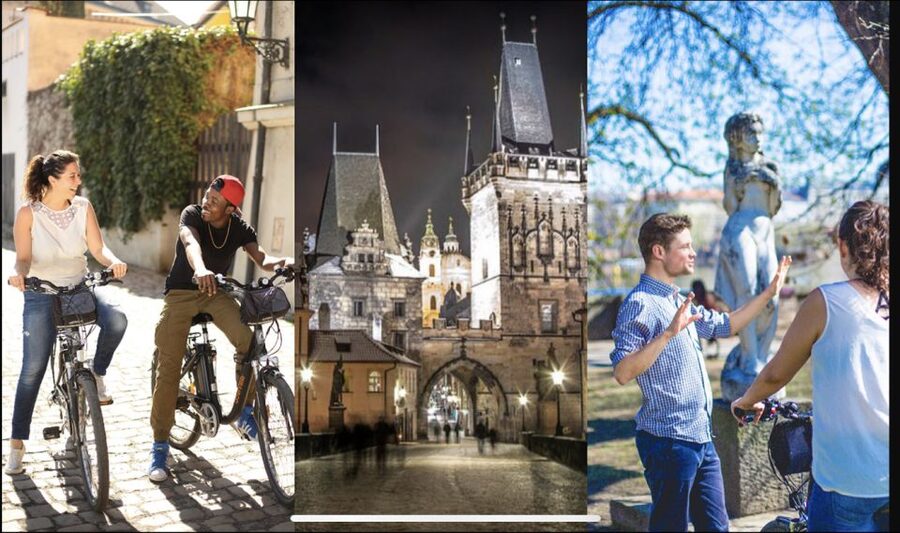
The group is limited to 10 people, though it may be smaller. One outing had only two participants, which allowed plenty of questions and requests.
A small group matters most on a history tour. You can usually hear the guide more easily, and the guide has a better chance of noticing when a complicated point needs another explanation. One guide was praised for giving a thorough overview before adding landmarks along the route. Another was praised for explaining history with humor and making sure the material was clear.
The pace is active but not described as exhausting. The advertised duration is 3.5 hours, and one account considered the length just right, with enough sightseeing and history without leaving the rider worn out.
Still, the route is not fully predictable. A guide may adjust the path because of crowds or street conditions. One less positive experience found too much bike walking and felt the guide struggled to fill the time. That seems important to remember when setting expectations: the tour’s success depends partly on the guide’s route choices and storytelling.
Is $74 a fair price?
At $74 per person, this is not the cheapest way to see Prague. You are paying for the e-bike, helmet, water, an English-speaking guide, a small group, a 3.5-hour route, admission to the Museum of Communism, and a beer at the end.
The value is strongest if you would otherwise book both a city cycling tour and a separate Communist history visit. The e-bike allows you to reach more than 30 locations, while the museum adds a full indoor component.
The value is weaker if you mainly want relaxed sightseeing or a detailed study of Communist architecture. The ride is built around modern political history, resistance, protest, and regime change. It does not promise a long stop at every site.
Free cancellation up to 24 hours before the start and the option to reserve now and pay later reduce the financial risk of fitting it into a changeable Prague schedule. Check the available starting time before booking, since the tour lasts most of half a day.
Who should book this e-bike tour?
I would recommend it to you if you:
- Want a clear introduction to Prague’s Nazi and Communist periods.
- Prefer moving around the city instead of sitting in a museum for several hours.
- Like asking questions in a small group.
- Are comfortable riding over cobbles and through busy central streets.
- Want to connect the Velvet Revolution with the actual places where it unfolded.
- Have already seen Prague Castle and the Old Town highlights and want a different angle.
I would be more cautious if you want a gentle ride, a route focused on scenic views, or a highly detailed look at everyday Communist life. Families and older riders may appreciate the electric assistance, but everyone still needs to manage a bicycle and uneven streets.
Final verdict: a strong choice for modern Prague
I would book this tour when I wanted to understand the Prague of the 20th century, not just admire its medieval center. The combination of more than 30 sites, a small English-speaking group, a free museum visit, and electric assistance offers a lot in a short time.
The strongest guides turn the route into a connected story. Michal, Marek, Tatiana, Tatyana, Nayeem, Niam, and Michelle were all named positively in the supplied feedback, with repeated praise for clear explanations, friendliness, and engaging delivery.
The main drawbacks are real: cobblestones, occasional walking with the bikes, older equipment, and a route that may give more attention to the Velvet Revolution than to the details of ordinary Communist life. If you accept those limits, this is a practical and memorable way to see a side of Prague many first-time visitors miss.
FAQ
How long does the Prague Communism and World War 2 E-Bike Tour last?
The tour lasts 3.5 hours. Starting times vary, so you need to check availability when choosing a date.
Where does the tour start and finish?
It starts at Prague by E-Bike, Besední 440/2, 118 00 Praha 1, in Malá Strana near the Újezd tram station. It ends back at the same meeting point.
What language is the tour offered in?
The live tour guide speaks English.
How many people can join the tour?
The group is limited to 10 participants. The group may be smaller, and one reported outing had only two people.
Is Museum of Communism admission included?
Yes. Free entrance to the Museum of Communism is included in the tour.
What should I bring?
Bring a passport or ID card. You should also arrive 15 minutes before the scheduled start.
What is included with the e-bike tour?
The tour includes an e-bike, helmet, one bottle of water, and a poncho if requested. One cold beer at the end of the tour is also included.
More e-bike rides around Prague
- Prague: Bike or E-Bike City Tour with A Local Guide
★ 4.9 · 416 reviews - E-BIKE TOUR: 10 Must-See Landmarks & Viewpoints in Prague 1-8per.
★ 5.0 · 270 reviews - Historical Prague Guided E-Bike Tour
★ 5.0 · 255 reviews - Prague: Small Group or Private E-Bike City Tour
★ 4.8 · 217 reviews
Recently added around Prague
- St Vitus Cathedral and Prague Castle Private Walking Tour★ 4.0 · 3 reviews
- Prague: Old Town and Jewish Quarter Small-Group Tour★ 5.0 · 3 reviews
- Royal Splendor Unveiled Private Prague Castle Interior Tour★ 3.5 · 3 reviews
- Prague Castle Interiors & Changing of the Guard-Small group★ 5.0 · 3 reviews
- Prague: Bohemian & Saxon Switzerland National Park Day Trip★ 5.0 · 3 reviews
- Running Tour of Prague. Your private 6-9K intro★ 5.0 · 3 reviews
- PRAGUE AIRSOFT SHOOTING GAMES★ 4.7 · 3 reviews
- Private walking tour and Boat cruise Best of Prague★ 5.0 · 3 reviews
Communism and Cold War Tours, compared.
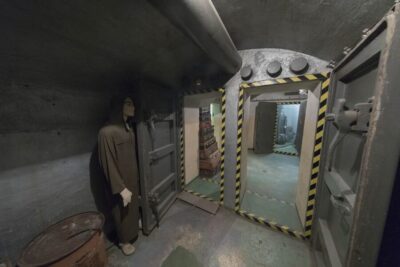
Communism History and Nuclear Bunker Guided Tour
Read our review →
Prague Communism History and Nuclear Bunker Tour
Read our review →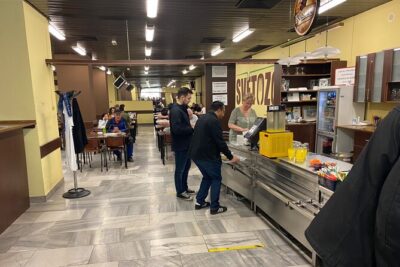
Communism & Nuclear Bunker Tour + 70s Canteen Lunch (own expense)
Read our review →
Communism and Bunker Tour with 70s Canteen Lunch
Read our review →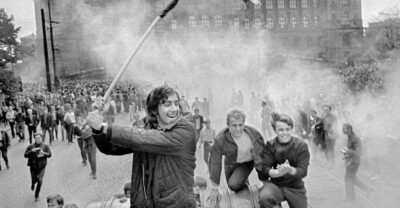
Second World War & Communism (Tip-based 3 hour tour)
Read our review →
Browse the lists this tour appears in