
Reviewed · COMMUNISM AND COLD WAR TOURS
Prague: World War II and Communist History Tour
Prague’s 20th-century story comes alive when you visit the places where resistance fighters hid, crowds protested, and political power changed hands. This 2.5-hour walk links the Nazi occupation, the assassination of a senior Nazi security chief, the Communist coup, the Prague Spring, and the Velvet Revolution into one clear human story.
I like the strong storytelling, especially the way guides such as Adam, Tony, Zach, and Daren have connected large political events with local lives. I also like the small-group feel reported on several departures, which gives you room to ask questions rather than simply trail behind a flag.
The one drawback is that some stops have little to see beyond the street itself, so the guide’s explanation does much of the work. If you want grand interiors or a long list of monuments, this may feel more like a moving history lesson than a conventional sightseeing tour.
Key points at a glance
- A full 20th-century story: Follow Prague from Nazi occupation and Czech resistance through Communism and the Velvet Revolution.
- Operation Anthropoid context: Learn about the plot to kill the head of the Nazi security services and the resistance fighters who later sheltered in a church crypt.
- Major Prague locations: The route includes the Municipal House, Jewish Quarter, Dancing House, and Wenceslas Square.
- Strong English-language guiding: Past guides named Adam, Tony, Zach, Daren, Tony, and others were praised for clear explanations, humor, and vivid storytelling.
- Good value at $34: Two and a half hours of guided history costs less than many specialized city tours.
- Walking with possible transit help: Expect a substantial walk, though one past departure used a tram ticket to save time.
Why this tour changes the way you see Prague
Most first visits to Prague focus on medieval lanes, Baroque churches, and the castle. Those sights are essential, but they can make the city feel frozen in time. This tour gives you another Prague: a capital shaped by occupation, political fear, street protests, artistic dissent, and sudden public courage.
I like that the route covers two connected periods rather than treating World War II and Communism as separate subjects. The Nazi occupation helps explain the later political climate, while the Communist years show how the city dealt with another form of control after the war.
You will hear about the transformation of Czechoslovakia from one of Europe’s progressive industrial states into a country under Nazi rule. The story then moves through the Czech uprising, the Communist takeover, the failed hopes of reform, and the mass movement that ended Communist rule in 1989.
The tone is serious, but the guiding style is not grim from start to finish. Past guides such as Zach, Adam, Tony, and Amanda were praised for adding humor and personal energy without making light of painful events. That balance matters on a tour dealing with executions, repression, betrayal, and war.
More communism and Cold War walks:
- Prague: Communism History and Nuclear Bunker Guided Tour
★ 4.7 · 2,417 reviews - Prague Communism History and Nuclear Bunker Tour
★ 5.0 · 1,742 reviews - Communism & Nuclear Bunker Tour + 70s Canteen Lunch (own expense)
★ 5.0 · 1,036 reviews
Starting near the Municipal House
The meeting point is at Týnská 639/4 in Prague’s Staré Město, or Old Town. From there, the route brings you toward the Municipal House, a useful place to begin because it sits at the meeting point of Prague’s cultural and political life.
The Municipal House is best known for its Art Nouveau design, but on this tour it helps set up the city’s modern political story. You are not simply admiring a pretty façade. You are considering the institutions and public spaces through which Czechoslovak identity developed before the war and then faced occupation and political upheaval.
This opening portion should appeal to you if you already know Prague’s older monuments and want help placing the city’s recent past. The guide’s narration is especially important here. The building itself cannot explain the turning points, but a good guide can show how the city’s public life changed under Nazi rule and later under Communism.
The Jewish Quarter and the Nazi occupation
The route skirts or passes through the Jewish Quarter, connecting the streets of central Prague with the Nazi occupation. This part of the walk is emotionally weighty, and it requires careful attention rather than quick sightseeing.
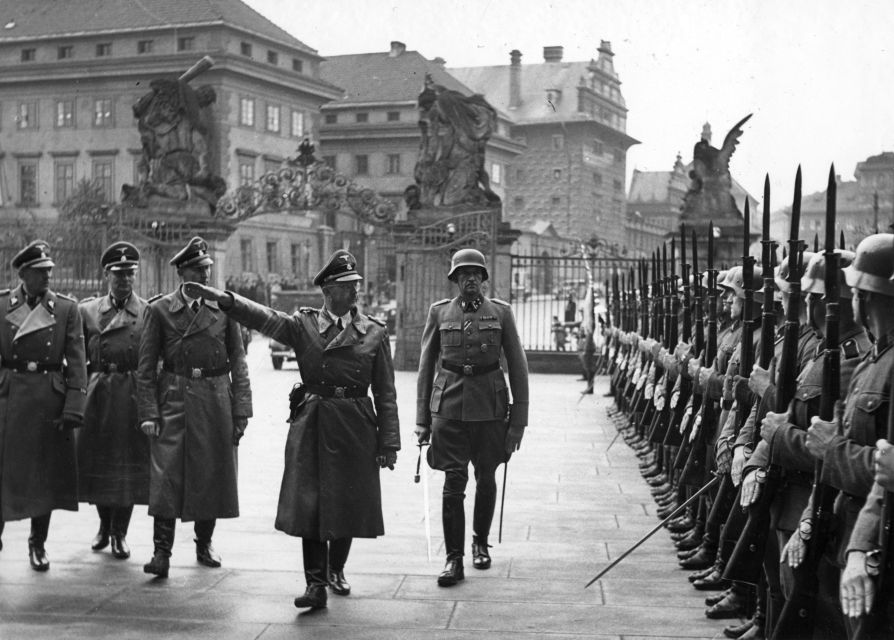
You will hear how occupation altered daily life and how Nazi control turned a modern European country into a place of fear. The tour places the experience in a local setting, using Prague streets to explain the pressure faced by ordinary people, political leaders, resistance members, and Jewish communities.
Do not expect every stop to have a large memorial or a dramatic museum display. One useful feature of the tour is that it makes clear how much of Prague’s 20th-century story is hidden in plain sight. The address or street may look ordinary, while the guide explains what happened there and why it mattered.
That approach suits me because it avoids reducing the occupation to a handful of famous names. You get a sense of the choices people faced, including resistance, silence, cooperation, and survival. The guide also discusses the Czech uprising, helping you understand how the end of Nazi rule unfolded locally.
The assassination plot and the resistance church
One of the tour’s strongest sections concerns the assassination of the head of the Nazi security services. The operation, known as Operation Anthropoid in the guiding, was carried out by Czech resistance fighters trained for the mission.
The story does not end with the assassination. You will also hear about the Nazi retaliation and the resistance soldiers who hid in the Church of Saints Cyril and Methodius. Several past departures included a visit to the church or its crypt, and that stop was described as one of the most powerful parts of the experience.
The church matters because it turns an abstract wartime episode into a physical place. You can better grasp the pressure surrounding the resistance fighters, the danger of sheltering them, and the scale of the Nazi response.
This is also where the limits of the tour become clear. The exact route and access to a museum or interior can vary, and the listed inclusion is the 2.5-hour walking tour itself. You should not book on the assumption that every departure includes a museum admission or an extended church visit.
Still, the subject is handled as more than a thrilling spy story. The best guides use it to explain courage, planning, consequence, and the cost paid by both resistance members and civilians. If you have seen films about the operation, the tour can give those scenes a Prague setting. One past participant followed the visit with Anthropoid and Munich, which is a useful idea if you want to continue the subject afterward.
More Historical Tours in Prague:
- Prague: Oldtown, Medieval Underground & Dungeon History Tour
★ 4.2 · 8,244 reviews - Prague Old Town, Medieval Underground and Dungeon Historical Tour
★ 4.5 · 3,227 reviews - Prague: Historic City Center Bus Tour with Top Sights
★ 4.4 · 2,360 reviews - Prague Historic Pub Tour with Drinks Included
★ 5.0 · 2,084 reviews
Wenceslas Square and the Communist coup
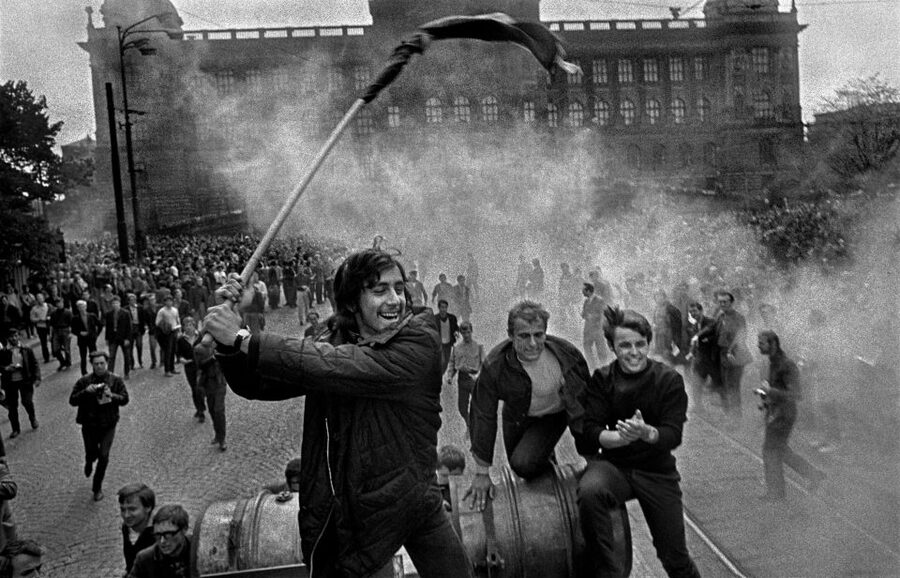
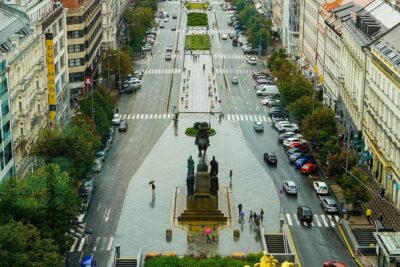
The walk then turns toward the Communist period, with Wenceslas Square serving as one of the most important settings. This broad public space has been central to demonstrations and political change, making it a natural place to discuss the Communist coup and the years that followed.
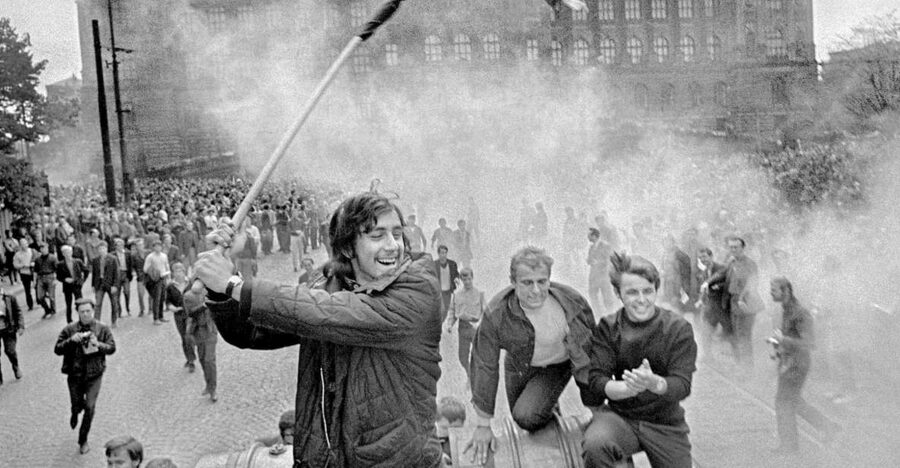
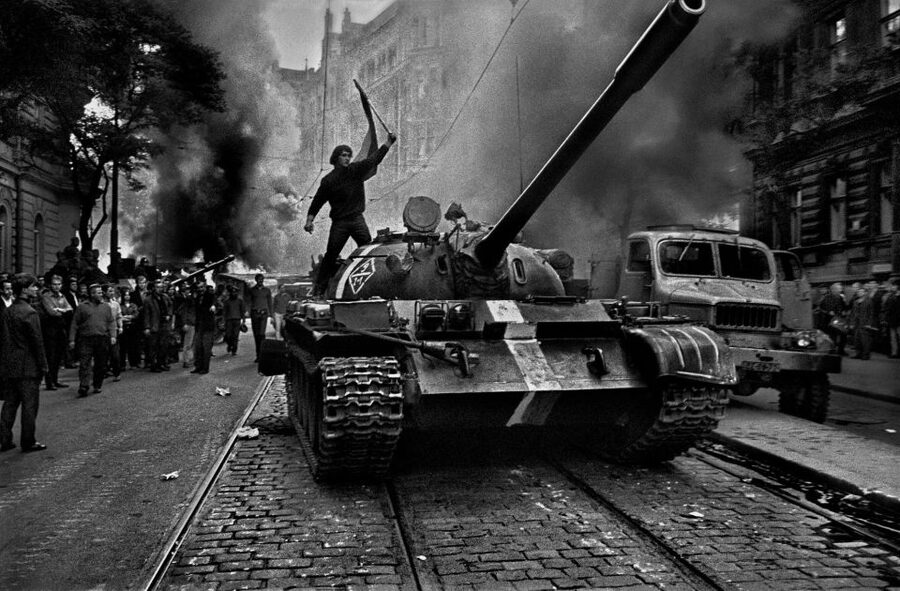
Here, the guide explains how political hope gave way to disappointment. The tour does not present Communism as a single unchanging block. Instead, it follows the shifts from the postwar takeover to the Prague Spring, the Warsaw Pact invasion, and the later period known as Normalization.
That sequence is valuable because the labels alone can be confusing. You will hear what reform meant during the Prague Spring, why the invasion crushed those hopes, and how the government responded afterward. The focus is not only on leaders and military movements. It also covers the effect on public life and personal freedom.
Wenceslas Square is a particularly effective stop because it shows how the same public space can hold very different memories. A place used for official displays and state power later became a center of protest. The guide’s job is to connect those moments without turning the square into a dry timeline.
The square can also be crowded and noisy. You may need to stay close to the guide, particularly if the group is moving through busy parts of central Prague. That is a practical reason to value a small group and a guide who keeps the story moving.
Prague Spring, Normalization, and cultural protest
The tour’s Communist-era section reaches beyond political leaders. You will learn about Normalization, the state’s response to reformers, and the persecution of the Plastic People of the Universe, an underground music group.
This cultural detail gives the tour unusual depth. A history of Communism can easily become a list of party officials, speeches, and military dates. The story of musicians being targeted shows how political control reached into art, dress, music, and private expression.
You will also hear about Charta 77, the dissident movement that challenged the government’s failure to respect basic rights. The subject leads naturally toward Václav Havel, whose life as a writer and dissident became central to the events of 1989.
I find this part especially useful if you want to understand why the Velvet Revolution was not an isolated burst of public anger. The tour presents it as the result of years of pressure, cultural defiance, political disappointment, and organized dissent.
The pace is brisk. In 150 minutes, the guide must cover war, occupation, resistance, Communism, the Prague Spring, invasion, Normalization, dissident movements, and the revolution. You will get a connected account, but not a university seminar on every topic. If one subject matters most to you, ask questions during the walk and use the tour as a starting point for further reading or films.
The Dancing House and the route through modern Prague
The Dancing House gives the walk a change of setting and helps carry the story into the city’s newer architectural and political identity. It is one of Prague’s most recognizable modern buildings, and its presence makes a sharp contrast with the older streets near the starting point.
The route between central locations means you see Prague as a functioning city rather than as a collection of isolated attractions. You may pass streets that seem unrelated to wartime or Communist events, then hear how the guide places them within the wider story.
One past participant described the walk as taking the group out of the most crowded part of the Old Town and into the newer, though still historic, sections of Prague. That is a real benefit. You get a break from the usual sightseeing circuit while learning why these less celebrated streets matter.
At the same time, this is not a monument-heavy tour. One past booking noted that only a few landmarks had visible reminders of the period. You should enjoy listening, asking questions, and imagining the past through the guide’s account. If you need a plaque, preserved room, or major exhibition at every stop, choose a museum-based experience instead.
The Velvet Revolution at Wenceslas Square
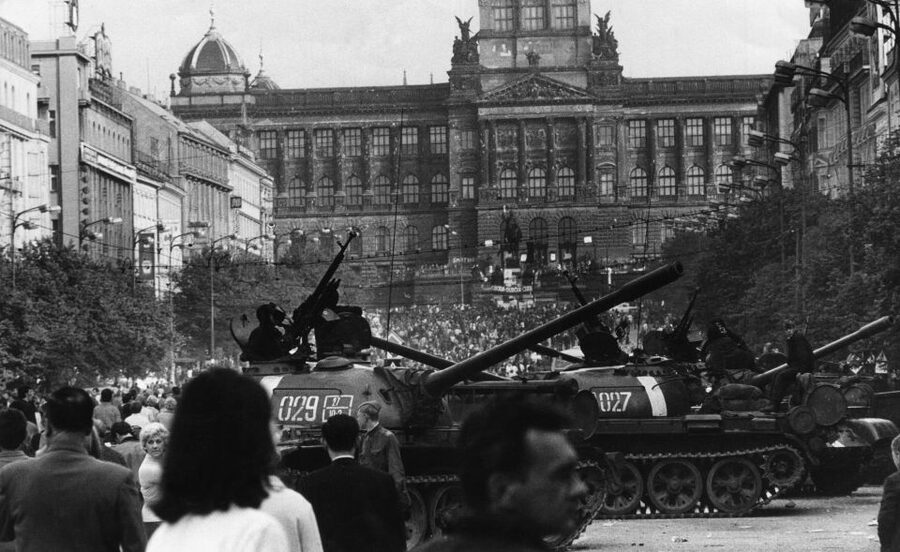
The final part of the story concerns the Velvet Revolution of 1989 and the rise of Václav Havel and other dissidents. Wenceslas Square provides the proper setting for this climax because it became a powerful stage for public gatherings and political change.
The tour explains how an eclectic group of dissidents was swept into power as Communist rule collapsed. The word Velvet can make the transition sound easy or gentle, but the walk gives you a better sense of the years of pressure that came before it.
This ending works because it brings the story back to ordinary public space. You are not left with a distant political event. You are standing in a place where crowds gathered and where the direction of the country changed.
The tour also avoids presenting every Czech political figure as blameless. One past account praised the guide’s willingness to discuss political complicity and uncomfortable facts rather than tidy the story for visitors. That honesty is important, particularly in a tour that crosses from occupation into dictatorship and then into democratic change.
How the guides shape the experience
The guide is the main attraction here. Past departures were led by several different English-speaking guides, including Adam, Tony, Zach, Daren, Amanda, Sean, Kevin, and others. Their personalities varied, but the qualities that mattered most were clear speech, strong preparation, humor, and the ability to tell a story in sequence.
Zach was praised for building the account gradually, while Tony was noted for answering questions and keeping the group engaged. Adam was repeatedly described as energetic and entertaining. Daren was praised for passion and a strong grasp of Prague’s past.
This matters because the tour covers places that may not announce their importance. A guide who simply recites dates will leave you cold. A guide who explains motives, consequences, and local experience can make an ordinary street feel significant.
English is the stated tour language. Several past guides were native or highly fluent English speakers, which helped with complicated names and political terms. Still, group pace and delivery can vary with the individual guide assigned that day.
Walking, timing, and practical comfort
The tour lasts 150 minutes and involves a substantial walk through central Prague. Wear shoes you can comfortably use for two and a half hours, and allow extra time after the scheduled finish if you have a dinner reservation or another fixed appointment. One past departure ran longer than the advertised time.
A tram ticket was provided on one occasion to save walking time. Since the included service is described as the walking tour, treat that as a possible convenience rather than a guaranteed part of every departure.
Weather matters. The tour has gone ahead in pouring rain and on a freezing December afternoon, and the guide’s energy helped keep the experience enjoyable. You should still dress for the forecast. Much of the value comes from standing outdoors while listening, so rain, cold, or summer heat can change your comfort.
The meeting point at Týnská 639/4 is in Staré Město. Check the starting time when you book, since departure times vary. The experience is offered in English, and free cancellation is available up to 24 hours before departure. You can also reserve and pay later, which helps if your Prague schedule is still shifting.
Is $34 a fair price?
At $34 per person, this is a good buy if you want a serious introduction to Prague’s recent past. You receive 2.5 hours with a live guide and cover subjects that would take considerable research to piece together alone.
The value comes from the connections. A self-guided visit to Wenceslas Square will show you the square. A self-guided visit to the Jewish Quarter will show you important buildings and memorials. This tour explains how occupation, resistance, Communist rule, cultural dissent, and revolution fit together.
There are two reasons not to judge the value by the number of admissions. The tour is primarily a walking and storytelling experience, and the listed inclusion is the guided walk. Museum access or transport may occur on some departures, but they are not the core product.
For history-minded visitors, students, film fans, and anyone who wants more than Prague’s postcard sights, $34 is sensible. For a visitor interested only in architecture or royal history, the price may be better spent on another type of tour.
Who should book this history walk?
I would choose this tour early in a Prague stay if you want the rest of the city to make more sense. It gives you useful context before visiting the Jewish Quarter, the church connected with the resistance, or museums focused on Communism and the 20th century.
It suits you best if you:
- Enjoy political and military history
- Prefer stories and explanation to formal museum visits
- Want to understand the Prague Spring and Velvet Revolution
- Are comfortable walking for 2.5 hours
- Like asking questions in a small group
- Want a guide who can connect local events with wider European history
It may not suit you if you need frequent indoor stops, have limited mobility, or want a tour centered on grand interiors. The route’s rewards depend heavily on listening, and some historical locations have few visible reminders today.
Should you book the Prague World War II and Communist History Tour?
Book it if you want to see Prague beyond its medieval charm. The tour’s best feature is its connected narrative, from Nazi occupation and resistance through the Communist coup, Prague Spring, cultural repression, and the Velvet Revolution.
Choose it with the right expectations. You are paying for a skilled English-speaking guide, a brisk city walk, and access to places loaded with meaning. You are not buying a museum tour with an artifact at every stop.
If the Church of Saints Cyril and Methodius or an Operation Anthropoid museum visit is especially important to you, confirm what your departure includes. Otherwise, the combination of strong storytelling, major city locations, flexible booking, and a $34 price makes this one of the better ways to understand Prague’s difficult recent past.
FAQ
Where does the tour meet?
The meeting point is Týnská 639/4, Staré Město, 110 00 Prague 1, Czechia.
How long does the tour last?
The scheduled duration is 150 minutes, or 2.5 hours.
What language is the tour offered in?
The live guided tour is offered in English.
What historical periods does the tour cover?
It covers the Nazi occupation, Czech resistance, the Communist coup, the Prague Spring, the Warsaw Pact invasion, Normalization, the Plastic People of the Universe, Charta 77, and the Velvet Revolution of 1989.
Which Prague locations are included?
The stated locations include the Municipal House, the Jewish Quarter, the Dancing House, and Wenceslas Square.
Does the tour discuss the assassination of a Nazi security chief?
Yes. The tour explains the resistance operation that assassinated the head of the Nazi security services and the events that followed.
Is this a walking tour?
Yes. The activity is described as a 2.5-hour walking tour through central Prague.
Is transport included?
The included service is the walking tour. On one past departure, the group received a tram ticket to save time, but this should not be treated as guaranteed for every departure.
Does the tour include museum admission?
Museum entry is not listed as a standard inclusion. One past departure included a museum visit, so confirm the details for your selected date if this matters to you.
Can I cancel or pay later?
You can cancel up to 24 hours in advance for a full refund. Reserve now and pay later is also available, so you do not have to pay at the time of booking.
Recently added around Prague
- St Vitus Cathedral and Prague Castle Private Walking Tour★ 4.0 · 3 reviews
- Prague: Old Town and Jewish Quarter Small-Group Tour★ 5.0 · 3 reviews
- Prague Castle Interiors & Changing of the Guard-Small group★ 5.0 · 3 reviews
- Royal Splendor Unveiled Private Prague Castle Interior Tour★ 3.5 · 3 reviews
- Prague: Bohemian & Saxon Switzerland National Park Day Trip★ 5.0 · 3 reviews
- Running Tour of Prague. Your private 6-9K intro★ 5.0 · 3 reviews
- Discover Prague’s most Photogenic Spots with a Local★ 3.5 · 3 reviews
- PRAGUE AIRSOFT SHOOTING GAMES★ 4.7 · 3 reviews
Communism and Cold War Tours, compared.
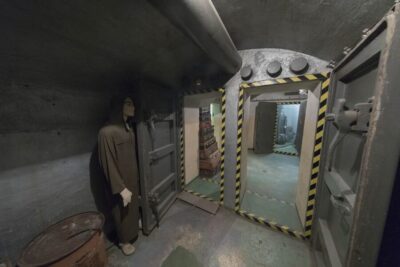
Communism History and Nuclear Bunker Guided Tour
Read our review →
Prague Communism History and Nuclear Bunker Tour
Read our review →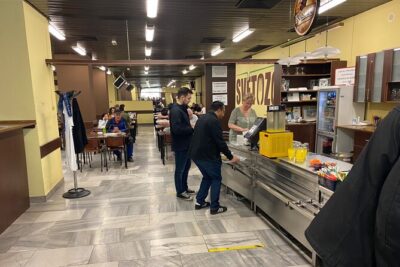
Communism & Nuclear Bunker Tour + 70s Canteen Lunch (own expense)
Read our review →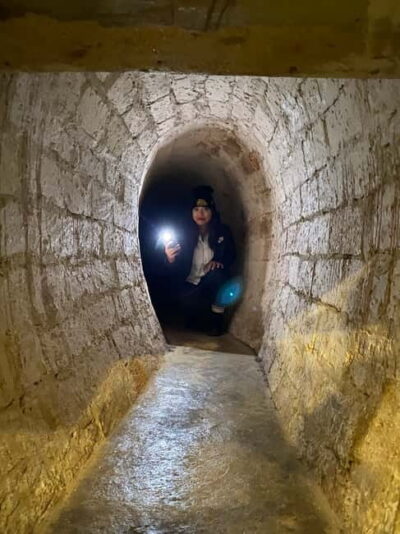
Communism and Bunker Tour with 70s Canteen Lunch
Read our review →
Second World War & Communism (Tip-based 3 hour tour)
Read our review →
Browse the lists this tour appears in