
Reviewed · COMMUNISM AND COLD WAR TOURS
Prague: Communism and Bunker Tour with 70s Canteen Lunch
Prague’s communist past comes into focus on this walking tour, which links famous city squares with the ordinary places and fears of life behind the Iron Curtain. The 1950s nuclear bunker is the big draw on the longer option, with uniforms, equipment, and a close look at Cold War survival plans.
I like the way the guides, including Klara, Leo, and Tereza, explain difficult events in plain English while adding family stories and old photographs. I also like the choice between a focused two-hour walk and a four-hour version with a 1970s workers’ canteen and bunker visit. The main drawback is simple: you walk outside in all weather, and the bunker is not suitable if you are claustrophobic.
Key points at a glance
- See Prague through its 1948 to 1989 political story: The route connects the Communist coup, Prague Spring, Soviet-led repression, and Velvet Revolution.
- Visit a real 1950s nuclear bunker: The extended tour includes entry valued at 250 CZK, or about €10.
- Eat or drink like a Czech worker of the 1970s: The canteen stop offers lunch or Kofola, though food and drinks cost extra.
- Expect a personal guide: The group limit is 15, and guides use photographs, quizzes, personal memories, and questions to keep the walk active.
- Start beneath the Powder Tower: Meet at Republic Square and look for a blue umbrella.
- Take home a period souvenir: Every participant receives an original communist-era pin.
Why Prague’s communist story works best on foot
A tour about communism can easily become a list of dates and political slogans. This one uses the city as its classroom. You begin at the Powder Tower, cross through Old Town, and continue into New Town, where streets and squares help anchor the story.
The subject runs from the end of the Second World War through the fall of communism in 1989. You hear about the Communist takeover in 1948, the reform movement known as the Prague Spring, the invasion that ended it, daily life under state socialism, and the peaceful Velvet Revolution.
I find this kind of route useful early in a Prague visit. The Old Town’s grand buildings are familiar postcard material, but the political events that unfolded around them are less obvious. A guide helps you connect public squares with demonstrations, official power, student protests, and the changing mood of the country.
The best guides also make room for the human side of the story. Klara has shared family experiences from life behind the Iron Curtain, while Leo has used quiz questions to keep the group thinking as it walks. Tereza is also praised for making the history easy to follow and lively without losing the serious parts.
That balance matters. Communism was not one single experience for everyone. The tour looks at ordinary people as well as those in government and positions of authority, giving you a clearer sense of how the system worked beyond the usual textbook account.
More communism and Cold War walks:
- Prague: Communism History and Nuclear Bunker Guided Tour
★ 4.7 · 2,417 reviews - Prague Communism History and Nuclear Bunker Tour
★ 5.0 · 1,742 reviews - Communism & Nuclear Bunker Tour + 70s Canteen Lunch (own expense)
★ 5.0 · 1,036 reviews
From the Powder Tower into Old Town
The meeting point is the Powder Tower at Náměstí Republiky, or Republic Square. Look for the guide carrying a blue umbrella. This is a busy central location, so arrive with enough time to identify the group before the walk begins.
The first hour takes place in Old Town. You are not simply being led between monuments. The guide uses the streets and squares to explain how Prague changed before, during, and after communist rule.
Old Town is a useful starting point because it places political history beside Prague’s older civic identity. As you walk, you can expect a timeline rather than a loose collection of anecdotes. The 1948 Communist coup, the later reform period, and the 1989 revolution are explained in sequence, so you can see how one event led to another.
Guides may bring printed photographs showing how parts of the city looked at different points in time. This is especially helpful when the modern streets give little visual clue about what happened there. A photograph can turn an ordinary corner into a place connected with protest, official ceremony, or public tension.
The walk is conversational. You can ask questions as you go, and the group size of no more than 15 makes that practical. Some groups have been much smaller, even just a family or a handful of people, which allows the guide to adjust the pace and spend more time on subjects that interest you.
Still, remember that this is a walking tour, not a museum visit. The history comes through spoken explanation and city views. If you need long periods indoors or a lot of time at each display, the route may feel brisk.
New Town and the road to the Velvet Revolution
The second walking section moves into New Town and lasts about an hour. This gives the tour room to explain the Prague Spring and the events that eventually led to the Velvet Revolution in 1989.
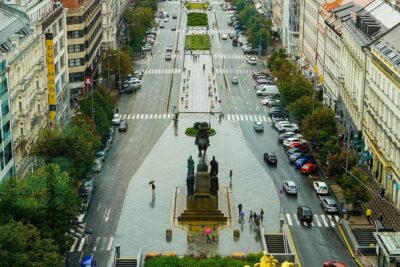
New Town is particularly important for understanding modern Czech political memory. Broad streets and major public spaces make the area well suited to discussing mass gatherings, public speeches, state power, and popular protest.
The guide’s job here is to make cause and effect clear. You learn not only what happened, but how the political system shaped daily life and why the public response changed over time. Guides have used personal stories and simple visual aids to explain what it meant to live under the system, rather than presenting communism as an abstract idea.
I appreciate that the tone is not simply gloomy. The tour includes humor, questions, and small moments of interaction, but the light touch does not erase the difficult material. You may be asked quiz questions, shown old images, or invited to consider how a place looked before and after communist rule.
The personal element can be particularly useful for visitors who know little about Czech history. A local guide can explain the difference between official public life and private attitudes at home, using family memories where appropriate. You should still treat these stories as personal perspectives, not as a complete account of every Czech person’s experience.
At the end of the walking portion, the itinerary lists the Jalta Boutique Hotel. The meeting information also describes the activity as ending back at the meeting point, so check the exact end point shown for your selected departure when you book. Either way, the route remains within central Prague and is designed as a walking experience rather than a coach excursion.
The 1970s workers’ canteen lunch
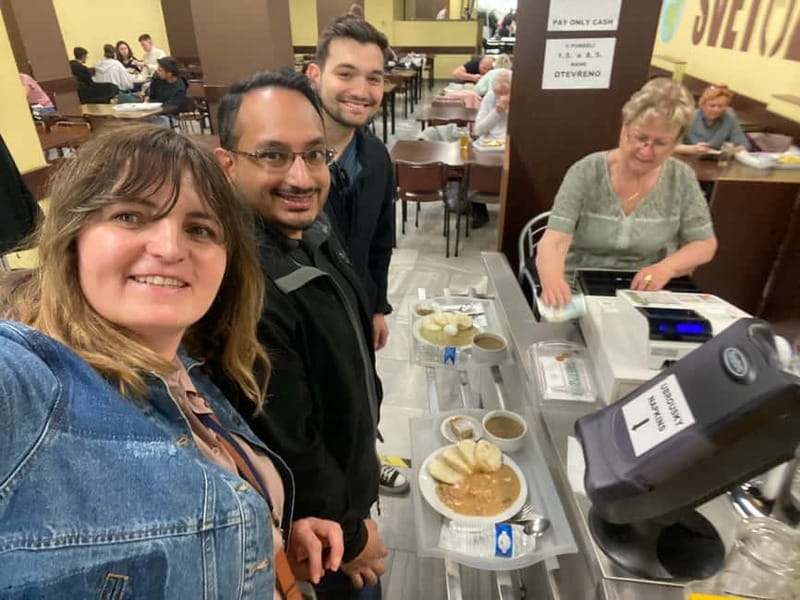
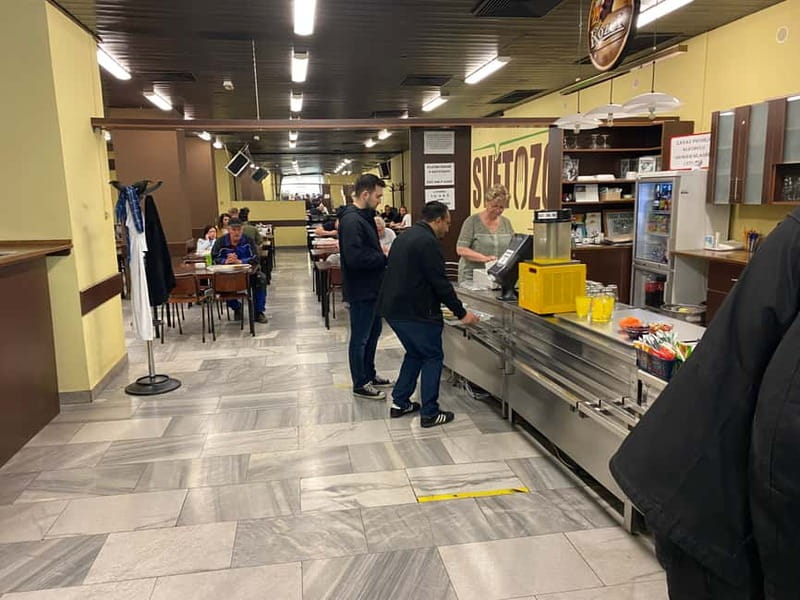
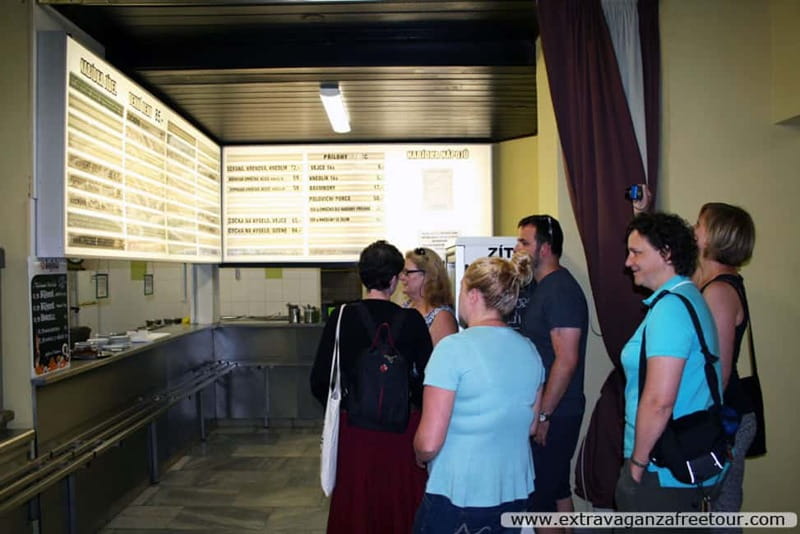
The four-hour option adds a 30-minute break in a retro working-class canteen styled after the 1970s. This is one of the tour’s more unusual features because it puts political history into an everyday setting.
You can choose to try a Czech meal or have Kofola, the Czech soft drink associated with the era. Food and drinks are not included in the tour price, so bring money for your order. The stop is not a formal tasting menu or a restaurant lecture. Think of it as a chance to sit down, eat something local, and see the kind of practical setting linked with working life under socialism.
That distinction is useful. A polished restaurant can serve traditional food, but a canteen gives you a better feel for the ordinary side of the period. The setting helps explain the difference between official ideals about workers and the real routines of people who had to shop, eat, work, and wait within a state-controlled economy.
The break also gives your feet a rest before the bunker visit. On a four-hour walking tour, that pause is welcome. It can also make the longer option feel less like a continuous history lesson.
You should not book the extended tour expecting lunch to be included. The canteen is part of the experience, but your meal or drink is paid separately. If you are traveling with children or picky eaters, the choice may be more about having a break and trying Kofola than planning a full meal.
One especially nice touch is the guide’s willingness to add small local food suggestions. Klara has taken time to show guests retro Czech chocolate bars that survived the move from communism to capitalism. That sort of detail can turn a short break into a useful introduction to Czech everyday culture.
More lunch stops around Prague:
- Prague Guided Walking Tour and Cruise with Authentic Czech Lunch
★ 5.0 · 3,627 reviews - Prague: Vltava River Lunch Cruise in an Open-Top Glass Boat
★ 4.5 · 2,865 reviews - Prague: Hard Rock Cafe with Set Menu for Lunch or Dinner
★ 4.4 · 1,487 reviews - Full-Day Prague Tour with Prague Castle, Lunch and Vltava Cruise
★ 4.0 · 921 reviews
Inside the 1950s nuclear bunker
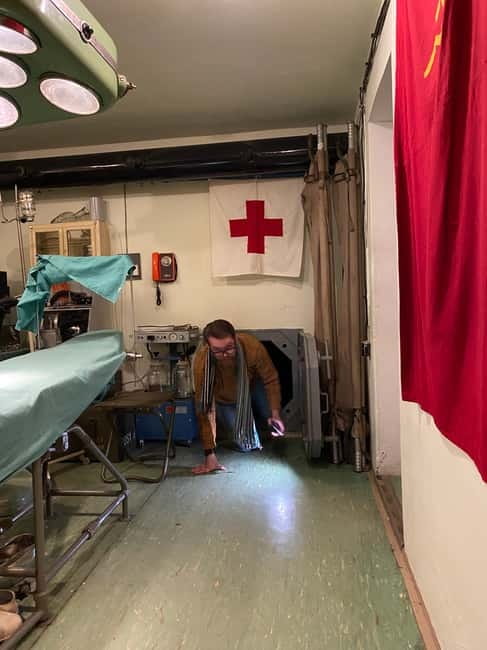
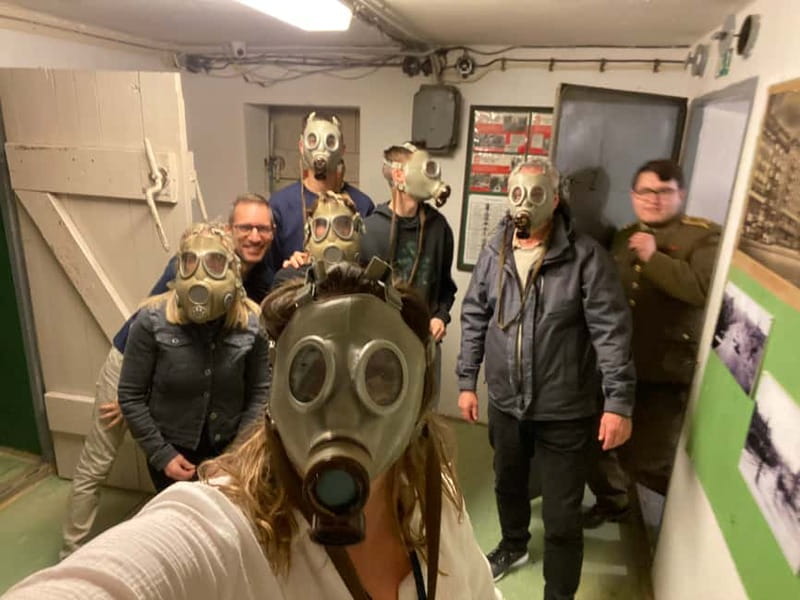
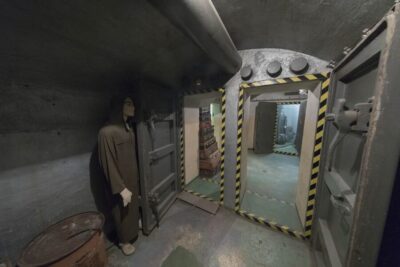
The bunker is the strongest reason to choose the four-hour tour. It is an authentic Cold War-era nuclear shelter dating from the 1950s, and the €10 entry fee is included in the extended tour.
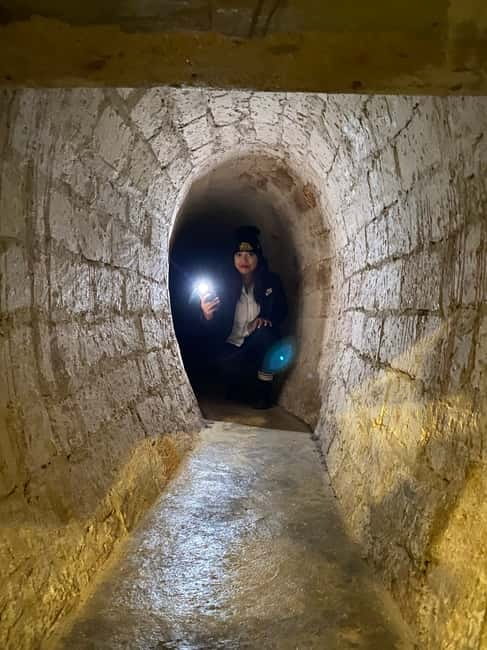
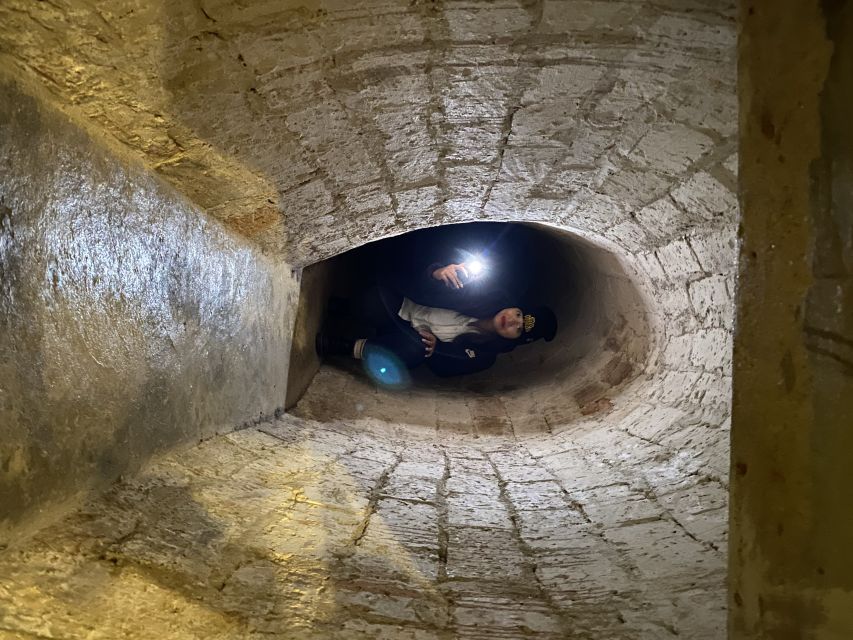
This is not just another underground room with a few signs on the wall. The bunker gives the history physical weight. You move into a space designed around the fear of nuclear war and the expectation that Prague might need emergency protection.
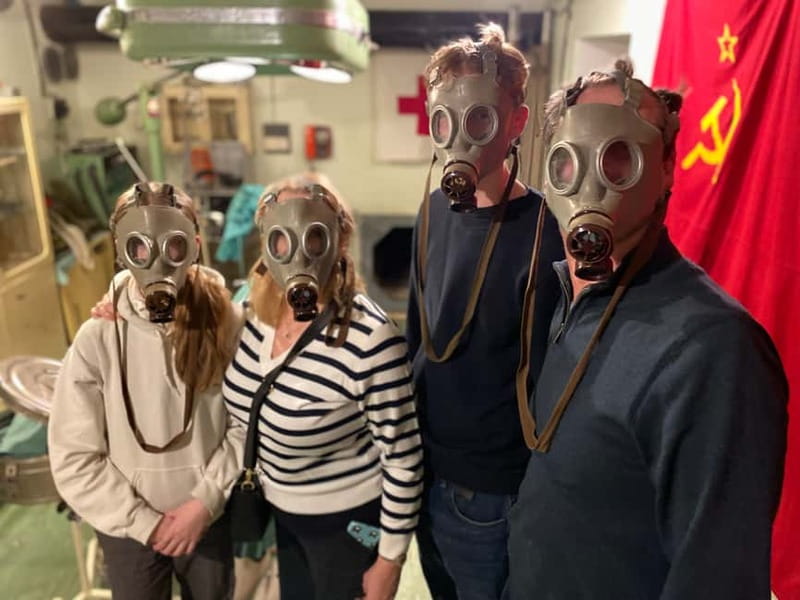
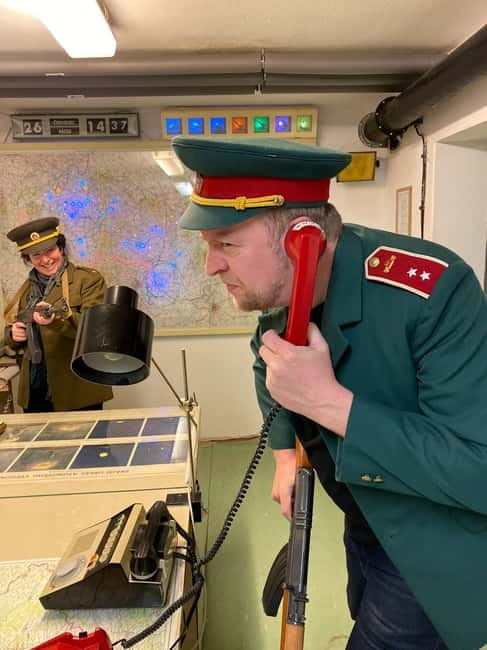
The atmosphere is part of the point. Concrete rooms, underground corridors, uniforms, and period equipment help you picture the tense mood of the early Cold War. Guides have encouraged visitors to try on actual uniforms, pose for photographs, and take part in small role-playing moments connected with the bunker’s functions.
That hands-on approach works well for families and younger visitors. It also keeps the bunker from becoming a silent display of military objects. Leo, Klara, and other guides have used the space to explain how the shelter worked and what different roles meant.
You should allow for a more confined setting here. The tour information specifically warns that the experience is not suitable for people with claustrophobia. Even if you are comfortable underground, the enclosed rooms may feel more intense than the open-air walking sections.
The bunker visit is guided, not simply a ticketed drop-in. That matters because the objects and rooms need context. Without explanation, a uniform is just a uniform. With a guide, it becomes part of a system built around emergency planning, authority, and fear.
The bunker also makes a strong contrast with the grand architecture above ground. Prague’s historic center can make the past feel decorative. Underground, the Cold War feels practical and immediate.
Guides who make the hard material accessible
The most important part of this tour is the guide. The subject covers political repression, failed reform, public protest, and the fall of a government, so poor presentation could make the experience either dry or confusing.
The guides used on this tour have different strengths. Klara is praised for combining humor with family experiences and for bringing visual material to show how places changed. Leo has used quiz questions and an energetic style to keep people involved. Tereza is described as warm, enthusiastic, and able to place Prague’s story in a wider setting.
You should expect a guide who welcomes questions rather than rushing through a script. Several details point to a flexible style: guides have answered long strings of questions, offered local advice for the rest of a Prague visit, and adjusted the break for small private groups.
That personal approach is a major benefit for a subject that can seem remote. You can ask about daily routines, public authority, family memory, or the differences between official and private life. The guide may not offer a single answer to every question, but you will get a clearer starting point for understanding Czech society.
The tour is in English. If you prefer silent sightseeing or a short list of dates, this may not be your best choice. If you like conversation and want to ask follow-up questions, the small group format is a real advantage.
Two hours or four hours?
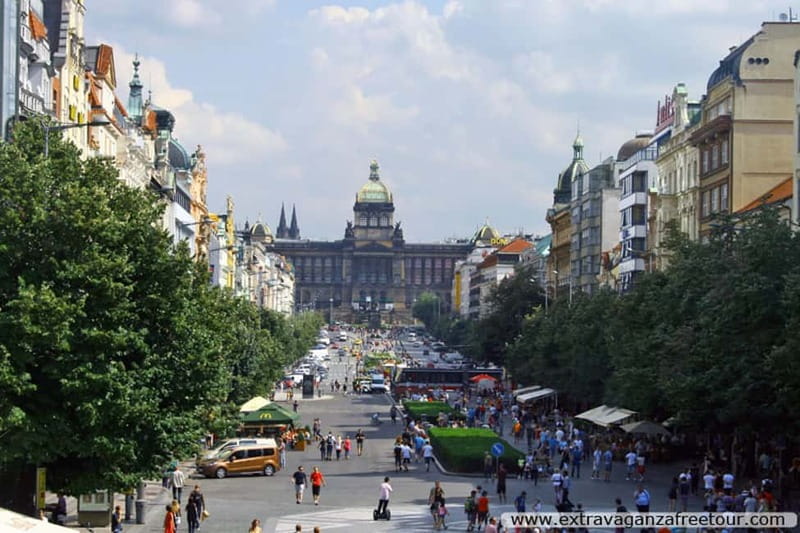
The two-hour option covers the walking tour through Old Town and New Town. It is the better fit if your schedule is tight, you want an introduction to the subject, or you already plan to visit other museums and underground sites.
The four-hour tour adds the canteen break and bunker. I would choose it for the fuller experience because those two additions change the tone of the day. The walk gives you the political framework, the canteen shows the everyday setting, and the bunker supplies a physical reminder of Cold War anxiety.
The longer tour is still manageable for most people who are comfortable walking for several hours, but you should dress for the weather. The activity operates rain or shine, and the outdoor sections make sensible shoes and a waterproof layer useful.
The four-hour version also offers better value at the listed price of $33 per person. The included bunker entry alone is worth about €10, and you receive the guided visit plus the canteen stop and the walking route. Lunch is extra, but the total cost remains reasonable for a small-group experience lasting up to half a day.
The two-hour version may be the smarter choice if you are watching every expense or have limited energy. You still receive the guide, the communist-era walking route, and the souvenir pin. You simply miss the bunker and canteen.
Price, group size, and practical value
At $33 per person, this tour sits in a useful middle ground. It costs more than wandering around Prague with a guidebook, but you get a local English-speaking guide, a planned historical route, and, on the extended option, bunker admission worth about 250 CZK.
The group limit of 15 is important. A large crowd would make it difficult to hear stories, view photographs, or ask questions in the street. With 15 or fewer people, the guide can keep the walk interactive, and a smaller booking may feel almost private.
The souvenir pin is a small but thoughtful extra. It is an original communist-era pin, not just a modern tour-company token. It will not decide the booking by itself, but it gives you a physical reminder of a subject that is otherwise carried away mostly through stories and images.
The activity offers free cancellation up to 24 hours before departure and a reserve-now, pay-later option. Those terms are useful if your Prague plans are still moving around, though you should check the exact conditions attached to your chosen time.
Meet at Republic Square by the Powder Tower and look for the blue umbrella. Since the route is outdoors and runs in all weather, check the forecast, wear shoes suited to city pavements, and be ready for the bunker’s enclosed spaces.
Who should book this Prague tour?
I would recommend the four-hour version to first-time visitors who want more than pretty architecture, history students, families with older children, and anyone curious about how ordinary life changed under communism.
It is also a good choice for people who already know the broad story but want local details. One participant who lives in Prague still learned new things, which suggests the tour can work beyond a basic introduction, especially when the guide uses photographs and personal memories.
The two-hour walk suits visitors with limited time, or anyone who wants a clear historical frame before exploring Prague alone. It is also a good first-day activity because the guide may offer useful suggestions for the rest of your stay.
I would hesitate if you dislike group walking, want a purely architectural tour, or feel uncomfortable in underground rooms. The bunker is optional only if you choose the shorter tour. On the extended option, it is a central part of the experience.
Should you book it?
Book this tour if you want Prague’s communist past explained by a local guide rather than reduced to dates on a plaque. The strongest package is the four-hour option, where the Old Town and New Town walk sets up the story, the workers’ canteen gives it an everyday setting, and the bunker makes the Cold War feel real.
Choose the two-hour version if you need a shorter outing or want to control extra spending. Either choice gives you a small group, an English-speaking guide, and a genuine look at events that shaped modern Czechia.
My practical advice is to choose a guide-led history experience early in your stay, then return to the places that caught your attention. If you can handle the enclosed bunker and have half a day free, the longer tour offers the better value and the more memorable visit.
FAQ
Where does the tour start?
The tour starts at the Powder Tower on Náměstí Republiky, also called Republic Square. Look for guides holding a blue umbrella.
What languages are available?
The tour is conducted in English with a live guide.
What are the two tour options?
You can choose a two-hour communism walking tour or a four-hour tour that adds the 1970s workers’ canteen and the 1950s nuclear bunker.
Is lunch included in the price?
No. The extended tour includes a break at the workers’ canteen, but lunch or Kofola is paid for separately.
Is entry to the nuclear bunker included?
Yes, bunker entry is included when you select the four-hour option. The included admission is listed as worth 250 CZK, or about €10.
Is the tour suitable for people with claustrophobia?
No. The activity is not suitable for people with claustrophobia because the extended option visits an underground nuclear bunker.
Recently added around Prague
- St Vitus Cathedral and Prague Castle Private Walking Tour★ 4.0 · 3 reviews
- Prague: Old Town and Jewish Quarter Small-Group Tour★ 5.0 · 3 reviews
- Royal Splendor Unveiled Private Prague Castle Interior Tour★ 3.5 · 3 reviews
- Prague Castle Interiors & Changing of the Guard-Small group★ 5.0 · 3 reviews
- Prague: Bohemian & Saxon Switzerland National Park Day Trip★ 5.0 · 3 reviews
- Running Tour of Prague. Your private 6-9K intro★ 5.0 · 3 reviews
- PRAGUE AIRSOFT SHOOTING GAMES★ 4.7 · 3 reviews
- Private walking tour and Boat cruise Best of Prague★ 5.0 · 3 reviews
Communism and Cold War Tours, compared.
Communism History and Nuclear Bunker Guided Tour
Read our review →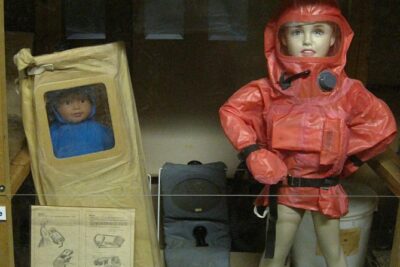
Prague Communism History and Nuclear Bunker Tour
Read our review →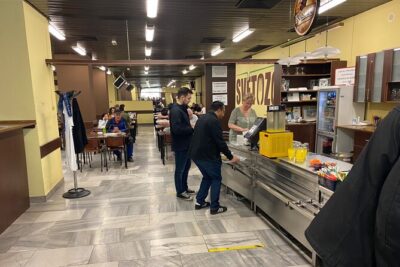
Communism & Nuclear Bunker Tour + 70s Canteen Lunch (own expense)
Read our review →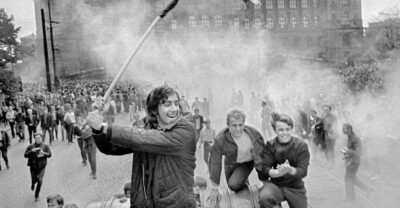
Second World War & Communism (Tip-based 3 hour tour)
Read our review →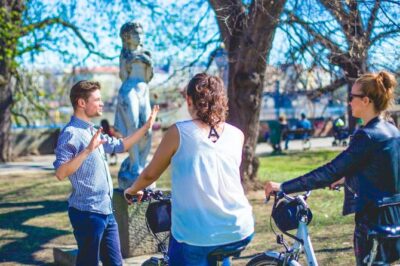
Browse the lists this tour appears in