
Reviewed · COMMUNISM AND COLD WAR TOURS
Back to Communism Walking Tour
Prague’s communist past becomes personal on this compact walking tour. You visit the former headquarters of the Czechoslovak secret police, pause at Wenceslas Square, and hear how the Velvet Revolution unfolded at Národní třída. The strongest part is the human angle, with guides such as Petr, Daniel, and Marek drawing on lived experience.
I like the small-group format, capped at 15 people, because it gives you room to ask direct questions about daily life, fear, shortages, and political change. I also like the plain, central route: the tour uses real streets and memorials rather than a museum display, so Prague itself becomes the classroom.
The main drawback is that this is an outdoor tour with no listed interior visits. The subject can also feel heavy, especially when the guide discusses Soviet bullets, political repression, and the risks faced by ordinary people. Dress for the weather and come ready for serious material.
Key points about this Prague walking tour
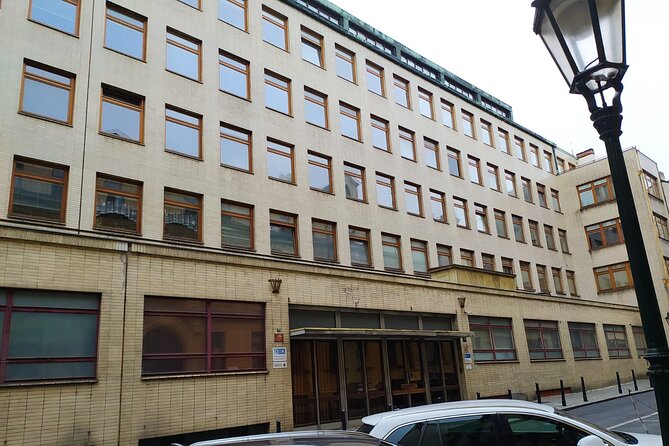
- Former secret police headquarters: Begin at Bartolomějská, once home to the Czechoslovak secret police.
- Wenceslas Square in modern history: Spend about 15 minutes at the square, a major setting for public protest and political change.
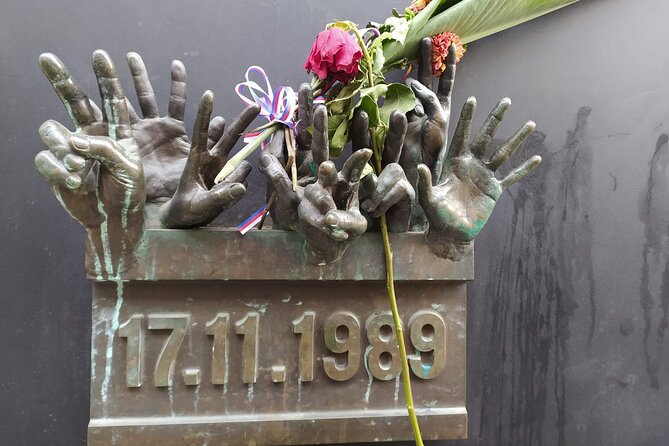
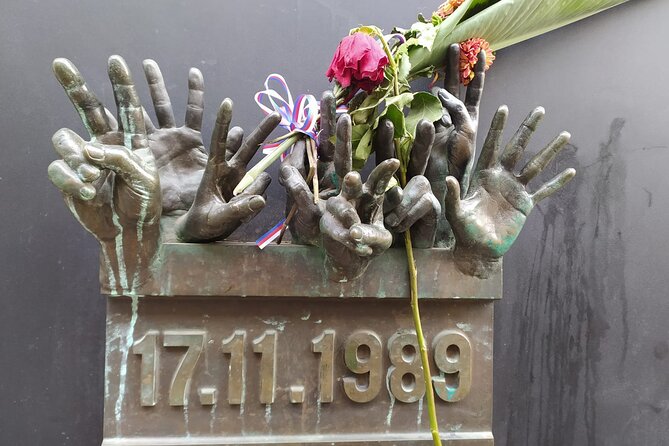
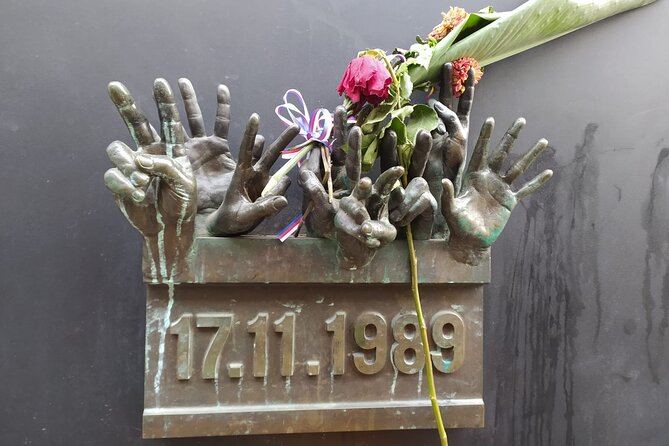
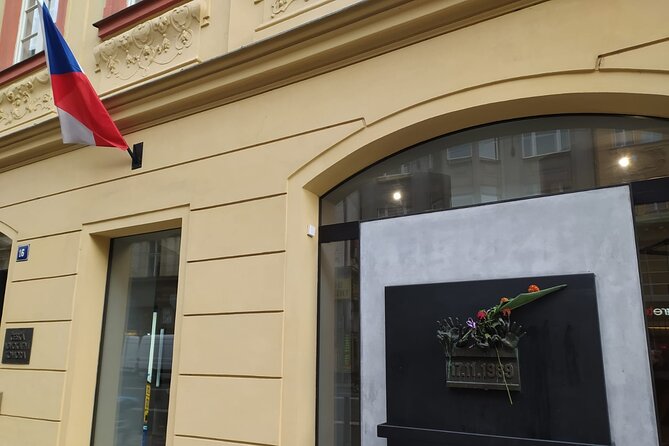
- Velvet Revolution memorial: See the hands reaching from the wall on Národní třída, dedicated to victims of the 1989 uprising.
- Guides with personal perspective: Petr, Daniel, and Marek have led this experience, with some guides having lived through part of the communist era.
- Small group, English language: The group limit is 15 people, and the tour is offered in English.
- Two hours on foot: You walk between central Prague sites, with the activity beginning and ending at Na Příkopě 864/28.
What this tour helps you understand about Prague
Prague is easy to admire as a city of castles, bridges, and grand squares. This walk asks you to look at it differently. The focus is the period of communist rule and the Cold War, especially the way politics shaped ordinary life in Czechoslovakia.
That makes the experience useful even if you already know the broad dates. You hear about the subject in places where events happened, rather than only reading a timeline on a museum wall. A guide can point out a street, building, or public square and explain why it mattered at that moment.
The personal element is important. Several guides, including Petr, Daniel, and Marek, have been praised for explaining the period clearly and for drawing on their own experience. That does not make every story an eyewitness account, but it can give the discussion a more direct tone than a standard sightseeing walk.
The subject is not presented as a light historical stroll. You may hear about surveillance, political control, the Cold War division of Europe, and the violent pressure that surrounded public protest. Some of the strongest comments about the experience describe the stories as chilling, especially when they connect the past with political events in the present.
That seriousness is part of the value. You should book this if you want to understand how a political system affected real people. If you are looking only for cheerful city views and quick facts, another Prague walking tour will suit you better.
More communism and Cold War walks:
- Prague: Communism History and Nuclear Bunker Guided Tour
★ 4.7 · 2,417 reviews - Prague Communism History and Nuclear Bunker Tour
★ 5.0 · 1,742 reviews - Communism & Nuclear Bunker Tour + 70s Canteen Lunch (own expense)
★ 5.0 · 1,036 reviews
Bartolomějská and the former secret police headquarters
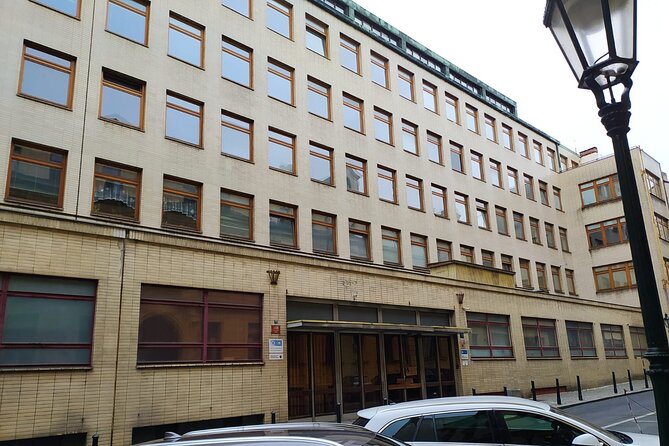
The first stop is Bartolomějská, the former headquarters of the Czechoslovak secret police. The stop itself lasts about five minutes, and there is no admission charge.
Five minutes may sound brief, but the location carries weight. This is not simply a building chosen for its appearance. It represents the machinery of surveillance and state control, giving the tour an immediate focus. From the start, you are dealing with how power operated behind the scenes.
The guide’s explanation matters more here than the amount of time spent at the site. The building alone cannot tell you what happened inside or how people felt about it. Your guide provides the political setting and explains why this address mattered.
Because the tour stays outside, you should not expect an interior inspection or a museum-style display. The value comes from standing at the place and asking questions. In a group of no more than 15, you have a fair chance to ask for clarification instead of simply listening from the back.
This is also a useful point to judge the guide’s approach. The best version of this tour should give you clear background without turning every subject into a political argument. The experience is historical and personal, but it is not presented as a formal academic lecture.
Wenceslas Square and Prague’s public life
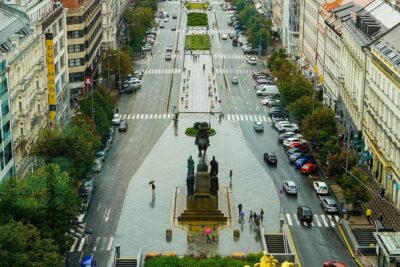
The walk continues to Wenceslas Square, with about 15 minutes set aside here. This is the longest listed stop, and it makes sense. Wenceslas Square has repeatedly served as a stage for major public events, so it offers plenty of room for the guide to connect the physical setting with recent Czech history.
The square is broad and central, with an urban scale that helps you picture crowds gathered for speeches, demonstrations, and moments of national tension. Your guide asks you to look beyond the shops and traffic and consider how the same space felt during the communist era and the transition away from it.
This stop is likely to be the main history lesson of the walk. The guide can explain what life was like under communism, how people understood the Cold War, and how public opinion changed over time. One advantage of a small group is that you can ask about daily life rather than staying with only the official political story.
Try asking practical questions. What could people say openly? How did families deal with state control? What did young people know about events outside Czechoslovakia? The supplied details do not promise a set list of answers, but the tour is designed around direct questions and personal explanation, so this is the right place to use them.
Wenceslas Square also gives the tour a wider frame. The story is not only about government buildings or famous leaders. It is about public space, shared memory, and how ordinary people respond when a political system begins to lose its hold.
The possible weakness is that 15 minutes is still not long enough to cover every event tied to the square. You will get an introduction rather than a full course in Czech political history. For most visitors, that is a sensible tradeoff in a two-hour walk.
Národní třída and the Velvet Revolution memorial
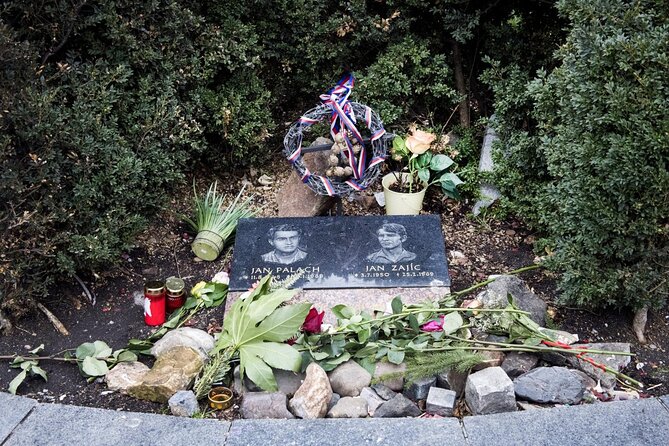
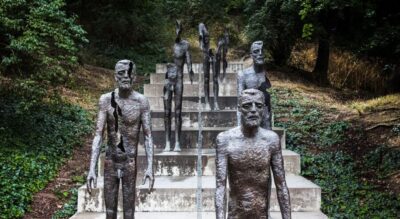
The third named stop is on Národní třída, where you see hands reaching out from a wall. It is a memorial to victims of the Velvet Revolution, and the stop lasts about 10 minutes.
This is the point where the tour moves from the long period of communist rule to the dramatic change that ended it. The memorial gives the guide a physical way to discuss the protests and the people who faced danger while demanding political freedom.
The phrase Velvet Revolution suggests a peaceful transition, but peaceful does not mean painless. The guide’s task is to explain the pressure, uncertainty, and human cost behind the change. The stories can be hard to hear, especially when the discussion includes the marks left by Soviet bullets and the treatment of people who opposed the system.
You may find this stop the most emotional part of the walk. It is not a grand monument with a long formal explanation. Its power comes from the human shape of the memorial and the story attached to the street around it.
The tour description identifies this as one of the strongest moments in modern Czech history. That is a fair reason to pay attention here, but the exact depth of the explanation will depend on your guide and the questions you ask. Petr, Daniel, and Marek have each been described as clear and well informed, with Daniel and Marek offering especially strong personal and historical context.
One useful feature is that the tour does not treat 1989 as a tidy ending. The guide connects the events to broader questions about the present and future. You may appreciate that wider view, though some people may prefer a strictly neutral list of dates and facts. The tour’s tone appears thoughtful and cautionary rather than purely celebratory.
More Walking Tours in Prague:
- Prague: 3-Hour Walking Tour of Old Town & Prague Castle
★ 4.7 · 5,696 reviews - Prague: Ghost Walking Tour Where Legends Come To Life
★ 4.4 · 5,253 reviews - Prague: Jewish Quarter Walking Tour with Admission Tickets
★ 4.7 · 3,729 reviews - Prague Guided Walking Tour and Cruise with Authentic Czech Lunch
★ 5.0 · 3,627 reviews
Why the personal guides matter
The most praised part of this experience is the quality of the guiding. Petr has been described as offering a detailed explanation in clear German on one occasion, although this booking is offered in English. Daniel has been noted for a deep understanding of the subject and for having experienced part of the period. Marek has been praised for explaining what he lived through and for answering questions clearly.
You cannot assume that one specific guide will lead your departure unless the booking confirms it. Still, these names show the type of person Spectrum Tours uses for the walk: a guide able to explain political history while relating it to everyday life.
That distinction matters. A guide who only recites dates can make communism feel remote. A guide who remembers part of the period can explain how the system affected choices, conversation, work, and family life. Personal memory also gives you a chance to ask questions that a textbook cannot answer.
At the same time, personal perspective has limits. No one guide can represent every Czech experience, and the tour is not a complete account of the era. Listen for the difference between personal memory, documented history, and interpretation. A good question can help you understand all three.
The English-language format makes the walk accessible to international visitors. Since the subject involves political terms and events, clear speech matters more than theatrical delivery. The positive descriptions of the guides focus on clear explanations, detailed stories, and strong subject knowledge, which are exactly the qualities you need here.
Is $44.22 good value for two hours?
At $44.22 per person, this is not the cheapest way to see central Prague. You are paying for a specialized subject and a guide-led experience rather than for entry to a major attraction.
The value depends on how much context you want. If you walk past Wenceslas Square and Národní třída alone, you can see the streets and memorial. You will not automatically understand their role in the Cold War, the secret police system, or the Velvet Revolution. The fee pays for the explanation, the route, and the chance to ask questions.
The group limit of 15 helps the price make more sense. This is not a large coach excursion where the guide must speak to a crowd from a distance. A small group can stop without creating much disruption, and you can ask about subjects that interest you personally.
There are no admission tickets included because the named stops are public places. That keeps the logistics simple, but it also means you should not expect a museum or interior attraction as part of the price. Consider the cost reasonable if you value a focused guide and a personal discussion. Consider it less attractive if you mainly want free sightseeing.
The booking pattern, with the activity often reserved about 78 days ahead, suggests that you should not leave it until the final moment if the subject is central to your plans. Confirmation is provided at booking, and free cancellation is available until 24 hours before the start time. A cancellation inside that window is not refundable, so keep an eye on local time.
Walking comfort, timing, and meeting point
The tour lasts about two hours and is built for active visitors who are comfortable exploring on foot. The listed stops account for roughly 30 minutes, with the remaining time used for walking and explanation between locations.
It begins at Na Příkopě 864/28 in Nové Město, Prague 1, and ends back at the same meeting point. That return is useful if you are fitting the walk between other plans. It also means you do not have to arrange transport from a distant final stop.
The meeting point is near public transportation, which helps if you are staying outside the center. The exact route between the named locations is not fully specified, so allow the full two hours rather than planning another appointment immediately afterward.
Wear shoes suited to city walking. You may not cover a huge distance, but the experience is still conducted outdoors and on foot. Weather can affect your comfort, and the descriptions of the tour repeatedly use the word freezing in a figurative sense, with at least one comment also suggesting very cold conditions. Bring a layer in cool weather.
Children must be accompanied by an adult. Service animals are allowed, and most people can participate. No special fitness requirement is stated, but anyone who dislikes walking or serious political discussion should think twice before booking.
Who will get the most from this experience?
I would recommend this walk to you if you have already seen Prague’s famous sights and want a better sense of the city’s 20th-century story. It is also a good choice if you grew up during the Cold War or on the other side of the political divide and want to compare that view with life in Czechoslovakia.
You will get the most from it if you ask questions. The small group and local guide make this more useful than a passive route from one monument to the next. Ask about ordinary routines, public speech, education, work, and the way people understood events beyond their borders.
The experience suits adults and older children who can handle difficult subjects. The tone includes warnings about the present and future, so it is not designed as a carefree family activity.
I would choose something else if you want interiors, archival exhibits, or a broad tour covering Prague from medieval times to today. This is a narrow, recent-history walk. Its strength is focus, not variety.
Should you book the Back to Communism Walking Tour?
Book it if you want personal stories tied to real Prague locations, especially the former secret police headquarters, Wenceslas Square, and the Národní třída memorial. The small group, English-language guiding, and two-hour length make it an easy addition to a city break.
I would be more cautious if outdoor walking is difficult for you, if you want a museum visit included, or if you prefer history without political interpretation. For the right audience, $44.22 is a fair price for a focused lesson in Prague’s communist and Cold War past, delivered where the events mattered.
FAQ
Where does the Back to Communism Walking Tour begin?
The tour begins at Na Příkopě 864/28, Nové Město, 110 00 Praha-Praha 1, Czechia.
Where does the tour end?
The activity ends back at the meeting point on Na Příkopě.
How long does the walking tour last?
The tour lasts approximately two hours.
Is the tour offered in English?
Yes. The experience is offered in English.
How large is the group?
The tour has a maximum of 15 participants.
Are admission tickets included?
The listed stops have free admission. The tour includes a local guide and a professional guide.
Can I cancel for a full refund?
Yes. You can cancel at least 24 hours before the local start time for a full refund. Cancellations or changes made less than 24 hours before the start are not accepted or refunded.
Recently added around Prague
- St Vitus Cathedral and Prague Castle Private Walking Tour★ 4.0 · 3 reviews
- Prague: Old Town and Jewish Quarter Small-Group Tour★ 5.0 · 3 reviews
- Royal Splendor Unveiled Private Prague Castle Interior Tour★ 3.5 · 3 reviews
- Prague Castle Interiors & Changing of the Guard-Small group★ 5.0 · 3 reviews
- Prague: Bohemian & Saxon Switzerland National Park Day Trip★ 5.0 · 3 reviews
- Running Tour of Prague. Your private 6-9K intro★ 5.0 · 3 reviews
- PRAGUE AIRSOFT SHOOTING GAMES★ 4.7 · 3 reviews
- Private walking tour and Boat cruise Best of Prague★ 5.0 · 3 reviews
Communism and Cold War Tours, compared.
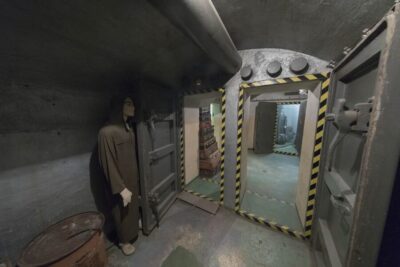
Communism History and Nuclear Bunker Guided Tour
Read our review →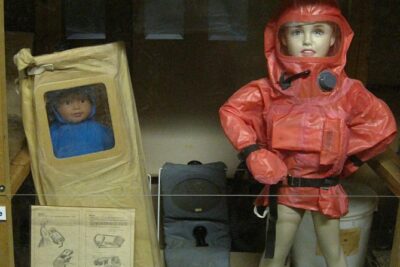
Prague Communism History and Nuclear Bunker Tour
Read our review →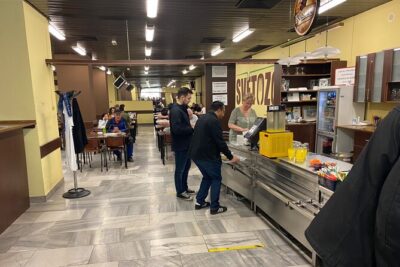
Communism & Nuclear Bunker Tour + 70s Canteen Lunch (own expense)
Read our review →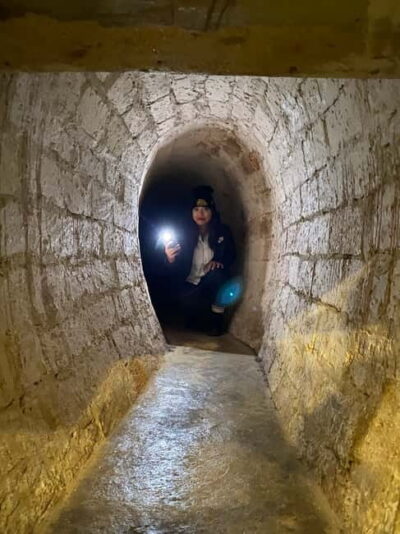
Communism and Bunker Tour with 70s Canteen Lunch
Read our review →
Second World War & Communism (Tip-based 3 hour tour)
Read our review →Browse the lists this tour appears in