
Reviewed · COMMUNISM AND COLD WAR TOURS
Communism and its fall Prague private tour
Prague’s communist past feels most immediate when it is tied to real streets, buildings, and people. On this private walk, Jana Neubergova brings unusual firsthand context: she took part in the November 1989 demonstrations and later worked in Vaclav Havel’s office.
I like the personal connection to the Velvet Revolution and the compact route through central Prague. I also like that the walk includes Lucerna Arcade, a place linked to Havel’s family and the city’s cultural life. The main drawback is that two hours goes quickly, and private walking tours cost more than a group outing.
Key points
- Jana’s firsthand perspective: She participated in the Velvet Revolution and later worked in Vaclav Havel’s office.
- Five central Prague stops: The route links the National Theater, Narodni Street, Lucerna Arcade, Wenceslas Monument, and the Memorial to the Victims of Communism.
- A private experience: Only your group takes part, giving you room to ask questions and set the pace within the fixed time.
- A focused two-hour walk: This works well as a history-centered introduction, not as a full survey of Prague.
- Hotel pickup on foot: Pickup is offered from all Prague hotels, but there is no private vehicle.
- A useful low-cost extra: The licensed guide and Prague map are included, while admission tickets are not.
Why Jana’s story changes the walk
Many tours about communism rely on dates, slogans, and broad political summaries. This one has a more direct human link through Jana, who was an active participant in the 1989 Velvet Revolution and later worked in Havel’s office.
That detail matters. You are not simply walking past a square where history happened. You can ask how events felt to someone who was there, what the demonstrations meant at street level, and how the country changed after the fall of communism. The available information does not promise a fixed lecture or a set list of personal stories, so the quality of your conversation will depend partly on the questions you bring.
Jana is described as friendly, approachable, personable, and fluent in English. Those qualities are useful on a private tour. A serious subject can become stiff if the guide only recites facts, while a relaxed guide can help you connect political change to everyday life.
This is also a good reason to book privately rather than simply join a large group. You can ask for more detail about the Velvet Revolution, Vaclav Havel, daily life under communism, or the meaning of a particular monument. The tour lasts about two hours, so it helps to arrive with a few questions in mind.
More communism and Cold War walks:
- Prague: Communism History and Nuclear Bunker Guided Tour
★ 4.7 · 2,417 reviews - Prague Communism History and Nuclear Bunker Tour
★ 5.0 · 1,742 reviews - Communism & Nuclear Bunker Tour + 70s Canteen Lunch (own expense)
★ 5.0 · 1,036 reviews
Starting with Prague’s intellectual meeting point
The tour begins at a meeting point associated with Czech intellectuals. The supplied details do not identify the exact building or explain how long you remain here, so you should treat this as the opening context rather than a full stop with a formal admission.
That beginning makes sense for the subject. Communism and its fall were not only matters for politicians and government offices. Writers, artists, students, academics, and other intellectuals played an important role in shaping public debate and opposition in Czechoslovakia.
This is a useful point to ask Jana about the connection between culture and politics. Her background gives the conversation a natural bridge from the ideas circulating among Czech intellectuals to the public demonstrations that later filled Prague’s streets.
Because the opening point is not described in detail, do not expect a museum visit or a long indoor presentation here. The value is in the explanation you receive and in how the guide sets up the rest of the walk.
National Theater and the power of culture
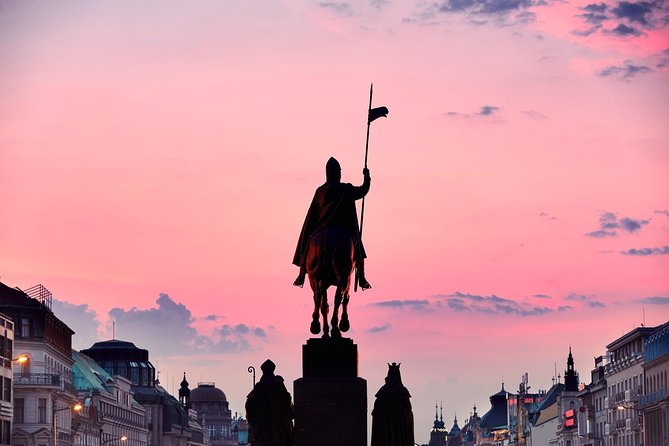
The first named stop is the National Theater, where you spend about 10 minutes. It played an important role in Czech history, though no admission ticket is included.
The theater gives the tour a strong cultural starting point. For a country living under political pressure, theaters and other cultural institutions could be more than places for entertainment. They helped preserve Czech identity, create space for public thought, and connect artists with the wider society.
Your time here is short. The itinerary does not say that you enter the theater, so plan on seeing and discussing it from the outside unless Jana tells you otherwise. If you want a full interior visit, you would need to arrange that separately, and the tour price does not cover admission.
I like this stop because it keeps the story from becoming a simple tale of government against protesters. Czech culture, public expression, and national identity are part of the explanation. The National Theater also helps you see why a city’s cultural buildings can matter during times of political control.
Narodni Street, where the revolution began
The walk then reaches Narodni Street for about 15 minutes. This is identified as the street where the Velvet Revolution started, making it one of the most important places on the route.
Here the broad story of 1989 becomes much more specific. You are standing in a central Prague street connected with the opening phase of the demonstrations that brought down the communist government. Jana’s own participation gives this stop particular weight.
This is likely the place where you will want to slow down and ask questions. What happened during the demonstrations? How did people respond? What did the atmosphere feel like? The available tour details do not provide a scripted account, but Jana’s firsthand experience is the reason to expect more than a standard textbook outline.
The stop lasts only 15 minutes, so the guide has to keep the story focused. That is a strength if you want a clear overview, but it may feel brief if you are hoping for a long political discussion. You can make the most of it by asking about the human side of the events rather than only requesting dates.
No admission ticket is included here. That is not much of a concern because the stop is centered on the street and its historical meaning, not on entry to a paid attraction.
A few more Prague half-days to weigh up
- Prague: 50-Minute Sightseeing Evening Cruise
★ 4.2 · 33,780 reviews - Prague: Medieval Dinner with Unlimited Drinks
★ 4.4 · 19,847 reviews - Prague: Skip-the-line Castle Ticket and Optional AudioGuide
★ 4.3 · 11,121 reviews - Prague: Castle Tour with Local Guide and Entry Ticket
★ 4.6 · 10,422 reviews
Lucerna Arcade and the Havel family connection
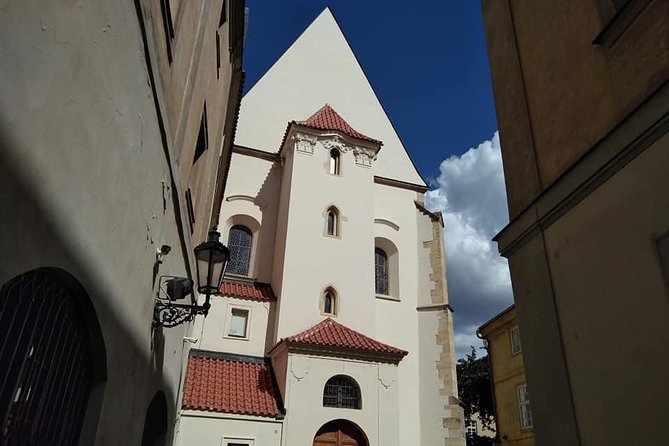
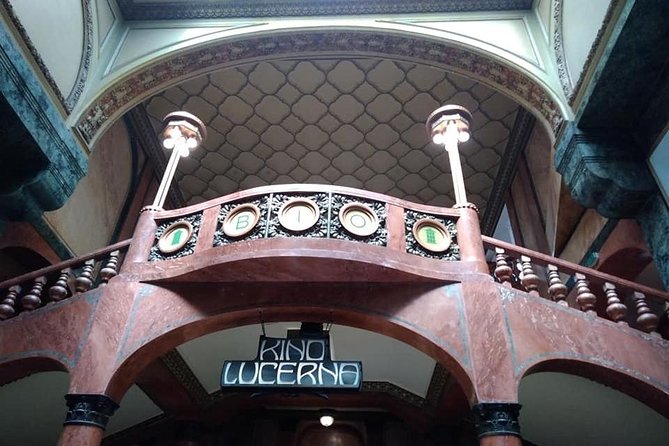
Lucerna Arcade receives about 10 minutes. This cultural and social center was founded by the family of Vaclav Havel, the playwright and later Czech president.
The arcade adds an important personal and cultural thread to the route. Havel is often remembered as a political figure, but his background as a writer and public intellectual is central to understanding his role. Lucerna links family, culture, public life, and the political changes that followed 1989.
Jana’s experience working in Havel’s office makes this stop especially relevant. You can ask about Havel as a public figure and about the transition from dissident and playwright to president. The tour information does not specify which rooms or businesses you visit, so expect a short outdoor or public-area explanation rather than a dedicated Havel museum tour.
Ten minutes is enough to point out why Lucerna matters, but not enough for a long architectural or family history. I see this as a connective stop, one that ties the earlier cultural themes to Havel and prepares you for the larger public space at Wenceslas Square.
Wenceslas Monument at the city’s civic heart
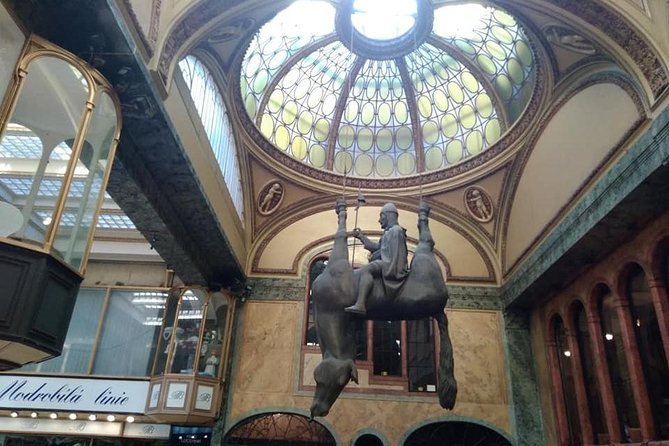
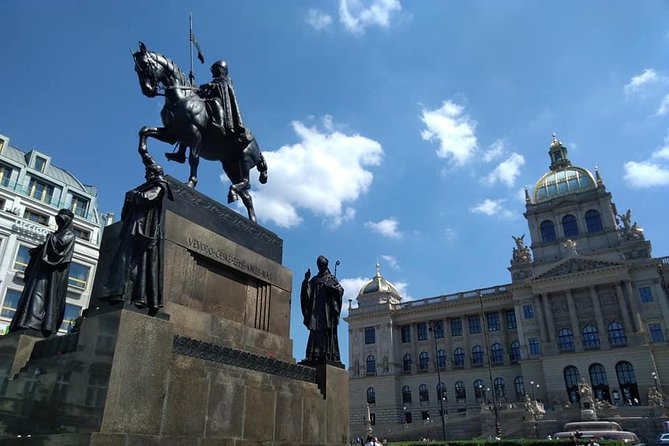
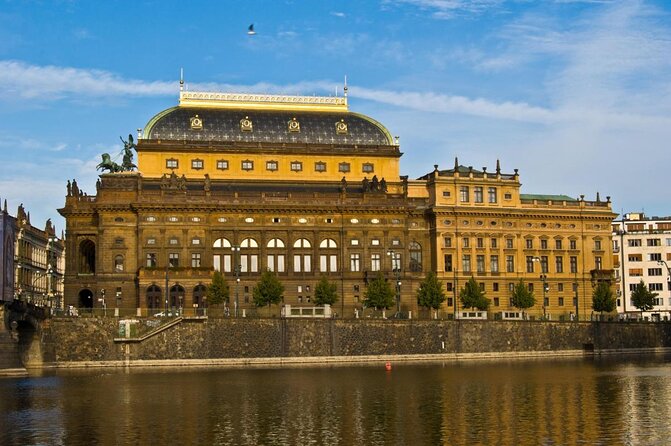
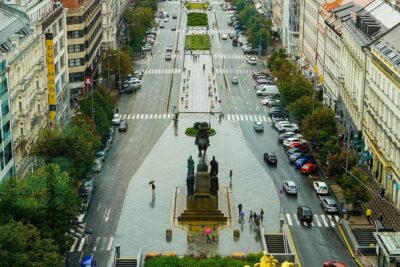
The longest stop is at the Wenceslas Monument, with about 20 minutes. The monument to the Czech patron saint sits at the top of Wenceslas Square, described as the heart of Prague and a traditional setting for demonstrations.
This is the place where the tour’s themes gather. The National Theater represents culture, Narodni Street points to the beginning of the Velvet Revolution, and Lucerna connects the story to Havel’s family. At Wenceslas Square, those strands meet in a public space where Czech people have repeatedly gathered to express political hopes and demands.
The monument itself honors the Czech patron saint, but the square around it carries the larger civic meaning. You will learn why demonstrations continue to be associated with this location and how public gatherings shape the story of modern Prague.
The 20-minute visit gives Jana more time to explain the fall of communism and the role of mass demonstrations. It is also a practical spot for questions because the square provides a clear setting for discussing public action, national identity, and political change.
The square is central, which makes this stop easy to combine with other sightseeing later. At the same time, its central position means you should not expect a quiet, private setting. You are learning in a public urban space, not in a hushed museum room.
The Memorial to the Victims of Communism
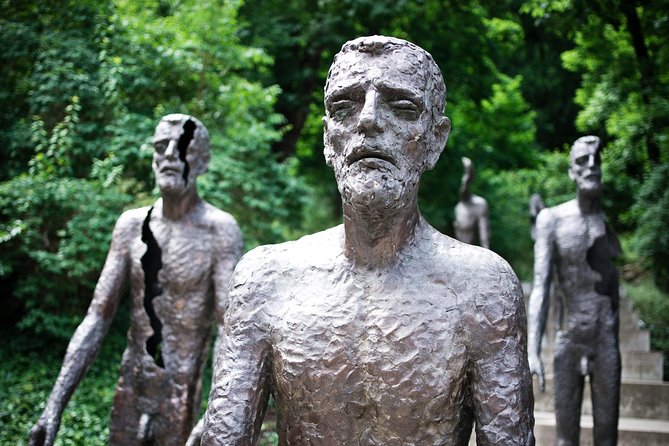
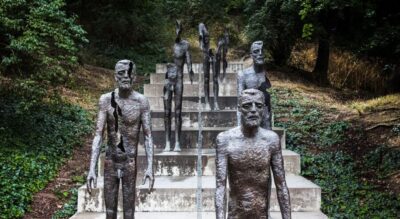
The final listed stop is the Memorial to the Victims of Communism, with about 15 minutes. Admission is free, and the memorial was created by sculptor Olbram Zoubek, one of the most notable Czech artists.
This is the tour’s most solemn stop. After the earlier focus on public movements, culture, and revolution, the memorial turns attention to the people who suffered under communist rule. It gives the walk a human cost that statistics and political timelines often leave out.
Zoubek’s work provides another link between art and public memory. The memorial is not simply a place to hear facts about the regime. It asks you to think about how a country remembers those harmed by political repression.
Fifteen minutes is a reasonable amount of time for an introduction, though you may want to stay longer afterward. Since entry is free, you can return on your own if you want a quieter look or more time to reflect. The tour itself remains a short overview rather than a full study of communist persecution.
This stop also helps keep the experience balanced. The route celebrates the courage of people who opposed communism, but it does not end with the political victory alone. It closes by remembering the victims.
What two hours can realistically cover
The listed stops add up to about 70 minutes of visiting time. The remaining portion of the two-hour tour is likely used for walking between locations and for explanations along the way, although exact walking times are not provided.
That makes this a focused city walk, not an all-day history program. You can expect a clear route through central Prague and a selected set of places rather than a detailed account of every decade of communist rule.
I like the format for a first introduction. It gives you a framework you can use for later sightseeing, especially if Prague’s twentieth-century history is unfamiliar. You will leave with several locations to recognize and a better sense of how culture, public squares, demonstrations, and memory fit together.
If you already know the political history well, the personal material from Jana may be the main reason to choose this tour. If you want extensive background on the First Republic, the Nazi occupation, the entire communist period, or post-1989 politics, two hours will not be enough.
The route requires a moderate level of physical fitness. It is a walking experience, and the tour details do not mention seating or a vehicle between stops. Wear comfortable shoes and allow enough time for a steady walk through central Prague.
Private value at $85 per person
At $85 per person, the price is easier to justify for a small group than for one person traveling alone. You are paying for a private, licensed guide and a conversation shaped around your group, not for transportation, attraction tickets, or a large sightseeing package.
The strongest value comes from Jana’s background. A standard walking tour can explain that the Velvet Revolution happened in 1989. This experience offers the possibility of hearing about those demonstrations from someone who participated in them and later worked for Havel.
The free Prague map is a small but useful extra. You can mark the places discussed and use the map to continue exploring after the walk.
There are clear limits. Private transportation is not included, and no admission tickets are included at the National Theater, Narodni Street, Lucerna Arcade, or Wenceslas Monument. The memorial is free, but the tour price should be viewed as payment for the guide and private format rather than a bundled entry package.
For a couple, family, or group of friends who care about modern Czech history, that can be good value. For a solo visitor comparing prices, a group tour may cost less, but it will not provide the same private access to the guide’s personal perspective.
Pickup, timing, and planning advice
Pickup on foot is offered from all Prague hotels. This means the guide can meet you at your accommodation and begin the walk, but you should not expect a private car or minibus.
The experience is offered in English and operates Monday through Sunday from 9:00 a.m. to 6:00 p.m. The mobile ticket makes it easy to keep the booking details with you.
Confirmation is normally received at booking. If you book within one day of the start time, confirmation arrives as soon as possible and depends on availability. I would avoid leaving a last-minute reservation until the final hours, especially if you have a tight Prague schedule.
Free cancellation is available when you cancel at least 24 hours before the start time. Changes or cancellations made less than 24 hours before the experience are not accepted for a refund, and the cutoff follows local Prague time.
Service animals are allowed, and the route is near public transportation. Still, the moderate fitness requirement matters more than the transport note: you should be comfortable walking for roughly two hours.
Who will get the most from this experience
I would recommend this tour to you if you want Prague’s communist past explained through real places rather than a long indoor lecture. It is particularly suited to history lovers, visitors interested in Havel, and anyone who wants a personal account of the Velvet Revolution.
It also works well for English-speaking families or small groups. A private format lets you ask questions without worrying about holding up a larger party.
You may want something else if your main goal is architectural sightseeing, museum admission, or a broad overview of Prague’s entire history. This walk is tightly focused on communism and its fall, and the stops are mostly short.
The tour also suits visitors who have already seen Prague’s main medieval sights. After the Old Town streets and castle views, this route gives you a different way to read the city. It shows how recent political events remain tied to ordinary streets and public spaces.
Should you book Communism and its Fall Prague?
Book it if you want a short, private history walk led by someone with a direct connection to the events of 1989. Jana’s participation in the Velvet Revolution and later work in Havel’s office are the tour’s most unusual strengths.
The experience is best for a small group willing to walk, ask questions, and focus on modern Czech history. At $85 per person, it is not the cheapest way to spend two hours in Prague, but the private guide and personal perspective give the price a clear reason.
Skip it if you want included transportation, long visits inside attractions, or a general city tour. Choose it if you want the streets of central Prague to explain how culture, protest, memory, and political change shaped the Czech Republic.
FAQ
How long does the Communism and its Fall Prague tour last?
The tour lasts approximately two hours.
Is the tour private?
Yes. Only your group participates in the activity.
Is the tour offered in English?
Yes. The tour is offered in English.
Can I be picked up from my Prague hotel?
Yes. On-foot pickup is offered from all Prague hotels. Private transportation is not included.
Are admission tickets included?
Admission tickets are not included for the National Theater, Narodni Street, Lucerna Arcade, or Wenceslas Monument. Admission to the Memorial to the Victims of Communism is free.
What is the cancellation policy?
You can cancel at least 24 hours before the start time for a full refund. Cancellations or changes made less than 24 hours before the start time are not accepted for a refund.
Recently added around Prague
- St Vitus Cathedral and Prague Castle Private Walking Tour★ 4.0 · 3 reviews
- Prague: Old Town and Jewish Quarter Small-Group Tour★ 5.0 · 3 reviews
- Royal Splendor Unveiled Private Prague Castle Interior Tour★ 3.5 · 3 reviews
- Prague Castle Interiors & Changing of the Guard-Small group★ 5.0 · 3 reviews
- Prague: Bohemian & Saxon Switzerland National Park Day Trip★ 5.0 · 3 reviews
- Running Tour of Prague. Your private 6-9K intro★ 5.0 · 3 reviews
- PRAGUE AIRSOFT SHOOTING GAMES★ 4.7 · 3 reviews
- Private walking tour and Boat cruise Best of Prague★ 5.0 · 3 reviews
Communism and Cold War Tours, compared.
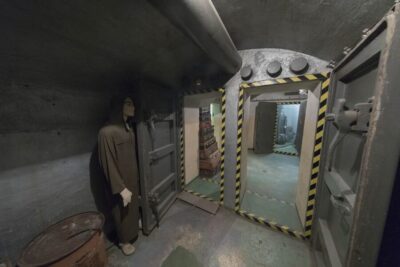
Communism History and Nuclear Bunker Guided Tour
Read our review →
Prague Communism History and Nuclear Bunker Tour
Read our review →
Communism & Nuclear Bunker Tour + 70s Canteen Lunch (own expense)
Read our review →
Communism and Bunker Tour with 70s Canteen Lunch
Read our review →
Second World War & Communism (Tip-based 3 hour tour)
Read our review →Browse the lists this tour appears in