
Reviewed · COMMUNISM AND COLD WAR TOURS
Prague Private Tour and Museum of Communism with transfer
Prague’s communist past comes into focus when you connect the Museum of Communism with the streets where protests, beatings, and political upheaval actually happened. This four-hour private tour pairs museum exhibits with Albertov, Wenceslas Square, Národní třída, and Letna Park.
I like the hotel pickup in a private Mercedes, which saves time and makes the scattered stops easy to reach. I also like the chance to hear personal memories from guides such as Pavel, Iva, or Hanna, who can make the political story feel human rather than textbook-dry.
The drawback is price: at $221.60 per person, this is a serious splurge unless your group values private transport and a flexible guide. You’ll also do a moderate amount of walking, and the four-hour schedule may feel brisk if you want long museum visits.
Key points to know before booking
- Personal memories can shape the tour: Guides such as Pavel, Iva, and Hanna have shared family or firsthand memories of life under communism.
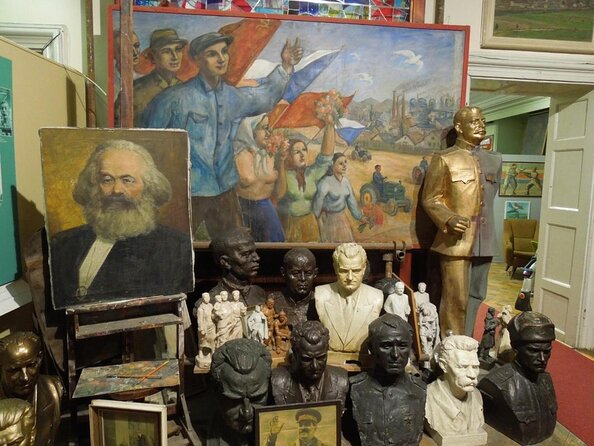
- The museum visit is built into a wider story: You see recreated classrooms, factories, and interrogation rooms, then visit the Prague streets tied to protest and repression.
- Private transport saves effort: A Mercedes and driver connect sites that are not all clustered together.
- You can request special interests: Ask for World War II locations or other Prague subjects when booking.
- Letna Park gives the tour breathing room: The former Stalin monument site now offers a broad city view and a giant metronome.
- The tour ends where it suits you: Return to your hotel or choose a convenient central Prague drop-off.
Why this private Prague tour works
This is not simply a museum transfer with a guide attached. Its value comes from the link between objects inside the museum and places outside it. You learn how the communist system worked, then see where ordinary people challenged it.
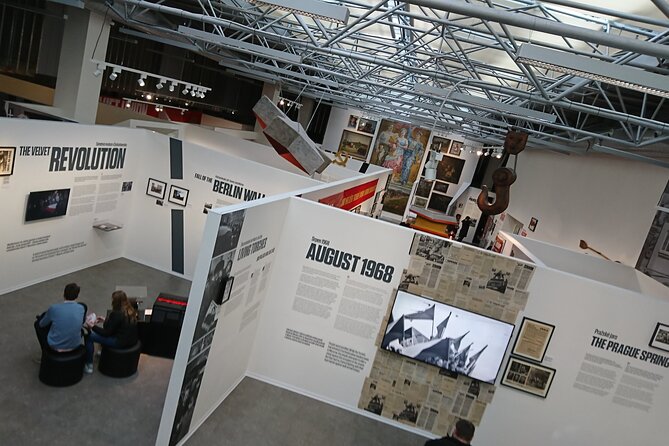
The tour covers Czechoslovakia from the February 1948 communist takeover through the Velvet Revolution in 1989. That period includes political repression, censorship, secret police surveillance, economic controls, propaganda, and the changes brought by the Prague Spring of 1968.
A private format matters here. You can ask why a particular protest began, how daily life differed from political slogans, or what happened to ordinary families during the period. The guide can adjust the walking route to your interests instead of following a fixed group script.
The experience is offered in English and includes pickup at your hotel lobby or another chosen place in Prague. At the end, you can return to your hotel or continue exploring from a central location. That small choice can save you a taxi ride and turn the final part of the afternoon into extra sightseeing.
More communism and Cold War walks:
- Prague: Communism History and Nuclear Bunker Guided Tour
★ 4.7 · 2,417 reviews - Prague Communism History and Nuclear Bunker Tour
★ 5.0 · 1,742 reviews - Communism & Nuclear Bunker Tour + 70s Canteen Lunch (own expense)
★ 5.0 · 1,036 reviews
Starting at Albertov and the Velvet Revolution
Albertov is a brief stop, but it gives the story a strong opening. Peaceful student demonstrations connected with the Velvet Revolution began here in 1989.
You’ll spend about 10 minutes at the site, with no admission charge. This is more of a historical marker than a major attraction, so do not expect a large memorial complex or a long visit. Its importance comes from the events associated with the location.
Starting here also helps you understand the Velvet Revolution as a movement that grew from public action. The story is not limited to famous speeches or packed squares. It began with people gathering, marching, and taking risks.
Ask your guide to explain how student demonstrations developed into a national challenge to communist rule. In a private tour, you have a better chance to pause over questions that would be hard to fit into a large group outing.
Wenceslas Square and the National Museum
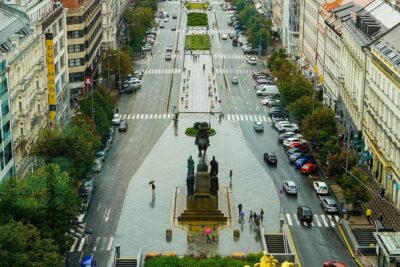
Wenceslas Square is one of the most useful stops for understanding modern Czech history. It looks like a long city boulevard lined with hotels, shops, restaurants, clubs, and offices, but its practical modern appearance hides several major political turning points.
The square was once a horse market. Today, the equestrian statue of Saint Wenceslas marks its upper end, in front of the National Museum. You’ll have around 30 minutes here, enough to see the main landmarks and hear how the space changed over time.
During the Prague Spring in 1968, Soviet armored units clashed with protesters around the square. The bullet holes preserved on the National Museum’s walls remain a physical reminder of that confrontation. They are easy to miss if you pass by without knowing where to look.
The square also became a major gathering place in November 1989. A protest against police brutality helped set off the Velvet Revolution, which led to the end of communist rule. Your guide can connect the events at Wenceslas Square with the earlier stop at Albertov, giving the day a clear historical progression.
You’ll also pass the Jalta Hotel. The site is tied to surveillance by the StB, the communist secret police, which monitored foreign diplomats and businesspeople staying there. This detail adds another layer to the square. Public protest happened outside, while state surveillance operated quietly inside places used by international visitors.
Národní třída and the hands in the wall
At Národní třída, the tour focuses on the harsh police response to the Velvet Revolution. The police blocked side streets and formed a narrow cordon, leaving people who tried to escape exposed to beatings.
The stop takes about 20 minutes and is free. Look for the hands reaching out of the wall, a memorial that recalls those who were trapped and assaulted.
This is one of the tour’s most direct reminders that the end of communism was not a calm administrative change. People faced real physical danger in the streets. The location helps explain why public anger spread so quickly after the crackdown.
The stop is short, so it works best when your guide supplies the context. You may want to ask about the sequence of events between the demonstration and the regime’s collapse. Because this is a private outing, you can spend a little more time on the subject if it matters to you, though the overall four-hour limit still applies.
More drivers for the day in Prague:
- Prague Airport Private Arrival Transfer
★ 4.5 · 991 reviews - UNESCO Cesky Krumlov from Prague with Guided Tour and Transfer
★ 4.0 · 812 reviews - Prague Airport Private Departure Transfer
★ 4.5 · 780 reviews - Prague: Shared Group/Private Segway Tour with Hotel Transfer
★ 4.8 · 574 reviews
Inside the Museum of Communism
The Museum of Communism is the main indoor portion of the experience, with about one hour set aside for the visit. Skip-the-line admission is included, so you avoid waiting at the entrance and get more usable time during the tour.
The museum covers communist Czechoslovakia from 1948 to 1989. Its subjects include:
- Daily life and education
- Politics and economics
- Sports and state propaganda
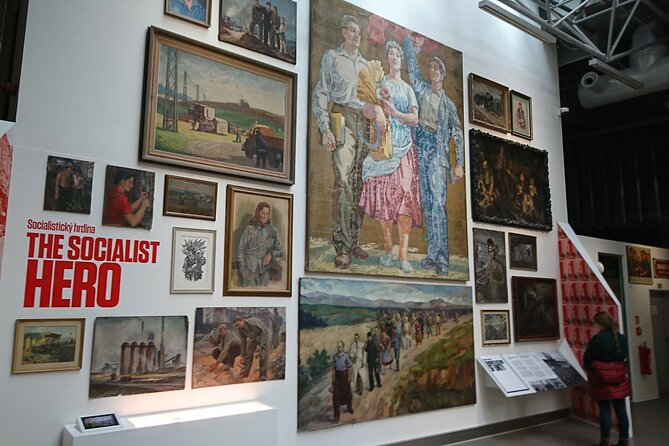
- Socialist Realism in art
- Media censorship
- The army, police, and People’s Militias
- The StB secret police
- Courts, show trials, and political labor camps
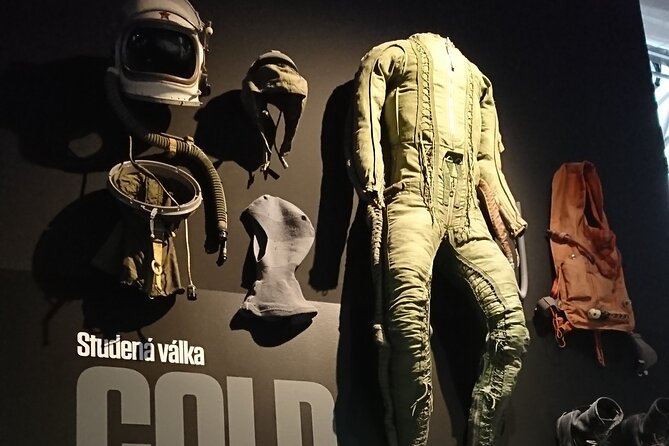
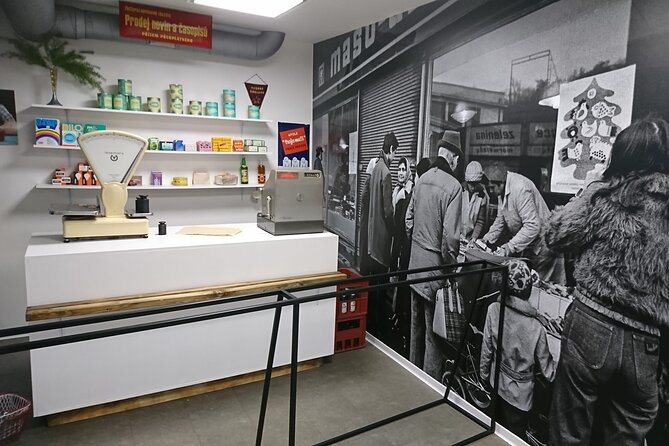
The recreated spaces are especially helpful. An old classroom shows how education could serve the state. A factory setting points to the economic side of the system. An interrogation room gives a more unsettling sense of how political control worked.
You’ll get more from these displays with a guide than by walking through alone. The exhibits cover a lot of ground, and the guide can explain which details matter most. Personal accounts from guides such as Iva, Hanna, and Pavel can add useful human scale to the dates and institutions.
Pavel, in particular, has shared family stories connected to the communist period from 1948 through 1990. Iva has described living in the Czech lands during communism, while Hanna has brought the political changes of the last six decades into a personal account. Guide assignments can vary, so you should not book on the assumption that one named guide is guaranteed. You can, however, list your interests when reserving the tour.
One hour is enough for an introduction, not a complete museum study. If you are an especially serious history enthusiast, you may want to return independently for more time. The benefit here is that the museum forms one part of a larger route instead of taking up the whole outing.
Letna Park and the former Stalin monument
The final listed stop is Letna Park, where you’ll have about 30 minutes to take in the view over Prague. This is a welcome change of pace after the heavier material at Národní třída and the museum.
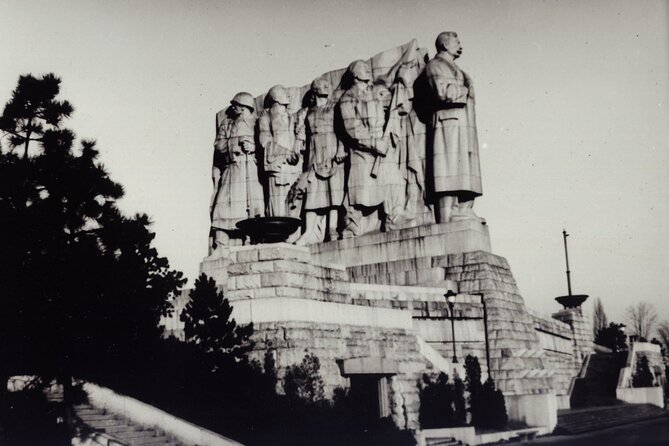
A giant statue of Joseph Stalin once overlooked the city from this location. The monument was later removed after Nikita Khrushchev publicly exposed Stalin’s crimes. The base survived, and a large metronome now occupies the site.
The view gives you a chance to think about how quickly political symbols can change. A monument built to project state power is gone, while the hill has become a popular place for young people, couples, and skateboarders.
Letna is also one of the practical benefits of having a car and driver. You avoid working out the best route between the museum, central squares, and the park. You can simply step out, take in the panorama, and let the guide explain what once occupied the space.
Private Mercedes transport and the four-hour schedule
The vehicle is a private Mercedes with a driver, and bottled water is included. Pickup and drop-off are available at your hotel or another chosen location in Prague’s center.
This arrangement is useful if you are short on time, traveling with family, or prefer not to navigate public transport between several historical sites. It also lets you see more than a museum and one nearby square in a single morning or afternoon.
The driver can add value beyond basic transport. On one outing, a driver and guide made extra stops possible, including the memorial connected with the assassination of Reinhard Heydrich, the Church of Saints Cyril and Methodius and its crypt, the Dancing Buildings, and the television tower. Those additions are not guaranteed parts of the standard route, but they show how a private vehicle can give the day some flexibility when time allows.
The tour is listed as operating daily from 8:00 AM to 2:00 PM. Confirm the exact pickup time when you book. You should wear comfortable shoes, since the itinerary includes a moderate amount of walking across streets, squares, and park paths. The tour runs in all weather, so bring suitable clothing.
What the $221.60 price buys you
At $221.60 per person, the tour costs far more than visiting the museum and using Prague’s public transport on your own. That comparison is fair, but it does not capture the full service.
Your price includes:
- An English-speaking professional guide
- Museum of Communism admission
- Private Mercedes transport and driver
- Hotel pickup and drop-off
- Bottled water in the vehicle
The main value lies in time, context, and control. You do not need to find the museum, wait in line, plan transfers, or decide how to connect Albertov with Wenceslas Square and Letna Park. You can also request a central drop-off and continue sightseeing or stop for lunch.
This price makes the most sense for a small group that can share the private vehicle cost, particularly if several people are interested in twentieth-century history. Group discounts may be available, so check the total for your party rather than judging only by the per-person figure.
If your budget is tight, you can recreate parts of the route yourself. The museum admission, public transport, and free outdoor sites would cost less. You would give up the private car, the skip-the-line entry, the personal stories, and the ability to ask one guide to connect the sites.
Who should book it
I would recommend this tour to anyone who wants a focused introduction to Prague’s communist period without spending a full day in a museum. It suits history enthusiasts, families with a strong interest in the subject, and first-time visitors who want a guide to handle the city’s geography.
It is also a good choice if World War II history interests you. Special requests must be listed at booking, but private guides and drivers may be able to include related sites when time allows. The extra stops connected with Heydrich and the Church of Saints Cyril and Methodius show the kind of adjustment that may be possible.
You may prefer another option if you want a slow museum visit, a full-day political history program, or the lowest-cost way to see Prague. Four hours passes quickly, and the standard experience gives each outdoor stop limited time.
Free cancellation is available when you cancel at least 24 hours before the local start time. Changes or cancellations made later are not refunded, so keep that cutoff in mind.
Should you book this Prague experience?
Book it if you want the Museum of Communism to make sense as part of the city around it. The preserved bullet holes at the National Museum, the protest site at Národní třída, and the former Stalin monument at Letna Park give the museum’s themes a physical setting.
The private format is the real reason to pay more. You receive a clean, comfortable vehicle, door-to-door service, and a guide who can respond to your questions. The strongest guides, including Pavel, Iva, and Hanna, bring family memories and lived experience into a difficult subject.
Skip it if you are happy using public transport, reading independently, and seeing only the museum and central sites. For everyone else, especially a small group with limited time, this is a well-focused way to understand how Prague moved from communist rule to the Velvet Revolution.
FAQ
How long does the Prague private tour last?
The experience lasts approximately four hours.
Is Museum of Communism admission included?
Yes. Admission to the Museum of Communism is included, with skip-the-line entry.
Is hotel pickup available?
Yes. Your private guide can pick you up at your hotel lobby or another location of your choice in Prague.
Where does the tour end?
The tour can end at your hotel or at another convenient place in central Prague.
What transportation is provided?
Transport is provided in a private Mercedes vehicle with a driver. Bottled water is included in the car.
Is this a private tour?
Yes. Only your group participates in the activity.
Which language is the tour offered in?
The tour is offered in English.
How much walking is involved?
A moderate amount of walking is involved. Comfortable walking shoes are recommended.
Can you request particular places or subjects?
Yes. You should list special interests when booking so the guide can prepare for your private tour. Food and drinks are not included.
More Museums in Prague
- Prague: Museum of Fantastic Illusions Entry Ticket
★ 4.3 · 4,337 reviews - IAM Illusion Art Museum Entry Ticket
★ 4.2 · 1,664 reviews - Prague: Museum of Senses Admission Ticket
★ 4.0 · 1,445 reviews - IAM Illusion Art Museum Prague Fast Pass Ticket
★ 5.0 · 957 reviews
Recently added around Prague
- St Vitus Cathedral and Prague Castle Private Walking Tour★ 4.0 · 3 reviews
- Prague: Old Town and Jewish Quarter Small-Group Tour★ 5.0 · 3 reviews
- Prague Castle Interiors & Changing of the Guard-Small group★ 5.0 · 3 reviews
- Royal Splendor Unveiled Private Prague Castle Interior Tour★ 3.5 · 3 reviews
- Prague: Bohemian & Saxon Switzerland National Park Day Trip★ 5.0 · 3 reviews
- Running Tour of Prague. Your private 6-9K intro★ 5.0 · 3 reviews
- Private walking tour and Boat cruise Best of Prague★ 5.0 · 3 reviews
- Discover Prague’s most Photogenic Spots with a Local★ 3.5 · 3 reviews
Communism and Cold War Tours, compared.
Communism History and Nuclear Bunker Guided Tour
Read our review →
Prague Communism History and Nuclear Bunker Tour
Read our review →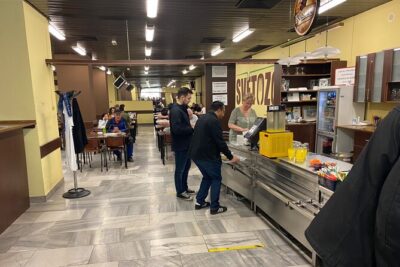
Communism & Nuclear Bunker Tour + 70s Canteen Lunch (own expense)
Read our review →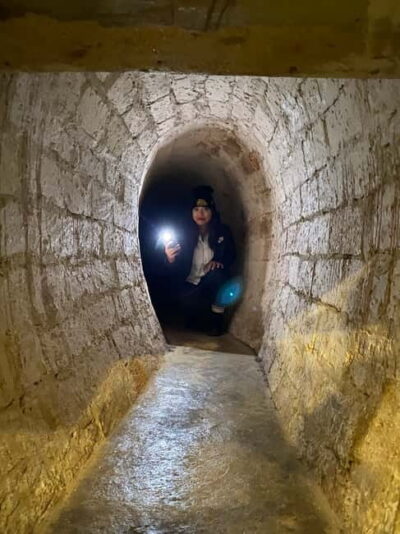
Communism and Bunker Tour with 70s Canteen Lunch
Read our review →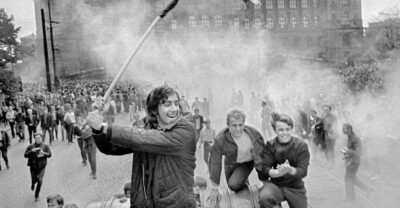
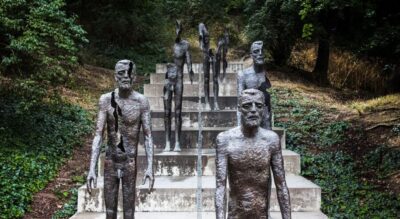
Second World War & Communism (Tip-based 3 hour tour)
Read our review →Browse the lists this tour appears in