
Reviewed · COMMUNISM AND COLD WAR TOURS
Second World War & Communism (Tip-based 3 hour tour)
Prague’s 20th-century story is not confined to one museum. It unfolds across bridges, squares, churches, and ordinary streets. This three-hour walking tour connects Nazi occupation, the fate of Czech Jews, the Prague Uprising, Communist rule, the 1968 invasion, and the Velvet Revolution in one clear route.
I like two things here. First, the tour ends at the crypt of Saints Cyril and Methodius, where Operation Anthropoid resistance fighters hid, and entry to the Museum of Anthropoid Operation is included. Second, the route links political events to real people, including Jan Palach and Václav Havel, instead of treating history as a list of dates.
The main caution is the walking. The route covers about five kilometers and includes several stops across central Prague. The group size may also need checking before you book: the activity is described as private, yet one account records a group of 24 instead of the advertised maximum of eight.
Key points to know before booking
- The route follows a clear historical arc: Start with the birth of Czechoslovakia, move through Nazi occupation and World War II, then follow Communism, the 1968 invasion, and the Velvet Revolution.
- Operation Anthropoid gives the tour a powerful finish: You enter the memorial crypt where Czechoslovak resistance soldiers hid after the assassination of Reinhard Heydrich.
- The Jewish history stop is brief but important: Pinkas Synagogue provides a focused look at emigration, persecution, and the fate of Czech Jewish communities.
- You walk through central Prague rather than sit in a museum: The Old Town, Wenceslas Square, Národní Street, and the Dancing House become part of the story.
- The $3.60 price is only the starting point: This is a tip-based tour, so you should expect to pay the guide according to the value you feel you received.
- English guides shape the experience: Guides named in booking feedback include Kamil, Vaclav, Katerina, Katarina, and Kuba, with clear storytelling and personal accounts often praised.
Why this route helps you understand modern Prague
Many first visits to Prague focus on the castle, Charles Bridge, and the medieval Old Town. Those sights matter, but they do not explain why the country has such a strong connection to democracy, occupation, resistance, and civic protest.
This tour shifts your attention to the last hundred years. You walk from Klárov through the Old Town and New Town, watching the city change as the story moves from independence after World War I to Nazi control, Soviet influence, and the peaceful end of Communism.
The route is especially useful if you know the broad outline but want the Czech version of events. You hear why Czechoslovakia was among the first countries occupied by Hitler, what happened to Czech soldiers during World War II, and how the end of the war did not simply restore the country’s earlier political system.
The guide’s job is important here. The chronology can become complicated, particularly when the Prague Uprising, postwar politics, Communist rule, and the 1968 Warsaw Pact invasion are covered in a single morning or afternoon. Guides such as Kamil and Vaclav are praised for explaining events in a clear sequence, while Katerina and Katarina are noted for combining facts with accounts of life under Communism.
More communism and Cold War walks:
- Prague: Communism History and Nuclear Bunker Guided Tour
★ 4.7 · 2,417 reviews - Prague Communism History and Nuclear Bunker Tour
★ 5.0 · 1,742 reviews - Communism & Nuclear Bunker Tour + 70s Canteen Lunch (own expense)
★ 5.0 · 1,036 reviews
Klárov: independence, occupation, and resistance
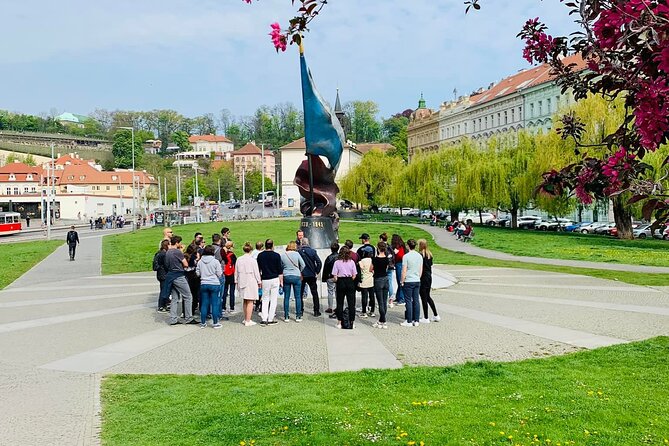
The tour begins near Metrocafe Klárov at Klárov 51 in Malá Strana. This opening stop takes about 20 minutes and uses two nearby monuments, the Memorial to the Second Resistance and the Winged Lion Memorial, to set the scene.
You begin with the creation of Czechoslovakia after World War I. That matters because the country’s independence was still relatively new when Hitler’s expansion placed it under threat. The guide then explains why Czechoslovakia was one of the first countries occupied by Nazi Germany and what happened to Czechoslovak soldiers during World War II.
This is a useful opening because it gives you political context before the tour turns to individual suffering. You are not simply told that the Nazis arrived. You learn what independence meant to Czechs and Slovaks, and why occupation struck a country that had only recently built its own state.
The monuments also make the first stop more concrete. Rather than beginning with a long lecture in a square, you have visible reminders of wartime resistance and the Czech connection to Britain. Admission is free, and the stop is outdoors, so dress for the weather.
Pinkas Synagogue and the fate of Czech Jews
From Klárov, the route continues to Pinkas Synagogue. The scheduled stop lasts about 15 minutes, with no separate admission charge listed for this part of the walk.
The subject is the fate of Czech Jewish communities during World War II. You learn how many people managed to emigrate and what happened to those who remained. The stop is short, so you should expect a focused explanation rather than an extended museum visit.
That limited time is both a strength and a weakness. It keeps the route moving and prevents the tour from becoming overloaded with long indoor stops. At the same time, anyone seeking a detailed study of Jewish Prague will need more time elsewhere.
The synagogue is a serious place, and the tone of the tour changes here. The earlier discussion of independence and soldiers gives way to the personal cost of Nazi rule. Listen closely, since this is one of the shorter stops and the information comes quickly.
Old Town Square and the Prague Uprising
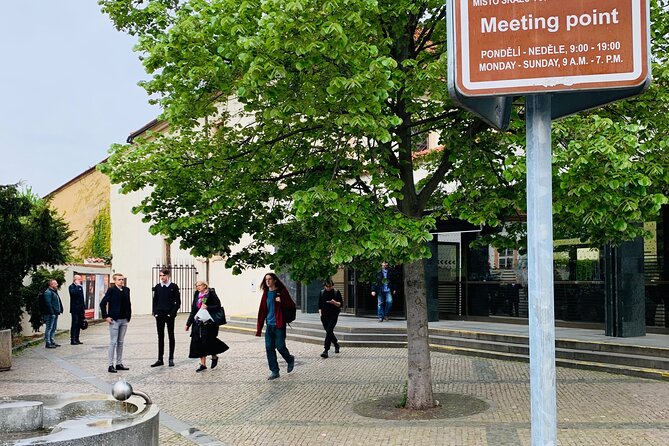
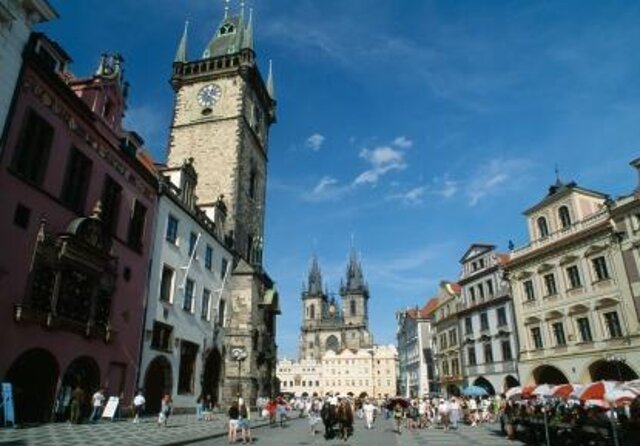
At Staroměstské náměstí, beside the Old Town Hall, the guide explains the Prague Uprising and the closing phase of World War II. This stop lasts about 20 minutes.
The square is usually associated with medieval buildings and grand ceremonies, but here you see it as a setting for modern political conflict. The guide explains how the uprising unfolded and how the end of Nazi rule shaped what came next.
This transition is one of the most valuable parts of the tour. The war did not simply end with a clean return to democracy. The political balance after liberation helped create the conditions for the rise of Communism in Czechoslovakia.
The location also makes the lesson easier to remember. You are standing in one of Prague’s best-known public spaces while hearing how ordinary streets and civic buildings became tied to national crisis. Because this is an outdoor stop, the square may be crowded, so stay close enough to hear the guide.
A few more Prague half-days to weigh up
- Prague: 3-Hour Walking Tour of Old Town & Prague Castle
★ 4.7 · 5,696 reviews - Prague: 3-Hour Old Town and Prague Castle Tour in German
★ 4.8 · 5,671 reviews - 3-hour Complete Prague Bike Tour
★ 5.0 · 3,674 reviews - Prague 3-hour Afternoon Walking Tour including Prague Castle
★ 5.0 · 1,899 reviews
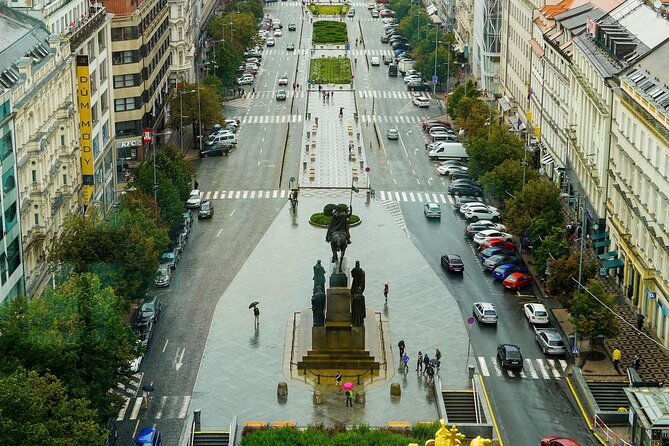
Wenceslas Square, 1968, and Jan Palach
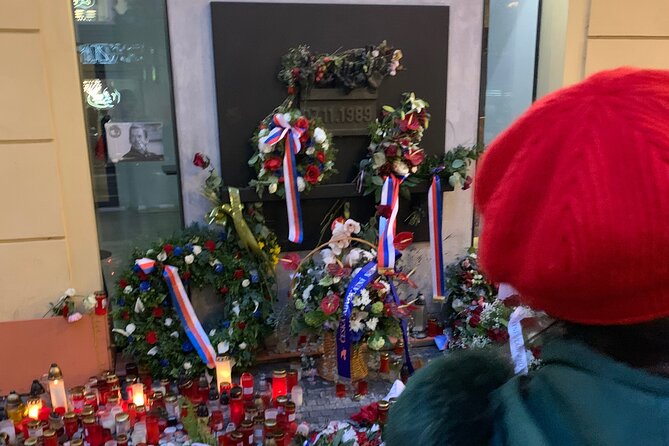
The next major stop is Wenceslas Square, where you spend about 20 minutes discussing life after Communism began, the 1968 invasion, and Jan Palach’s self-immolation.
The guide explains why Warsaw Pact armies invaded Czechoslovakia in 1968. This is a key moment in the country’s modern story, and the location gives the subject real weight. Wenceslas Square has long served as a place for public gatherings and political action, making it a natural setting for this part of the route.
You also learn where Jan Palach set himself on fire in protest. The subject is painful, but it shows how political pressure was experienced by individuals, not only by governments and armies.
This stop works best when the guide keeps the chronology simple. Accounts of the 1948 Communist takeover, the reform movement of 1968, the invasion, and the later protests can blur together. The strongest guiding on this tour is said to be linear and easy to follow, which matters most here.
Art under Communism at OC Quadrio
At OC Quadrio, the guide introduces the Rotating Head of Kafka and uses it to discuss art during Communism. The stop lasts about 15 minutes.
The modern sculpture provides a break from military and political events. It also raises a broader question: how could artists work, criticize, or communicate under a restrictive government? The stop is not only about Kafka or the sculpture itself. It shows how public art can reflect changing attitudes toward authority and identity.
This is a shorter stop, but it gives the tour some variety. You are no longer looking only at monuments connected directly to war or protest. Instead, the guide shows how cultural expression fits into the wider story of life under Communism.
The sculpture is outdoors, and admission is free. If you enjoy architecture and public art, this may be one of the more memorable pauses. If you prefer military history alone, it may feel like a brief side trip, though it helps explain the social atmosphere of the period.
Národní Street and the Velvet Revolution
The route then reaches the hands reaching out of the wall on Národní třída. The stop takes about 15 minutes and covers the Velvet Revolution and the fall of Communism.
This is where the tour moves from repression to mass civic action. You learn how Communism ended in Czechoslovakia and why Národní Street became linked with the movement. The name Velvet Revolution reflects the largely peaceful nature of the change, but the guide can also show that peaceful political change still depends on courage and public pressure.
The hands emerging from the wall give the stop a visual focus. After several hours of occupation, war, and authoritarian government, the image helps turn the final political change into something you can see rather than simply memorize.
The route is also becoming more personal by this point. You have heard about national leaders and soldiers, but the story increasingly concerns students, protesters, artists, and citizens. That human scale is one reason the tour suits anyone who wants more than battlefield facts.
Václav Havel and the National Theater
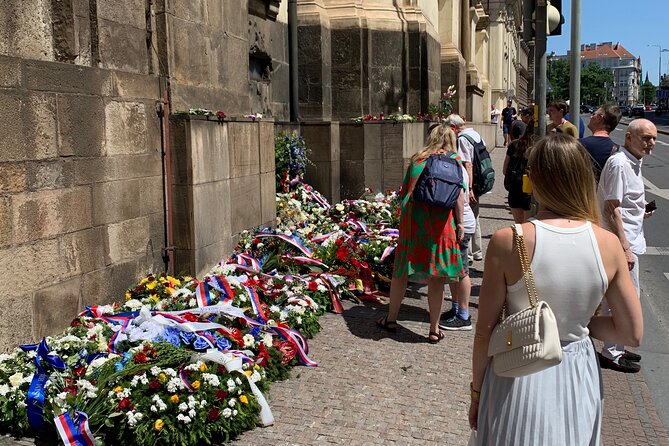
At the National Theater, the guide spends about 10 minutes introducing Václav Havel and his role in the Velvet Revolution. You learn how he became the first president of Czechoslovakia after the fall of Communism.
This is a compact stop, but Havel ties together several themes from the tour: political dissent, culture, public protest, and the move from opposition to government. The theater is an apt setting for discussing a playwright who became a major political figure.
Do not expect a full biography. The purpose is to place Havel in the story of 1989 and explain why his leadership mattered. The short duration keeps the tour on schedule, but you may want to read more if Havel’s life interests you.
The Dancing House and the Valentine’s Day bombing
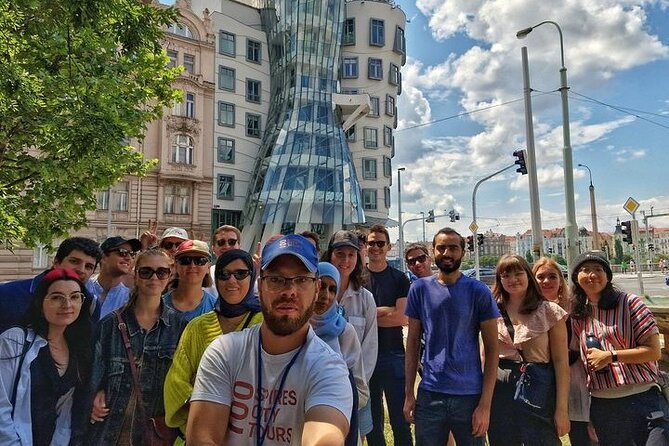
The next stop is the Dancing House, one of Prague’s most recognizable modern buildings. The guide spends about 10 minutes showing you the building and explaining the story of the Valentine’s Day bombing.
This stop adds another wartime episode to a route already focused on occupation and resistance. It also gives you a chance to see how Prague’s modern architecture fits into the city’s changing appearance.
Because the stop is brief, the bombing story is presented as a compact piece of context rather than a full historical case study. Still, it helps break up the political chronology and reminds you that the city’s 20th-century past includes more than the best-known milestones.
The Dancing House is also a practical marker. The final stop is only about a minute away from it, and the end point is close to Charles Square as well.
Operation Anthropoid at Saints Cyril and Methodius
The tour finishes at the Orthodox Cathedral of Saints Cyril and Methodius on Resslova Street. The scheduled discussion lasts about 20 minutes, and this is the point where the included museum entry becomes especially valuable.
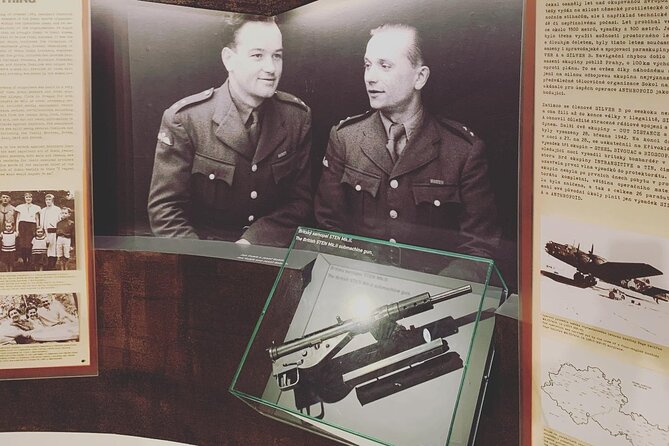
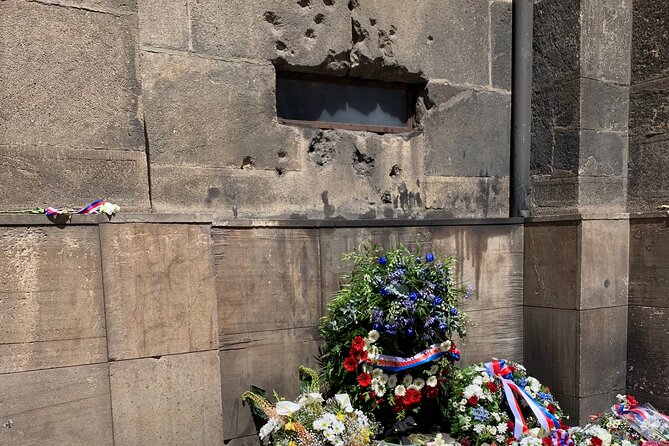
Here you learn about Operation Anthropoid, widely regarded as the most important achievement of the Czechoslovak resistance during World War II. The tour ends in the crypt, which served as a hideout for soldiers involved in the operation.
The crypt changes the mood of the entire experience. Earlier stops take place in open squares and along busy streets. Here, the story reaches a confined historical space connected directly to the resistance fighters. You are not simply hearing about an operation from a distant viewpoint. You are standing at the place where the soldiers made their final stand.
The activity includes free entry to the Museum of Anthropoid Operation. That inclusion improves the value of the tour, particularly because the final stop is not just an exterior explanation before the group moves on. The end point is inside the memorial area.
Animals are not allowed inside the war memorial, although service animals are allowed on the tour generally. The activity is not recommended for people with mobility problems, and you should have moderate physical fitness for the full walk.
What the $3.60 tip-based price really means
The listed cost is $3.60 per person, which makes this one of the least expensive ways to get a guided introduction to Prague’s modern history. But this is a tip-based tour, so that price should not be treated as the complete expected cost.
You pay the guide according to what you feel the experience was worth. One person specifically appreciated this arrangement and chose to pay more than for similar-length tours because the guide provided strong value. That is a useful way to think about the pricing: the booking amount gets you onto the tour, while the tip reflects the guide’s time, preparation, and storytelling.
For a three-hour route with museum entry included, the starting price is appealing. You should still budget for a voluntary payment at the end. If you want a fixed final cost, a standard priced tour may be easier to compare.
Guides, group size, and the walking pace
The tour is offered in English with an in-person certified guide. Names associated with the experience include Kamil, Vaclav, Katerina, Katarina, and Kuba.
The most praised qualities are clear explanations, strong storytelling, and personal insight into life under Communism. Kamil is described as bringing passion and personal experience to the story. Vaclav is noted for presenting the material in a clear, linear way and managing a fairly large group in city streets. Katerina and Katarina are praised for making the period from World War II through the present easy to follow, including firsthand accounts of Communist life.
The group-size information deserves attention. The activity is described as private, with only your group participating, but one account reports 24 people instead of a stated limit of eight. Ask for the expected group size when booking if a small group is important to you.
The total walking distance is about five kilometers. You will move between outdoor locations on city streets, so comfortable shoes are sensible. The tour is near public transportation, but the supplied details do not specify transport during the experience. Plan to walk the route rather than rely on vehicles.
Who should book this Prague history walk?
I would choose this tour if you want a structured introduction to Czech history from World War II through the end of Communism. It suits history buffs, visitors who have already seen Prague’s medieval center, and anyone interested in resistance movements, political change, or the Cold War.
It is also a good choice for families with older children who can manage three hours of walking and serious subject matter. The story has enough monuments, public squares, and dramatic episodes to hold attention, but the guide’s explanations are the main attraction.
I would not choose it as your only Jewish history experience in Prague, since the Pinkas Synagogue stop is short. I would also look elsewhere if you need a fully accessible route, a guaranteed very small group, or a tour focused mostly on architecture.
Cancellation and practical details
You receive confirmation when booking, and free cancellation is available up to 24 hours before the start time. Cancel later than that and the payment is not refunded, while changes inside the same 24-hour window are not accepted.
The tour requires a minimum number of participants. If the operator cancels because that minimum is not reached, you are offered another date or experience, or a full refund.
The meeting point is Metrocafe Klárov 51 in Malá Strana. The tour ends at the Orthodox Cathedral of Saints Cyril and Methodius, in the crypt memorial. From there, you are about one minute from the Dancing House or Charles Square.
Should you book Second World War & Communism?
Book it if you want Prague’s recent past explained as one connected story rather than as separate museum visits. The route is well chosen, the final crypt visit gives the tour a strong ending, and the tip-based price offers excellent potential value if you appreciate the guide’s work.
Before booking, confirm the likely group size and be realistic about five kilometers of walking. If those points suit you, this is a practical way to understand why Prague’s public squares, monuments, and streets still carry the marks of occupation, resistance, Communism, and peaceful political change.
FAQ
How long is the Second World War & Communism tour?
The tour lasts approximately three hours.
Where does the tour begin?
It starts at Metrocafe Klárov 51, 118 00 Praha 1, Malá Strana, Czechia.
Where does the tour end?
It ends in the crypt of the Orthodox Cathedral of Saints Cyril and Methodius on Resslova Street.
Is entry to the Museum of Anthropoid Operation included?
Yes. Free entry to the Museum of Anthropoid Operation is included.
What language is the tour offered in?
The tour is offered in English with an in-person certified guide.
Is this a private tour?
The activity is described as a private tour with only your group participating. One account records a group of 24, so confirm the expected group size before booking if this matters to you.
How much walking is involved?
The route covers about five kilometers on foot and lasts around three hours.
Is the tour suitable for people with mobility problems?
It is not recommended for people with mobility problems, and participants should have moderate physical fitness.
Are service animals allowed?
Service animals are allowed on the tour. Animals are not allowed inside the war memorial visited at the end.
What is the cancellation policy?
You can cancel up to 24 hours before the start time for a full refund. Cancellations or changes made less than 24 hours before the start time are not accepted for a refund.
Recently added around Prague
- St Vitus Cathedral and Prague Castle Private Walking Tour★ 4.0 · 3 reviews
- Prague: Old Town and Jewish Quarter Small-Group Tour★ 5.0 · 3 reviews
- Royal Splendor Unveiled Private Prague Castle Interior Tour★ 3.5 · 3 reviews
- Prague Castle Interiors & Changing of the Guard-Small group★ 5.0 · 3 reviews
- Prague: Bohemian & Saxon Switzerland National Park Day Trip★ 5.0 · 3 reviews
- Running Tour of Prague. Your private 6-9K intro★ 5.0 · 3 reviews
- Discover Prague’s most Photogenic Spots with a Local★ 3.5 · 3 reviews
- PRAGUE AIRSOFT SHOOTING GAMES★ 4.7 · 3 reviews
Communism and Cold War Tours, compared.
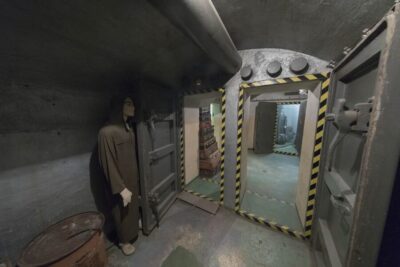
Communism History and Nuclear Bunker Guided Tour
Read our review →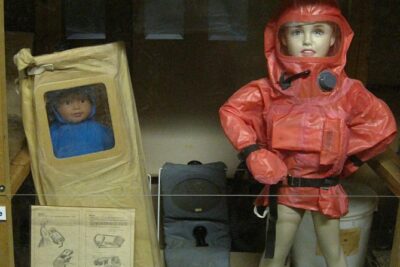
Prague Communism History and Nuclear Bunker Tour
Read our review →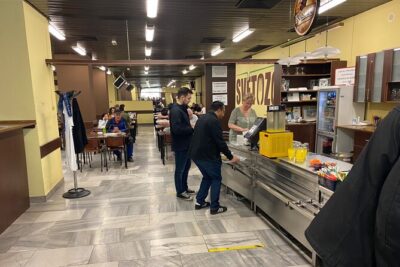
Communism & Nuclear Bunker Tour + 70s Canteen Lunch (own expense)
Read our review →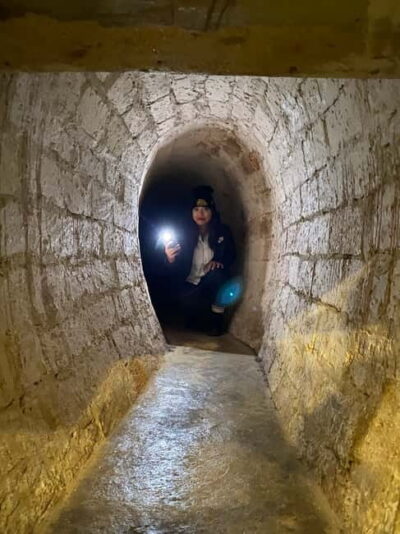
Communism and Bunker Tour with 70s Canteen Lunch
Read our review →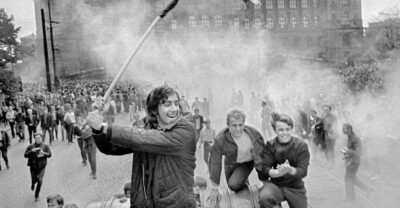
Browse the lists this tour appears in