
Reviewed · COMMUNISM AND COLD WAR TOURS
Prague: 2-Hour Back to Communism Walking Tour
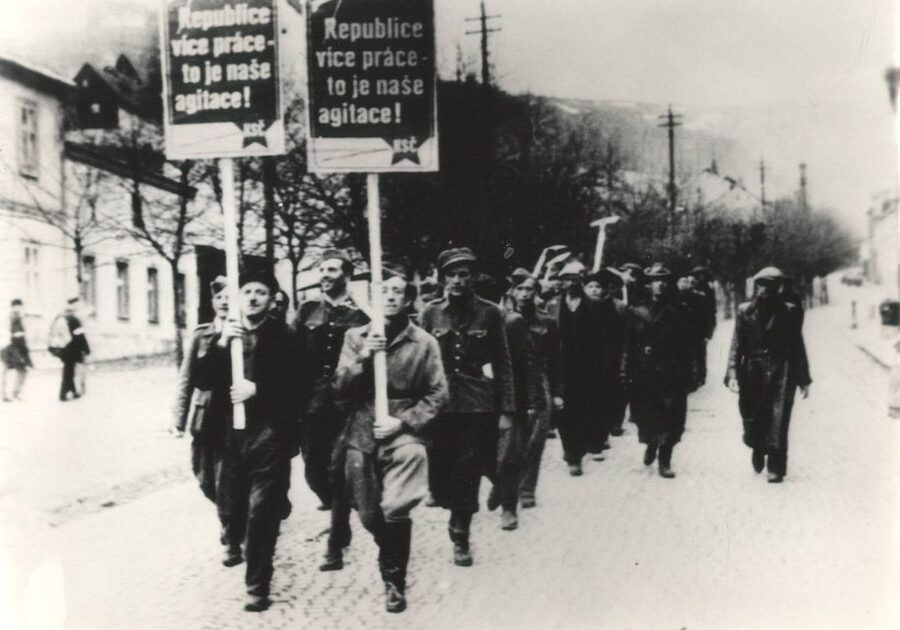
Prague’s communist past is not confined to a museum. It appears in former police offices, government buildings, protest squares, and places tied to the Soviet occupation. This walking tour connects those sites while a local guide who lived through the era explains what the dates and political slogans meant in ordinary life.
I like the firsthand local perspective, and I like the way the tour covers both political events and daily routines. You hear about the rise of socialism, the postwar Soviet influence, protests, rebellions, and revolution in one compact walk. The main caution is guide consistency: some bookings have received excellent storytelling, while others have been held back by weak German, illness, or a guide distracted by phone calls.
Key points at a glance
- Former secret police headquarters: See a place linked to the machinery of communist control in Prague.
- A walk through protest history: Visit locations tied to demonstrations, rebellion, revolution, and the Soviet occupation.
- A guide with lived experience: Local Cold War survivors explain how the system affected everyday life.
- Politics plus ordinary routines: Learn about both the official theory of communism and its practical effects.
- About two hours on foot: The route is short enough to fit into a busy Prague schedule.
- Best for history-minded visitors: It suits you if you want context behind Prague’s monuments, not just photographs.
Prague’s communist story begins in the street
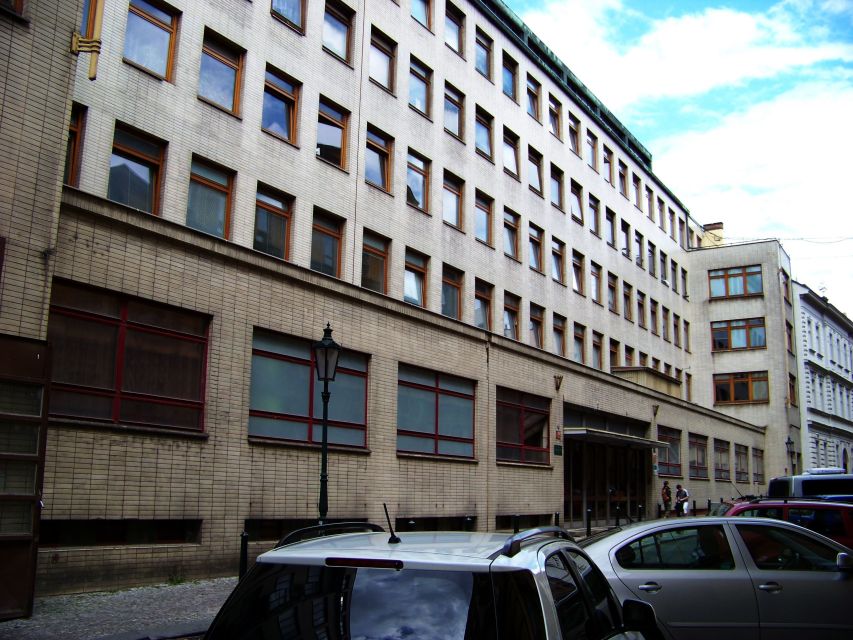
This tour gives you a different way to read central Prague. Instead of focusing on medieval lanes, grand churches, and palace views, you follow the marks left by the 20th century: state surveillance, party power, public protest, Soviet influence, and the collapse of the old system.
The opening sets the political frame. You hear how socialism and communism developed in the 19th century, how communist rule spread through Central and Eastern Europe, and why Czechoslovakia became part of the Soviet sphere after the Second World War.
That introduction matters. Without it, a former party office or protest site can look like just another building. With the background in place, the stops begin to connect. You can see how an ideology moved from theory into government, policing, employment, education, and daily habits.
I would not book this expecting a light sightseeing stroll. The subject includes repression, fear, occupation, and public resistance. Some places are described as still carrying a heavy mood, and the tone can be serious. That is part of the value, but it may not suit you if you want only cheerful architecture and easy anecdotes.
More communism and Cold War walks:
- Prague: Communism History and Nuclear Bunker Guided Tour
★ 4.7 · 2,417 reviews - Prague Communism History and Nuclear Bunker Tour
★ 5.0 · 1,742 reviews - Communism & Nuclear Bunker Tour + 70s Canteen Lunch (own expense)
★ 5.0 · 1,036 reviews
The former secret police headquarters and the machinery of control
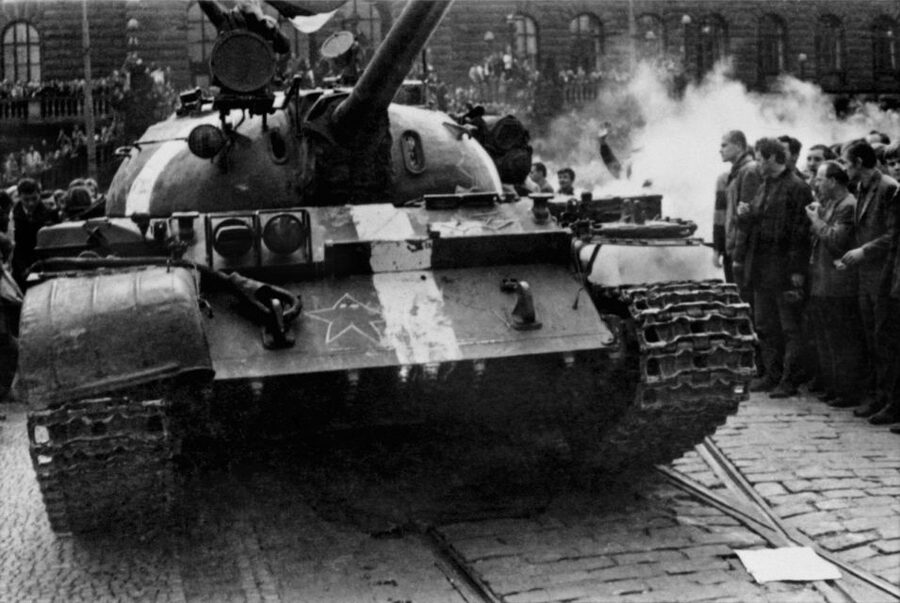
One of the most important stops is the former headquarters of the communist secret police. The building itself may not look dramatic, which makes the explanation especially useful. A guide can show you how an ordinary-looking address became connected with surveillance and state power.
This is where the tour moves from political theory to personal consequences. You learn about the people and institutions that helped monitor opposition, protect the ruling system, and enforce loyalty. The stop gives a physical address to an otherwise abstract idea: the state watching its own citizens.
The tour does not treat communism as a simple cartoon of villains and victims. Its stated aim is to discuss both advantages and disadvantages, including the arguments supporters used and the costs paid by people who lived under the system. That balance is important if you want a serious introduction rather than a one-sided political speech.
The guide’s personal connection can make this section more useful. Local guides who lived through the Cold War can explain not only what the secret police did, but also how people adjusted their behavior around work, public speech, and official institutions. You should feel free to ask questions here, since discussion is actively welcomed.
The former Stalin statue site and Soviet influence
Another stop marks the former location of Prague’s Stalin statue. The monument is gone, but the site remains a useful place to discuss how Soviet power was displayed in public.
A huge political statue was never just decoration. It sent a message about who held authority and which version of history citizens were expected to accept. Learning what once occupied the site helps you read the city beyond its surviving buildings.
This part of the route also helps explain the difference between Czech and Soviet experiences of communism. The tour is especially focused on the Soviet model and its effect on Europe after the Second World War. If you want a broad comparison of communist systems around the world, this walk may feel narrower than you expect.
The benefit of that focus is clarity. In two hours, the guide can follow one main thread instead of racing through every communist government and revolutionary movement. You get a sharper picture of Prague under Czechoslovak communism and the pressure exerted by the Soviet Union.
Communist Party buildings and the public face of power
The route also includes current and former seats of the Communist Party. These locations show how political power occupied the city in an official, visible way.
Here, I would pay attention to the difference between a party headquarters and a government building. The party was not merely one organization among many. Its role shaped the state, public life, and access to opportunity. A guide can explain the personalities, dates, and turning points that made the party central to Czechoslovak life.
The stop should be useful even if you already know the broad outline of the Cold War. You get a closer look at how authority was organized in one capital city, and how the party’s presence appeared in everyday Prague.
The quality of this section depends heavily on the guide. The strongest feedback describes an engaging speaker who adds unusual anecdotes and explains the subject in detail. A weaker experience is possible if the guide is not comfortable in your chosen language or is distracted by personal matters. English is likely the safest choice for most visitors, but Czech and German are also offered.
More Walking Tours in Prague:
- Prague: 3-Hour Walking Tour of Old Town & Prague Castle
★ 4.7 · 5,696 reviews - Prague: Ghost Walking Tour Where Legends Come To Life
★ 4.4 · 5,253 reviews - Prague: Jewish Quarter Walking Tour with Admission Tickets
★ 4.7 · 3,729 reviews - Prague Guided Walking Tour and Cruise with Authentic Czech Lunch
★ 5.0 · 3,627 reviews
Protest sites, rebellion, and revolution
The tour visits places associated with protests, demonstrations, rebellions, and revolutions. This gives the walk a human center. Political change does not happen only in offices and ministries. It also happens when ordinary people gather in public and decide that fear is no longer enough to keep them silent.
At these locations, you hear how public resistance challenged the ruling system and how major events affected Prague. The route connects individual acts of protest with larger changes in Czechoslovakia and Europe.
The exact stop-by-stop details can vary with the chosen meeting option and the guide’s route, so you should not expect a fixed museum-style sequence with exhibits at every point. This is a live walking lesson, shaped by the streets around you and by the questions you ask.
That flexibility can work in your favor. If you are curious about demonstrations, occupation, or the fall of communism, you can ask the guide to spend more time on those subjects. If you prefer dates and political structure, you can steer the conversation in that direction.
How daily life looked under the system
The most useful part for many people will be the discussion of ordinary life. The tour is not limited to leaders, party offices, and major dates. Guides who lived through the era describe how the system felt from the inside.
You learn about both the advantages claimed by the government and the disadvantages faced by citizens. That can include the contrast between promises of social security and the restrictions placed on speech, choice, and political activity. The point is not to hand you a ready-made opinion. It is to help you understand why some people accepted the system, why others opposed it, and why public memory remains complicated.
This personal layer also helps younger visitors and anyone from outside Central Europe. A textbook can explain Soviet occupation. A local guide can explain how a family or neighborhood experienced that wider event. The tour information does not promise that every guide will share the same stories, but the format clearly depends on local experience rather than a memorized script alone.
I would reserve a few minutes after each major stop for questions. The best value here comes from conversation. Ask about work, public life, political loyalty, or how people spoke about the system in private. The guide is expected to welcome discussion.
What two hours gives you in Prague
The walk lasts about two hours, though the stated duration can range from one to two hours depending on availability and the exact booking. That makes it easy to place between other central Prague activities.
You can choose between two starting locations on Na Příkopě, at numbers 28 or 864. Check your confirmation carefully, since the meeting point can vary by the option you select. Do not arrive with a large suitcase or oversized bag. Luggage is not allowed, and a passport or identity card is required.
The route is designed for walking through Prague rather than using transport between distant districts. Wear comfortable shoes and allow yourself enough time to find the meeting point. The tour is wheelchair accessible, which is useful, though the booking details do not spell out the exact street conditions or restroom arrangements.
A private group option is available. That can be worth considering if your party wants to ask many questions or needs a more personal pace. One unusual possibility is a scheduled group booking that ends up operating as a private tour if no other participants join. For some people, that is a pleasant bonus. For others, a group walk feels more social.
A guide-led experience with uneven language results
The guide makes or breaks this tour more than the route does. The strongest accounts describe a guide who arrives on time, gives clear meeting instructions, and tells the story in an interesting way. One Italian-speaking participant especially praised the guide’s ability to explain fine details and unusual anecdotes.
That is exactly what this subject needs. A list of dates would be dull. A guide who can connect the former police headquarters, the Stalin statue site, party offices, and protest places gives the walk shape and meaning.
Still, you should keep expectations realistic. The tour is offered in Czech, English, and German, but language ability may vary by guide. German-language feedback has included a request for stronger German skills. Another booking was weakened by a guide who spent much of the walk handling organizational problems by phone, along with repeated coughing from a cold.
Those problems appear to be exceptions, but they are worth knowing before you pay. If the history matters a lot to you and you need polished German, contact the provider before booking if possible. If English works for you, that may give you a wider choice of guides.
Is $50 a fair price?
At $50 per person, this is not the cheapest walking tour in Prague. You are paying for a focused subject, a professional guide, and access to local interpretation rather than simply following a general city route.
The value is strongest if you would otherwise struggle to understand the political meaning of the places you pass. A general Prague walk may show you beautiful streets and major sights, but it is unlikely to spend time on the former secret police headquarters, communist party locations, Soviet occupation, and the daily realities of the Cold War.
The price is less convincing if you only want a quick introduction to Prague or prefer to learn at your own pace in a museum. It is also a risk if your language match is uncertain. Since the tour lasts only one to two hours, the guide’s performance has a large effect on the value of every minute.
I see it as a worthwhile specialist walk for history students, politically curious visitors, and anyone with family or personal ties to the Cold War. For casual sightseers, the price may feel high unless this period is a major reason for visiting Prague.
Who should book this communist-era walk?
I would recommend it to you if you want to understand Prague after the medieval and imperial stories have been covered. It works well as a short history-focused activity during a city break, especially when you want context for the Soviet period and the fall of communism.
It is also a good fit for private groups with different levels of background knowledge. Questions are welcome, and a private format gives you more control over the pace and emphasis.
You may want to skip it if your interest is only in communism outside the Soviet sphere. The tour centers on the Soviet system and the Soviet Union’s influence over Central and Eastern Europe after the Second World War.
I would also think twice if you need a highly polished German-language presentation. The subject is too dense for unclear explanations to be a minor nuisance. English or Czech may be a better match if you have that choice.
Practical advice before you reserve
Book this walk early in your Prague planning, not because it fills every time, but because its subject fits best when you know what else you want to see. You can use it to add meaning to places you have already passed, or take it before exploring other 20th-century sights.
Keep your group light and leave large bags behind. Bring identification, check the correct Na Příkopě meeting point, and confirm the starting time because availability changes.
The activity allows free cancellation up to 24 hours before departure, and you can reserve now while paying later. Those terms help if your Prague schedule is still changing. They do not solve the larger question of guide quality, so language choice and group format remain the key decisions.
Should you book the Back to Communism tour?
Book it if you want a compact, personal account of Prague under communism, with real places tied to surveillance, Soviet influence, party power, protest, and revolution. The best version gives you more than dates. It shows how a political system affected ordinary people.
I would treat the $50 cost as fair for a strong guide and less attractive for a weak one. Choose your language carefully, arrive ready to ask questions, and expect a serious walking lesson rather than a standard sightseeing loop. If that sounds like the Prague you want to understand, this is a focused and useful choice.
FAQ
Where does the Prague Back to Communism tour start?
The tour has two possible starting locations: Na Příkopě 28 and Na Příkopě 864. The meeting point depends on the option you book, so check your booking details carefully.
How long does the walking tour last?
The tour is listed as lasting between one and two hours, with the guided walk generally described as approximately two hours.
What places related to communism does the tour cover?
The route includes the former secret communist police headquarters, the former site of the Stalin statue, current and former Communist Party locations, and places linked to protests, demonstrations, rebellions, revolutions, and the Soviet occupation.
Is the guide a local?
Yes. The tour uses local professional guides, including people who lived through the Cold War period and can describe everyday life under communism.
What languages are available?
The tour is offered in Czech, English, and German. Guide language ability can vary, so choose the language that will let you follow a detailed historical discussion most easily.
Can I ask questions during the tour?
Yes. Questions and discussion are welcome during the experience.
Is the tour wheelchair accessible?
Yes, the activity is listed as wheelchair accessible.
Can I book a private group?
Yes. A private group option is available.
What should I bring?
Bring a passport or identity card. Comfortable walking shoes are also sensible for a central Prague walking tour.
Can I bring luggage or a large bag?
No. Luggage and large bags are not allowed on the tour.
Can I cancel the booking?
Yes. You can cancel up to 24 hours in advance for a full refund.
Do I have to pay when I reserve?
No. The reserve-now, pay-later option lets you hold your place without paying immediately.
More 2-Hour Experiences in Prague
- Prague: Pub Crawl with 2-Hour Open Bar at Drunken Monkey
★ 3.9 · 670 reviews - Prague Castle & Castle District: 2-Hour Guided Tour
★ 4.6 · 622 reviews - Prague Boats 2-hour Lunch Cruise
★ 4.0 · 352 reviews - 2-Hour Old Town and Jewish Quarter Tour in Prague
★ 5.0 · 310 reviews
Recently added around Prague
- St Vitus Cathedral and Prague Castle Private Walking Tour★ 4.0 · 3 reviews
- Prague: Old Town and Jewish Quarter Small-Group Tour★ 5.0 · 3 reviews
- Royal Splendor Unveiled Private Prague Castle Interior Tour★ 3.5 · 3 reviews
- Prague Castle Interiors & Changing of the Guard-Small group★ 5.0 · 3 reviews
- Prague: Bohemian & Saxon Switzerland National Park Day Trip★ 5.0 · 3 reviews
- Running Tour of Prague. Your private 6-9K intro★ 5.0 · 3 reviews
- PRAGUE AIRSOFT SHOOTING GAMES★ 4.7 · 3 reviews
- Private walking tour and Boat cruise Best of Prague★ 5.0 · 3 reviews
Communism and Cold War Tours, compared.
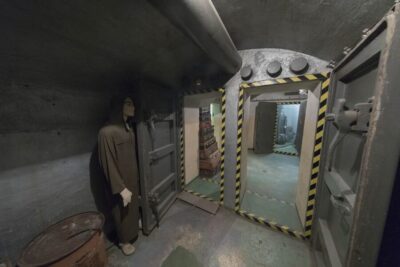
Communism History and Nuclear Bunker Guided Tour
Read our review →
Prague Communism History and Nuclear Bunker Tour
Read our review →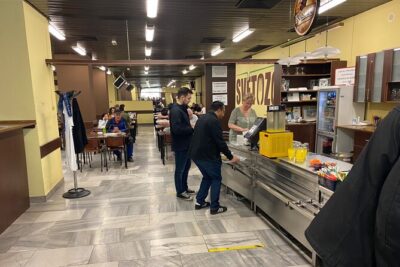
Communism & Nuclear Bunker Tour + 70s Canteen Lunch (own expense)
Read our review →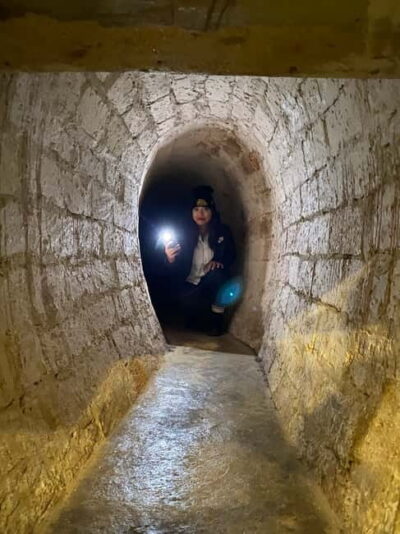
Communism and Bunker Tour with 70s Canteen Lunch
Read our review →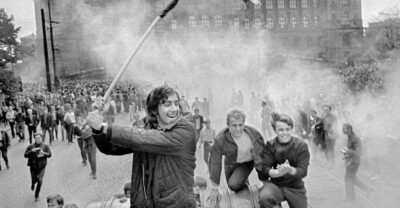
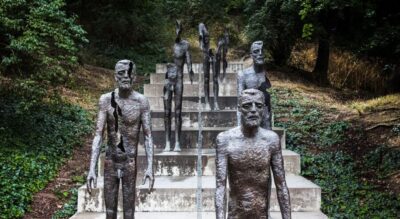
Second World War & Communism (Tip-based 3 hour tour)
Read our review →Browse the lists this tour appears in