
Reviewed · COMMUNISM AND COLD WAR TOURS
Prague Cold War Walking Tour
Prague’s Communist past is easiest to understand when you see the places where power was displayed, feared, and finally challenged. This three-hour walk links bomb-shelter corridors, Klement Gottwald’s former mausoleum, Vitkov Hill, the Lennon Wall, and Wenceslas Square into one sharp lesson in modern Czech history. The guide is a historian, and Vadim has been singled out for leading a sophisticated, thoughtful discussion.
I like the small maximum of eight people, which gives you a real chance to ask questions, and I like that tram tickets are included, since the route covers more ground than a simple stroll through the Old Town. The main catch is the steep 20 to 30 minute climb to the Vitkov monument. If hills are difficult for you, ask about the private version that skips Vitkov.
Key points at a glance
- Klement Gottwald’s former mausoleum: See the place where the Communist leader’s embalmed body was once displayed, along with the adjoining laboratory.
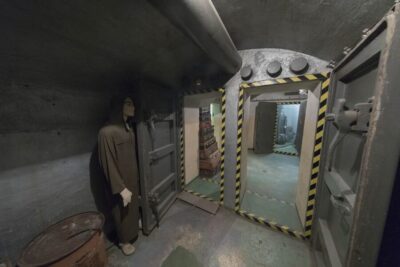
- Cold War shelter corridors: Look through locked doors connected to nuclear bomb-shelter passages built during the Cold War.
- Vitkov Hill’s giant Jan Zizka statue: Study one of the world’s largest equestrian statues while discussing Czech nationalism and Communist politics.
- A small English-speaking group: The tour accepts no more than eight people, making discussion with the historian easier.
- Wenceslas Square and the Velvet Revolution: Follow the route to the square where mass protest helped bring Communist rule to an end.
- A useful physical warning: Vitkov requires a sustained uphill climb, so good walking shoes and an honest look at your fitness matter.
Why this Prague Communist tour is different
Many Prague walks concentrate on medieval streets, Baroque churches, and grand royal buildings. This one asks you to look at a harder, more recent past. Its subject is Czechoslovakia under Communist rule, the political machinery behind it, and the public resistance that helped bring it down.
You are not simply shown a statue and given a date. The route connects architecture, propaganda, political ceremony, national identity, and personal memory. That makes the experience especially useful if you want to understand why Prague’s Communist period still shapes public debate in the Czech Republic.
The tour is conducted in English and lasts about three hours. You can request a morning or afternoon departure, with the listed start time at 2:00 p.m. The group limit is eight people, a good size for a walking tour built around questions and discussion rather than a long speech at each stop.
The tour is priced at $126.43 per person. That is a serious price for a three-hour walk, so the value depends on your interests. You are paying for a historian-led route, a small group, public transportation during the tour, and access to a carefully connected subject that can be hard to piece together on your own. If you only want a quick overview of Prague, this may feel expensive. If modern European history is a main reason for your visit, the focused instruction can justify the cost.
More communism and Cold War walks:
- Prague: Communism History and Nuclear Bunker Guided Tour
★ 4.7 · 2,417 reviews - Prague Communism History and Nuclear Bunker Tour
★ 5.0 · 1,742 reviews - Communism & Nuclear Bunker Tour + 70s Canteen Lunch (own expense)
★ 5.0 · 1,036 reviews
Starting near Náměstí Republiky
The supplied meeting information gives the start as Náměstí Republiky 1077/2 in Prague 1, while the tour description also identifies St. Joseph Church as the beginning point. Confirm the exact meeting instructions after booking, especially since Prague has several churches and squares within walking distance of one another.
The route begins by moving away from the postcard version of Prague. That is part of its appeal. You will spend time in places connected to state power, military memory, public protest, and Communist-era planning rather than staying only among the city’s most polished historic streets.
Tram tickets are included. Food, drinks, and hotel pickup are not, so arrive ready to walk and carry water if you need it. The activity calls for a moderate level of physical fitness, with the climb to Vitkov being the most demanding section.
The Karlin-Zhizhkov tunnel and the locked shelter doors
One of the first stops is the pedestrian tunnel linking Karlin and Zhizhkov. Here, you can observe locked doors leading toward nuclear bomb-shelter corridors constructed during the Cold War and still maintained.
This is a brief stop of about ten minutes, but it sets the tone well. Cold War planning was not only about speeches, party offices, and military parades. It also shaped ordinary urban spaces, including the hidden areas beneath or behind public routes.
You should not expect a long underground visit. The listed experience is to observe the locked entrances and discuss their purpose. That limitation is worth knowing in advance. If you are hoping to walk through a large shelter complex, this stop may feel more like a visual introduction than a full exploration.
Still, it is a useful opening because the doors make an abstract threat visible. Nuclear war was discussed in global terms, but cities had to prepare for it in very practical ways. Your guide can place those preparations within the political climate of Communist Czechoslovakia.
Vitkov Hill and the former Gottwald mausoleum
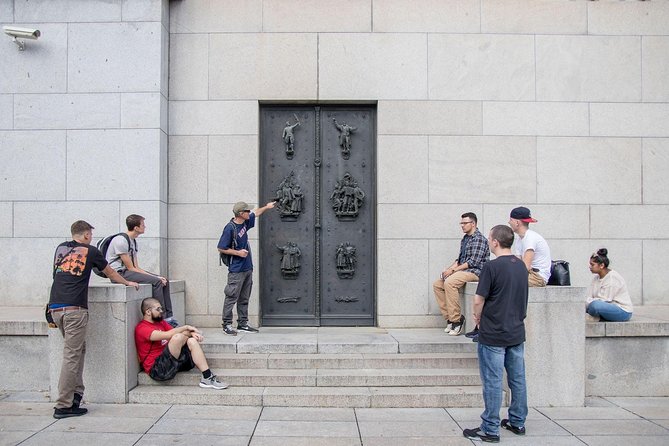
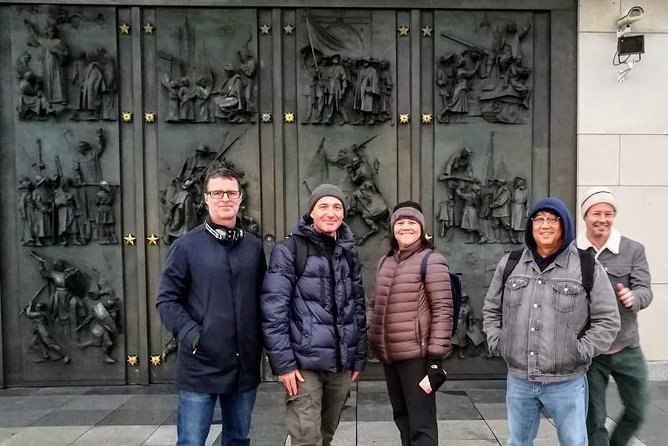
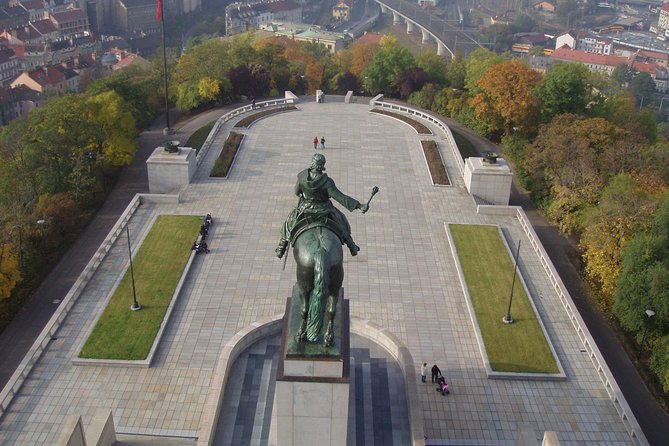
The longest stop is the National Monument at Vitkov, with about an hour scheduled there. It commemorates Czech and Slovak warriors of World War I and includes the Hall of the Soviet Soldier. The site also contains the former mausoleum of Klement Gottwald, once General Secretary and Chairman of the Communist Party of Czechoslovakia.
Gottwald was the first chairman of the party, and his mummified body was displayed here after his death. You will also hear about the adjoining laboratory where the body was embalmed. That detail gives the monument a disturbing physical connection to the cult of political leadership. The story is not only about policies and party structures. It is also about how governments turn leaders into symbols.
The Hall of the Red Army, with its statuary and decorations, offers another way into the period. Your guide discusses the Communist Party’s propaganda and politics, including the 1948 takeover sometimes described as an elegant coup. The setting helps explain how public art and ceremonial spaces were used to present Communist rule as orderly, legitimate, and tied to liberation.
The climb is the practical issue here. Reaching the Vitkov monument requires roughly 20 to 30 minutes of uphill walking. The tour specifically recommends a private alternative that leaves out Vitkov for people who have trouble with steep climbs. Take that advice seriously. Skipping one hill is better than spending the rest of the walk managing pain or exhaustion.
At the top, you encounter the monument to Jan Zizka and its enormous horse and rider. The statue is described as the third-largest bronze equestrian statue in the world. The guide uses it to explain the role of Czech nationalism in Communist rule, an important point because Communist governments did not rely on class politics alone. They also borrowed national symbols and heroic figures to build support.
More Walking Tours in Prague:
- Prague: 3-Hour Walking Tour of Old Town & Prague Castle
★ 4.7 · 5,696 reviews - Prague: Ghost Walking Tour Where Legends Come To Life
★ 4.4 · 5,253 reviews - Prague: Jewish Quarter Walking Tour with Admission Tickets
★ 4.7 · 3,729 reviews - Prague Guided Walking Tour and Cruise with Authentic Czech Lunch
★ 5.0 · 3,627 reviews
The Zizkov Television Tower and Prague’s Brutalist profile
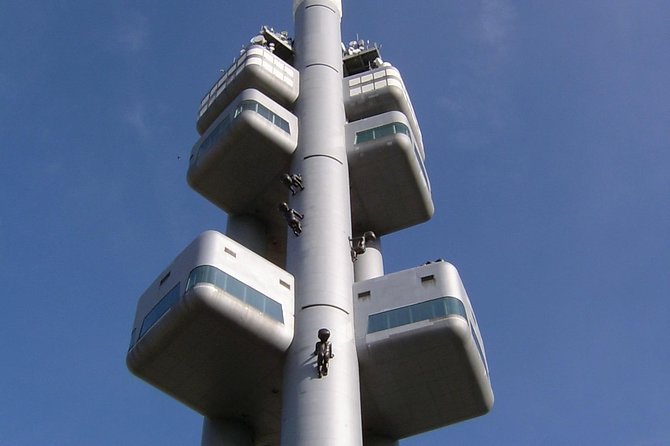
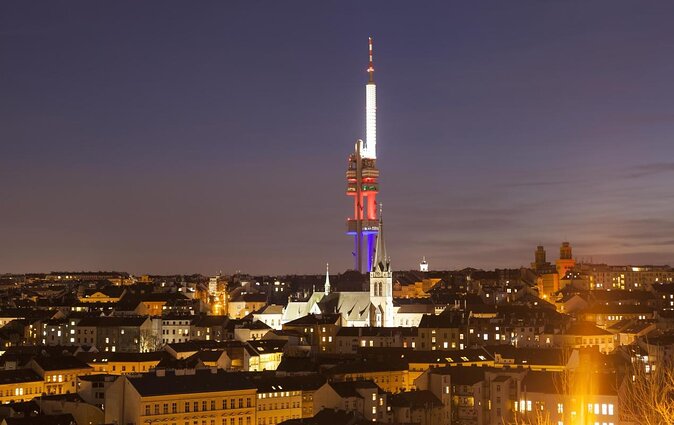
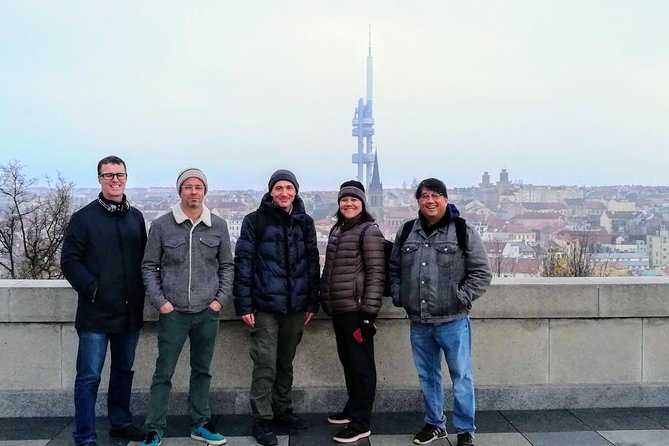
The next stop offers a view of the Zizkov Television Tower, one of Prague’s most recognizable examples of Brutalist design. The stop is short, about five minutes, and admission is free. You are there to see the structure and place it within the city’s modern architectural story, not to spend time inside the tower.
The tower can be a divisive sight. Its heavy form and unusual profile contrast sharply with Prague’s Gothic spires and historic facades. That contrast is exactly why it works on this route. Communist-era architecture often gets reduced to gray concrete, but the tower shows how bold and experimental some state-era projects could be.
This is also a reminder that the tour is not limited to political monuments. It considers the physical city produced during the period, including the large-scale structures that changed Prague’s skyline.
Letna Hill and Stalin’s vanished monument
Letna Hill was once home to an enormous statue of Joseph Stalin. The statue is gone, but its former site remains important because it shows how quickly official symbols can be built, celebrated, and erased.
Your guide also tells the tragic story of the sculptor. That human detail keeps the discussion from becoming a simple account of Communist monuments. Public art under an authoritarian system could involve ambition, fear, pressure, and personal cost.
The former Stalin statue site helps you think about political memory. A missing monument can still shape a place. Its absence raises questions about what governments want citizens to admire, what later generations want removed, and what traces remain after an official version of history collapses.
The supplied route description includes Letna Hill among the tour’s major Communist sites, but the detailed stop list does not assign it a separate duration. Expect its treatment to be part of the wider route and commentary rather than a long standalone visit.
The Lennon Wall and protest in public space
The John Lennon Wall introduces a very different kind of political expression. It became an important site of protest, with messages and images challenging official control. Its meaning comes from the contrast between personal creativity and a state that tried to regulate public speech.
You will not be looking at an official monument here. You will be looking at a public surface repeatedly used to express dissent. That makes the stop a useful counterpoint to Vitkov and the former Stalin site. Those places show power speaking downward. The Lennon Wall shows people finding a way to speak back.
The wall also connects Prague’s local story to wider ideas of peace, freedom, and youth protest. Your historian can explain why this site mattered during the Communist period and why it continues to attract political messages today.
The National Assembly and the machinery of government
The walk passes the National Assembly building, once the seat of the Communist government. From the outside, a government building can seem ordinary. Its importance comes from knowing what decisions were made there and how the state operated.
This stop helps connect public symbols to administration. A statue may shape the mood of a city, but offices and assemblies turn ideology into rules, appointments, restrictions, and daily reality. The tour’s strength is the way it links those layers rather than treating each place as an isolated curiosity.
As you move through the city, the guide builds a picture of Communist rule as both an idea and a system. That distinction matters. It lets you consider how political power reached into public space and ordinary life without reducing the entire period to a collection of dramatic anecdotes.
Wenceslas Square and the one-day revolution
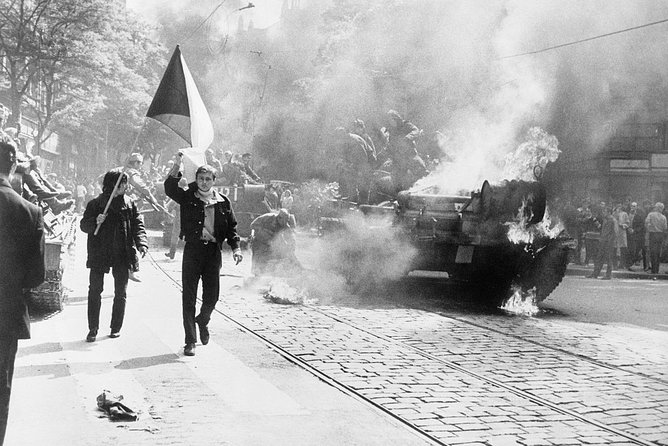
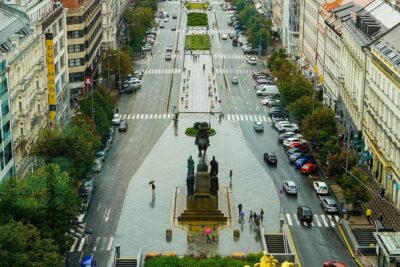
Wenceslas Square is the emotional high point of the walk. You will consider the square’s long history, from its founding in the 14th century to military parades held by occupying powers, the tragic events of the Prague Spring, and the enormous gatherings of the Velvet Revolution.
The square is especially effective because it has served many political purposes. It has been a place for official display, military presence, national frustration, and public hope. By the time you reach it, the earlier stops have given you the background needed to understand why a crowd in this particular place could carry such force.
The Velvet Revolution ignited here in a single day. The tour explains how the movement brought Communist rule to an end and why the event still matters in the modern Czech Republic. You should come away with more than a date. The aim is to understand the shift from a tightly controlled political system to a new public life shaped by protest, uncertainty, and change.
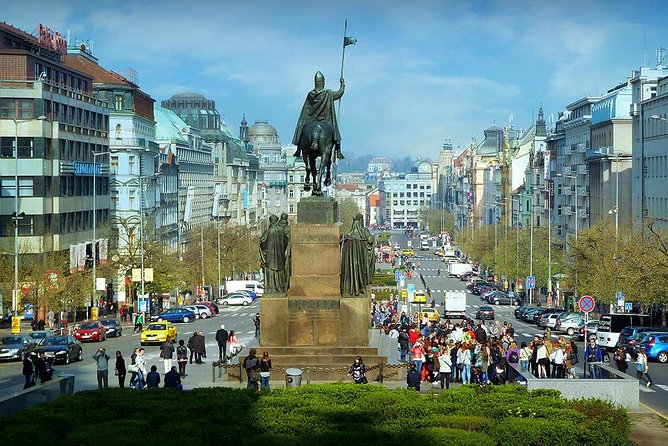
The upside-down Wenceslas statue
The final stop is the upside-down statue of King Wenceslas riding a dead horse. This ironic sculpture offers a sharp ending to a tour concerned with official heroes, national myths, and the way public art can question authority.
The statue invites you to compare older symbols with contemporary political attitudes in Central Europe. It is playful, but not empty. After spending hours looking at heroic Communist and national imagery, you can read the sculpture as a deliberate refusal to treat public symbols with automatic respect.
This is a short stop of about five minutes. Its value comes less from the amount of time spent there than from the way it sends you out of the tour thinking about how Prague continues to argue with its own past.
Group size, guides, and the pace of the walk
With a maximum of eight people, the format suits anyone who wants a discussion rather than a large-group lecture. You can ask about the 1948 takeover, Gottwald’s treatment after death, the meaning of Czech nationalism, or the Velvet Revolution as the route develops.
The guide is a historian, and Vadim is one named guide associated with the experience. A current rating of 5 from 9 reviews includes specific praise for his sophisticated, intellectual approach to Communist history. That wording suggests the tour is best for people who enjoy analysis and context, not only quick facts and photo stops.
The pace combines walking with tram travel. The exact balance depends on the group and route conditions, but you should expect a substantial amount of time on foot. Wear shoes suited to the Vitkov climb and uneven city walking.
Morning and afternoon departures are available, though the booking information gives 2:00 p.m. as the listed start time. Confirm the departure you want when booking. Confirmation is sent within 48 hours, subject to availability, and the activity is often reserved well in advance, with an average booking lead time of 195 days.
Who should book this experience
I would choose this tour if you want modern Prague explained by someone who can connect places to political ideas. It suits history students, readers of twentieth-century European history, and anyone who finds the city’s Communist-era buildings and public symbols as interesting as its medieval center.
It is also a good fit if you prefer a small group and want the freedom to ask questions. The English format and included tram tickets make the route easier to manage, while the three-hour length gives the subject enough time to develop without taking an entire day.
I would think twice if you dislike political discussion, want a relaxed sightseeing walk, or have difficulty with steep hills. The private option that skips Vitkov may solve the physical problem, but it is worth confirming the alternative route and price before booking.
At $126.43, this is not a casual budget walk. The value comes from the historian, the tightly focused route, the small group, and the access to difficult material that is not always clear from visiting Prague’s monuments alone. If those features matter to you, the price can be reasonable. If you mainly want famous views, choose a less specialized tour.
Should you book the Prague Cold War Walking Tour?
Book it if you want to understand how Communist power was displayed, how people lived beneath it, and how public protest helped end it. The strongest parts are the former Gottwald mausoleum, the political reading of Vitkov and Letna, and the final movement through the Lennon Wall and Wenceslas Square.
Skip it if you want a gentle walk or cannot manage the Vitkov climb. If your interests run toward twentieth-century politics and Prague’s less polished stories, this is one of the more focused ways to read the city. Cancel at least 24 hours before the start for a full refund. Changes or cancellations made within 24 hours are not accepted for a refund.
FAQ
How long does the Prague Cold War Walking Tour last?
The tour lasts approximately three hours.
What language is the tour offered in?
The tour is offered in English.
How many people can join the tour?
The maximum group size is eight travelers.
Who leads the walking tour?
A historian leads the tour. Vadim is a named guide associated with the experience.
Are morning and afternoon departures available?
Yes. You can choose a morning or afternoon departure and should state your preference when booking. The listed start time is 2:00 p.m.
Where does the tour start?
The meeting information gives the start as Náměstí Republiky 1077/2, Nové Město, Prague 1. The tour description also refers to St. Joseph Church, so confirm the exact meeting instructions after booking.
Are tram tickets included?
Yes. Tram tickets are included in the tour price.
Is admission to the National Monument at Vitkov included?
No. Admission to the National Monument at Vitkov is not included.
Is the tour physically demanding?
You need a moderate level of physical fitness. The route includes a steep 20 to 30 minute climb to the Vitkov monument.
Can I cancel for a full refund?
Yes, if you cancel at least 24 hours before the experience start time. Cancellations or changes made less than 24 hours before the start are not refunded.
Recently added around Prague
- St Vitus Cathedral and Prague Castle Private Walking Tour★ 4.0 · 3 reviews
- Prague: Old Town and Jewish Quarter Small-Group Tour★ 5.0 · 3 reviews
- Prague Castle Interiors & Changing of the Guard-Small group★ 5.0 · 3 reviews
- Royal Splendor Unveiled Private Prague Castle Interior Tour★ 3.5 · 3 reviews
- Prague: Bohemian & Saxon Switzerland National Park Day Trip★ 5.0 · 3 reviews
- Running Tour of Prague. Your private 6-9K intro★ 5.0 · 3 reviews
- Private walking tour and Boat cruise Best of Prague★ 5.0 · 3 reviews
- Discover Prague’s most Photogenic Spots with a Local★ 3.5 · 3 reviews
Communism and Cold War Tours, compared.
Communism History and Nuclear Bunker Guided Tour
Read our review →
Prague Communism History and Nuclear Bunker Tour
Read our review →
Communism & Nuclear Bunker Tour + 70s Canteen Lunch (own expense)
Read our review →
Communism and Bunker Tour with 70s Canteen Lunch
Read our review →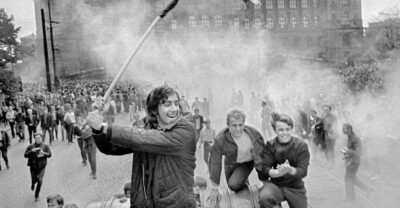
Second World War & Communism (Tip-based 3 hour tour)
Read our review →Browse the lists this tour appears in