
Reviewed · COMMUNISM AND COLD WAR TOURS
Prague Communism and World War II Walking Tour
Prague’s prettiest streets carry some of Europe’s hardest modern stories. This walking tour connects the Old Town Bridge Tower, New Town, and Wenceslas Square with the Nazi occupation, the communist takeover, the 1968 Soviet invasion, and the Velvet Revolution of 1989. The guide does the connecting, turning ordinary corners and grand squares into places with real political weight.
I like the chronological shape of the tour, which helps you understand how one crisis led to another. I also like the local angle. Guides such as Tomas, Martin, Maria, Dominick, and Zdenek have been praised for answering questions, sharing family memories, and, in one case, describing first-hand participation in the Velvet Revolution. The main consideration is scope: this is an outdoor city walk, not a detailed visit to wartime tunnels, parachutist hideouts, or the Jewish Quarter.
Key points to know before you book
- Start at Křižovnické náměstí: Meet beside the Old Town Bridge Tower, with a view toward Prague Castle.
- Follow Prague from Nazi rule to 1989: The tour covers the Protectorate, Operation Anthropoid, communist rule, Prague Spring, and the Velvet Revolution.
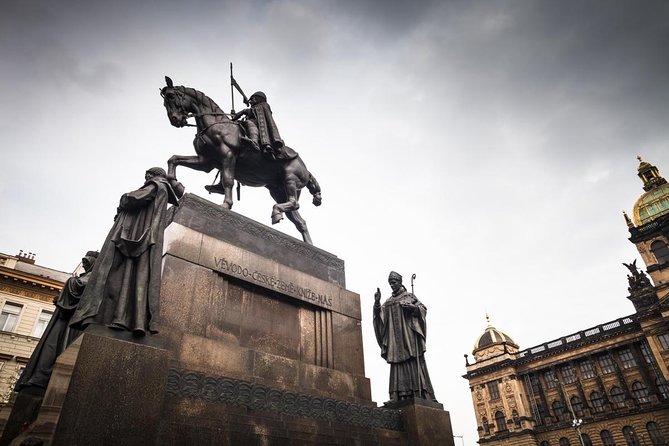
- Spend an hour around Wenceslas Square: This is the emotional center of the walk, with stories of Soviet tanks, student protest, and police violence.
- Expect a guide-led history lesson outdoors: There are no admission tickets included, and the value comes from explanation, context, and conversation.
- Plan for a lot of walking: The route links central Prague districts and may run longer than two hours if discussion continues.
- Best for modern-history fans: It suits you if you want Prague beyond castles, churches, and postcard views.
Why this walk adds another layer to Prague
Many first visits to Prague focus on the Charles Bridge, Prague Castle, Old Town Square, and the astronomical clock. Those sights are essential, but they can leave you with a picture of the city frozen in an earlier age.
This tour shifts your attention to the 20th century. You follow the story of a democratic Czechoslovakia that was weakened by outside powers, occupied by Nazi Germany, placed under Soviet influence after World War II, and controlled by a communist dictatorship for more than four decades.
I find that useful because Prague’s modern political story is not always visible at first glance. A building may look simply grand. A square may seem like a place for shopping or sightseeing. Then your guide explains that tanks once rolled through it, that students gathered there, or that police beat demonstrators on a nearby street. The city begins to feel less like a museum and more like a place where recent events still matter.
The listed price is $30.12 per person. For about two hours of focused guiding in central Prague, I consider that a fair price, especially if you ask questions and use the walk to plan the rest of your stay. You are not paying for entry to a museum or transport. You are paying for a local person to supply the background that plaques and buildings rarely provide.
More communism and Cold War walks:
- Prague: Communism History and Nuclear Bunker Guided Tour
★ 4.7 · 2,417 reviews - Prague Communism History and Nuclear Bunker Tour
★ 5.0 · 1,742 reviews - Communism & Nuclear Bunker Tour + 70s Canteen Lunch (own expense)
★ 5.0 · 1,036 reviews
Starting beside the Old Town Bridge Tower
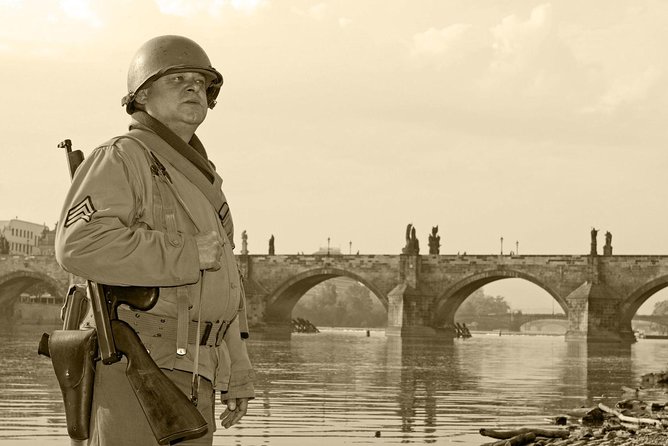
The walk begins at Křižovnické náměstí, in the heart of the Old Town and beside the threshold of the Old Town Bridge Tower. This is a convenient meeting point, close to major sights and public transport.
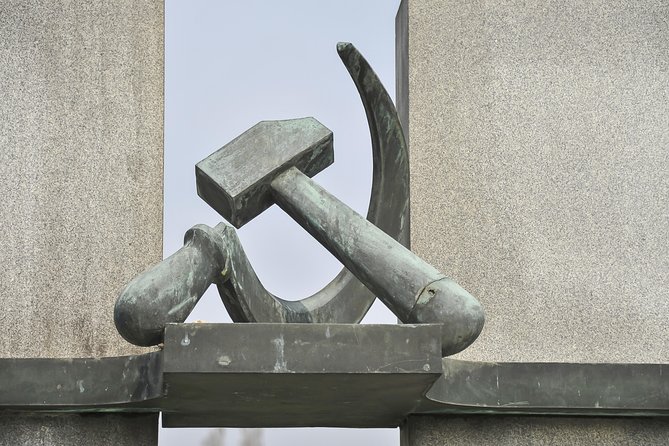
The opening view points across the river toward Prague Castle, the seat of Czech rulers and presidents. It is a fitting place to begin a story about power. Your guide uses the castle and the surrounding heights to explain the changing political order, including the surprising fact that the area once held the largest statue of Joseph Stalin in the world.
That detail gives the tour an early jolt. Prague’s graceful historic setting can make the communist period seem like a brief interruption. The Stalin monument helps you see how strongly the regime wanted to mark the city and its people with Soviet symbolism.
This first stop lasts about 15 minutes. Do not expect a long formal lecture. It is an orientation, a chance to place Prague’s rulers, institutions, and political changes on a mental map before the walk moves into New Town.
New Town and the road to Nazi occupation
The New Town section sets up the story before World War II. You learn how the Czech lands moved from the Austrian monarchy to an independent Czechoslovak democratic state after World War I.
That new country had a strong industrial base and was one of the better-performing economies of its time. The guide also explains why Czechoslovakia was important in Central Europe after 1933, when democratic governments elsewhere were collapsing or turning authoritarian. This political background matters because it shows what was lost when foreign pressure and Nazi expansion took hold.
The tour then turns to the Nazi Protectorate of Bohemia and Moravia. The subject is difficult, but the walk places occupation within the story of daily life and national survival. You are not simply given dates. You are shown how a functioning state was stripped of independence and subjected to Nazi control.
Operation Anthropoid receives special attention. This was the Czechoslovak operation that led to the assassination of Reinhard Heydrich, a senior Nazi official. The tour presents it as the only successful assassination of a senior Nazi leader during World War II, making it one of the most important episodes in Prague’s wartime story.
If Operation Anthropoid is your main interest, be clear about what you want from the tour. The route includes the story, but the supplied details do not promise a visit to the parachutists’ hideout or the tunnels associated with the final battle. One disappointed participant had hoped for more on those locations. You may want to visit a separate museum or site afterward if you want a full treatment of the operation.
From liberated democracy to communist dictatorship
The New Town section also explains the postwar shift toward Soviet control. Czechoslovakia did not simply wake up one morning with communism imposed from nowhere. Your guide outlines the political methods and outside influence that allowed the communist party to seize power and transform a formerly democratic country into a dictatorship.
This is one of the tour’s most useful themes. It shows how institutions can be weakened, how pressure from a larger power can narrow political choices, and how a regime changes ordinary life once it controls the state. The wording of the tour is blunt about the cost: human life was treated as less important than political obedience.
A local guide can make this period easier to understand than a quick reading of a timeline. Guides named Tomas and Martin have been praised for explaining childhood experiences under communism, including atomic drills at school and life behind the Iron Curtain. Those memories do not replace the larger history, but they help you grasp how political fear entered schools, families, and daily routines.
The strongest guides also leave room for questions. Several tours ran beyond the scheduled two hours because the conversation continued. That can be a real benefit if you enjoy discussion. It can also make the ending time less exact, so avoid booking something immediately afterward.
More Walking Tours in Prague:
- Prague: 3-Hour Walking Tour of Old Town & Prague Castle
★ 4.7 · 5,696 reviews - Prague: Ghost Walking Tour Where Legends Come To Life
★ 4.4 · 5,253 reviews - Prague: Jewish Quarter Walking Tour with Admission Tickets
★ 4.7 · 3,729 reviews - Prague Guided Walking Tour and Cruise with Authentic Czech Lunch
★ 5.0 · 3,627 reviews
Wenceslas Square and the shock of 1968
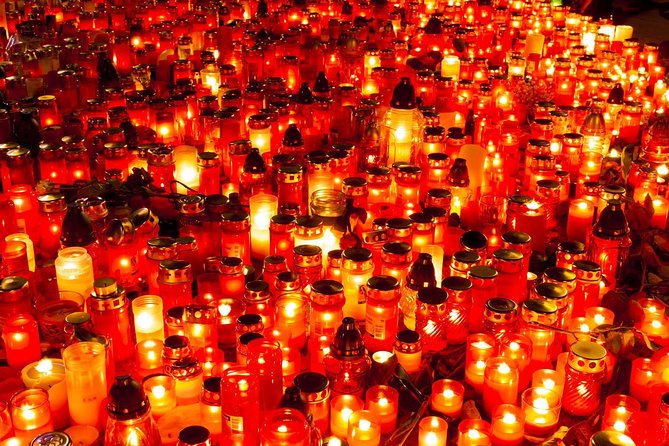
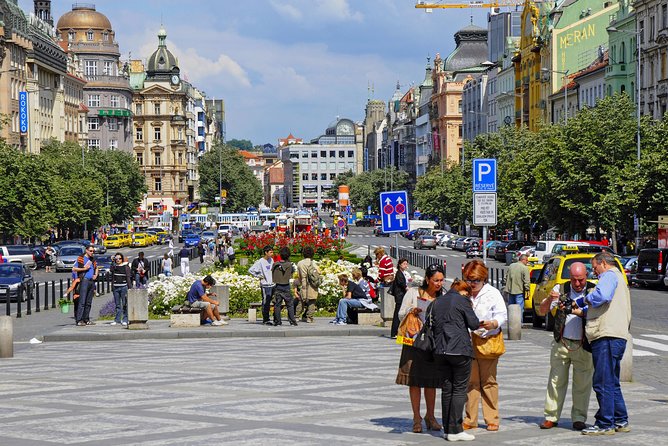
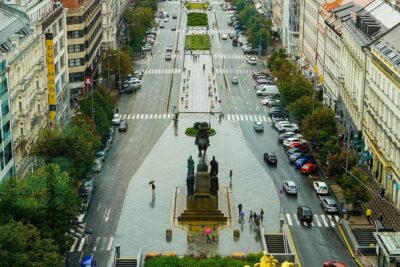
The tour spends roughly an hour around Václavské náměstí, or Wenceslas Square. This is the longest and most dramatic portion of the route.
The square is not merely a broad shopping avenue. It has been a stage for national celebration, protest, mourning, and political change. Here you imagine the excitement of Prague Spring, the reform movement that briefly offered the hope of a more open form of socialism.
That hope ended when Soviet-led forces invaded Czechoslovakia in 1968. Your guide explains how tanks entered Prague and how troops fired on the National Museum building. The damage and violence turned the square into a symbol of a crushed reform movement.
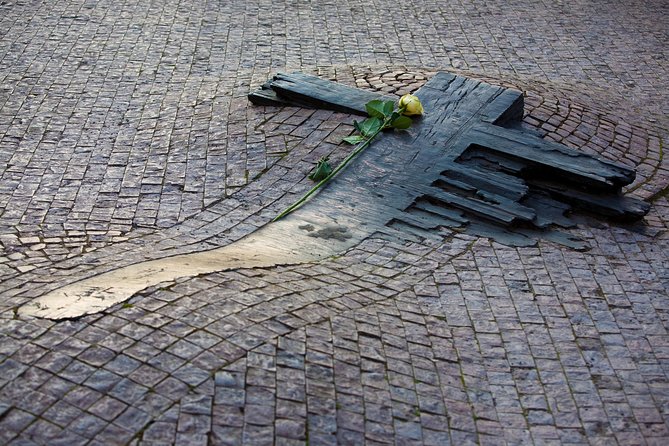
The tour also discusses Jan Palach and Jan Zajíc, young students who set themselves on fire in 1969 as acts of protest against the occupation and the loss of national unity. This is emotionally heavy material. A good guide needs to explain the political setting without reducing these deaths to a dramatic anecdote, and the tour’s focus gives enough time for that context.
You will also hear about the Brezhnev Doctrine and the tightening of communist rule in the 1970s and 1980s. The walk connects the public events in the square with the less visible years that followed: political conformity, police pressure, and the gradual loss of hope that eventually gave way to renewed opposition.
Narodní třída and the Velvet Revolution
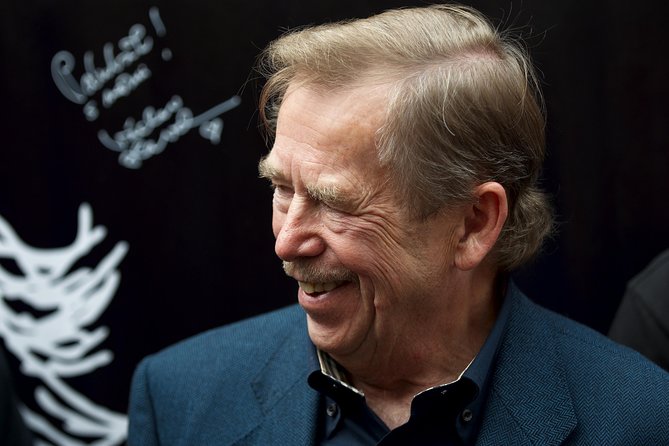
The final part follows the long road to November 1989. The tour introduces Václav Havel, student activists, police forces, and the clashes at Národní třída.
For me, this is where the earlier material pays off. The Velvet Revolution did not appear out of thin air. It grew from decades of disappointment, reform attempts, repression, private dissent, and public courage. Hearing that chain in sequence makes 1989 more than a triumphant final date.
One guide had been a student demonstrator during the Velvet Revolution and could describe the events from personal experience. That sort of perspective can change the mood of the walk. You are no longer hearing only about distant politicians. You are hearing how a young person experienced a turning point in the streets of Prague.
The tour does not end in solemn tones alone. It includes humorous and less familiar stories from the early period of freedom after communism. That lighter material is welcome. Czech history in the 20th century contains enough pain, and a few odd stories about newly gained freedom help show how people adjusted when the old rules disappeared.
What the guides add
The guide is the heart of this experience. The strongest names associated with the tour include Tomas, Martin, Maria, Dominick, and Zdenek, although you should not assume a particular person will lead your departure.
Tomas has been praised for clear political explanation, personal family background, and an easy conversational manner. Martin is described as a strong communicator who could answer questions about Prague and Czech history while offering practical suggestions for food and other sights. Maria extended one walk beyond three hours because the group remained interested, and Dominick handled detailed historical questions from a participant with a strong background in the subject.
The tour can sometimes become a private or very small experience. The stated maximum is 25 people, but some departures had only two people or even one small party. That can make the discussion much better, though you should not book on the assumption that every departure will be private.
You may also receive useful advice for the rest of your visit. Guides have suggested local food, beer, and other things to see. One guide even joined the group for coffee and later a beer, though that was an individual experience and not part of the advertised package.
Walking, timing, and practical comfort
The meeting point is central, and the tour is offered in English with a mobile ticket. It begins at 10:00 a.m. and lasts about two hours, though the actual time can stretch when questions and conversation take over.
Wear comfortable shoes. You cover several central areas on foot, and one account describes the route as easy to manage but still extensive. The city itself supplies plenty of visual interest along the way, so you may want a little time for photos, but remember that stopping often can make the tour run longer.
No food or drinks are included. That is not a serious drawback for a two-hour morning walk, but bring what you need if you prefer water while walking. Children must be accompanied by an adult, and most people can take part. The route is near public transportation, which helps if the end point leaves you away from your hotel.
The walk starts at Křižovnické náměstí and finishes in central Prague. The exact route may feel different depending on the guide and the day. Some descriptions place more emphasis on New Town and Wenceslas Square, while past walks have included Charles Square and the Vitkov Memorial. Treat the advertised stops as the main framework, not as a promise of a fixed museum-style route.
What this tour does not cover in depth
This is a broad history walk. It is not a specialist World War II tour, a dedicated Jewish Quarter tour, or a museum visit.
If your top priority is the Jewish experience during the Nazi occupation, you may find the brief treatment of the Jewish Quarter too short. One participant specifically wanted more explanation there and felt disappointed by how quickly the route passed through it.
You also should not expect interior visits, entry tickets, or a detailed exploration of wartime tunnels and resistance hideouts. The tour’s strength is the connection between places, events, and political ideas. Its weakness is that each individual site receives limited time.
That tradeoff makes sense for a first morning in Prague. You get a working framework, then you can return to the subjects that catch your interest. The Museum of Communism was recommended as a useful follow-up, and it would pair well with this walk for anyone who wants more objects, displays, and detail.
Who should book this Prague history walk?
I would choose this tour if you want modern Czech history explained in a clear sequence. It is especially useful for you if Prague is your first stop in Central Europe and you need a firm introduction to the region’s experience of Nazi rule, Soviet power, and the collapse of communism.
It also suits people who prefer conversation over a scripted lecture. The guide may ask what interests you, take questions, and adjust the emphasis. History buffs should appreciate that the guides can handle serious discussion, while newcomers get enough context to follow the story.
You may want another tour if you mainly want medieval Prague, architectural detail, or a close look at wartime sites. You may also be disappointed if you expect every stop to include a monument, plaque, or building connected directly to the event being discussed.
Should you book it?
At $30.12, this is a sensible buy for a focused two-hour introduction to Prague’s recent past. I especially like it as an early trip activity, when you can use the guide’s advice to shape the rest of your sightseeing.
Book it if you value clear chronology, local perspective, and open conversation. Skip it if you want a dedicated Operation Anthropoid route, extensive Jewish history, or indoor exhibits. Free cancellation is available up to 24 hours before the 10:00 a.m. start, so you have some flexibility when planning.
FAQ
Where does the Prague Communism and World War II Walking Tour start?
It starts at Křižovnické náměstí in central Prague, beside the Old Town Bridge Tower.
What time does the tour begin?
The stated start time is 10:00 a.m.
How long does the walking tour last?
The tour is scheduled for approximately two hours. Some walks have lasted longer when guides continued the discussion or answered questions.
What subjects does the tour cover?
It covers the Nazi Protectorate of Bohemia and Moravia, Operation Anthropoid, the communist takeover, Soviet influence, Prague Spring, the 1968 invasion, student protests, Václav Havel, Národní třída, and the Velvet Revolution.
Is the tour conducted in English?
Yes. The experience is offered in English.
Are food, drinks, or attraction tickets included?
No. The tour includes a professional guide, but food, drinks, and admission tickets are not included.
Can children join the tour?
Yes, most people can participate, but children must be accompanied by an adult.
Recently added around Prague
- St Vitus Cathedral and Prague Castle Private Walking Tour★ 4.0 · 3 reviews
- Prague: Old Town and Jewish Quarter Small-Group Tour★ 5.0 · 3 reviews
- Royal Splendor Unveiled Private Prague Castle Interior Tour★ 3.5 · 3 reviews
- Prague Castle Interiors & Changing of the Guard-Small group★ 5.0 · 3 reviews
- Prague: Bohemian & Saxon Switzerland National Park Day Trip★ 5.0 · 3 reviews
- Running Tour of Prague. Your private 6-9K intro★ 5.0 · 3 reviews
- PRAGUE AIRSOFT SHOOTING GAMES★ 4.7 · 3 reviews
- Private walking tour and Boat cruise Best of Prague★ 5.0 · 3 reviews
Communism and Cold War Tours, compared.
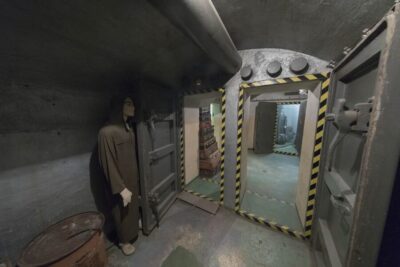
Communism History and Nuclear Bunker Guided Tour
Read our review →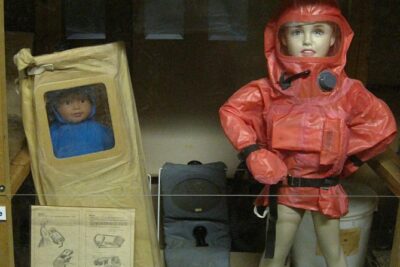
Prague Communism History and Nuclear Bunker Tour
Read our review →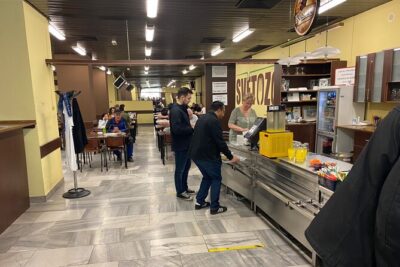
Communism & Nuclear Bunker Tour + 70s Canteen Lunch (own expense)
Read our review →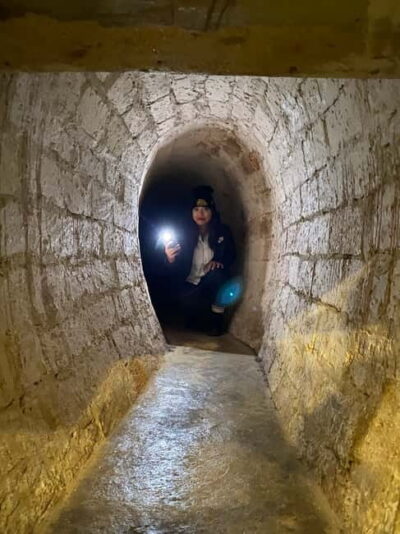
Communism and Bunker Tour with 70s Canteen Lunch
Read our review →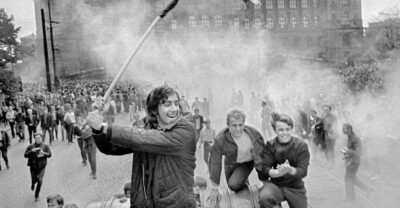
Second World War & Communism (Tip-based 3 hour tour)
Read our review →Browse the lists this tour appears in