
Reviewed · COMMUNISM AND COLD WAR TOURS
Prague Communism tour with visit of Communism museum
Prague’s communist past comes into focus when you connect museum displays with the actual streets where protests, repression, and the Velvet Revolution unfolded. This private tour brings you to Wenceslas Square, Národní třída, and the Jan Palach Memorial, with time at the Museum of Communism to tie the story together.
I like the personal angle, especially when guide Lenka shares stories from her family’s life under communist rule. I also like the private format, which lets you ask questions rather than follow a large group. The main drawback is cost: at $114.39 per person, you also pay the museum’s €15 entrance fee.
I like that the tour ends in central Prague at Národní třída, rather than sending you back to the starting point. You can continue sightseeing on foot after the tour. Just remember that the outdoor portion runs in all weather, so sensible shoes and a weatherproof layer matter.
Key points to know before booking
- Personal stories from communist-era Prague: Guide Lenka has shared family experiences that add a human scale to the political events.
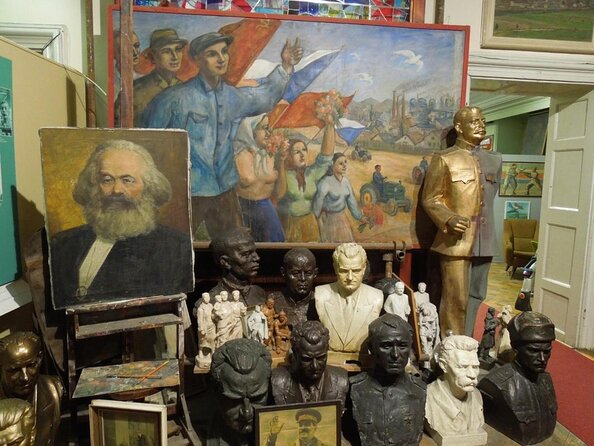
- The Museum of Communism anchors the tour: Allow about 90 minutes there, with the €15 admission paid separately.
- Important sites are seen on foot: The route includes Wenceslas Square, Národní třída, and the Jan Palach Memorial.
- A truly private outing: Only your group participates, so you receive direct attention from the guide.
- The tour ends in the city center: Finish at Národní třída, a useful location for continuing your Prague day.
- Plan for a three-hour history lesson: The pace combines indoor exhibits with short outdoor stops.
Why communist Prague is best understood on foot
Communism in Prague is not only a chapter in a textbook. It shaped public squares, universities, families, shops, monuments, and the way people spoke in daily life. This tour helps you connect those broad themes to specific places in the city center.
The period covered runs from the communist takeover in 1948 through the fall of the regime in 1989. That span includes decades of restricted political life, pressure on ordinary families, public protest, and the eventual Velvet Revolution.
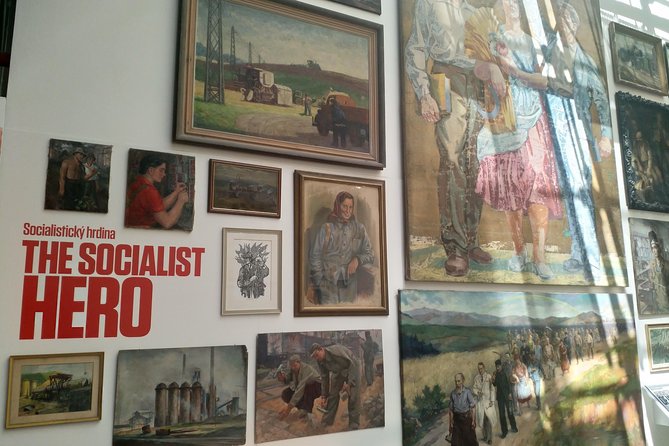
I find the combination of museum and walking tour useful because each part does a different job. The museum gives you background and visual material. The walk shows you where major events happened. One without the other would leave gaps.
This is also a good choice if you want more than Prague’s castles, churches, and pretty lanes. The tour deals with a difficult part of the country’s recent past, but it does so in a way that remains tied to places you can see and remember.
More communism and Cold War walks:
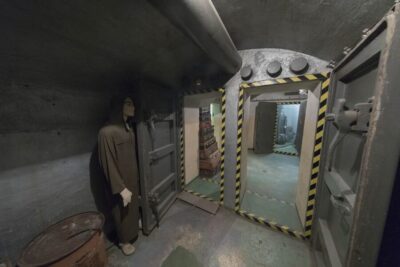
- Prague: Communism History and Nuclear Bunker Guided Tour
★ 4.7 · 2,417 reviews - Prague Communism History and Nuclear Bunker Tour
★ 5.0 · 1,742 reviews - Communism & Nuclear Bunker Tour + 70s Canteen Lunch (own expense)
★ 5.0 · 1,036 reviews
Starting at V Celnici and meeting your private guide
The tour begins at 4 V Celnici in Nové Město, Prague 1. The area is near public transportation, which makes the meeting point practical if you are coming from another part of the city.
You receive confirmation when you book, so check the exact meeting instructions before setting out. Since this is a private activity, only your own group takes part. That matters if you want to ask about family life, political change, or a particular event without waiting for a large group to move along.
The tour is offered in English. Guide Lenka receives especially strong praise for her clear explanations and her personal connection to the period. She grew up under communism and has used stories about her family and friends to explain how the system affected everyday life. Guide assignments can vary, so I would not assume Lenka will lead every departure, but her approach shows the kind of personal storytelling this tour can offer.
The private format also helps with pacing. You might want to spend longer on the political background, or you may prefer to focus on the human stories. A private guide can respond to those interests more easily than a fixed large-group outing.
The Museum of Communism, about 90 minutes indoors
The Museum of Communism is the longest stop, with about one hour and thirty minutes set aside for the visit. Admission is not included. The entrance fee is €15 per person, so add that to the advertised price when judging the total cost.
The museum gives the tour its factual base. It helps explain the structures of communist rule and the conditions that shaped daily life. You can then take those ideas outside and see how they connect to Prague’s public spaces.
The museum visit is not simply a quick add-on. Ninety minutes gives you time to look at the displays rather than rush through them. Guide Lenka’s explanations have been especially useful here, since she can point out connections between the exhibits and the stories discussed during the walk.
One practical detail deserves attention: the museum admission is paid separately. At $114.39 per person before that fee, this is not a low-cost city walk. You are paying for a private guide and a focused subject, not just entrance to a museum.
I think the value depends on your interests. If you want a serious look at Prague’s 20th-century political life, the cost can make sense, especially for a small group sharing the private guide. If you are only mildly curious about communism, a standard museum visit followed by independent sightseeing may be easier on your budget.
Wenceslas Square and the public face of protest
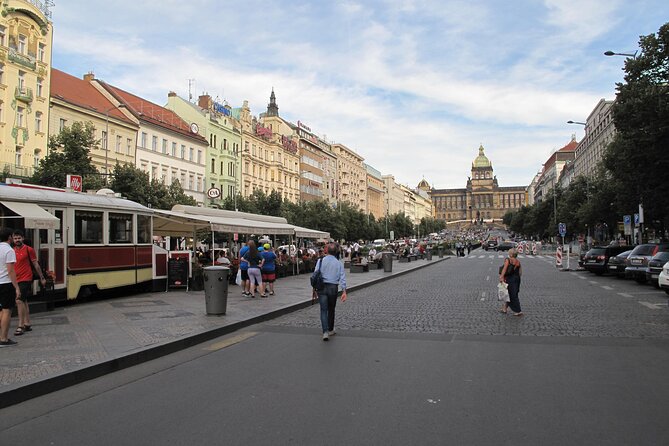
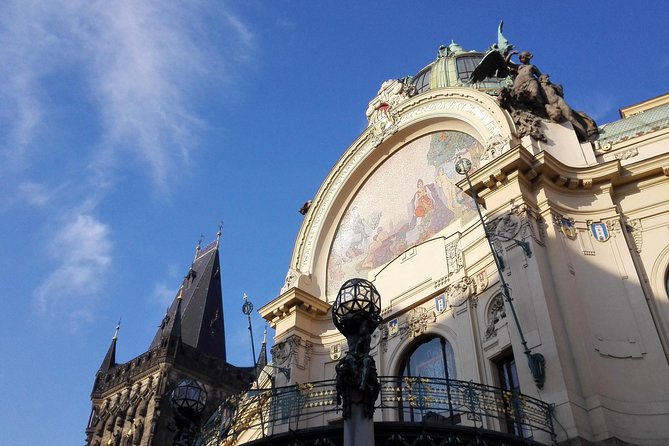
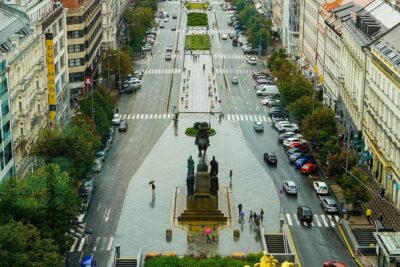
Wenceslas Square is one of the key outdoor stops, with about 20 minutes devoted to it. The square is important because it has been a major stage for public gatherings and political events, including events tied to the communist period and the changes of 1989.
A guide can make a familiar city space feel different. You may already have crossed the square while shopping or walking between sights. On this tour, you look at it as a place where public opinion became visible and where major national moments played out.
Twenty minutes is enough for an explanation and a short orientation, but not for a long stop. Wear shoes you can walk in, and keep your attention on the guide rather than treating this as free time. The value comes from hearing what happened here and understanding why the location mattered.
The square also makes a useful contrast with the museum. Inside, you see the system presented through exhibits. Outside, you stand in a public place where citizens gathered and political power was challenged.
More Museums in Prague:
- Prague: Museum of Fantastic Illusions Entry Ticket
★ 4.3 · 4,337 reviews - IAM Illusion Art Museum Entry Ticket
★ 4.2 · 1,664 reviews - Prague: Museum of Senses Admission Ticket
★ 4.0 · 1,445 reviews - IAM Illusion Art Museum Prague Fast Pass Ticket
★ 5.0 · 957 reviews
Národní třída and the Velvet Revolution
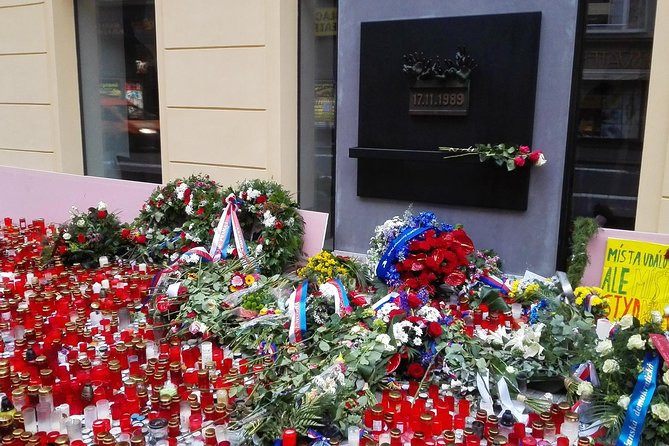
The route continues to Národní třída, also called National Avenue. This is where the events that sparked the Velvet Revolution took place, making it one of the most important stops on the walk.
The Velvet Revolution brought the communist period to an end in 1989. The tour places that change in a real setting rather than leaving it as a date to memorize. You can connect the final phase of the story with the street where the movement gained force.
The stop lasts about 20 minutes. That is brief, but the location carries enough importance to make even a short explanation worthwhile. Since the tour ends here, you can stay in the area afterward and continue exploring central Prague on your own.
I particularly like this arrangement. The route does not finish at a remote transport point or return you to the start. It leaves you at Národní třída, close to other central sights and public transportation. That gives you flexibility for the rest of the day.
The Jan Palach Memorial and the human cost of protest
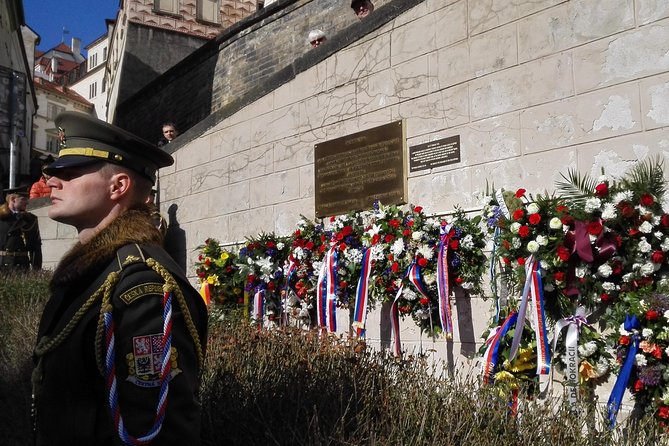
The Jan Palach Memorial is another 20-minute stop. It commemorates Jan Palach, the student who set himself on fire in protest. The memorial gives the tour a personal and painful focus.
Palach’s action is not presented as an abstract political footnote. It points to the pressure and despair that could lead an individual to make an extreme sacrifice in public protest. The memorial helps you consider the human cost behind the larger story of repression and resistance.
This stop may be emotionally heavy. That is part of its purpose, but it also means the tour is not light sightseeing. You should book it because you want to think about Prague’s difficult past, not simply collect another city attraction.
The tour also touches on other signs of oppression and remembrance in central Prague. These include sculptures about the destruction of the soul and spirit under oppression, as well as commemorative plates set into sidewalks in front of buildings connected with people who were taken to extermination camps. Those references broaden the discussion beyond one political period and show how different layers of 20th-century trauma can meet in the city streets.
What the guide adds to the museum and walk
The strongest feature is the human voice. Dates and political terms matter, but personal stories help you understand what those conditions meant at home, at school, and among friends.
Guide Lenka has been praised for explaining the period in a clear and engaging way, even though she is younger than the events she discusses. Her family stories give the subject a direct connection to lived experience. That can be especially helpful if you know little about Czechoslovakia before 1989.
I would still treat the guide’s personal stories as one part of the tour, not the whole history. The museum and public sites supply the wider frame. Together, they give you political context, private experience, and physical locations.
The private setting is important here. You can ask what a particular exhibit means, pause over a memorial, or request more detail about an event. With a group of only your own companions, the conversation can be more focused and less hurried.
Timing, walking, and weather
The full experience lasts about three hours. The museum takes roughly 90 minutes, and the three listed outdoor stops each take about 20 minutes. The remaining time covers meeting the guide, moving between locations, and discussion.
The schedule is manageable for most people, but it is still a walking tour. The route uses central Prague streets, and the outdoor portions operate in all weather. Bring clothing suited to the forecast, along with comfortable footwear.
The tour is near public transportation, and most people can participate. Service animals are allowed. No special physical requirement is stated, but anyone who has trouble standing or walking should ask the provider for current route details before booking.
Because the tour is private, you do not need to match the pace of strangers. That is useful for families and small groups with different interests. Still, the timing is approximate, and you should not plan a tightly timed attraction immediately afterward.
Is $114.39 plus €15 a fair price?
The listed cost is $114.39 per person, with a group discount available. The museum entrance fee is extra at €15 per person. The total is therefore considerably higher than a basic self-guided museum visit.
The price is easier to justify for a small private group that values direct conversation. You receive an English-speaking local guide, a museum visit, and a guided route through several important Prague locations. A private tour also avoids the limits of a large group.
For one person or a couple on a tight budget, the price requires more thought. You could visit the museum independently and see Wenceslas Square, Národní třída, and the Jan Palach Memorial without paying for a guide. What you would miss is the connecting explanation, the local perspective, and the chance to ask questions as the story unfolds.
I would book this for a group of friends, a family with older children, or anyone who considers recent political history a major part of a Prague visit. The group discount may improve the value, though the exact savings are not given.
Who should book this Prague communism tour?
This tour suits you if you want to understand how Prague changed from 1948 to 1989 and prefer a guide to connect the facts. It is also a strong choice if you enjoy memorials, political history, and personal accounts of ordinary life.
It may not suit you if you want a relaxed sightseeing walk with little serious discussion. The Jan Palach Memorial and the references to oppression and deportation can be difficult. The weather-proof outdoor portion and separate museum fee also deserve consideration.
The overall rating is 4.3 from 15 ratings, a solid result for a narrow, subject-focused tour. The most praised elements are the museum’s role in explaining the subject, the quality of Lenka’s presentation, and the way the street walk makes the events feel real.
Should you book it?
Book this tour if Prague’s communist period is more than a passing interest and you want a private English-language guide to connect the museum with the city itself. The combination of personal stories, memorials, and major protest sites gives you a clearer sense of how political change affected real people.
Skip it if you are watching every euro or prefer to explore at your own pace. The extra €15 museum fee raises the total, and you can see the outdoor sites independently. For history-minded visitors, though, the guided context is the main reason to pay for this experience.
Free cancellation is available if you cancel at least 24 hours before the start time. Changes or cancellations made less than 24 hours before the experience are not accepted for a refund.
FAQ
How long does the Prague Communism tour last?
The tour lasts approximately three hours. About 90 minutes are set aside for the Museum of Communism, with around 20 minutes at each of Wenceslas Square, Národní třída, and the Jan Palach Memorial.
Is the Museum of Communism entrance fee included?
No. The museum ticket costs €15 per person and must be paid separately.
Is this a private tour?
Yes. Only your group participates, so you receive personal attention from the local English-speaking guide.
Where does the tour begin?
The tour begins at 4 V Celnici, Nové Město, 110 00 Prague 1, Czechia.
Where does the tour end?
The tour ends at Národní třída in central Prague.
Is the tour available in English and does it operate in bad weather?
Yes, it is offered in English. It operates in all weather conditions, so dress appropriately.
Recently added around Prague
- St Vitus Cathedral and Prague Castle Private Walking Tour★ 4.0 · 3 reviews
- Prague: Old Town and Jewish Quarter Small-Group Tour★ 5.0 · 3 reviews
- Royal Splendor Unveiled Private Prague Castle Interior Tour★ 3.5 · 3 reviews
- Prague Castle Interiors & Changing of the Guard-Small group★ 5.0 · 3 reviews
- Prague: Bohemian & Saxon Switzerland National Park Day Trip★ 5.0 · 3 reviews
- Running Tour of Prague. Your private 6-9K intro★ 5.0 · 3 reviews
- PRAGUE AIRSOFT SHOOTING GAMES★ 4.7 · 3 reviews
- Private walking tour and Boat cruise Best of Prague★ 5.0 · 3 reviews
Communism and Cold War Tours, compared.
Communism History and Nuclear Bunker Guided Tour
Read our review →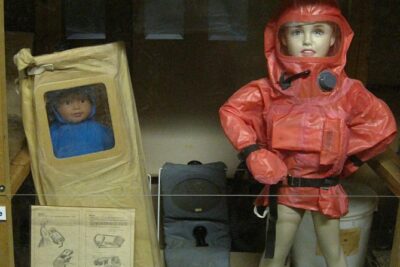
Prague Communism History and Nuclear Bunker Tour
Read our review →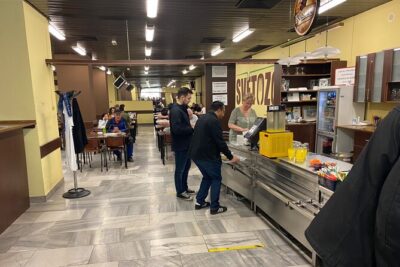
Communism & Nuclear Bunker Tour + 70s Canteen Lunch (own expense)
Read our review →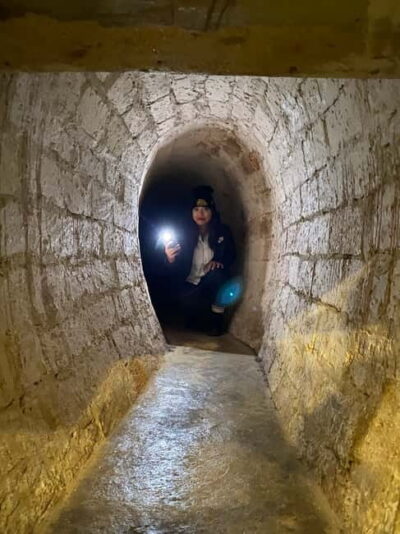
Communism and Bunker Tour with 70s Canteen Lunch
Read our review →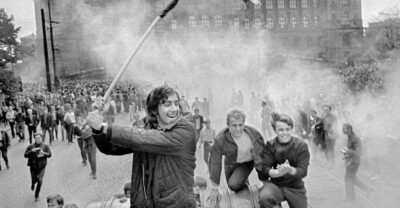
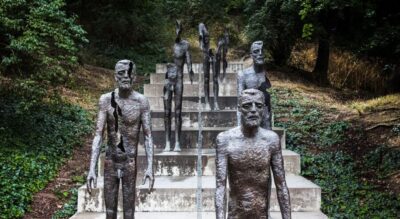
Second World War & Communism (Tip-based 3 hour tour)
Read our review →Browse the lists this tour appears in