
Reviewed · COMMUNISM AND COLD WAR TOURS
Private Prague Cold War Walking Tour
Prague’s Cold War story becomes most gripping when you leave the grand castles and churches behind. This private tour takes you from locked nuclear-shelter doors and a former communist mausoleum to the protest sites of the Velvet Revolution, linking big political events with ordinary life under state control. Klement Gottwald’s preserved-body laboratory is the tour’s strangest stop.
I like the private format, since your guide can adjust the pace and answer questions without a large group slowing things down. I also like the human touch: guides such as Vadim and Alzbeta bring family experiences and lively discussion into the history, rather than simply pointing at buildings. The main drawback is the steep 20-minute climb up Vitkov Hill, which may not suit anyone with mobility concerns.
Key points to know before you book
- A former communist mausoleum: See the rooms once used to preserve the embalmed body of Klement Gottwald, including the laboratory and temperature-control center.
- A Cold War shelter entrance: Walk through the Karlin-Zizkov pedestrian tunnel and view locked doors leading to maintained nuclear-bomb-shelter corridors.
- A private English-language guide: Your group receives undivided attention for about three hours, with tram tickets included.
- The best historical stop in central Prague: Wenceslas Square connects the 1968 Prague Spring with the 1989 Velvet Revolution.
- A steep Vitkov Hill climb: The route includes about 20 minutes uphill, but the memorial provides broad views over Prague.
- A group-priced experience: The listed price is $390.37 per group, with pricing based on six people or fewer and group capacity stated as up to 10.
Why Prague’s Cold War story works best on foot
This is not a tour about grand imperial Prague. It is about a city shaped by occupation, surveillance, censorship, protest, and sudden political change.
From 1948 to 1989, Czechoslovakia lived under communist rule aligned with the Soviet Union. The period included military parades, rigid political control, limited freedom of speech, and the crushing of the 1968 Prague Spring. The story ends in 1989, when mass demonstrations helped bring about the Velvet Revolution and the fall of communist rule.
A walking tour suits this subject because the important places are scattered through the city. You move from a concrete tunnel to a hilltop monument, then by tram toward the center. That movement helps you see how official power and public protest occupied the same city.
The guide matters a great deal here. A list of dates will not explain what it meant to live under a one-party state. A good historian can connect statues, squares, memorials, and everyday restrictions. Vadim is particularly suited to visitors who like discussion. He has worked with American study-abroad students and is described as engaging people with questions instead of delivering a one-way lecture. Alzbeta also brings family experiences into the story.
The exact guide is not guaranteed, so I would treat those names as examples rather than a promise. Still, the private setup gives you the best chance to ask for more detail about daily life, political events, or family memories.
More communism and Cold War walks:
- Prague: Communism History and Nuclear Bunker Guided Tour
★ 4.7 · 2,417 reviews - Prague Communism History and Nuclear Bunker Tour
★ 5.0 · 1,742 reviews - Communism & Nuclear Bunker Tour + 70s Canteen Lunch (own expense)
★ 5.0 · 1,036 reviews
Starting at the Karlin-Zizkov tunnel
The tour begins at Náměstí Republiky, near the Church of St. Joseph. You should arrive 15 minutes early unless hotel pickup has been arranged.
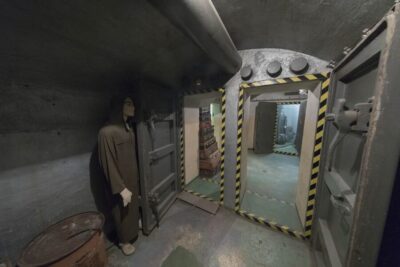
From there, the route reaches the pedestrian tunnel between Karlin and Zizkov. The tunnel itself is a useful introduction to Cold War Prague. Behind locked doors are corridors connected to nuclear-bomb-shelter facilities built during the period and still maintained.
You do not enter the shelter corridors, but seeing the sealed entrances makes the threat of nuclear war more concrete. This is not a polished museum display. It is an ordinary part of the city with an unsettling purpose hidden behind it.
The stop takes about 10 minutes and has no admission charge. It also sets the tone for the tour: Prague’s Cold War past is often found in practical structures and altered public spaces, not only in formal memorials.
Climbing Vitkov Hill to the Klement Gottwald mausoleum
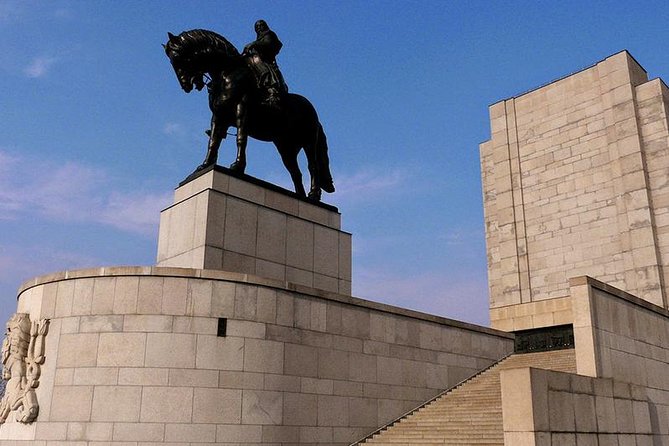
The most unusual part of the route is the National Monument at Vitkov. The monument was created to commemorate Czech and Slovak warriors of World War I, but its later communist use gives the site a darker layer.
Inside, you see the Hall of the Soviet Soldier, decorated with statues and friezes honoring Soviet troops who died in Eastern Europe during World War II. The hall reflects the official friendship between Czechoslovakia and the Soviet Union, at least as presented by the communist government.
You also visit the former mausoleum of Klement Gottwald. Gottwald was president of Czechoslovakia from 1948 to 1953 and general secretary and chairman of the Communist Party. His body was once displayed in the monument in a state modeled on the treatment of Lenin.
The mausoleum’s laboratory and temperature-control center are the memorable details. Staff worked to keep the embalmed body presentable, using specialized equipment in rooms that still convey the practical burden behind political spectacle. This is a rare look at how a regime tried to turn a political leader into a permanent symbol.
The site also includes the huge bronze equestrian statue of Jan Zizka, identified as the third-largest bronze equestrian statue in the world. The monument and the statue provide a sharp contrast: medieval military imagery and modern political theater sharing one hilltop.
The climb is the tour’s chief physical challenge. Allow about 20 minutes uphill. If that is not realistic for you, contact the operator ahead of time. The hill can be omitted, allowing the guide to focus on other Prague Cold War sites.
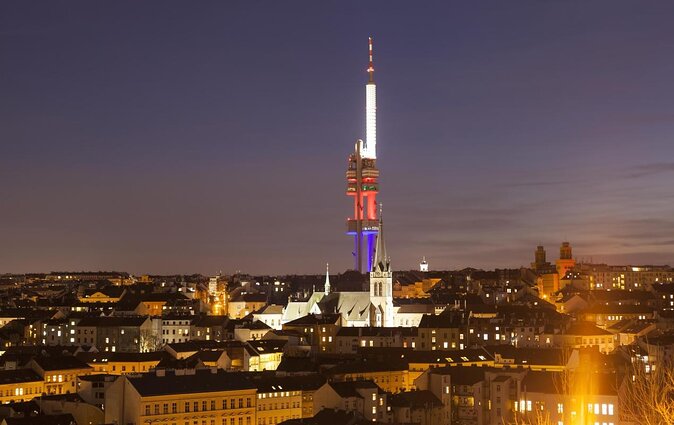
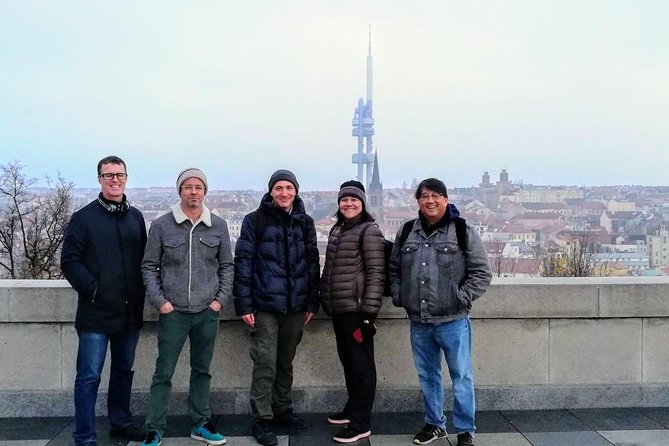
At the top, you get broad views over the city, including the Old Town and the distinctive Zizkov Television Tower. A late afternoon departure may bring a fine sunset from Vitkov, though the tour does not promise sunset timing. You will also want practical shoes, since the route is a walking tour rather than a gentle city stroll.
Admission to the National Monument is not included in the tour price. The supplied details do not state the entrance fee, so confirm the current cost when booking.
Seeing the Zizkov Television Tower from Vitkov
The Zizkov Television Tower is not a communist memorial in the same way as Vitkov, but it is an important example of Prague’s Brutalist-era architecture.
From Vitkov, you get one of the useful views of the tower. Its tall, stark form is easy to spot on the horizon, and your guide can place it within the visual character of late communist Prague.
This is a brief five-minute stop with no admission charge. Do not expect a tower visit here. The point is to look at the structure from outside and understand how it fits into the city’s postwar building style.
More Walking Tours in Prague:
- Prague: 3-Hour Walking Tour of Old Town & Prague Castle
★ 4.7 · 5,696 reviews - Prague: Ghost Walking Tour Where Legends Come To Life
★ 4.4 · 5,253 reviews - Prague: Jewish Quarter Walking Tour with Admission Tickets
★ 4.7 · 3,729 reviews - Prague Guided Walking Tour and Cruise with Authentic Czech Lunch
★ 5.0 · 3,627 reviews
Letna Hill and the missing Stalin monument
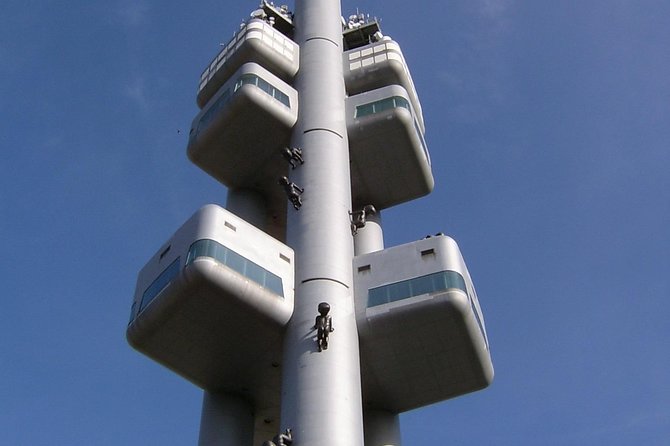
The tour then turns toward Letna Hill, where one of the world’s largest statues of Josef Stalin once looked down over Prague.
The statue is gone, but its former location remains meaningful. Stalin’s image represented the power of the Soviet system, and its removal reflected a major political shift. Your guide can explain how the site functioned as a public symbol and why its disappearance mattered.
This is a good example of how the tour handles absence. You are not simply looking at a surviving monument. You are considering what used to dominate the city and how political messages can vanish from public view while their effects remain.
The description does not assign a precise duration to the Letna stop. Since the tour lasts about three hours and includes several other locations, the amount of time here may depend on your guide and the group’s interests.
The John Lennon Wall and protest in plain sight
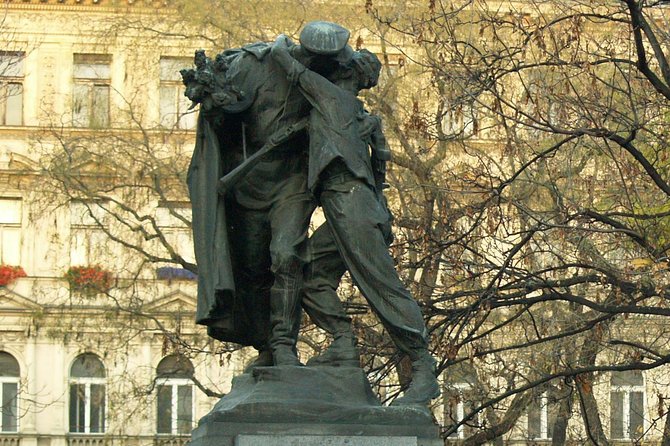
The John Lennon Wall gives the tour a more personal and creative turn. During the Cold War, people painted messages of hope, peace, and Western-style freedom on the wall. The graffiti became a public outlet for ideas that could not be expressed freely through official channels.
The wall is not important because Lennon himself lived in Prague. Its importance comes from what local people made of his image and the language of protest. Music, handwritten messages, and painted slogans offered a way to push back against the limits of the state.
This stop also helps explain the difference between formal opposition and everyday resistance. Not every act of dissent involved a public speech or organized march. Sometimes it appeared as a painted phrase on a city wall.
The condition of the wall can change, and the tour details do not promise a specific set of images. Go for the continuing political meaning rather than one fixed artwork.
Wenceslas Square, from occupation to the Velvet Revolution
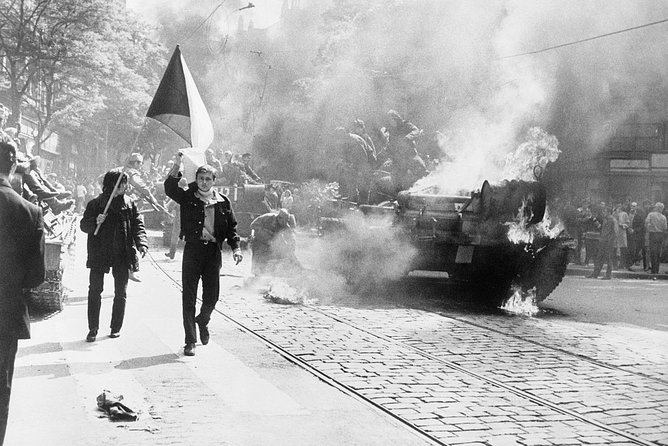
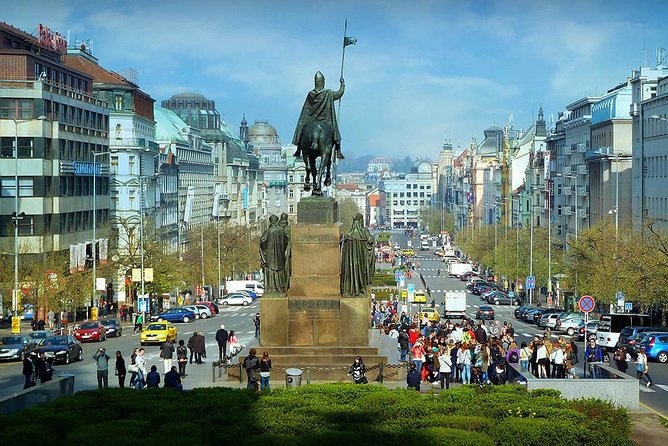
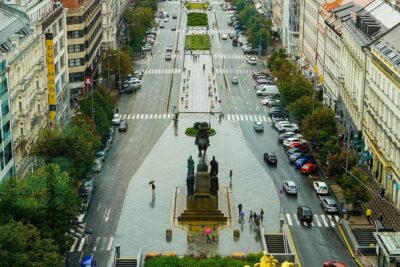
Wenceslas Square is the tour’s key central-Prague stop. It is broad, easy to reach, and loaded with political memory.
The guide traces the square from its founding in the 14th century through military parades and demonstrations by occupying powers. The Cold War story becomes especially intense here in 1968, when Warsaw Pact tanks entered Prague and crushed the Prague Spring.
The Prague Spring was an eight-month period when freedom of speech and an independent press were allowed to grow. The invasion ended that experiment and began a period of renewed political control.
You also hear about the demonstrations of 1989. Those gatherings helped produce the Velvet Revolution, the peaceful movement that ended communist rule in Czechoslovakia. The square became a place where large numbers of people could gather and turn private frustration into public action.
Allow about 20 minutes for this walk-through. That sounds brief, but the square works best as a focused historical stop rather than a long museum visit. The guide’s explanation is what gives the monuments and open space their meaning.
If you want to explore Wenceslas Square on your own afterward, this is an easy place to continue. The tour ends somewhere in Prague rather than at the original meeting point, so ask your guide for the exact end location and nearby transport advice.
The upside-down Wenceslas statue
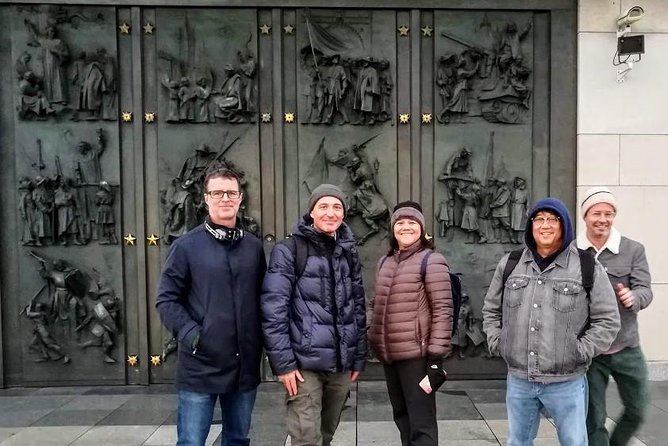
Near the end, you see the upside-down statue of King Wenceslas riding a dead horse. This ironic sculpture comments on political life in contemporary Central Europe and offers a modern counterpoint to the older monuments around the city.
The stop takes about five minutes. It is short, but it gives you a chance to consider how Prague uses humor and irony to respond to official symbols.
After the serious material about repression, invasion, and protest, the sculpture provides a change of mood. It also shows that political commentary in Prague did not end with 1989.
What the private price means
The listed price is $390.37 per group, with capacity stated as up to 10 people and pricing based on six people or fewer. That detail matters. For two people, the cost is high. For six, it works out to about $65 per person before any admission fee to the National Monument. With a larger group, confirm how the pricing applies before booking.
The value comes from the subject and the private guide, not from included attractions. Tram tickets are included, but food, drinks, and hotel drop-off are not. The National Monument admission is also not included.
For a couple focused on keeping costs low, a shared walking tour may be better value. For a family, study group, or small party of friends, the private format becomes more reasonable. You can ask questions, request more emphasis on daily life, and adjust the pace within the three-hour schedule.
The English-language historian guide is the main service you are paying for. That is worthwhile if you want context rather than a quick checklist of Cold War sites.
Timing, walking, and meeting details
You can choose a morning or afternoon departure. Morning gives you a clear start to the day, while afternoon may suit anyone hoping for a sunset view from Vitkov. Sunset is not guaranteed, so choose based on your broader Prague plans rather than that possibility alone.
Hotel pickup may be arranged, but the standard meeting point is the Church of St. Joseph at Náměstí Republiky 1077/2. You should arrive 15 minutes before the start.
The tour is near public transportation and includes tram tickets. The route requires a moderate level of fitness, mainly because of the climb up Vitkov Hill and the amount of walking between sites.
If you have mobility issues, tell the operator in advance. The hill can be left out, and the guide can concentrate on other Cold War locations. That flexibility is one of the useful advantages of booking privately.
Free cancellation is available if you cancel at least 24 hours before the start time. Changes or cancellations made less than 24 hours in advance are not accepted for a refund.
Who should book this Prague Cold War tour?
I would choose this tour if you want political history, architecture, and personal stories in one outing. It suits people who have already seen Prague’s main medieval sights and want to understand the 20th-century forces that shaped the modern city.
It is also a strong choice for students and families with older children who can engage with difficult subjects. The discussion-based approach associated with guides such as Vadim is useful when you want to ask how communism affected daily life, not just memorize dates.
I would hesitate if you dislike uphill walking, want to enter every attraction, or prefer a broad introduction to Prague. This tour stays focused on the Cold War and gives only a short look at each place.
Should you book it?
Book it if the former Gottwald mausoleum, Cold War shelters, Prague Spring, and Velvet Revolution sound more interesting to you than another general city tour. The mix of hidden infrastructure, political monuments, protest art, and public squares is unusually strong.
The best fit is a private group of several people willing to share the cost. Confirm the final per-group pricing, ask about the National Monument admission fee, and request the Vitkov-free route if the climb is a concern. For the right audience, this is a sharp, thoughtful way to see how Prague moved from Soviet control to public freedom.
FAQ
How long is the Private Prague Cold War Walking Tour?
The tour lasts approximately three hours.
What language is the tour offered in?
The tour is offered in English.
Is this a private tour?
Yes. Only your group participates.
How many people can join the group?
The tour information states a group size of up to 10 people. The price is based on six people or fewer, so confirm the exact pricing for larger groups.
Where does the tour start?
The standard meeting point is the Church of St. Joseph at Náměstí Republiky 1077/2 in central Prague. You should arrive 15 minutes before the start time unless hotel pickup has been arranged.
Is hotel pickup available?
Pickup may be arranged, but hotel pickup and drop-off are not included as standard.
Is the tour physically demanding?
You should have a moderate level of physical fitness. The route includes a steep climb of about 20 minutes up Vitkov Hill.
Can the Vitkov Hill climb be skipped?
Yes. If you have mobility issues, you can inform the operator so the hill is left out and the guide focuses on other Cold War sites.
Are tram tickets included?
Yes. Tram tickets are included.
Are food and drinks included?
No. Food and drinks are not included.
Is admission to the National Monument included?
No. Admission to the National Monument at Vitkov is not included in the tour price.
What is the cancellation policy?
You can cancel at least 24 hours before the start time for a full refund. Cancellations or changes made less than 24 hours before the experience are not accepted for a refund.
Recently added around Prague
- St Vitus Cathedral and Prague Castle Private Walking Tour★ 4.0 · 3 reviews
- Prague: Old Town and Jewish Quarter Small-Group Tour★ 5.0 · 3 reviews
- Royal Splendor Unveiled Private Prague Castle Interior Tour★ 3.5 · 3 reviews
- Prague Castle Interiors & Changing of the Guard-Small group★ 5.0 · 3 reviews
- Prague: Bohemian & Saxon Switzerland National Park Day Trip★ 5.0 · 3 reviews
- Running Tour of Prague. Your private 6-9K intro★ 5.0 · 3 reviews
- PRAGUE AIRSOFT SHOOTING GAMES★ 4.7 · 3 reviews
- Private walking tour and Boat cruise Best of Prague★ 5.0 · 3 reviews
Communism and Cold War Tours, compared.
Communism History and Nuclear Bunker Guided Tour
Read our review →
Prague Communism History and Nuclear Bunker Tour
Read our review →
Communism & Nuclear Bunker Tour + 70s Canteen Lunch (own expense)
Read our review →
Communism and Bunker Tour with 70s Canteen Lunch
Read our review →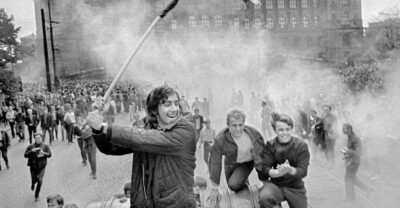
Second World War & Communism (Tip-based 3 hour tour)
Read our review →Browse the lists this tour appears in